I sometimes wonder, are we looking at the world through the wrong end of the telescope?
We focus on risk, things that can go wrong...
... in consequence we compile risk registers, many of which are not about difficult-to-predict-threats. They are often a list of things we haven’t got around to fixing or are, frankly, unfixable. Beyond the control of the organisation.
Staffing, for example.
A global shortage of health professionals. Should it be on an organisation’s risk register? It’s predictable...
... shouldn't it be moved to a management issue? The job; to find new ways of working, retention, innovation and skills training.
One of the biggest risks in the NHS is that professionals find it too much of a risk, to own up to mistakes.
Compliance and regulation take over. If we don’t know what mistakes are made, we’ll never stop people making the same mistake, again.
We are risk averse, instead of risk-intelligent.
It is not intelligent to regulate in such a way that it entrenches risk into the organisation. The risk of the risk. The risk of telling the truth, outweighs owning-up and fixing the risk.
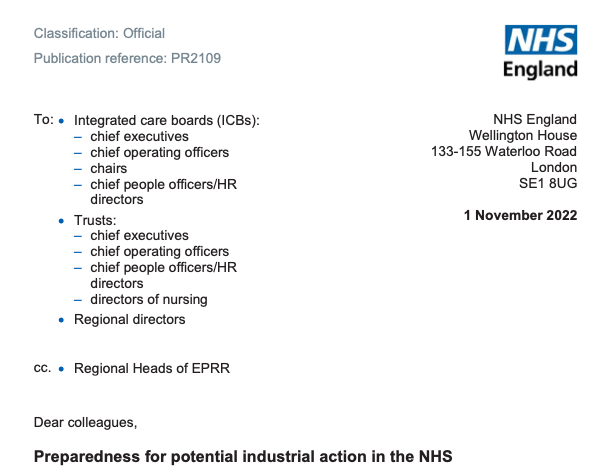
The general response to risk is targets, threats of financial sanctions and another letter from NHSE, bearing six signatures from six people, most of us have never heard of... telling us how to do things.
A well balanced organisation would have firmly rooted values, shared by the people doing the work and a climate where risk is understood and open to discussion.
Focussing on risk and what goes wrong, we ignore the value in what goes right and the clues to keeping it going, right.
There's an endless stream of data that the NHS creates, every minute, of every hour, of every day, with the potential to add value to the ordinary, day-to-day success of the service.
‘… Data on patient outcomes is especially important to create a picture of what works well.’
GIRFT recommends;
‘… improving the recording of data about key aspects of maternity care, including outcome data around spontaneous birth, caesarean section and assisted birth.’
Why don’t we?
Legal claims against maternity services represent 9% of the number of claims received… but 50% of the total value.
Sensible observations and recommendations are the work of GIRFT, who could not exist, if the NHS did not have, data.
The GIRFT plea is, more data.
It’s not just maternity services. GIRFT has a repertoire of research, some of which has been adopted, ‘to huge benefit’.
‘… cemented hip replacements for patients aged over 65 has led to savings of an estimated £4.4m a year….
... reduced length of stay for hip and knee operations has freed up 50,000 beds annually…’
GIRFT were ahead of the game in recommending surgical hubs;
‘… Trusts… moved to more ring-fenced orthopaedic beds, reducing cross infection and
… an increase in localised consolidated working between Trusts, sharing resources and maximising the number of procedures carried out…’
Data, data, data, once described as ‘the new oil’. Today it’s the digital equivalent of lithium.
HMG are not blind to the importance of data. They commissioned the Goldacre Review but after a half-hearted fanfare, as far as I can see, it’s fizzled out. Busking at the occasional conference.
Now, there's an upheaval planned.
NHS Digital is about to be stuffed up the back passage of NHSE Towers.
Will they take data more seriously?
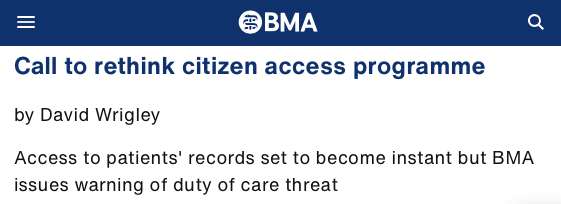
Will they make something as simple as synchronous access to records for GP practices, hospitals and tertiary centres, actually happen?
No, they’ll be bogged down in merger-mayhem.
If the Porter Study of mergers is correct, 18% of top people will jump-ship. Some already have.
There is a huge amount of data, advice, good practice available.
There is data to tell us what works and what doesn't.
Nevertheless, the NHS regularly insists on frightening everyone with the threats of inspection, ridicule and derision for struggling with things going badly...
...rather than highlighting what goes well.
We have the data, the knowledge and the smarts but somehow...
>> I'm hearing - The north west of England faced the largest, pharmacy regional-closure rate in 2021/22.
>> I'm hearing - NHSE is planning to down-grade some category 2 calls to free up more urgent responses. It was just this thinking, in 2014, that got us in the mess we are in now...