|
Nebraska's Library Commission is a state government agency that falls under the state's executive branch. There are six, Governor appointed, board members that serve three-year terms. Members may not serve more than two consecutive terms. This means all current members of Nebraska's Library Commission were appointed by former Nebraska Governor Pete Rickets. Governor Jim Pillen will have the opportunity to select 3 new members in 2024.
Not surprising, libraries have a very long and robust history. In the US, the first libraries were privately owned. Ministers and doctors usually had small book collections as did churches and colleges. In the 1700's, many church book collections were available to the public and colleges had small private libraries as early as the mid-1600's. Books were expensive, thus a correlation existed between the number of books owned and status. A good example of this is when Reverend John Harvard passed on 280 books and an endowment to a recently founded college in 1638. The college adopted his name and we know the rest of that story.
Libraries eventually evolved into three distinct trends; Social Libraries, Circulating Libraries, and School District Libraries. It's a combination of these trends that led us to public libraries. Social libraries give us the concept of sharing books and focusing on quality, circulating libraries brought in the inclusion of popular materials, and school district libraries gave us the idea of public funding.
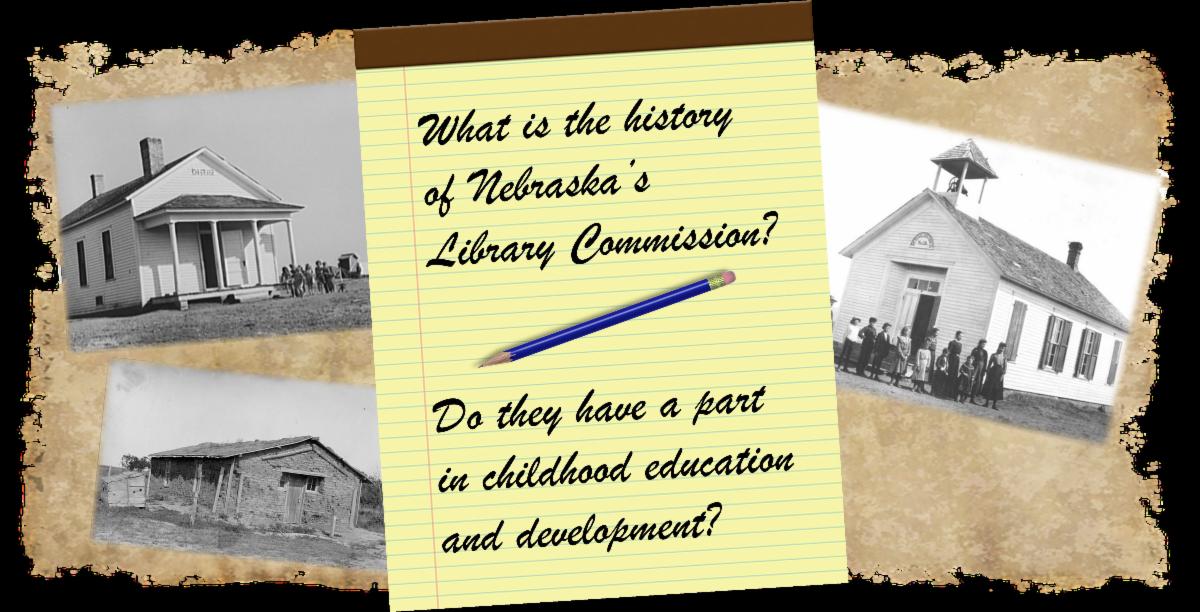
Nebraska's Public Library Commission was established by a legislative act in March 1901 with the main goal of fostering growth of public libraries in Nebraska. Traveling libraries were their first way to spread libraries across the state. Interestingly, the Library Commission was abolished in 1933 over funding but was re-established in 1935. The Nebraska Public Library Commission changed its name to the Nebraska Library Commission in 1972. In addition to the name change, a division of the Nebraska Library Commission called the Nebraska Publication Clearinghouse was also created that same year. You can read more on their website.
The commission's statutory authority is set forth in Chapter 51 of Nebraska Revived Status. The statutes range from 51-401 to 51-418. Their powers and duties are listed in 51-403.
|