|
|
NFFV Update
What we heard on
Nebraska Taxes
| |
|
|
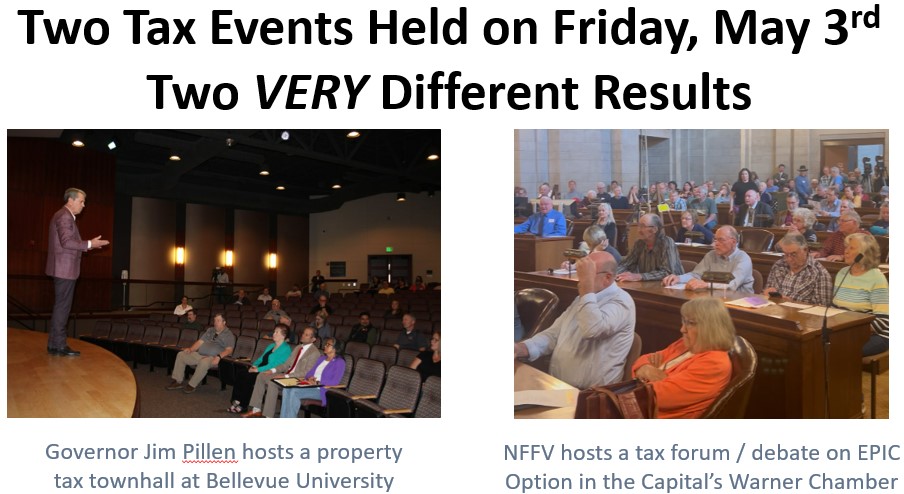
Did you get a chance to attend the NFFV hosted tax discussion last Friday? It was quite informative with a lot of good information Nebraskans need to understand and consider when it comes to Nebraska's tax system and whether EPIC option is a viable path forward. Or, did you attend Governor Jim Pillen's townhall where, according the Omaha World Herald, he asked Nebraskans to accept higher sales taxes to get property tax reductions.
This Minuteman Alert will look at the five main topics covered during NFFV's tax forum on EPIC, providing key highlights and takeaways. To properly frame this recap and establish a foundation for this discussion, we will start with a quote from one of the seven panelists, Creighton University Economist Dr. Ernie Goss;
"We need to accept the fact Nebraska is a high tax state"
Dr. Goss' comment is supported by many others. MoneyGeek has Nebraska ranked 10th in states with the highest tax burden and Route Fifty's 2021 analysis lists Nebraska as the 9th least friendly state for middle-class family taxes. While Governor Pillen is strictly focused on lowering property taxes and raising sales tax; Nebraskans need a tax solution that will lower their overall tax burden, not swapping one tax for another.
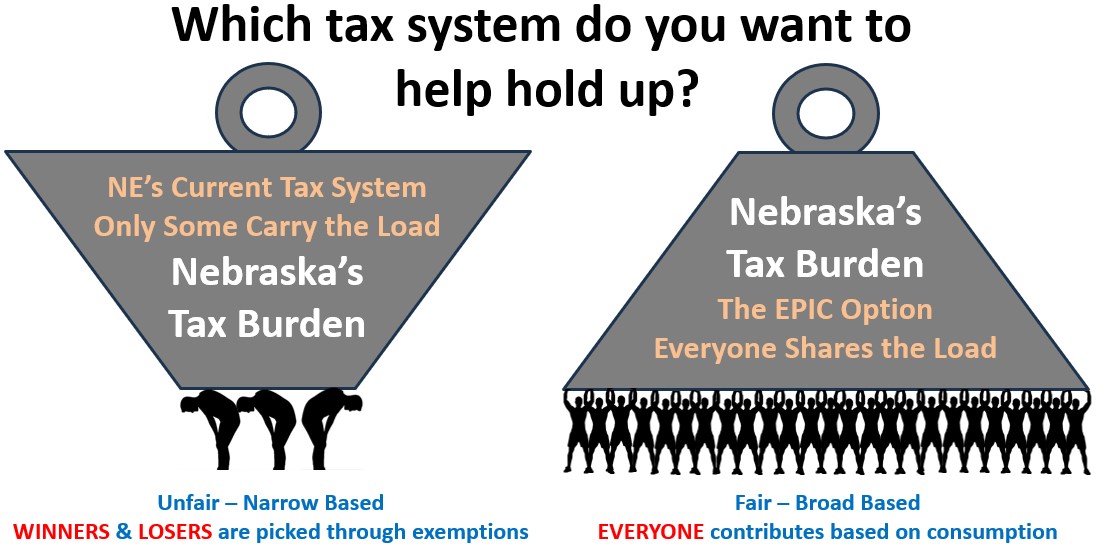
That's where EPIC Option is different from other solutions; it addresses Nebraska's overall tax burden without picking winners and losers.
| |
|
Another foundational point Nebraskans need to understand when it comes to taxes is the more pillars (people and entities) that share the tax burden, the easier it is on everyone. If you have a 10,000 lb. tax burden and you have 1,000 pillars, supporting that 10,000 lbs. is manageable. If you start removing pillars through tax exemptions, the weight on the remaining pillars grows until it's unbearable. Many are at this point - unable to support Nebraska's tax burden. This is most visible with those faced with losing their home because of property taxes.
Panelists Senator Steve Erdman, Senator Steve Halloran, and Dr. Goss all commented on the number of tax exemptions within Nebraska's tax code. Dr. Goss stated early in the forum that "the Nebraska code is proliferated with exemptions". He also went on to say Nebraska does a good job of listing the exemptions.
| |
Let's look at the five main topics covered: | |
|
i. What would the EPIC tax rate be?
The study done by Beacon Hill Institute forecasts a 7.5% tax rate while opponents of EPIC site studies by the Tax Foundation which states the real tax rate would be 21 to 22%. Who's right? Where would the tax rate actually fall? Time constraints limited how detailed the discussion could get, however, Dr Goss offered his thoughts. He believes the actual rate is somewhere between 7.5% and 21%, and much closer to the 7.5%.
This is significant as Tax Foundation themselves stated "If a 7.5 percent rate on this tax base, as included in the legislation, could really replace all these other taxes, it would be a remarkably good deal that Nebraskans would be well-advised to adopt." in their critique of EPIC.
The Tax Foundation also dedicated an entire paper to the benefits of a consumption based tax systems; "How Taxing Consumption Would Improve Long-Term Opportunity and Well-Being for Families and Children".
Key takeaway; Supporters and one, often sited, opponent of EPIC believe a consumption based tax system is beneficial. If the tax rate is around 7.5% it would be a remarkably good deal for Nebraskans.
| |
|
ii. Local Control
Robert Berndt brought up his concern about losing local control of financing their school. He gave an example of how local control worked in getting roads repaired after flooding a few years back. Should Nebraskans be concerned about all tax revenues flowing to a central location and then distributed back throughout the state as would occur with EPIC Option?
Senator Erdman discussed how EPIC would set aside monies for situations like the flooding that was brought up. Both Senator Erdman and Senator Halloran talked about how in the first 100 years of Nebraska, from 1867 to 1967, Nebraska had one revenue stream. That revenue stream was property tax which all came to Lincoln and was then distributed out from there. Their point being, Nebraska has done this before and they can figure out how to do it again.
Key takeaway; Having a central distribution point for all Nebraska taxes is not new. Nebraska did it for 100 years.
| |
|
iii. Outside state entities buying Nebraska property
This is a concern for Robert Berndt who believes if Nebraska eliminated property taxes more outside people would buy Nebraska farmland. It was also pointed out this is happening in our urban areas with housing. Would having no property taxes incentivize non-Nebraskans to buy up Nebraska property?
Senator Erdman brought up people like Bill Gates and Ted Turner, who have bought Nebraska farmland, are not concerned with taxes. In fact, if property tax was their concern they could potentially eliminate them by rolling their assets into one of their nonprofit organizations. This was reported by the Flatwater Free Press in their article "Spilling Bill’s beans: Tech billionaire spent $113 million on Nebraska farmland". Here's one small piece from the article: "If Gates’ land was given to a nonprofit – potentially making it exempt from property taxes – it would “decimate” the counties involved, State Sen. Tom Brewer, a Republican whose district covers 11 rural counties in central and northern Nebraska, said in an email." In addition, The Flatwater Free Press also published "Who’s buying Nebraska? Foreign companies deeply involved in farmland — but not how you think".
Key takeaway; Entities buying Nebraska property is happening now, with our current high property taxes. Eliminating property tax with EPIC may incentivize more purchases but it also reduces the risk for rural counties if Bill Gates would one day move all his land into non-profits. The bottom line is this issue needs be addressed regardless of the tax system or tax rate. This is not so much a tax issue but it is something the legislature needs to work out.
It does appear more states and even the federal government are looking for ways to curb or stop these kinds of purchases as reported by Fox Business.
| |
|
IV. Consumption tax hurts the poor while benefiting the rich
Carol Grell presented this idea. Dr. Goss talked about this on a couple of occasions stating a consumption tax does benefit the poor as well as the wealthy. Even if the wealthy get more benefit it still helps the poor. He went on to say if we are so concerned with taxes on the poor then let's get rid of the lottery, scratch offs, casinos, and so on.
Key takeaway; Consumption tax does not hurt the poor, though, there are many taxes on the books that do. As previously mentioned, even the Tax Foundation highlighted how consumption tax benefits families and kids.
| |
|
V. Having a high consumption tax rate would lead to border bleed for purchases
Dr. Goss stated he believes moving to a consumption tax would ultimately lead to a reduction in prices in Nebraska. Senator Erdman reiterated this point. Items will be more competitive in Nebraska because hidden taxes go away. He described Nebraska's current border bleed as "people get in a U-Haul truck and they go across the border and they don't come back".
Key takeaway; No one knows for certain how EPIC will affect border bleed. Dr. Goss and Senator Erdman are confident prices will drop in Nebraska and this alone will help. It is apparent that Nebraska needs to do something as Dr. Goss pointed out. We need to recognize who our competitors are. With Iowa being identified, he went on to say "I'm sorry to tell you, Iowa is moving aggressively toward reducing their tax burden. Nebraska must move in the same direction." By staying "status quo", Nebraska will lose the border bleed battle.
| |
|
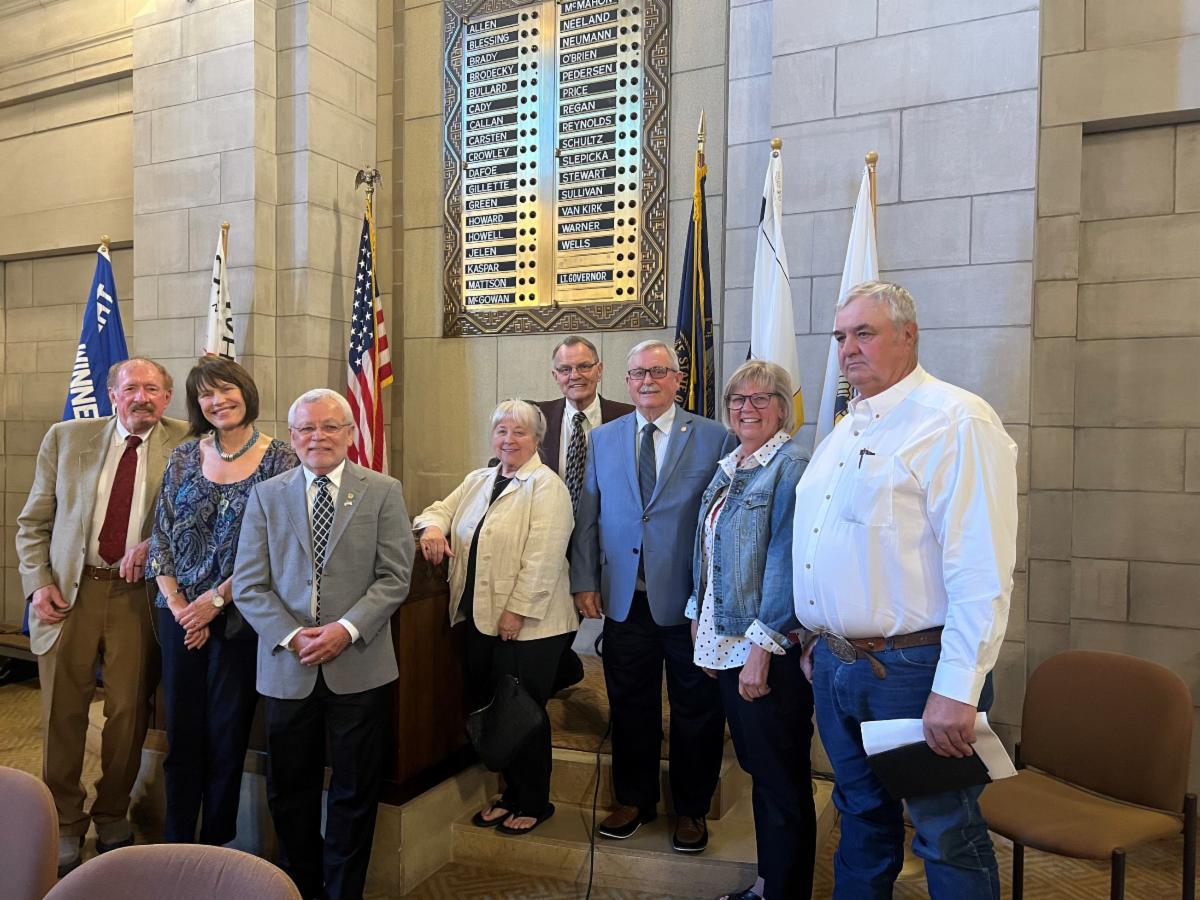
NFFV wants to thank all it's panelists and those who attended and supported this event. While we initially tried to make this a debate with the prominent opposers, supporters, and those neutral of EPIC, NFFV decided on a "forum" like approach when the first 10 opposers declined to participate. This approach allowed us to cover what those opposers were saying about EPIC, while also taking questions from Nebraskans in attendance. NFFV couldn't be more pleased with how it turned out.
Pictured below are the panelists and MC from left to right: Dr. Ernie Goss, Leslie Sims, Senator Steve Halloran, Carol Grell, MC - Paul Von Behren, Senator Steve Erdman, Peggy Cismanec, and Robert Berndt.
| |
|
Finally NFFV strongly encourages you to listen to the forum as we only touched on a few of the highlights.
If you think EPIC is right for Nebraska:
- Sign the petition going around
- Let you senator know you support EPIC and want to see it debated if a special session is called by Governor Pillen
- Spread the word and help NFFV provide more of these types of events by donating or being an event sponsor
| |
If you liked the content provided in this Minuteman, consider donating to NFFV. You can donate by clicking the button below or by mailing a check made to Nebraska for Founders' Values. | |
|
Nebraskans for Founders' Values
PO Box 255
Walton, NE 68461
| |
|
|
NEBRASKANS FOR FOUNDERS' VALUES
Board of Directors Team
www.nffv.org
| | | | |