|
|
NFFV Action Alert
Upcoming
Legislation on Immigration
| |
| |
Have you heard?
There is an abundance of immigration bills this session, all with the same intent, limit Nebraska's ability to work with federal immigration authorities. NFFV is tracking most of them, however, due to the shear number we will not send a new alert for each one. Those that are schedule for hearings this week are in bold. NFFV recommends you oppose them all. Following is the list of bills:
-
LB843 - Require the Department of Health and Human Services to file a Supplemental Nutrition Assistance Program waiver for refugees and immigrants
-
LB854 - Prohibit law enforcement officers from wearing facial coverings or disguises and require them to wear appropriate identification
-
LB906 - Prohibit law enforcement officers from wearing facial coverings or disguises and require officers to wear appropriate identification
-
LB879 - Adopt the Guest Worker Permit Act
-
LB881 - Require law enforcement agencies, jails, and the Nebraska State Patrol to receive approval prior to entering into agreements to enforce immigration law
-
LB963 - Prohibit agreements by state agencies relating to immigration enforcement without legislative approval and change provisions relating to the use of state prisons
-
LB1149 - Require disclosure of proposed state agency contracts with private entities that have contracts with United States Immigration and Customs Enforcement
-
LB886 - Change provisions relating to operation of motor vehicles by persons who are not citizens of the United States
-
LB907 - Prohibit law enforcement officers from entering community safe spaces to enforce immigration law
-
LB1150 - Prohibit the approval of certain applications under the ImagiNE Nebraska Act
To understand these bills, one should have an understanding of our country's immigration history and practices. Let's start with a review.
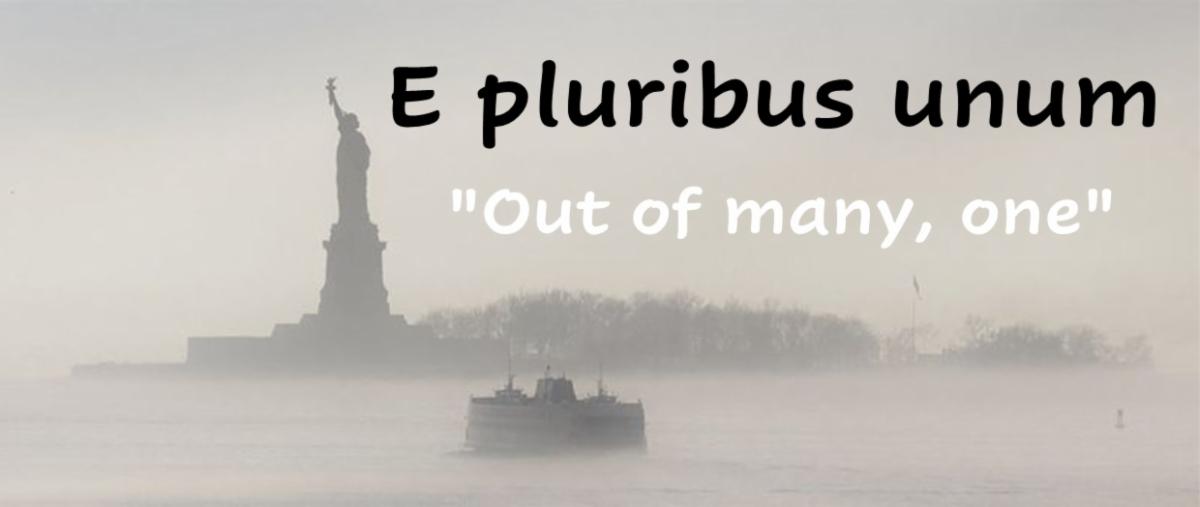
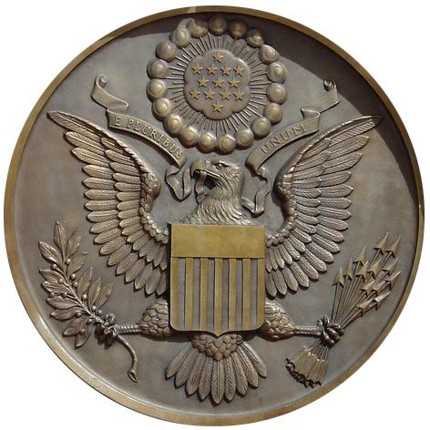
| | E pluribus unum translates to "Out of many, one" though some phrased it as "From many, one". It is one of the traditional mottos of the United States, appearing on the Great Seal (since 1782). It's original meaning primarily referred to the union of the original 13 colonies in a single unified nation. Out of many separate entities, one country emerged. The idea springs from classical sources emphasizing unity from diversity in bonds of society. | | | |
In modern discussions, it's often tied to the United States as a "nation of immigrants". The phrase highlights how people from diverse backgrounds, countries, cultures, and ethnicities come together to form one cohesive American people and nation.
Our Founders believe in God-given unalienable rights:
"We hold these truths to be self-evident, that all men are created equal, that they are endowed by their Creator with certain unalienable Rights, that among these are Life, Liberty and the pursuit of Happiness."
It's that belief that we pronounce when reciting the Pledge of Allegiance:
"... and to the Republic for which it stands, one Nation under God, indivisible, with liberty and justice for all."
When a nation has the belief of God-given unalienable rights, then a diverse nation is a strong nation, and that's what America has been. Our diversity makes us stronger.
Diversity, however, only makes a country stronger when all the citizen are working towards the same goal. When we stop working toward the same goal, our diversity weakens and can ultimately destroys us. We can see this in the business world where every successful business has either a Mission or Vision statement. This statement aligns the workforce to a common goal. This thought is important as we discuss immigration.
It's safe to say that America's goals can be found in our original documents; the Declaration of Independence, the Constitution, and the Bill of Rights.
| | |
A nation of immigrants
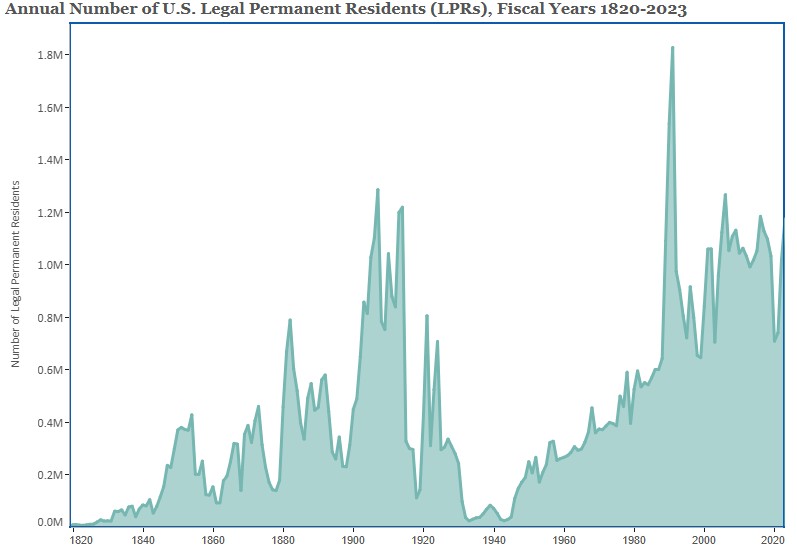
Our nation started with people escaping persecution. Since the official founding in 1776, the United states has opened itself to others. The chart below shows immigration flows into the United States from 1820 until 2023.
| | |
The chart is quite amazing when you look at it. There has never been a time in our nation's history where immigration hasn't happened. We have always welcomed the foreigner.
The history of U.S. immigration could fill volumes, but here is a quick summary of some of key points in the chart. The "waves" in immigration you see from ~1840 - ~1914 are predominately from European countries due to famine, revolutions, overpopulation, land scarcity, and persecution in various forms. Immigration was not limited based on numbers during that time period, however, restrictions did start to develop. The restrictions ranged from banning criminals, polygamist, anarchists, unaccompanied children under 16, and even adding a literacy test to the Immigration Act of 1917, which also restricted immigration from Asian countries.
Between roughly 1914 through 1950 immigration was significantly limited for various reasons. The Emergency Quota Act of 1921 established the first numerical limits on immigration, 3% of the number of foreign-born residents from that country living in the United States as of the 1910 Census. This was lowered further in 1924 to 2%.
It was the Hart-Celler Act of 1965 that opened the door to our "modern" immigration policies. Numerical limits ended and inflows began to rise significantly. The Act also eliminated national origin limits that severely restricted immigration from Southern and Eastern Europe, Asia, Africa, and most other parts of the world.
The huge spike you see around 1991 was a one-time amnesty, legalization program, that came from The Immigration Reform and Control Act of 1986. The notable dip around 2020 was restriction put in place due to the covid pandemic.
| | The United States has hosted the largest immigrant population in the world for decades with over 50 million foreign born residents as of recent estimates. That's around 15% of the population in the mid 2020s. Never in its history was immigration halted. Even during the most restrictive periods with world wars raging and a crippling depression, the United States kept the door open. | | |
Naturalization
What do all those individuals represented in the immigration chart above have in common? They all went through some form of naturalization to become a United States citizen.
| | Not surprisingly, that process has changed through our nation's history. As we've grown and evolved as a nation, so has the process. There is one aspect of the practice that has not changed - an "oath to support the Constitution and renounce foreign allegiances". We will look more into that as we explore the process through time. | | | |
Once again, we will only provide a very high level look at the process. First thing, the U.S. Constitution (Article I, Section 8) gives Congress the exclusive power "To establish a uniform Rule of Naturalization." Immigration has always fallen under Federal authority. Knowing that, from roughly 1790 to 1906 the naturalization process was somewhat informal and varied across the young United States. The Naturalization Act of 1790 set a loose standard (residency, good character, oath of allegiance, renunciation of foreign ties) that Congress delegated to local or state courts. There were no formal written tests. Instead, Judges conducted oral examinations in court often asking simple questions about the applicant's life, intentions, and basic loyalty.
Immigration standardization began in 1906 and grew through 1952. The Basic Naturalization Act of 1906 started the process with the creation of the Bureau of Naturalization. The Bureau created nationwide standards like the ability to speak English, knowledge of civics, and U.S. history. They also instituted waiting periods of 2-7 years along with affirming 5 years of residency and good character.
The Immigration and Nationality Act of 1952 further solidified knowledge of English, U.S. history, and government by making these explicit statutory requirements. By 2008, there was a fixed pool of 100 questions on civics. Each applicant was asked 10 questions out of the 100. Six correct answers was enough to pass. Today, there are 128 possible questions with the applicant asked 20. Twelve correctly answered gets you through. Today's applicants must also file Form N-400 after 5 years as a lawful permanent resident and good moral character. The process is now controlled by the United States Citizenship and Immigration Service - USCIS. You should check out their study guide for the civics test.
| |
The oath
One of the most consistent items of U.S. naturalization has been the oath. Though not always a formal document, it has always contained some form of these elements.
- Support the Constitution;
- Renounce and abjure absolutely and entirely all allegiance and fidelity to any foreign prince, potentate, state, or sovereignty of whom or which the applicant was before a subject or citizen;
- Support and defend the Constitution and laws of the United States against all enemies, foreign and domestic;
- Bear true faith and allegiance to the same; and
A. Bear arms on behalf of the United States when required by the law; or
B. Perform noncombatant service in the Armed Forces of the United States when required by the law; or
C. Perform work of national importance under civilian direction when required by the law.
Following is the current oath on the USCIS website:
"I hereby declare, on oath, that I absolutely and entirely renounce and abjure all allegiance and fidelity to any foreign prince, potentate, state, or sovereignty, of whom or which I have heretofore been a subject or citizen; that I will support and defend the Constitution and laws of the United States of America against all enemies, foreign and domestic; that I will bear true faith and allegiance to the same; that I will bear arms on behalf of the United States when required by the law; that I will perform noncombatant service in the Armed Forces of the United States when required by the law; that I will perform work of national importance under civilian direction when required by the law; and that I take this obligation freely, without any mental reservation or purpose of evasion; so help me God."
It is important to note how the naturalization process and the oath aligns with our nation's goals. This is important when we think of immigration.
Stay tuned when we will discuss the other side of immigration in part 2.
| | If you liked the content provided in this Minuteman, consider donating to NFFV. You can donate by clicking the button below or by mailing a check made to Nebraska for Founders' Values. | | |
Nebraskans for Founders' Values
PO Box 255
Walton, NE 68461
| |
| |
NEBRASKANS FOR FOUNDERS' VALUES
Board of Directors Team
www.nffv.org
| | | | |