|
|
NFFV Action Alert
Upcoming
Executive Board Hearing
Thursday, February 19, 2026
12:00 PM, Room 1524
| |
| |
Support
LB1066 - Require members of the Legislature to complete a civics assessment
| | The Stated Intent: LB 1066 requires members of the Legislature to complete a civics assessment comprised of 20 questions randomly selected from the United States Naturalization Test within 90 days of taking the oath of office. The Clerk of the Legislature shall publish each member's score on the Legislature's website and in their official biography. Nothing in this bill adds or changes the qualifications for office established in the Constitution of Nebraska. | | |
So what is LB1066 all about?
This bill's name and stated intent describes it pretty well. Here are a couple key definitions:
"civics assessment means the civics portion of the United States Naturalization Test administered by the United States Citizenship and Immigration Services of the Department of Homeland Security or an equivalent test designated by the Secretary of State or the State Department of Education"
"Completion of the assessment is required, but passage is not required. Completion or results of the civics assessment shall not affect the ability of any member of the Legislature to assume, hold, or continue in office."
"Individual question responses shall remain confidential"
"Any member who does not achieve a passing score on the civics assessment shall be invited, but not required, to attend a voluntary civic literacy seminar conducted by the Nebraska State Historical Society or the Legislative Research Office"
| | |
Sad days, indeed
Lets make sure we're on the same page by first defining what civics is, since LB1066 doesn't actually provide a definition. Merrian-Webster defines civics "as a social science dealing with the rights and duties of citizens". The civics portion of the U.S. naturalization test assesses one's knowledge of American history, government, and the principles of the U.S. Constitution. Key topics covered are:
- Principles of American democracy (e.g., Constitution, Bill of Rights, self-government).
- Structure of the U.S. government (legislative, executive, judicial branches).
- Key historical events, founding documents, and civic responsibilities.
Those that take the test are randomly given 20 questions from a pool of 128 questions. To pass, you must answer at least 12 of the 20 questions correctly.
Is it a sad day that we're even talking about members of the legislature being tested on civics? Shouldn't every high school graduate be able to pass a civics test? The unfortunate reality is many people do not know basic civics. That includes elected officials.
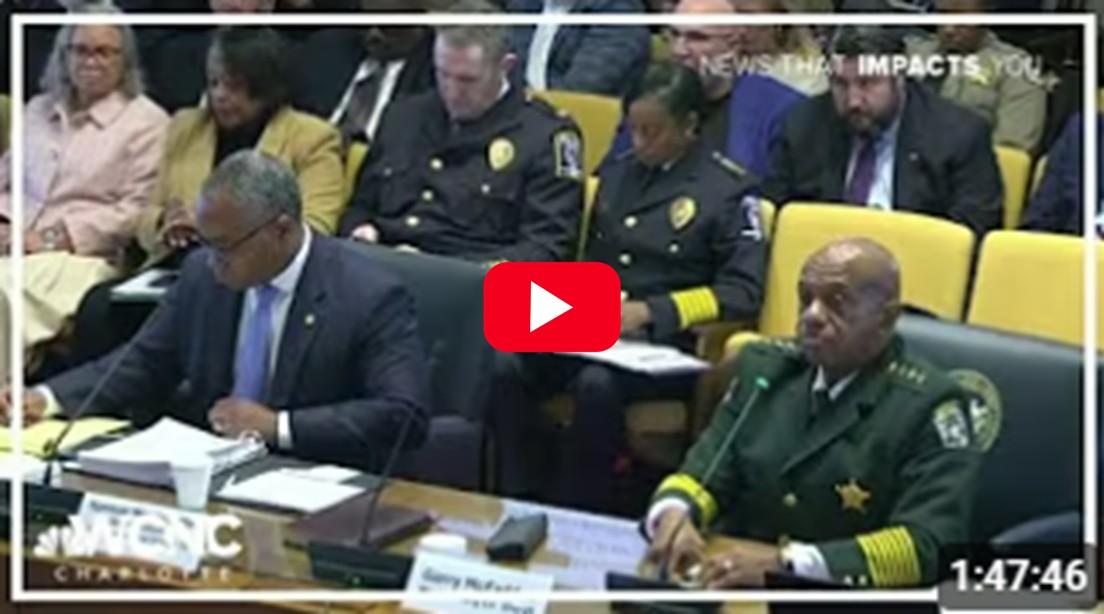
If you want to hear how civics knowledge has eroded, check out this video in which an elected North Carolina county sheriff is asked basic questions about which branch of government his office falls under and how many branches of government there are. His responses should surprise and shock you.
| | Does that mean Nebraska elected officials don't know how many branches of government there are or which branch they fall under? Of coarse not. However, it does highlight the lack if civics knowledge many have. This sheriff's testimony was just a few days ago. | | |
Why does it matter?
Does it matter if our elected officials cannot answer basic questions on civics? Better yet, why does it matter if citizens of this country cannot answer basic questions on civics? If you don't know your rights how will you defend them or even know if they are being taken from you? That's why it matters.
In Nebraska, executive and judicial officers, and members of the Legislature are required to take and subscribe an oath in writing before assuming their duties;
"I, .........., do solemnly swear that I will support and defend the Constitution of the United States and the Constitution of the State of Nebraska, against all enemies, foreign and domestic; that I will bear true faith and allegiance to the same;"
How can they "support and defend the Constitution" if they do know what's in the constitution? This is a BIG deal! One criticism of the bill is the lack of repercussions for failing. Adding repercussions would entail changing Nebraska's constitution that establishes qualifications for the office. Those qualification are simply stated on the Nebraska Legislature's website:
"Constitutionally, a candidate for the Nebraska Legislature must meet the following qualifications:
- be at least 21 years of age;
- be registered to vote; and
- be a resident of Nebraska -- specifically a resident of the legislative district he or she wishes to serve -- for at least one year prior to the general election."
Wouldn't it be nice if candidates had to take a civics test during the election process before they actually get elected?
| | |
Civics for all
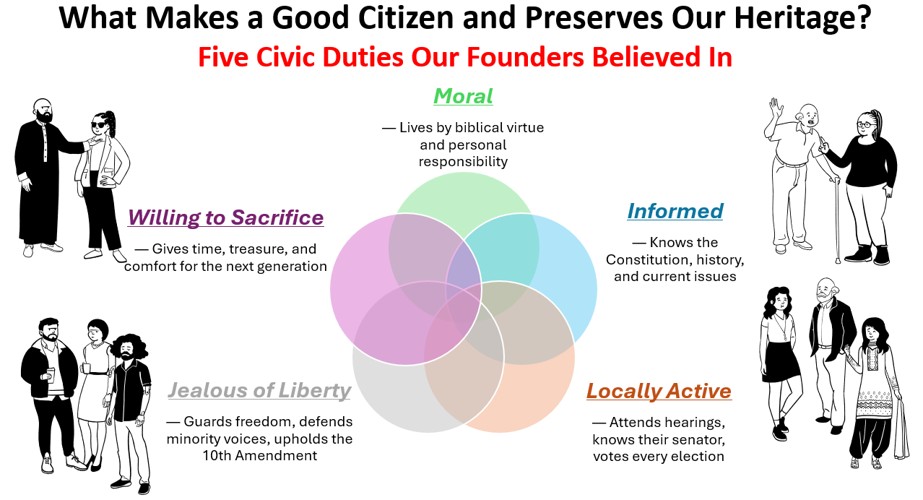
If we expect our leaders to know civics, shouldn't we expect that of ourselves too? Element in the definition of civics is "duties of citizens". Pictured below are five civics duties our Founding Fathers believed in.
| | |
Yes, based on Founders' writings, they believe a "good citizen" should be:
-
Moral - Lives by biblical virtue and personal responsibility
-
Informed - Knows the Constitution, history, and current issues
-
Locally Active - Attends hearings, knows their senator, and votes every election
-
Jealous of Liberty - Guards freedom, defends minority voices, and upholds the 10th Amendment
-
Willing to Sacrifice - Give time, treasure, and comfort for the next generation
How would you rate yourself as a citizen of Nebraska or of the United States? Have you demonstrated all five key qualities of good citizenship? If you'd like to learn more, schedule a presentation with NFFV. We’ll walk you through our country's journey from the Founding of the Nation to Nebraska and explore what true citizenship means.
| | What will test day look like at the Legislature? | | |
Let YOUR senator(s) know:
- Our Public Schools are failing. People don't know what good civics looks like any more.
- It's imperative Nebraska's elected officials know the right's of the people and protect them according to the Constitution they swore to support and defend
- As civic knowledge wains, so do people's rights.
| | |
Your voice is powerful, make it heard on LB1066. The committee hearing is scheduled for Thursday, February 19, 2026. NFFV recommends you "Support" this bill.
How to be heard? Here are three ways:
-
Most Effective: Testify in person. Going to the Committee hearing and sharing YOUR story with committee member Senators is very impactful. For first time in person testifier here are some helpful hints.
-
Effective: Submit written testimony. If you can't be there in person then submit written testimony. Not sure how to do that, click here. Note: The deadline to submit and verify a comment for the hearing record for LB1066 is Thursday, February 19, 2026 at 8:00 AM Central Time.
-
Least Effective: Email your position letter to the Committee Senators and CC your own Senator. For a listing of the Executive Board Senators click here. Note: emails should be sent by noon, the business day before the committee hearing. It's not likely these emails will be included in official hearing minutes, however, there is a better chance Committee Senators will see your comments. You can request they be added to meeting minutes in your email to Committee Senators.
| | If you liked the content provided in this Minuteman, consider donating to NFFV. You can donate by clicking the button below or by mailing a check made to Nebraska for Founders' Values. | | |
Nebraskans for Founders' Values
PO Box 255
Walton, NE 68461
| |
| |
NEBRASKANS FOR FOUNDERS' VALUES
Board of Directors Team
www.nffv.org
| | | | |