NFFV Action Alert


Upcoming

Urban Affairs Committee Hearing

Tuesday, February 10, 2026

1:30 PM, Room 1200


Oppose

LB1214 - Create a pilot program for neighborhood data collaboratives

The Stated Intent: LB1214 purpose is to establish a pilot program for neighborhood data collaboratives that support resident-led, data-informed decision-making at the neighborhood level. The bill authorizes funding for partnerships among neighborhood associations, nonprofits, and regional planning organizations to build local capacity to use data to advance community identified priorities, strengthen coordination, and inform future policy and investment decisions.

So what is LB1214 all about?


This bill looks to do what the title says, create a new pilot program. You may may wonder what a neighborhood data collaborative is. The bill describes it this way:


"a partnership among neighborhood associations, nonprofits, and regional planning organizations that uses data to support community-identified priorities"


where a regional planning organization is defined as


"a metropolitan or regional planning entity, including the Metropolitan Area Planning Agency, the South Central Economic Development District, or similar organizations"


a pilot location should


"reflect geographic and community diversity and demonstrate readiness for implementation"


the neighborhood data collaborative shall


"demonstrate shared governance and resident leadership"


"submit an annual report to the Legislature electronically. Each report shall include activities, outcomes, resident participation, lessons learned, and recommendations for scalability."


and finally


"the Legislature to appropriate $250,000 to the Department of Health and Human Services for the purposes of carrying out this section"

Is that it?


LB1214 is very light on details and that is concerning. Following are four areas where details should be abundant but are entirely missing.


What's tracked: There is nothing in this bill that tells the reader what is actually being tracked, who is doing the tracking, or how the data is being collected. It does not say if the "collaborative" is looking at existing data or gathering new data. However, in the sections detailing what the funding should be used for, it states "technology and data tools". One can only assume new data collecting tools will be imposed on residents of these communities.


Who gets the data: The collaborative includes neighborhood associations, nonprofits, and regional planning organization but the bill never states who actually gets the data or mentions what "they" are allowed to do with the data. Remember, we don't even know what the data is at this point. There is no mention of privacy protocols or protections for neighborhood residences. There is not even any language that requires these collaboratives get resident consent for the data collection.


Oversight: The bill never mentions who has oversight of this collaborative. Yes, the collaborative has to submit an annual report to the legislature. Does that mean the legislature is providing oversight? There is no mention of audits, data security, or how to measure "readiness for implementation".


Measures of Success: The bill outlines what the annual report should include: activities, outcomes, resident participation, lessons learned, and recommendations for scalability. But, it never mentions what success looks like. Per the bill's own language, someone is already planning to grow the program (recommendations for scalability) without ever say what they hope to accomplish. For example, if the collaborative held barbeques in the park every month with 90% of the neighborhood attending, is that success? Could the lesson learned be - the neighborhood likes hamburgers over pizza?


If any one of these items were missing in a bill it would be enough to oppose the bill. With ALL these things missing, the bill must be opposed!


When a bill like this comes along, it is a good time to reflect on Ronald Reagan's 1964 speech "A Time of Choosing"


"No government ever voluntarily reduces itself in size. So governments' programs, once launched, never disappear. Actually, a government bureau is the nearest thing to eternal life we'll ever see on this earth."

What's missing?


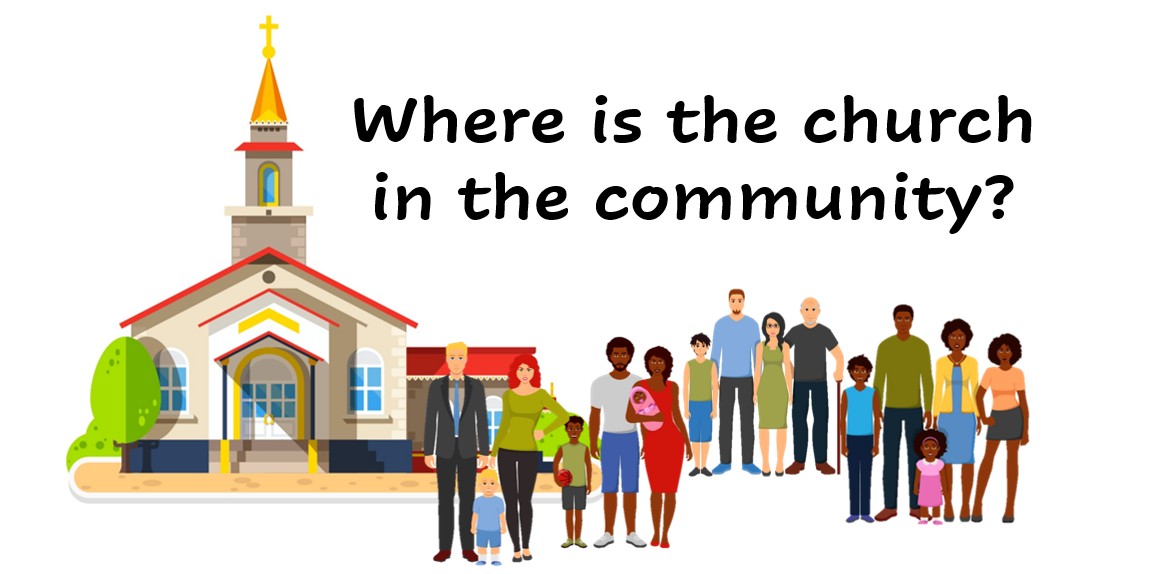
As mentioned, we don't know the true intent of LB1214. However, reading between the lines it appears this piece of legislation is trying to take the place of what the church should be doing. For many centuries, town and villages were built around the church. The church was literally the center of the community. It's where people gathered for community and worship. It's where they went for help and healing. The church new the community and the community knew the church. With the century long push to alienate the church and break apart the family, communities are left soulless and many are struggling.


Focusing on black communities, Thomas Sowell has repeatedly highlighted the strength of historical black family structure and their erosion in modern times. He points out that in 1960, before the major expansion of welfare programs, about 78% of black children were raised in two parent families. During that same time, black poverty rates had fallen significantly from 87% in 1940 to 47% by 1960. He contrasts this with the post-1960s era, where single-parent households rose sharply (to around 66-67% by the mid-1980s) attributing much of the shift to government welfare programs. In his view, these policies created perverse incentives that subsidized unwed pregnancy, discouraged marriage and work, and shifted welfare from temporary aid to a way of life, undermining family stability and self-reliance far more effectively than historical oppression ever did. You can check out a couple of his articles "A Legacy of Liberalism" and "How 'Favors' Destroyed Black Community" to learn more.


Of coarse there many more who warn us about the loss of the traditional family and the roll the church plays. Jack Hibbs, Larry Elder, and even the late Charlie Kirk all have given such warnings. Will Nebraska head them?

Let YOUR senator(s) know:


  • The lack of details in this bill is very concerning what's tracked, who gets the data, and missing oversight.


  • The bill does not detail what success looks like. This looks like another never-ending grant program for Nebraska. Taxpayers are tired of these kind of bills. We should be searching for tax cuts, not expanding programs.


  • We need legislation that fosters the church and family.

Your voice is powerful, make it heard on LB1214. The committee hearing is scheduled for Tuesday, February 10, 2026. NFFV recommends you "Oppose" this bill. 


How to be heard? Here are three ways:


  • Most Effective: Testify in person. Going to the Committee hearing and sharing YOUR story with committee member Senators is very impactful. For first time in person testifier here are some helpful hints. 
  • Effective: Submit written testimony. If you can't be there in person then submit written testimony. Not sure how to do that, click here. Note: The deadline to submit and verify a comment for the hearing record for LB1214 is Tuesday, February 10, 2026 at 8:00 AM Central Time.
  • Least Effective: Email your position letter to the Committee Senators and CC your own Senator. For a listing of the Urban Affairs Committee Senators click here. Note: emails should be sent by noon, the business day before the committee hearing. It's not likely these emails will be included in official hearing minutes, however, there is a better chance Committee Senators will see your comments. You can request they be added to meeting minutes in your email to Committee Senators.

If you liked the content provided in this Minuteman, consider donating to NFFV. You can donate by clicking the button below or by mailing a check made to Nebraska for Founders' Values.

Nebraskans for Founders' Values

PO Box 255

Walton, NE 68461


NEBRASKANS FOR FOUNDERS' VALUES

Board of Directors Team

www.nffv.org