Executive Director's Message
|
|
Dr. Stuart Rockoff
Executive Director
|
|
Honoring Anne Moody & Understanding Mississippi
A few weeks ago, I traveled to Centreville to help unveil a Mississippi Writers Trail marker honoring Anne Moody, author of the seminal memoir Coming of Age in Mississippi. Funded by a special Chairman’s grant from the National Endowment for the Humanities, and administered by Visit Mississippi and the Mississippi Arts Commission, the writer’s trail highlights Mississippi authors who have taken their experiences living in this sometimes difficult and complicated place to create profound art that has moved readers all across the world.
"This is the power of the humanities and great writers like Anne Moody, who foster empathy and change hearts and minds."
|
|
I first read Coming of Age in Mississippi in graduate school, where I was studying US History. The book has been widely assigned in universities because of its eloquent and bracing truth about the experience of growing up in a society profoundly shaped, or misshaped, by white supremacy. The culture that grew out of this racist belief often silenced or overlooked voices like Anne Moody. And that is the genius and importance of the book. Moody draws the reader (including this white man from Texas), into her own experience. We see the world of Jim Crow Mississippi through her eyes. And once we experience this, we are forever changed. This is the power of the humanities and great writers like Anne Moody, who foster empathy and change hearts and minds.
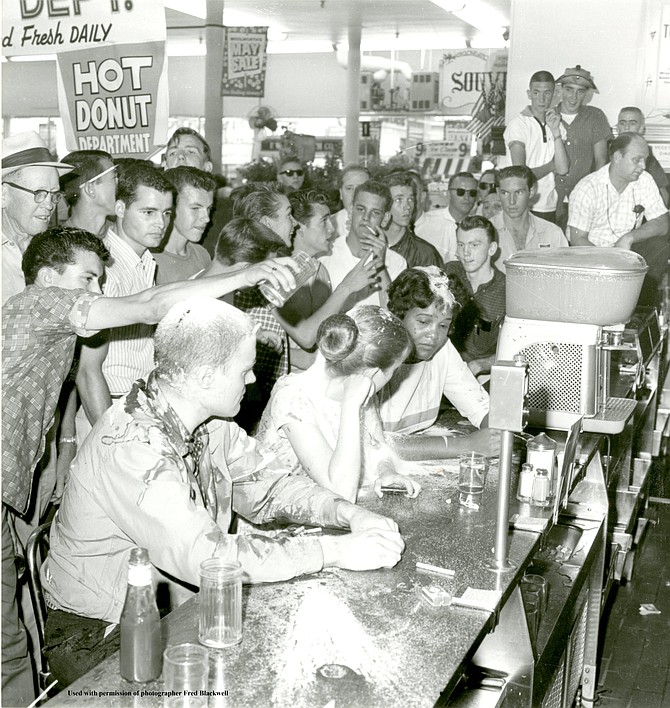
Those of you who have read Coming of Age in Mississippi certainly know Anne Moody. But if you haven’t (though I encourage you to), you may know her from the widely published photograph of the 1963 Woolworth sit-in in Jackson. Moody, then a student at Tougaloo College, along with Professor John Salter and fellow student Joan Trumpauer sit at a lunch counter peacefully while a mob of whites gather around and abuse them. For three hours, the civil rights activists sat in protest of segregation, while the mob members attacked them verbally and physically and poured food on their heads.
|
|
Because of her book, we know what was going through Anne Moody’s mind during this event. But what was going through the minds of the white men who attacked and humiliated these brave students? What culture and political environment gave them the permission to treat others this way? What inspired them to respond in such a way to peaceful efforts to allow Blacks and Whites to sit together in public places? If we could remove Anne Moody and her colleagues from the picture, we would focus our attention on the white crowd who thought they were defending their “way of life.”
As Mississippians, we should seek to understand these people and learn how the culture of the time enabled this dehumanization. We must work to uncover any vestiges of the beliefs that fostered such cruelty. This incident, and the many others like it, were more than just a group of people mistreating another. They emerged from a culture and a politics rooted in the idea that white lives were more important. As Mississippians, we must understand this past, and work to root out its pernicious effects on the present.
Terms like systemic racism and critical race theory are hotly debated these days, and this is not the place to engage those debates. But in Mississippi, we don’t need to approach these issues in the abstract. We can read Anne Moody and look at this famous photograph to better understand the history of our state and the burden we must all overcome.
|
|
MHC to Help Humanities Organizations Recover from COVID
With support from Congress through the American Rescue Plan Act of 2021, the Mississippi Humanities Council is offering grants to help non-profit cultural organizations recover from the impact of
the Covid-19 pandemic.
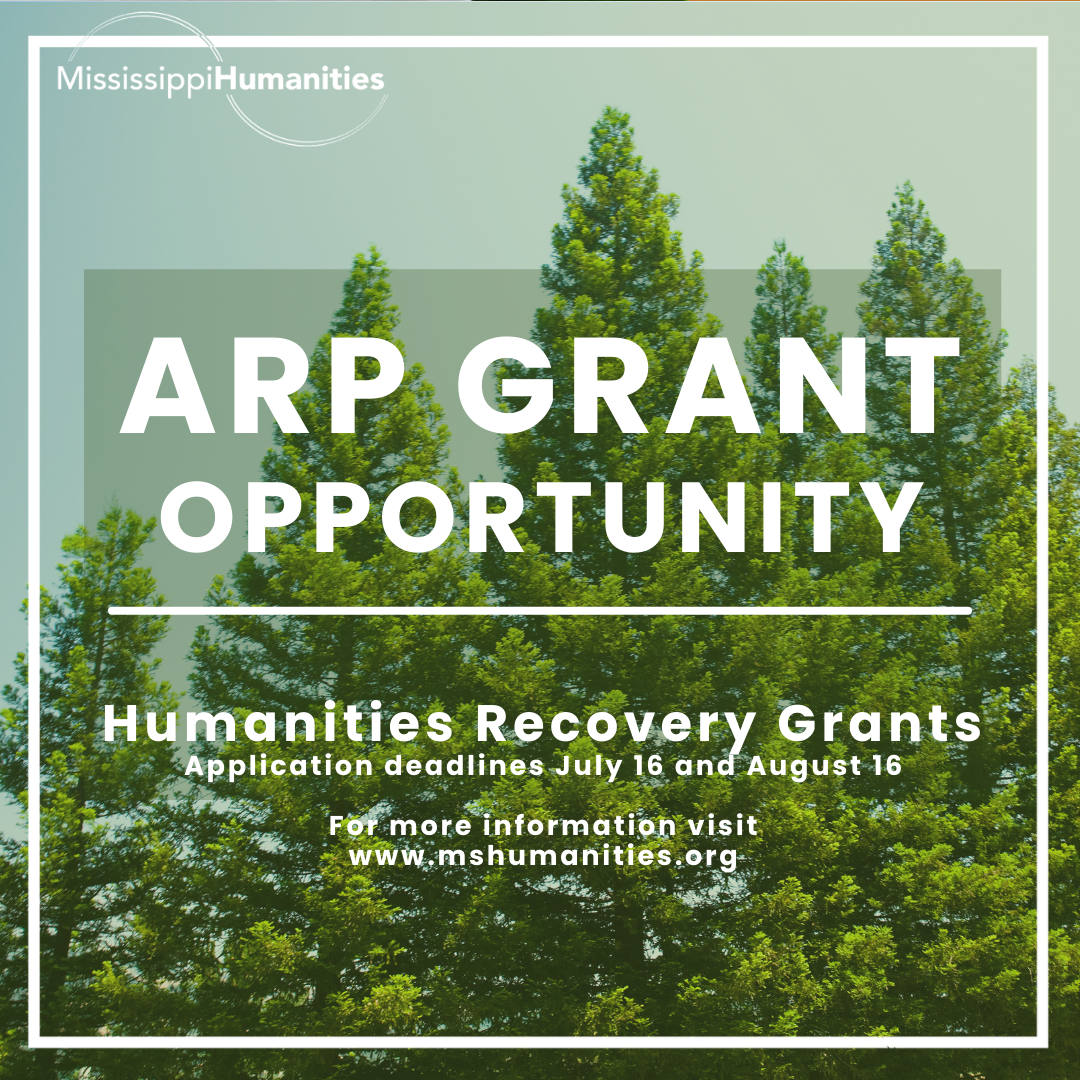
These ARP Humanities Recovery Grants are designed to be flexible, helping organizations develop new public humanities programs to reengage with audiences and transition to outdoor, digital, and virtual programs.
|
|
|
These grants can also support capacity-building training and strategic planning related to coronavirus and the economic crisis. Eligible organizations may apply for up to $15,000. Up to half of the request may be for operational expenses. Deadlines for ARP Humanities Recovery Grants will be July 16 and August 16.
These grants are open to nonprofit organizations, institutions of higher education, state and local governmental agencies, and federally recognized Native American tribal governments. Public libraries are not eligible to apply since the ARP has set aside funds for public libraries, which will be distributed by the Mississippi Library Commission. Arts-focused organizations should contact the Mississippi Arts Commission for information about its ARP grant program.
Prospective applicants are strongly encouraged to contact Carol Andersen or Stuart Rockoff to discuss their project before they apply. More information about these grants, including grant guidelines and applications, can be found on the MHC website.
The MHC will be hosting an ARP grant workshop via Zoom on June 30 at 2 pm.
The workshop is free but registration is required!
|
|
MHC Welcomes Two New Staff Members
The MHC has welcomed two new staff members this month: Evan Jones and John Spann
are serving the roles of Office Administrator and Program & Outreach Officer, respectively.
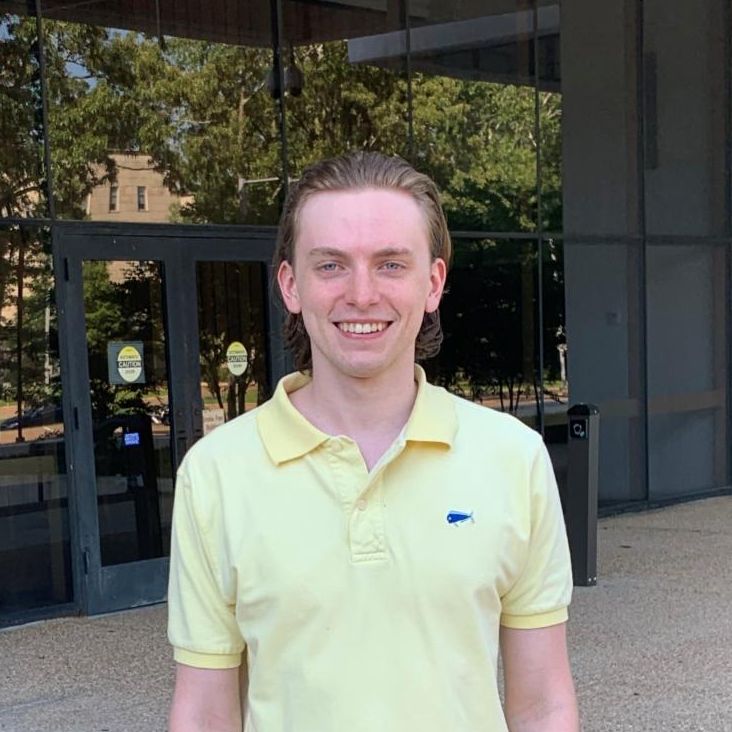
Evan is from Clinton, Mississippi and holds a B.A. in government and politics from Millsaps College. Having previously worked for various campaigns and political organizations, Evan’s passion for a better Mississippi has now found a home with the MHC. Evan provides administrative support, handles event planning, and will oversee the Humanities Teacher Awards.
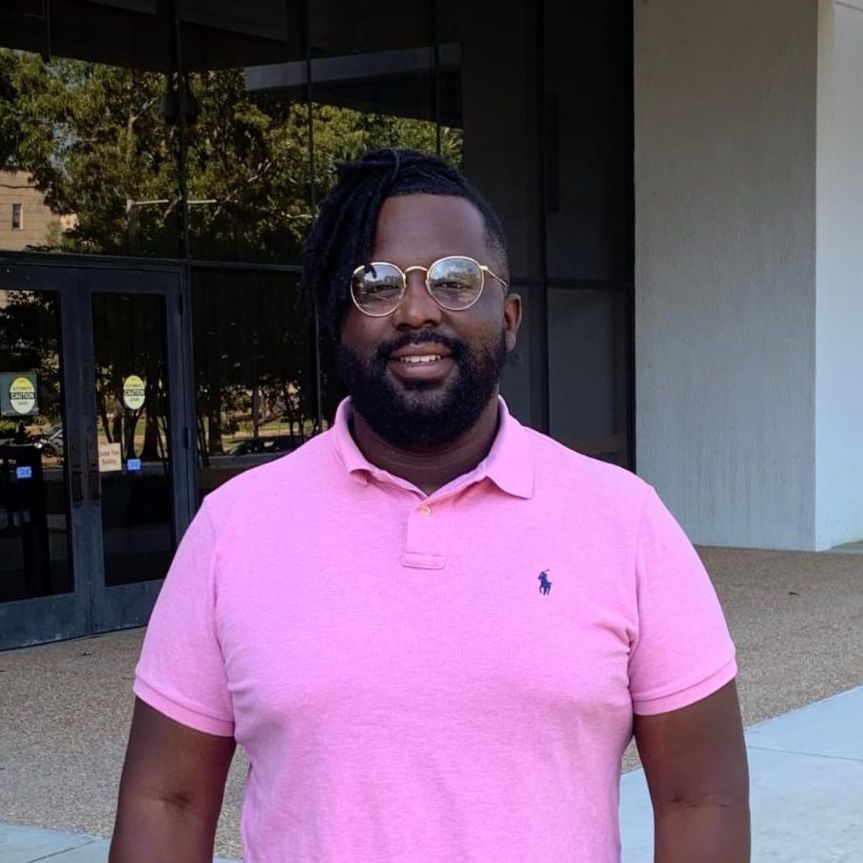
Originally from Columbus, Mississippi, John has lived in the Jackson Metro area since 1997. Shortly after graduating from Mississippi State University with a B.A. in history, he joined the museum division staff of the Mississippi Department of Archives and History. During his five years with MDAH, he became an inaugural member of the curatorial team for the Two Mississippi Museums. As program and outreach officer, John oversees and develops council-conducted programs, such as Ideas on Tap and The More Perfect Union initiative. In addition, he will cultivate partnerships with educational institutions, nonprofit organizations, and community groups to guide grant applications and promote MHC programs.
|
|
John Spann
Program & Outreach Officer
|
|
Evan Jones
Office Administrator
|
|
MHC Awards
$46,000 in Grants
|
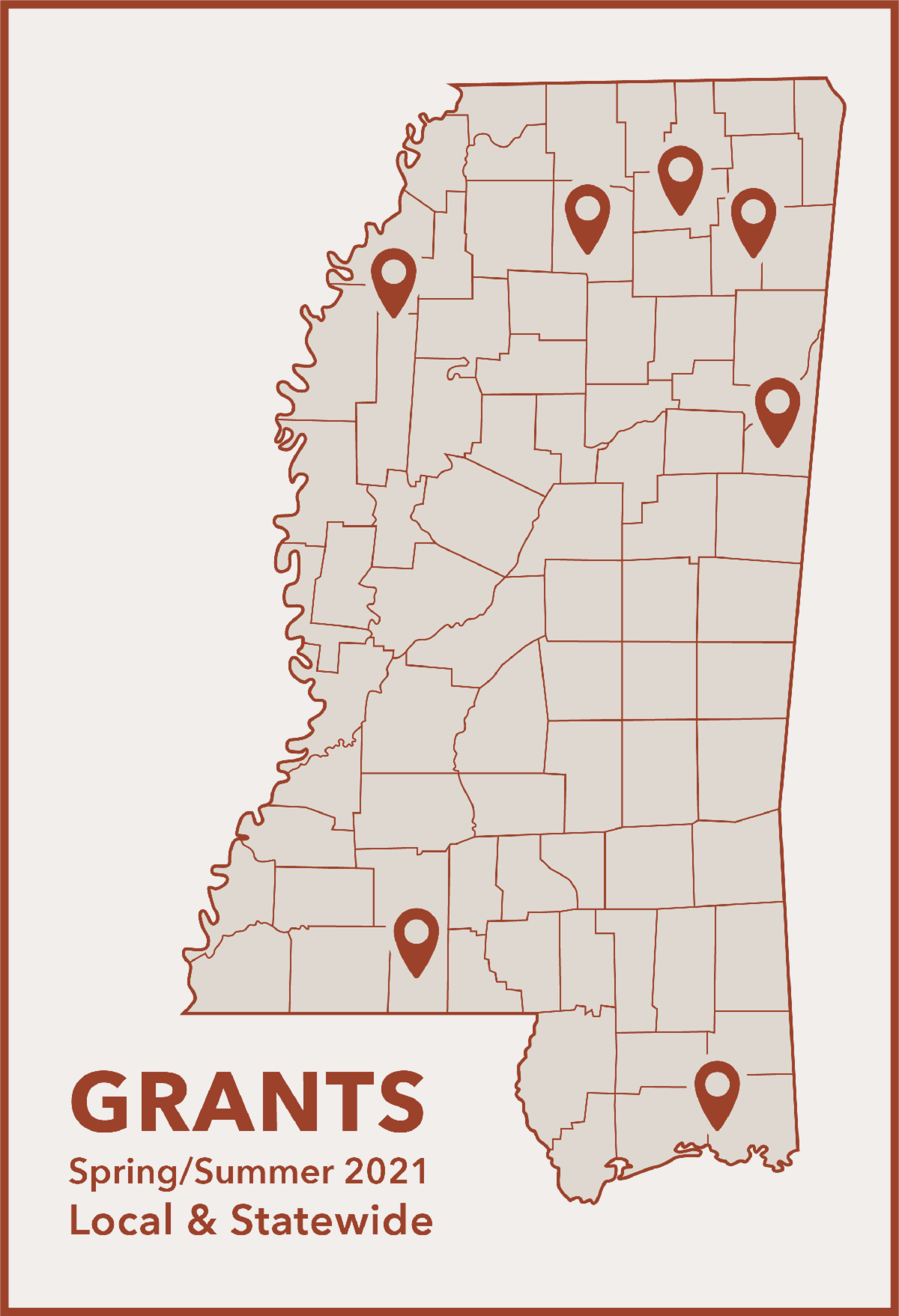
The Mississippi Humanities Council is pleased to announce more than $46,000 in grants to eight Mississippi organizations in support of public humanities programs.
In addition to this direct support, each organization was required to present matching cash or in-kind cost share, pledging an additional $46,000 to humanities programming around our state. The humanities programs funded in this major round support projects exploring the histories of two segregation-era African American schools; literary connections between William Faulkner, Eudora Welty and Richard Wright; the challenges and triumphs of life in a small Southern town through a mid-century photograph collection; and Southern depictions of life and death through art, nature and the land.
|
|
|
Dr. Stuart Rockoff, executive director of the Mississippi Humanities Council, said, “These grants reflect the diversity of our state’s history and culture. We are very excited to help document important local stories that add to the rich tapestry of Mississippi history.”
Humanities grants are awarded to Mississippi nonprofit organizations in support of programs that foster the public’s understanding of our rich history and culture.
“The Mississippi Humanities Council is pleased to support this rich array of projects that will use the humanities to examine our history and our culture through new and different lenses,” said Council Board Chair Sharman Smith.
The organizations and projects that were awarded grants, listed by community, include:
Clarksdale:
Coahoma Community College —$7,500
2021 Mississippi Delta Tennessee Williams Festival
Twenty-ninth annual festival examining the life and works of playwright Tennessee Williams. Given a possible need to continue social-distancing in the fall, the 2021 festival will offer both in-person and virtual programming. The 2021 theme is “the exchange of culture, history and music along the Mississippi River,” using Williams’ A Streetcar Named Desire as the foundation for various components of the three-day program schedule.
Columbus:
Columbus Arts Council—$7,500
O.N. Pruitt’s Possum Town: Photographing Trouble and Resilience in the American South
Traveling multimedia exhibition and related public programs featuring the photography of a white photographer, O.N. Pruitt, in Lowndes County, circa 1920s-1950s, which reveals the everyday life of a small Southern town, including the realities of a community segregated by race.
McComb:
Pike School of Art —$3,500
Charles Edward Williams: FORWARD
Various public events related to visiting artist Charles Williams, whose project, FORWARD, examines, through art and music, the McComb community’s place in the civil rights struggle.
New Albany:
Union County Historical Society & Heritage Museum—$7,500
Oral History of Union County Training School/B.F. Ford School
Oral history project to interview former students and graduates of the Union County Training School and later B.F. Ford School, at one time the only school in Union County that African Americans could receive high school diplomas.
Oxford:
University of Mississippi—Department of English —$2.600
“Faulkner, Welty, Wright: A Mississippi Confluence” 2021 Faulkner and Yoknapatawpha Conference)
Annual literary conference will use a virtual format to look at three Mississippi literary standouts who left an indelible mark on American literature and modern intellectual life: William Faulkner, Eudora Welty, and Richard Wright. A program highlight will be virtual appearances by Julia and Malcolm Wright, daughter and grandson of Richard Wright.
Ocean Springs:
Walter Anderson Museum of Art —$7,500
Mississippi Elegy: Southern Depictions of Life & Death
Exhibition and related programming exploring concepts of grief and mourning through the lens of nature and the Southern land. Public events will address talismans of cultural memory, notions of spirituality and nature, memento mori silhouettes as a mode of remembering loved ones, elements of death and remembrance in the life and work of William Faulkner, the history of early photography to document the dead, themes of death and the spirit world in Blues music and foodways traditions surrounding the Southern funeral.
Shannon:
University of Mississippi—Center for the Study—$7,152
Siggers High School Oral History Project
Oral history project to interview former students, teachers and graduates of Siggers High School in Lee County, formerly the Shannon Colored School. Most of the material records of the school were discarded or destroyed when public schools integrated in 1967.
Statewide:
Mississippi Heritage Trust —$3,000
10 Most Endangered Historic Places in Mississippi
Annual awareness-building program about endangered historic structures in Mississippi.
|
|
'Crossroads' Heads
to the Coast
On July 3, the Smithsonian traveling exhibit
Crossroads: Change in Rural America will open
to the public at the Waveland Ground Zero Museum, where it will remain
on display through mid-August.
|
|
|
In conjunction with Crossroads, the Waveland museum has organized a series of public programs that are free and open to the public to attend. These programs include presentations from: Steve Barney, director of The Arts, Hancock County, to discuss the importance of the creative economy of Hancock County; Art Clementin, retired school principal and former chairperson of the Hancock County Library System, to discuss the historical contributions of the African American community and a history of race relations in the area; Allison Anderson and Brehm Bell on the Logtown community near Waveland was once the site of a large sawmill and logging operation; as well as a presentation by Crossroads state scholar Dr. John Green.
More information on Crossroads in Greenwood can be found on the MHC calendar.
Crossroads will be on display at the Waveland Ground Zero Hurricane Museum through mid-August before it leaves the state. Through artifacts, images, text, and interactive elements, Crossroads explores rural identity, the importance of land, how rural communities manage change, and much more.
Since it arrived in Mississippi in September 2020, Crossroads has visited Senatobia, Mount Olive, Scooba, Columbia, and Greenwood. Crossroads’ Mississippi tour is supported by a generous grant from Entergy Mississippi.
More information about the exhibition and its Mississippi tour can be found on the MHC website.
|
|
'Get2College Guide':
A Resource for the Incarcerated
|
|
|
This summer, adults in Mississippi prisons will have more information
about their options for postsecondary education.
Get2College is a program of the Woodward Hines Education Foundation whose mission is to help more Mississippians obtain postsecondary credentials, college certificates, and degrees that lead to meaningful employment. Committed to “Ascent to 55%” or raising the state’s postsecondary attainment level to 55% by 2030, Get2College recognizes that goal is only attainable by including adult learners.
Get2College Director Ann Hendrick explains, “As we began strengthening our adult strategies. we found our way into addressing learners who are incarcerated through Mississippi Gulf Coast Community College’s Second Chance Pell program and the work of the Humanities Council.”
Previously, Get2College published two guides, one for high school students and another for adults. Through conversations with Mississippi Department of Corrections Education Director Shaniece Mabry and MHC Prison Education Project Coordinator Carla Falkner, Hendrick realized the potential of a Get2College Guide focused on students who are incarcerated.
The printed Guide will be distributed in Mississippi correctional facilities, providing a resource about education opportunities in prison and beyond. “We want these adults to see themselves as potential students and know their options,” continued Hendrick, “as they prepare to reenter society as productive citizens.”
|
|
Anti-Racism Reading
Shelf Grants: Mississippi Libraries Update Collections
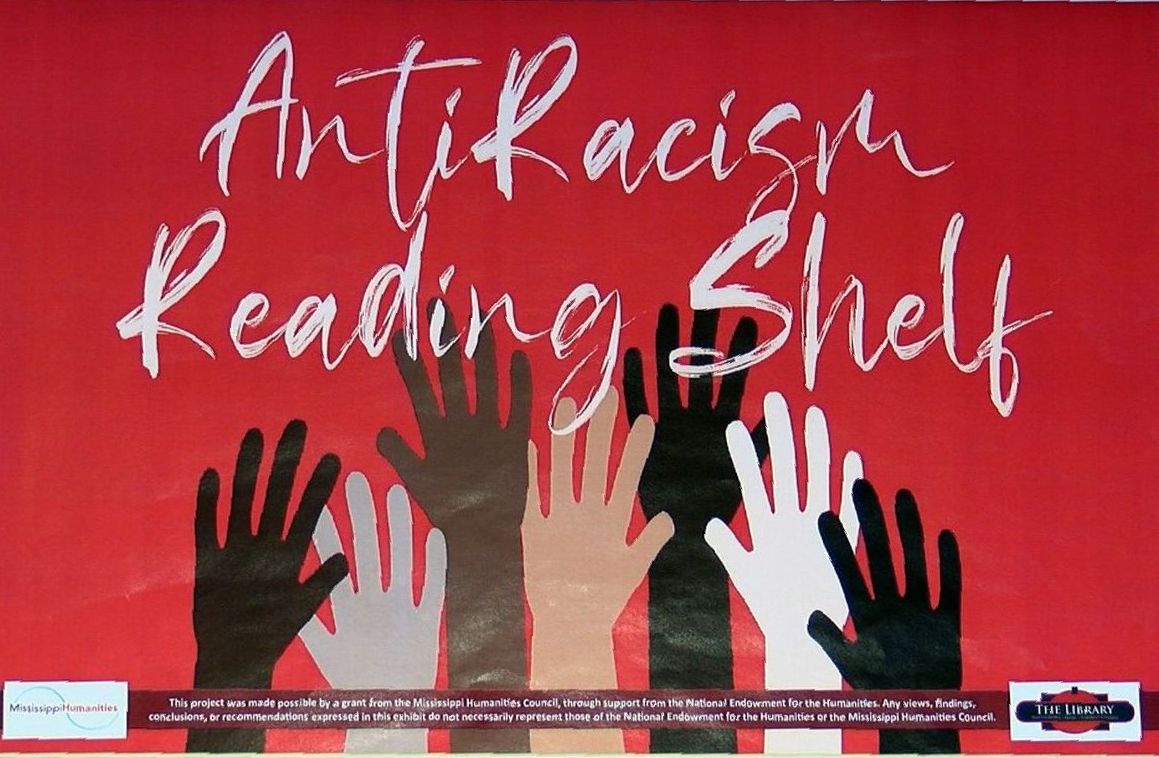
In October 2020, the MHC created a special
grant program to help Mississippi public
libraries purchase books on the history of
white supremacy and how to create a
racially equitable society.
|
|
|
Working with the Mississippi Library Commission and humanities scholars, the MHC compiled a suggested reading list of over 120 books for libraries to choose from. In total, $29,000 was awarded to 27 public library systems across the state.
Ranging from $750 for single branch systems to $1,500 for larger multi-branch systems, these grants helped put more than 1,700 books in over 120 public libraries in Mississippi.
"Although the books address a serious topic, they do so in an interesting way, without being dull or sanctimonius," said one librarian, regarding young adult and children's books. "Parents who read aloud to their children may find that these books raise topics that their child wants to discuss...I had prepared myself for the possibility of a negative reaction, but I have been pleased that no parents objected to books featuring children and families different from their own--given the history of our community, I took that as a win!"
Funds to support the Anti-Racism Reading Shelf program came from the National Endowment for the Humanities, the Thomas M. Blake Charitable Fund #2 of the Community Foundation for Mississippi, and generous private donations from Mississippians.
|
|
MS+MA Concludes with Discussion of the Blues
The Mississippi Humanities Council’s virtual dialogue project with our partner council, Mass (Massachusetts) Humanities, concluded last night with a look at the history of Blues music in our two states, entitled “MS+MA: Routes of the Blues.”
MS + MA has been a joint project of the Mississippi and Massachusetts humanities councils, bringing together people from our respective states for six interactive, online programs to facilitate conversation and connection. The series was developed during the COVID-19 pandemic to forge connections when in-person programming became impossible. By reflecting on our states’ histories in relationship to each other, the series’ aim was to build understanding and offer new perspectives.
The series spanned seven months and examined the literary heritage of our two states, the Civil Rights Movement from the perspectives of Mississippi organizers and Massachusetts volunteers, the lives of fishing families on the Gulf of Mexico and the Atlantic seaboard, the role of poetry in public life, the long and and ongoing challenge of school integration for both of our states, and, with our final discussion, Blues music and venues in our two states.
“In some ways, MS+MA was an artifact of the COVID pandemic, when so many of us were isolated in our homes and craving connection,” said Dr. Stuart Rockoff, Mississippi Humanities Council executive director. “What we learned from this series is that no matter our differences, there are always points of connection, based around our shared identity as Americans and our common experience of being human.”
Each program was recorded and can be viewed here.
|
|
'Evicted'
Exhibition hosted by
Margaret Walker Center
Through MHC Grant
In the Fall of 2020, the MHC awarded
|
|
|
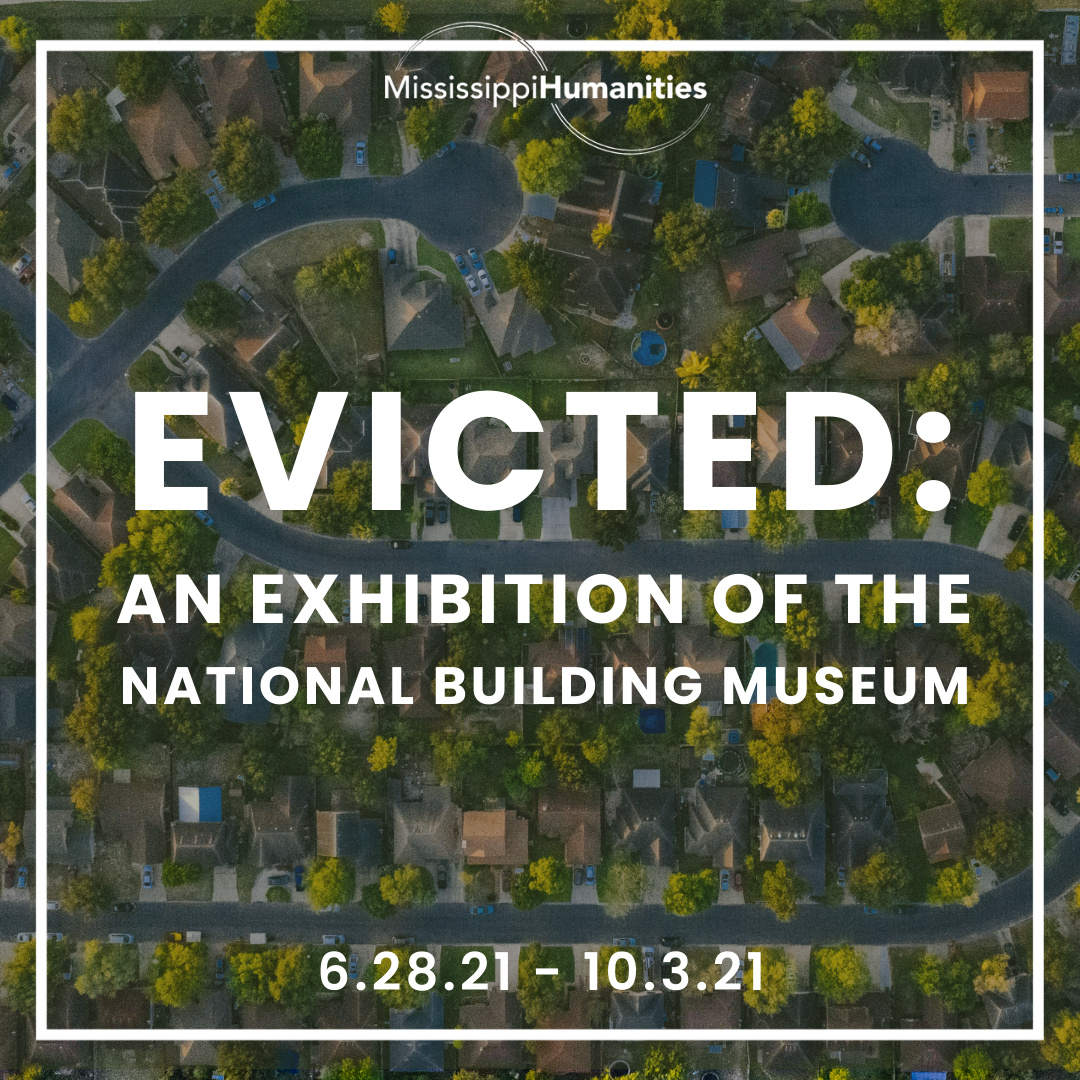
Inspired by Matthew Desmond’s Pulitzer Prize-winning book, the Evicted exhibition brings visitors into the world of low-income renter eviction. The exhibition challenges visitors to face the enormity of one of 21st- century America’s most devastating problems, while providing context for the crisis and a call to action.
Developed in collaboration with designers MATTER Architecture Practice and mgmt. design, Evicted includes specially commissioned visual infographics and forward-thinking design to introduce visitors to the numbers and statistics that will help them to better understand the causes for and ramifications of chronic eviction. Data developed by the Eviction Lab—the first central repository for national eviction data—highlights rates of evictions in different markets and makes evident the depths of the problem. Working together, these elements amplify the stories of tenant families, as they explain in their own words and images the impact eviction has on them and their loved ones.
The exhibition also highlights ways that some local and state governments and nonprofits are intervening to upend the cycle of chronic evictions, such as Right to Counsel laws and new affordable housing projects. Visitors leave armed with ideas for ways they can enact change in their jurisdictions and help alleviate the downward spiral for those already living on the economic edge.
Along with the 15-week run of the exhibition from June 28 to October 3, 2021, and an ongoing oral history project, the Margaret Walker Center is planning to host at least seven public programs throughout this summer and fall. The first program is a virtual opening conversation with Alieza Durana from the Princeton Eviction lab on July 1. Following that, on July 22, will be an in-person panel discussion with representatives from Springboard to Opportunities and The Immigrant Alliance for Justice and Equity, moderated by Silvina Barrera of the Mississippi State University School of Architecture.
|
|
Upcoming Events Sponsored by the MHC:
Jackson Metro Area:
Evicted: An Exhibition of the National Building Museum
June 28, 8:00 am – 5:00 pm
Johnson Hall Art Gallery, Jackson, MS
Traveling exhibition from the National Building Museum opened an exhibition exploring the causes and impacts of eviction, based on Matthew Desmond’s award‐winning book Evicted.
Evicted events:
Opening Virtual Conversation
July 1, 6:00 pm – 7:00 pm
Exhibition Panel Discussion
July 22, 6:00 pm – 7:00 pm
Department of Urban & Regional Planning (JSU Downton Campus), Jackson, MS
West Mississippi:
Speakers Bureau: A Look at Mande (West African) Culture Through Traditional Music
June 19, 10:00 am
Vicksburg City Park, Vicksburg
As part of the Juneteenth Heritage Festival, this presentation and performance from Jerry Jenkins will give the listener a glimpse of the Mande Culture of West Africa. A discussion will explore the function of the Mande music and musical instruments, Mande class system, songs, ceremonies and stories.
South Mississippi:
Crossroads: Change in Rural America (Waveland)
July 3 – August 14
Ground Zero Hurricane Museum, Waveland, MS
Crossroads is a traveling exhibit offered by the Museum on Main Street division of the Smithsonian Institution. It consists of six free-standing display units incorporating photographs, text, and numerous interactive elements.
Crossroads events at Waveland Ground Zero Hurricane Museum:
July 14: Port and Harbor: An Asset to Hancock County presentation, William Cotter
July 21: Creative Economy of Hancock County presentation, Steve Barney
July 24: Agricultural Changes of Hancock County presentation, Dr. Christian Stephenson
The Delta:
Crossroads: Change in Rural America (Greenwood)
Museum of the Mississippi Delta, Greenwood
June 22: A free workshop for rising 5K- rising 2nd graders called “My Musical Delta," celebrating blues musician Muddy Water.
June 24: Free and open to the public reading and signing of Mary Ann Hamilton's Trials of the Earth in conjunction with Crossroads at the Museum of the Mississippi Delta, on display until June 26.
Speakers Bureau: Reflections on the Blues & the Mississippi Blues Icon B.B. King
June 25, 6:00 pm
Charleston Arts & Revitalization Effort, Charleston, MS
This presentation by Diane Williams juxtaposes the life of B.B. King, his mission of spreading word about blues music around the world, and early reflections on Blues and its connection to spirituals and gospel music. The discussion will reflect on the past, present, and the continued preservation of the music.
Online:
Speakers Bureau: Plague Experiences in Early Modern London and their Contemporary (COVID-19) Resonances Today
July 9, 12 pm
Mississippi Library Commission, See website for link
How might a consideration of the individual and collective experiences of early modern Londoners help us think through the collective challenges we face today? This presentation from Dr. Christopher Foley briefly surveys a cross-section of plague-time literature from early modern London in search of the answer to this question.
|
|
|
|
|
|
|