MoDOT employee receives Award of Distinction
| |
|
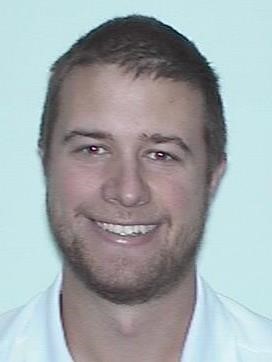
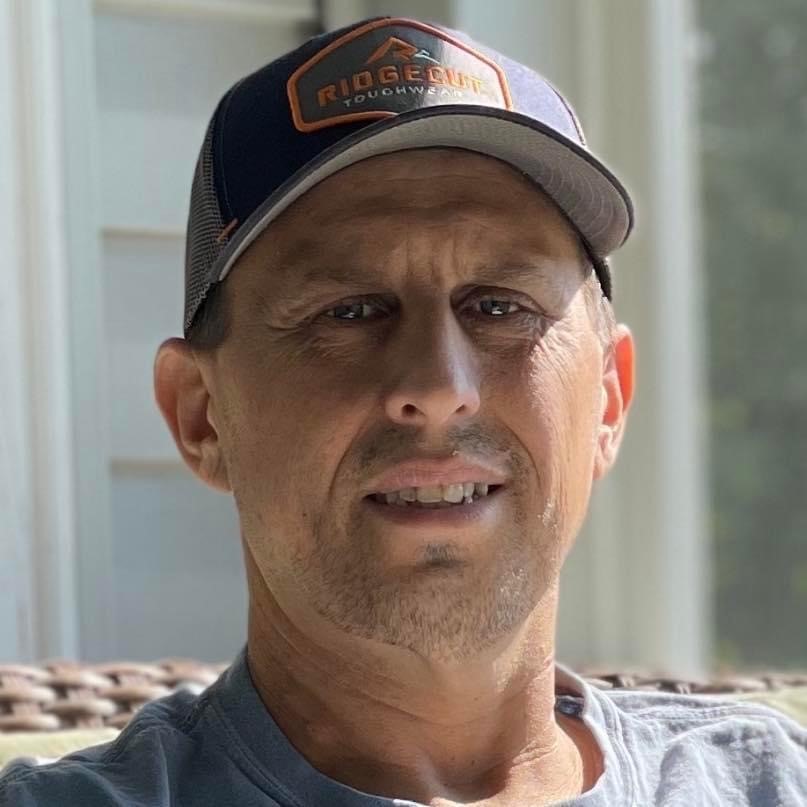
Congratulations to St. Louis Senior Highway Designer Glenn Konersmann for receiving the Office of Administration's Award of Distinction!
The Missouri Award of Distinction Program recognizes and awards outstanding employees who are innovative, positively impact organizational or statewide goals, demonstrate true leadership, act compassionately and courageously to serve the local or global community, and advance the importance and perception of state service.
Konersmann's nomination comes from his discovery of the opportunity for Missouri to receive up to $100 million in additional federal funding - representing about 10% of MoDOT's annual construction budget.
| |
St. Louis Senior Highway Designer Glenn Konersmann. | |
|
The Federal Highway Administration contributes 80% of the funding for most of MoDOT’s projects. FHWA also has a program that provides state agencies an additional 5% federal contribution to innovative projects as part of their Every Day Counts initiative. MoDOT has successfully applied for and received this additional 5% on a few projects but wasn’t truly maximizing the possible program benefits. Konersmann saw an opportunity and began accelerating investigations with his team on all innovative technologies MoDOT is already using.
MoDOT is now taking full advantage of FHWA’s program because of Konersmann and his team’s diligent work. They dedicated hours of conversation with the State of Kentucky, FHWA and various others to determine which of MoDOT’s innovative technologies were eligible for additional funding. Konersmann coordinated with MoDOT leadership and FHWA to develop a system that is efficient for everyone. Project managers and planning staff can move newly developed projects forward to Konersmann and his team, who review and submit appropriate projects to FHWA to seek additional funds.
Beyond FHWA’s list of pre-approved technologies, Konersmann also identified several other opportunities that may be eligible for this funding. In 2021, through the processes and policy he and his team created, they identified and were approved for over $20 million in savings/reimbursements. When fully implemented, MoDOT could be eligible for up to $100 million per year – all thanks to Konersmann and his team’s hard work!
| |
Southwest District innovation wins HOPE Award
| |
|
A recent Innovations Challenge submission from the Southwest District was recognized with a Highway Opportunities through Professional Engineering (HOPE) Award at this year’s Highway Safety and Traffic Conference in Columbia.
The award was given for the Work Zone Crash Reporting Form. It’s a fillable form found on SharePoint that improves and standardizes the process of reporting crashes in MoDOT work zones.
Southwest District Administrative Officer Greg Chapman accepted the award on behalf of the team that developed the form. The form won in the statewide Innovations Challenge last year in the Projects category.
To see a video explaining more about the Work Zone Crash Reporting Form, click here.
| 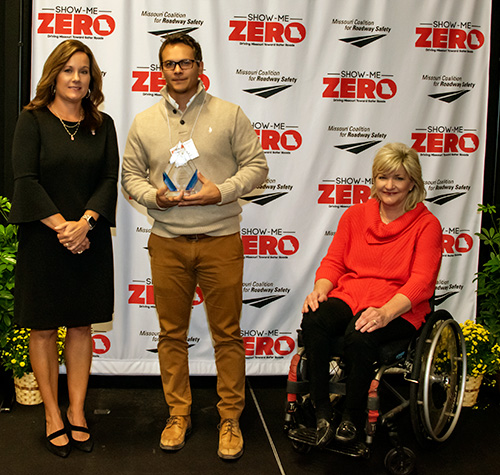 | Southwest District Administrative Officer Greg Chapman (center), accepts the HOPE Award on behalf of the team that developed the Work Zone Crash Reporting Form. Also pictured are State Highway Safety & Traffic Engineer Nicole Hood (left) and Penny Lorenz Anderson, assistant director for ThinkFirst Missouri. | |
MoDOT upgrading to Class 3 PPE | |
|
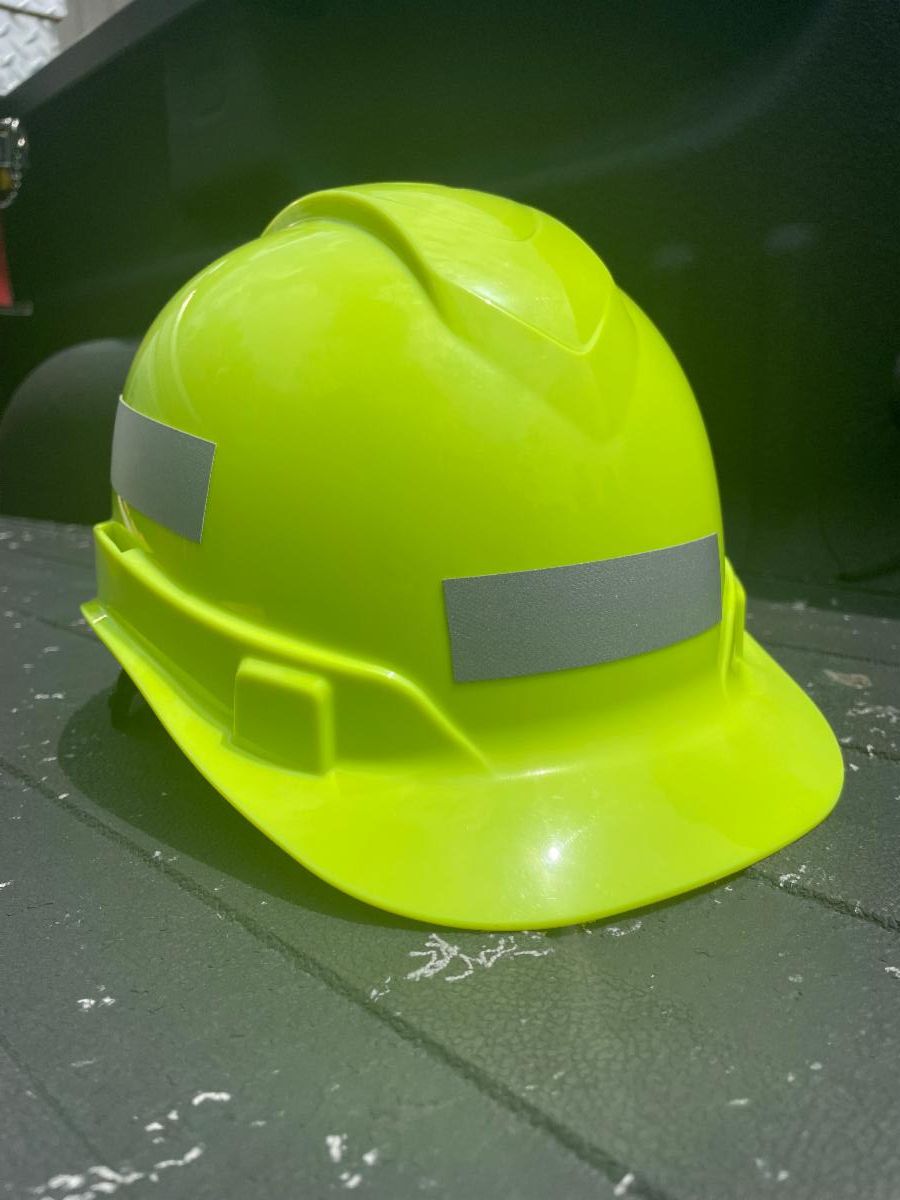
MoDOT continues to actively strive toward increasing safety of the workforce. A current upgrade MoDOT is implementing is the use of ANSI Class 3 Hi Visibility Personal Protective Equipment, versus Class 2.
Class 3 PPE provides 60% more high visibility background and 54% more retroreflective material than Class 2 to better capture the attention of motorists during both day and night operations.
All future purchases of high visibility PPE should be Class 3 unless an exception is granted by the DE or division head. MoDOT facilities that utilize PPE vending machines will be stocked only with Class 3 PPE. Class 2 items will be removed and no longer stocked in the machines – MoDOT will only provide Class 3 PPE to employees. This will result in certain items no longer being provided by MoDOT, such as sleeveless Class 2 t-shirts.
MoDOT will continue to allow the use of Class 2 PPE that is in satisfactory condition but will not stock or issue such items.
If supply chain and availability issues are encountered, contact your local Safety & Emergency Management staff for assistance.
| |
MoDOT completes 2022 snow drill | |
|
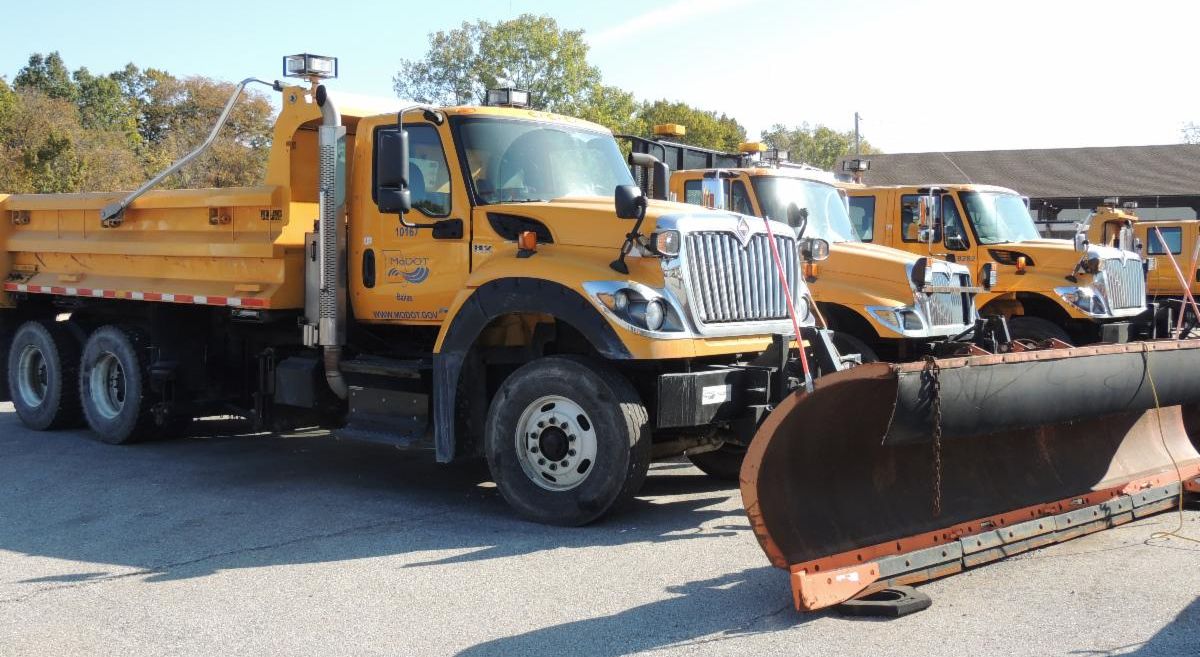
The Farmer's Almanac is forecasting a "Hibernation Zone" across the Midwest for the winter season. Through it's still too early to tell what the winter will bring, MoDOT is preparing for the worst.
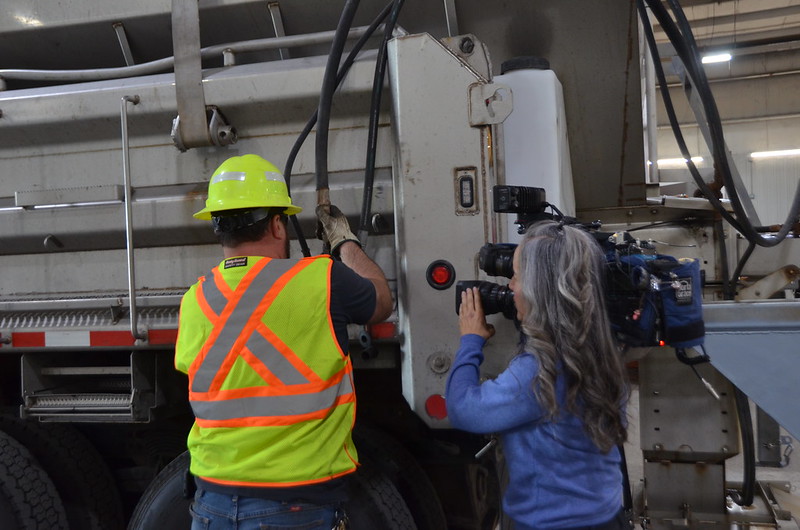
For the annual snow drill, which took place this year on Oct. 20, employees reacted to a simulated forecast of significant snow for the entire state. The emergency operations center was activated, and maintenance employees were deployed to their trucks. With high turnover rates and many positions still open, driver training on this day was more critical than ever.
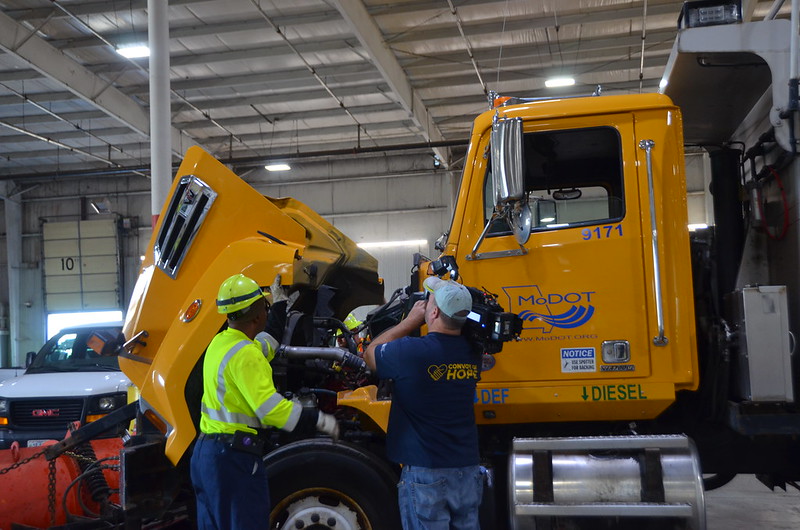
“Safety is the cornerstone of everything we do at MoDOT,” said Chief Safety & Operations Officer Becky Allmeroth. “The drill ensures that proper equipment, plowing techniques and safety measures are used by every MoDOT employee.” In addition, every piece of equipment - every truck, motor grader, snow blower and tractor - was inspected and calibrated to conserve materials and operate efficiently and safely.
| |
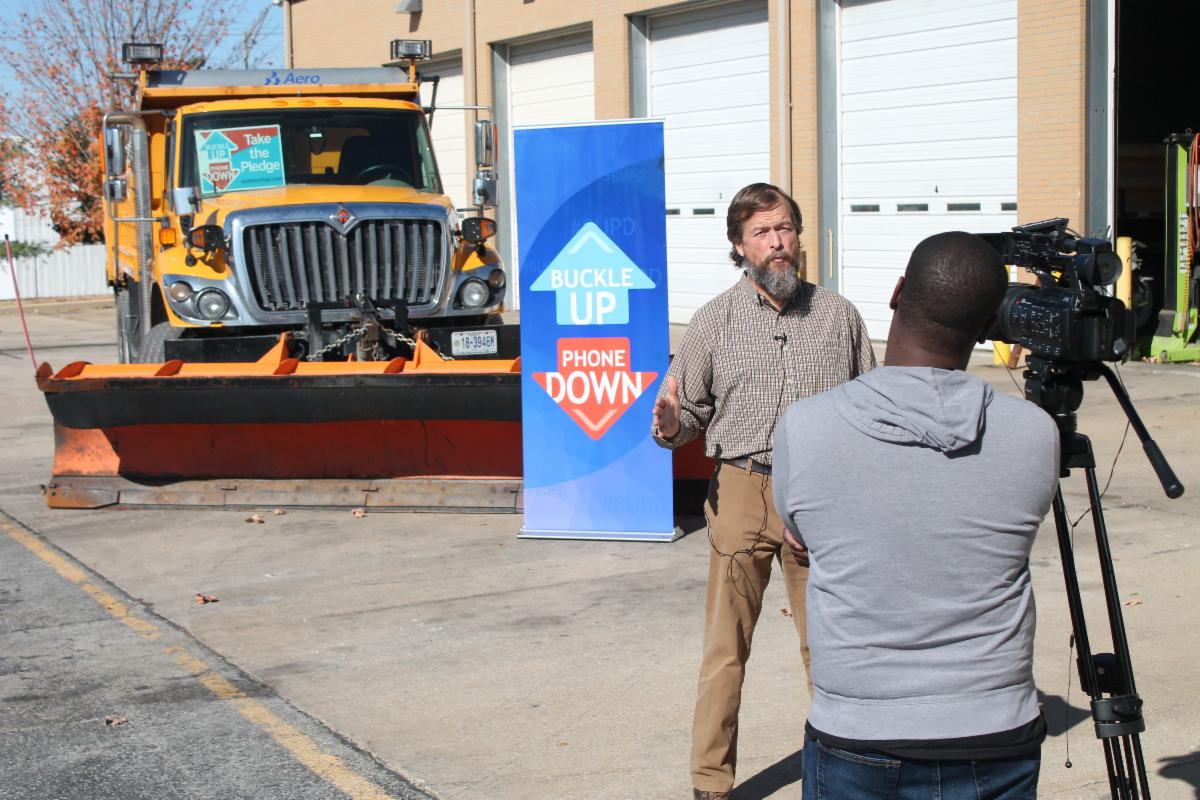
The Southwest District held two media events combining the snow drill event and BUPD Day, promoting both the internal and external safety aspects of MoDOT's operations. One media event was held in Springfield with District Engineer Steve Campbell (left) and the other in Joplin with Area Engineer Marvin Morris. | |
Snow plows in the St. Louis District are lined up and ready for deployment for the Oct. 20 snow drill event. | |
In the Kansas City District, Assistant District Engineer Matt Killion participated in two days of interviews with local media. Maintenance staff from Lee's Summit Maintenance Facility spent the afternoon demonstrating safety checks, using equipment to practice loading salt and showcased the machinery used to clear the roads during a winter storm for three local media outlets. For more photos from the Kansas City event, click here. | |
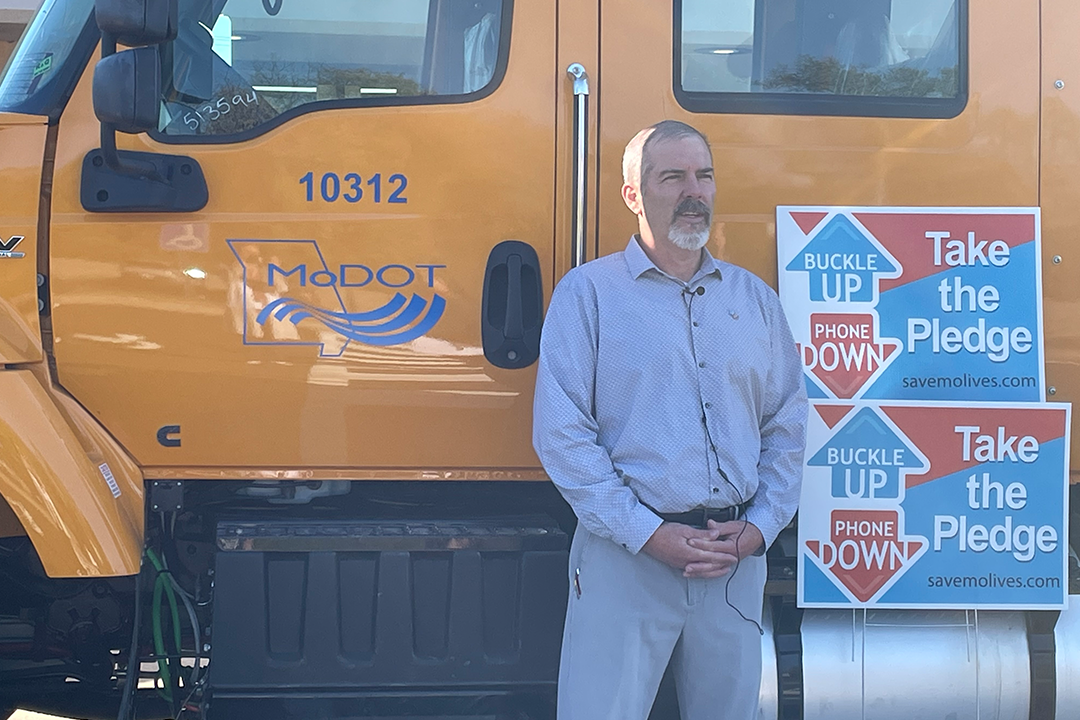
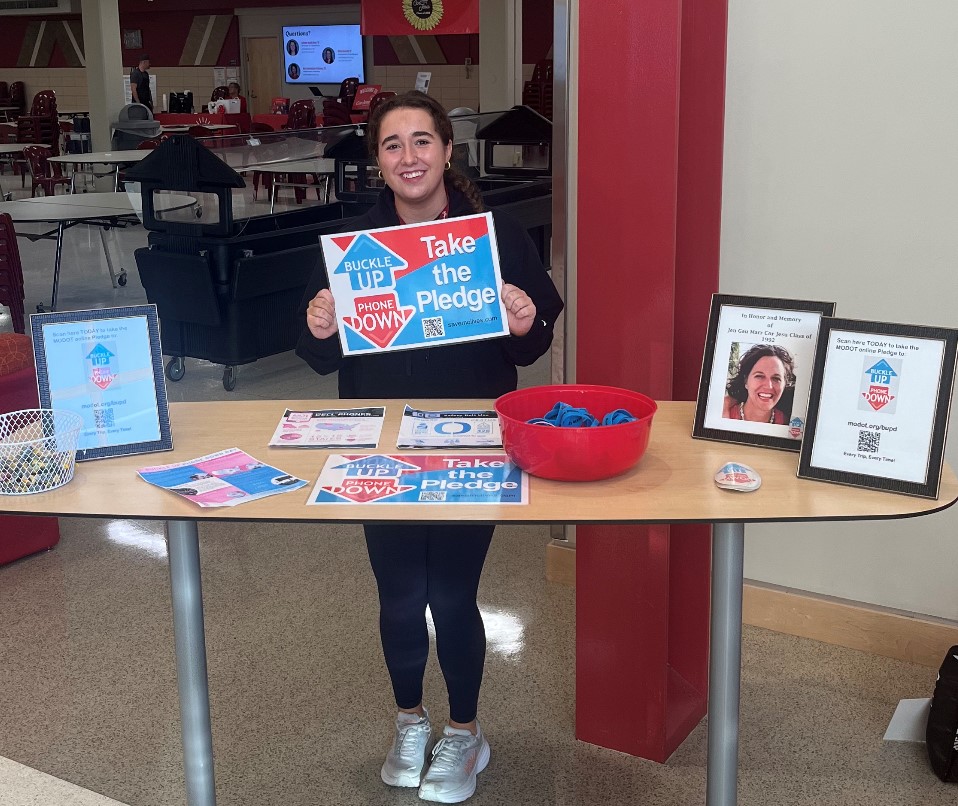
Oct. 21 was Buckle Up Phone Down Day in Missouri. For the sixth year, the Missouri Department of Transportation and the Missouri Coalition for Roadway Safety, along with various safety partners, school and businesses throughout the state, encouraged better driving behaviors as part of Buckle Up Phone Down Day; and this year, aimed for the goal of zero traffic fatalities throughout the day. | |
In the St. Louis District, Cor Jesu Academy student Anna Moore promotes BUPD at a booth at her school. Two BUPD signs were also installed at the end of the school's driveway. | |
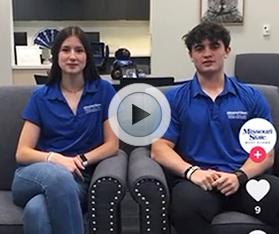
In the Southeast District, Missouri State University-West Plains students created a TikTok video for BUPD Day. Click the image above to view the video. | |
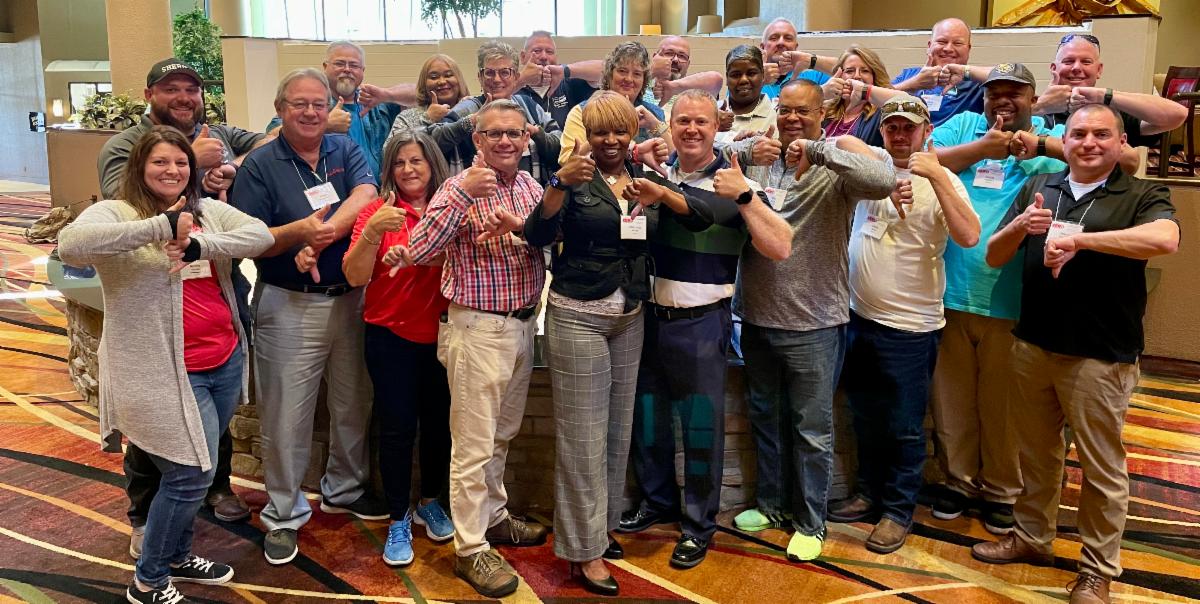
St. Louis District employees took the opportunity to promote BUPD at their recent safety conference in Columbia. Click the image above to view their "Buckle Up Phone Down" clip. | |
|
Missouri's 2022 Seat Belt Usage Survey showed 89% of vehicle occupants use a seat belt, matching the highest rate the state has ever recorded. But the unbuckled 11% make up a majority of the state’s roadway fatalities, which reached a 15-year high in 2021. Cellphone use continues to be one of the most concerning behaviors for all roadway users. In 2021, over half of the distracted driving fatalities in Missouri claimed the life of someone besides the distracted driver.
Since the program began in 2017, the BUPD movement has spread steadily across Missouri. More than 20,000 Missouri individuals and businesses have accepted the BUPD challenge, and more than a dozen other states are actively sharing the messages along their highways.
| |
|
Everyone has been criticized at some point. It’s important to understand why people criticize others and to recognize the difference between positive criticism, which is vital to our growth, and destructive criticism, which is not.
Why do people criticize others?
Managers must pass along feedback for employees to meet job expectations. Teachers must show students what they did incorrectly for them to learn. At times, however, criticism isn’t an effort to promote growth but to cause pain. These are some reasons people engage in such behavior:
-
Feelings of inferiority - trying to make themselves feel more secure by belittling others.
-
Personal failure - criticizing others in order to think that the problem is with others, not themselves.
-
Group acceptance - strengthen ties within the group by criticizing people they feel don’t belong.
-
Revenge - feeling slighted due to a previous situation and using criticism as a form of punishment.
-
Ego - feeling they deserve better and other people are preventing them from achieving their goals.
Types of Criticism
Constructive criticism provides useful feedback to help the recipient improve. It is healthy and necessary for us to grow. Destructive criticism is invalid and often delivered in a manner meant to belittle the recipient.
Handling Destructive Criticism
-
Disagree - filter the information and, if something is valid, find a way to agree with that small part.
-
Respond to words, not tone - by staying calm and refusing to be provoked, criticism can be separated from the style of criticism.
-
Pause before responding - this allows you to reflect on the message and to respond appropriately.
-
Thanks, but no thanks - be polite, thank them, but let them know that the feedback is not beneficial.
-
It might not be you - personal or overly harsh criticism often has more to do with the critic’s life than your actions.
-
Seek perspective - a third party can look at the situation more objectively.
| |
Kansas City's downtown loop turns 50 | |
|
The downtown loop in Kansas City — four miles of highway arteries that form a boundary around Kansas City, Missouri's central business district – turns 50 this month with its completion on Oct. 26, 1972. Kansas City residents first saw a vision of the loop in the city’s 1947 “Master Plan for Kansas City,” which was designed to move the city into the modern world.
Construction of the entire Loop took almost 20 years. Construction of the downtown loop’s northern stretch began in 1953, and the “Intercity Freeway” was dedicated on Oct. 7, 1957. Construction of the eastern stretch of the loop began in 1958. The Southeast Freeway, as it was called, would connect the loop’s northeast corner to Interstate 70. The eastern portion of the loop was dedicated on Aug. 17, 1962. Work on the southern edge of the loop began in 1961, and the “Crosstown Freeway” was dedicated on July 20, 1967, with a speech by Missouri Highway Commission Chairman Jack Stapleton. The “West Highway," the final portion, opened on Oct. 26, 1972.
| |
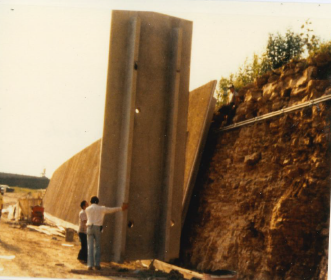
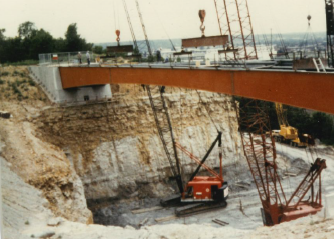
Historical photos of the original Kansas City downtown loop construction. For more historical photos, click here. | |
Cory Gray's road to recovery | |
|
Over the past year, Southeast District Maintenance Supervisor Cory Gray has been on a lifesaving medical journey.
In June 2021, Gray went to the doctor for swelling in his legs and severe muscle cramps. The doctor quickly realized it was his liver. Gray was diagnosed with Alpha 1 Antitrypsin Deficiency, a genetic condition that raises the risk of liver and lung disease. The condition was caught early enough it hadn’t impacted Gray’s lungs, but it was causing cirrhosis of the liver.
“Cory continued to work and stayed positive despite the difficult news,” said Maintenance Superintendent Harold Eads. “I’m proud of Cory’s dedication, and he truly has the heart of a public servant. I know there were days he wasn’t feeling well, but it wasn’t reflected in his work or attitude.”
| |
Cory Gray, maintenance supervisor for the Southeast District's Kennett facility. | |
|
The only cure for ATT is a liver transplant. Gray was placed on the transplant list in May 2022 and received the call on June 21 that a liver was available. He received the transplant that day but developed toxins, causing an unresponsive state. The delirium from the toxins was the most difficult part of the journey for Gray and left him feeling as if he were “trapped in that state for years.” Unfortunately, a second transplant was necessary.
“On June 28, I got the second transplant,” he recalled. “All looked good with this one, except for a hematoma that developed behind the liver. After another surgery to remove that, I was finally on my way to healing.” Five days later, the delirium lifted.
| |
|
“During Cory’s recovery, I was thankful to have Assistant Maintenance Supervisor Billy Johns and Crew Leaders Arein Baney and Billy Holmes to step in and help out,” said Eads. “They pulled together, shifted responsibilities to keep things running smoothly and were there for each other.”
Gray returned to work earlier this month.
“It’s restored my life,” said Gray. “I’d like to thank everyone for their prayers and support. Please don’t take a single day for granted. You’re never guaranteed tomorrow.”
Welcome back, Cory!
| |
Krista Strong
Northwest District Assistant Construction & Materials Engineer
| |
What is a “day in the life” of an assistant construction and materials engineer?
It definitely varies from day to day. When I first started, there seemed to be a solid stream of Material Summaries, but they come and go. Currently, I'm helping cover our RE office whose boss retired, so that adds in a few extra meetings, preparing for those meetings, helping answer construction project questions and computer work. I try to get out once a week to projects throughout the district to see what’s going on and what's needed from our materials department.
How long have you been doing this job?
Since Dec. 1, 2020 – I started out during COVID-19. I was very glad to get back in the office shortly after.
What’s your favorite thing about your job?
The variety of people I work with. I have employees that have nearly 30 years of experience down to less than two years. Also, I get to interact with most of the other departments. I'm slowly learning who does what and where.
What has been the highlight of your career so far as an assistant construction and materials engineer?
Branching out – learning new things, meeting new people and taking on more responsibility.
What draws you to working at MoDOT?
The people mostly - and the variety of jobs.
What is something you’ve experienced in your job that you didn’t expect?
That we even inspect trash bags!
What do you like to do outside of work?
Hang out with friends and family; help at church.
What’s something unique you bring to your position?
Construction and materials departments go hand in hand, but I was also utility engineer for a while.
| |
|
Leach, Charles - NW - 17
Drew, Timothy - NW - 27
Burnett, Otis - KC - 13
Johnson, Rocky - KC - 24
| |
|
Reliford, Fredrico - KC - 30
Hatch, Gregory - SL - 12
Clark, Randall - SL - 6
Newcomb, Steven - SL - 20
| |
|
Brown, Danny - SL - 7
Davis, Phillip - SL - 15
Ahlvers, David - CO - 37
Stevens, Sheri - CO - 28
| |
|
The mission of Connections is to be a source of MoDOT news
and feature articles that connect employees statewide.
| |
|
Comments
What would you like to see in Connections?
We want to hear from you!
Send comments and suggestions to:
bethany.belt@modot.mo.gov
| |
|
MoDOT Communications
P.O. Box 270, Jefferson City, Mo 65102
573-751-2840 | www.modot.org
Editor: Sr. Communications Specialist Bethany Belt
| | | | |