|
Message from the President
By: Shima Mohebbi
| |
Dear M&S Division Members,
As the Spring semester draws to a close, I’m looking forward to an exciting Annual Conference in Atlanta. This event offers a wonderful opportunity to reconnect with friends and colleagues, and to forge new connections as well. We hope to see you at the Division Town Hall Meeting in Atlanta, scheduled for Sunday, June 1st, from 12:00 PM to 1:20 PM.
At the Town Hall, we will introduce our new M&S Board members and recognize this year’s award recipients. The M&S Division will also host two special sessions on Simulation Software Workshops featuring Arena, FlexSim, AnyLogic, and Simio; two sessions on AI/ML and Simulation; and one panel discussion on the use of Discrete Event Simulation in industry. As we strengthen collaboration between industry and academic members, we continue to showcase the success stories of our talented students and professionals - highlighting the value and impact of our community.
Our division continues to grow steadily and embrace transdisciplinary research, and we rely on our members to help spread the word. Please continue reaching out to your colleagues and encouraging them to join our vibrant community—anyone with an interest in M&S is welcome! Stay connected by following the M&S Division on LinkedIn. It’s a fantastic way to network with like-minded modelers and communicate with the Board. Join our LinkedIn group here and follow our LinkedIn page here.
| |
This newsletter contains:
- M&S Division New Leaders and Board Members
- 2025 IISE Annual Conference and Expo Preview
- Student Spotlight: Amir Khosheghbal, University of Massachusetts Amherst
- Student Spotlight: Enzo Domingos, Polytechnique Montréal
- Student Spotlight: Agnes Nyanamba, Gavin Conradt, and Charlotte Lance, Western Michigan University
- Presidential Transition
- Call for Entries to the Division Newsletter and Social Media
- Join the M&S Division!
| |
Best regards,
Shima Mohebbi
IISE M&S Division President
| | | |
M&S Division New Leaders and Board Members | |
After a competitive election season, we have selected four new members of the M&S Division Board of Directors to replace our outgoing officers. Members serve a two-year term; their 2025-26 roles and responsibilities will be revealed in the Fall newsletter.
Chaitra Gopalappa from the University of Massachusetts Amherst has been selected as our next President-Elect.
Welcome New M&S Board Leaders
-
Mahmoud Khasawneh, Director of the School of Engineering, Texas A&M International
-
Zeyu Liu, Assistant Professor, West Virginia University
-
Jennifer Lobo, Associate Professor, Public Health Sciences, University of Virginia
-
Tate Lampe, Industrial Engineer, Spirit Aerosystems
New board members will be officially installed at the M&S Division Town Hall session of the 2025 Annual Conference and the term starts on June 1, 2025.
| | | |
2025 IISE Annual Conference & Expo Preview | |
We look forward to an exciting annual conference this year in Atlanta where we are again sponsoring the M&S Track. The conference is a forum for exchanging knowledge and discoveries in the Industrial and Systems Engineering research and practitioner communities.
The program includes 47 presentations and 25 papers, organized into 12 sessions covering areas such as:
- Methodological advances
- Defense applications
- Digital twins
- Data analytics and machine learning
- Epidemiology and healthcare
- Manufacturing
- Agriculture & Environmental
The M&S Division is also hosting a Townhall, two special sessions on Simulation Software Workshops featuring Arena, FlexSim, AnyLogic, and Simio; two sessions on AI/ML and Simulation; and one panel discussion on the use of Discrete Event Simulation in industry.
At the Townhall, we will install the new President and President-Elect, introduce new board members, present awards, and hold a discussion about the future of our community. Keep a close eye on the main schedule for these events.
| | | |
|
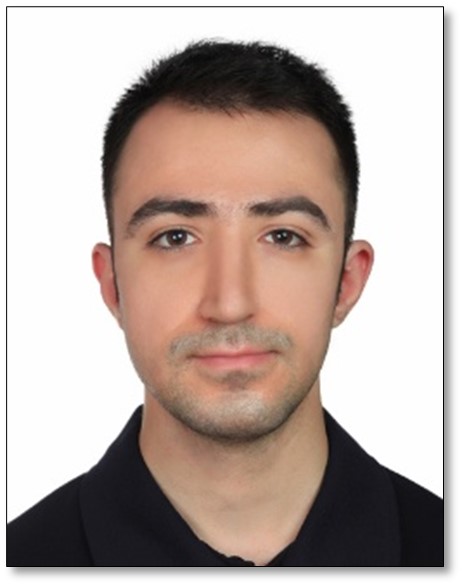
Amir Khosheghbal earned his BS and MS in Industrial Engineering in his home country of Iran. He later moved to the U.S. to pursue another master’s degree and is now working toward a PhD in Industrial Engineering and Operations Research at UMass Amherst.
What do you work on?
I’m part of the Disease Modeling Lab under the supervision of Professor Gopalappa. Our research focuses on developing mathematical models to support healthcare decision-making, ultimately aiming to save lives and reduce costs. Specifically, my work has been centered on HIV, where we integrate machine learning techniques into simulation models.
One example of my research is our recent publication, where we applied Copula theory and probabilistic graphical models to estimate joint distributions between non-medical factors such as homelessness and poverty, with disease-related behaviors. We then incorporated these estimates into a national-level HIV simulation model to evaluate various "what-if" intervention scenarios, i.e., what would be the impact on HIV transmission if we address the social needs among disadvantaged people.
How can your research be applied to another field?
The social determinants of health data we use are sourced from multiple datasets, and similar data structures exist in many fields, making our approach applicable to other diseases. Additionally, the methods we use, such as Copula theory, have widespread applications beyond healthcare, including finance and drought analysis. As long as the underlying data share similar characteristics, our methodology can be adapted to other domains.
What suggestions do you have for other students to join this expanding field?
I believe it's crucial for students to find a research area they genuinely enjoy and see meaning in. Passion for the work plays a significant role in long-term motivation.
For students considering research-based graduate programs, I recommend reaching out to different labs, exploring their work, and reading a few of their publications to find a topic that truly interests them. Additionally, subscribing to journal mailing lists is a great way to stay updated on the latest research.
Can you provide any open access resources for our readers?
There are several great online learning platforms I’d recommend such as Coursera & Udemy – Many courses can be audited for free, meaning you can access the lectures without paying unless you want a certificate. Also, I particularly like LinkedIn learning because many courses are taught by industry professionals, providing practical insights. It also offers training on essential soft skills like negotiation, teamwork, and leadership. It’s not free, but many universities provide subscriptions for their students. I often use YouTube to explore specific topics and then use ChatGPT to clarify concepts further as other options.
| |
Enzo Domingos received his B.S. degree in Industrial Engineering from the State University of Santa Catarina (UDESC), Joinville, Brazil, in 2022. He is currently pursuing a Ph.D. in Industrial Engineering at Polytechnique Montréal, Canada. He previously worked as a Research Assistant with the Supply Chain Research Group (Núcleo de Estudos e Pesquisa em Supply Chain) at UDESC. His research interests focus on the conceptual and technical development of digital twins for logistics and inventory management.
What do you work on?
I develop an application of the concept of digital twins to logistics and supply chain operations. More specifically, I work on the accomplishable modelling features of digital twins that respond to strategic, tactical, and operational challenges of logistics and supply chain management. This application is complex and requires expanding conceptual and practical notions of how a digital twin should behave. This means assessing approaches and methods to designing, developing, implementing, and updating digital models that allow modularity, reuse, and evolution of the components within production logistics systems. This includes creating a real-time image of a supply chain that allows testing alternative policies of inventory management to evaluate its current and possible performances. My goal is evaluating to what extent implementable features of digital twins assess and support the coordination of logistics and distribution operations.
How can your research be applied to another field?
Since supply chains are complex systems, developing an application of digital twins to this field tests the limits of the concept. On one hand, it questions the notions of real-time data and closed-loop control. Other fields may benefit from these conceptual discussions to adapt the concept into their own applications. On the other hand, the development of the tool can guide other researchers to evaluate the technical limitations when applying to their field.
What suggestions do you have for other students to join this expanding field?
If you come from an industrial engineering background like me, know that you will need to learn about computing, modelling, simulating and coding. I suggest you evaluate these are expertise you are interested in and that you have access to learn about.
Can you provide any open access resources for our readers?
Of course, here are some interesting applications and considerations for digital twins:
-
Liu, B., & Cai, J. (2023). Design of Logistics Intelligent Warehouse Management System Based on Radio Frequency Identification Technology for 5G. Wireless Communications and Mobile Computing, 2023. https://doi.org/10.1155/2023/8060198
-
Kaiblinger, A., & Woschank, M. (2022). State of the Art and Future Directions of Digital Twins for Production Logistics: A Systematic Literature Review. In Applied Sciences (Switzerland) (Vol. 12, Issue 2). MDPI. https://doi.org/10.3390/app12020669
-
Baslyman, M. (2022). Digital Transformation from the Industry Perspective: Definitions, Goals, Conceptual Model, and Processes. IEEE Access, 10, 42961–42970. https://doi.org/10.1109/ACCESS.2022.3166937
| | | |
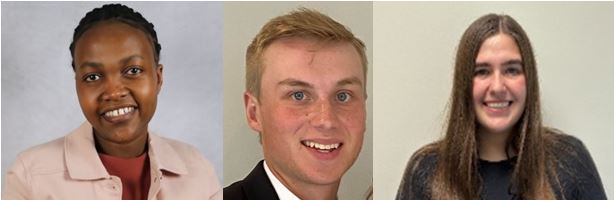
Student Spotlight: Capstone Project | A group of seniors from Western Michigan University—Agnes Nyanamba, Gavin Conradt, and Charlotte Lance (L–R)—are utilizing simulation for their Capstone project. Agnes is graduating with a Bachelor of Science in Industrial and Entrepreneurial Engineering and a minor in Supply Chain Management. Gavin, a senior in the Engineering Management Technology program, is set to graduate in Spring 2025 and plans to launch his career as a Project Manager at Epic, a healthcare software company based in Verona, Wisconsin. Charlotte, also a senior in the Engineering Management Technology program, is on track to graduate in Spring 2025. | |
What do you work on?
We are developing a FlexSim simulation model to evaluate the capacity of sealed freeze-dry cabinets at Pfizer. Our goal is to determine if the current number of cabinets is sufficient for handling freeze-dried products while accounting for production schedules, maintenance downtime, and different freeze dryer (FD) types. The model helps visualize material flow, identify potential bottlenecks, and improve operational efficiency in the freeze-drying process.
How can your research be applied to another field?
The methodologies used in our FlexSim model can be applied to various industries that rely on batch processing, material handling, and capacity optimization. For example:
- Pharmaceutical Industry: Beyond freeze-drying, the model can optimize vial or syringe filling lines, cold storage, and packaging logistics.
- Manufacturing: It can simulate assembly line efficiency, warehouse storage, and robotic automation.
- Healthcare Systems: Hospitals can use similar simulations to manage patient flow, reduce ER wait times, or optimize staff scheduling.
- Supply Chain & Logistics: FlexSim can enhance warehouse distribution models, reduce bottlenecks in transportation hubs, and optimize supply chain networks.
What suggestions do you have for other students to join this expanding field?
- Gain hands-on experience with simulation tools like FlexSim. Many offer student licenses for practice.
- Learn the fundamentals of discrete-event simulation (DES) through online courses, textbooks, or industry case studies.
- Develop strong analytical and problem-solving skills by working on real-world projects, internships, or research opportunities in manufacturing, logistics, or healthcare operations.
- Join professional organizations like IISE (Institute of Industrial & Systems Engineers).
- Engage in interdisciplinary work, combining simulation with fields like data science, AI, or optimization for advanced problem-solving.
Can you provide any open access resources for our readers?
| | | |
M&S Division President Transition | |
It has been an eventful and rewarding year serving as President of the IISE M&S Division. At the upcoming Annual Conference, my term will officially come to a close, and David Claudio will step into the role. He will be supported by a strong team, including several returning members, four new additions, and Chaitra Gopalappa as President-Elect.
My sincere thanks to the entire 2024–2025 M&S Board of Directors for their dedication and hard work in helping our community continue to thrive.
| | | |
Call for Entries to the Division's Newsletter and Social Media | |
The Division is publishing its newsletters and hereby soliciting news entries. We would also like to feature the accomplishments of IISE M&S Division Members in our LinkedIn group and page. This is a great opportunity to showcase interesting and impactful research, professional practice, and educational efforts within the Division. The solicited story will go into the following blocks in the newsletter: Research on the News, Practical Applications, and Education and Outreach. It would be great if you could:
- Prepare your story write-up within 200 words (write it in plain language for diverse audiences)
- Provide a nice picture together with the story
- Provide a link (if possible) to a detailed version of the story (hyperlink to your project public webpage, etc.).
Please email your information and materials to Dr. Chaitra Gopalappa (chaitrag@umass.edu) and your entry will appear in the next available division newsletter and LinkedIn posts.
| | | |
How to Join the M&S Division | |
You can connect with us via the following:
| | | |
Corporate/University Partnerships | |
Have you considered a corporate membership? If not, why? Companies large and small enjoy the benefits. Include your entire team and receive all the benefits of individual membership, plus lowest rates to attend the Conferences and much more.
Contact Doug Long IISE Global Director for Strategic Alliances for more details.
| | | | | | |