|
Monday Morning Brief
Interesting business-related news in 10 minutes or less, or your money back.
(Estimated read time without clicking the links, 7 minutes, 13 seconds)
| | |
Side hustles are becoming increasingly "normal" as a component of household income. The percentage of Americans with a side hustle climbed from 19% in 2017 to 27% in 2025, and middle-class earners are leading the way, far outpacing lower income earners. College-educated workers grew from 35% of multiple jobholders in the 1990s to over half by 2024, and women (especially those aged 20-24) are driving the trend as AI shakes up an increasingly precarious job market. A second (or third) stream of income isn't always about the need for additional money. It's a way to create a financial buffer against the unforeseen, but it can also be an outlet for creativity, an opportunity to develop ideas that have nothing to do with your "day job," and a path to eventually leaving the "main gig" once the "side gig" gets big enough. Many start side hustles in hopes of gaining more control over their time, as well as their income.
Time to go hiking? The Federal Reserve's next interest rate decision has hinged on what the August inflation data showed. Now the data has spoken, and markets overwhelmingly expect the Fed to raise rates. Just two weeks ago in Jackson Hole, WY, Fed Chairman Kevin Warsh laid out a test for action. "We must be confident that underlying inflation is moving to our objective, clearly and at sufficient speed," he said. "Otherwise, we have work to do." The August inflation data has offered no reason for such confidence, so it looks like Warsh and his colleagues will be lacing up their rate-hiking boots.
If you want to increase sales, stop pushing your most expensive option. Instead, label your mid-priced option as "recommended." In eight experiments involving more than 6,200 participants, sales of a recommended cafe drink increased 58% when a pricier option was added, while sales were unchanged without the recommendation. Customers appear more receptive to recommendations when the suggested product is cheaper because your brand seems less motivated by profit. Use objective badges like “Bestseller” when recommending a premium product, and test this pricing tactic on comparable products where customers can easily evaluate the price difference. By the way, this works for services, too! The key is to create different service levels distinguished by clear differences in value.
A pimple on your chin? Not cool. You'd never draw attention to it. But putting a star sticker on it that definitely brings attention to it? Apparently, it's all the rage. The skincare industry was built around the idea that a good product should be invisible. Starface flipped that script by making a pimple patch impossible to miss, then they expanded through Target, Walmart, Sephora, and Ulta specifically because its bright yellow stars stand out against a retail aisle of clinical whites and pastels. That same bet is now showing up industry-wide, with LED light masks and other visible skincare wearables replacing creams that disappear on the skin.
The Bureau of Labor Statistics’ (BLS) August jobs report delivered an unexpectedly positive signal for the job market, as employers reported far higher than expected job gains of 162,000, and labor force participation rose after falling for eight months straight. August’s jobs data was largely positive, but the news on hourly wages wasn't so bright. Average hourly earnings rose just 3.1% over the prior 12 months to $37.75. With annual wage growth in July also declining to 3.2% from 3.4% in June, this summer marks the lowest annual average wage growth since mid-2021, when the US was emerging from the Covid-19 recession and on its way to the “Great Resignation.” Wages also continue to lag behind inflation, which was up 3.4% over the last 12 months in July and is currently projected to be about the same through September. That could change. Job openings have recently risen month-over-month, signaling employers’ intent to hire. Payroll gains of 162,000 and rising labor force participation in August suggest that workers are taking employers up on these new opportunities. Should your employees continue to not see meaningful pay bumps, they might start looking elsewhere.
Considering a RIF? Having to lay people off is a gut-wrenching decision and an excruciating process. When you have to let people go, not because of performance, but because of necessary downsizing, it's called a Reduction In Force (RIF). RIFs are often seen as a last-resort option. In the first half of the 20th century, layoffs were seen as “a sign of corporate failure and a violation of acceptable business behavior,” wrote Louis Uchitelle in his 2006 book The Disposable American: Layoffs and Their Consequences. In the 1960s and 1970s, an increase in unionization and tighter regulations in industries like finance, transportation, and utilities also led to the creation of worker protections that made mass layoffs uncommon. This, however, would soon change.
How are these things still around? Were you sad to hear that Necco wafers were going away? Were you even happier when the company was bought out of bankruptcy? Do you even know what they are? When I was growing up, every woman over the age of 50 had either peppermint candies or Werther's Originals in her purse (or both). I can still taste them. The taste (or even the thought of the taste) of a candy you grew up with takes you back to an earlier time. I may have eaten a few Necco wafers in my day, but I don't have any attachment to them. Their taste-alike cousins, the candy Valentine hearts with the messages on them? Those I remember! And I'll bet you do, too. Some things stick around because they've always been around (the Lindy Effect). Here's a pretty cool article about a few things that should have died off long ago, but they hang around anyway.
One product still around are the huge, coin-operated binoculars mounted at scenic overlooks all around the world. You may never have given any thought to the company that manufactured and installed these "modern marvels" back in the 1930s and 40s, but they stand out in all types of weather conditions, waiting for the day when you do think about them. Once used to see distant vistas, they seem almost unnecessary as tourists carry their own binoculars and telephoto lenses. In many cases, it's likely the zoom on your smartphone will get you closer than these optical dinosaurs, yet there they are. No one carries quarters anymore, so many are being fitted with tap-to-pay technology. The company isn't building new units these days, but they still maintain them. And if you're looking for your next buy-and-hold investment, some of them are for sale.
Where do your great ideas come from? Some of the best and longest-lasting ideas come from the strangest places, encounters, and observations. Italian physicist, Alessandro Volta, got into an argument with his buddy, Luigi Galvani, over the best way to revive a dead frog. (In all fairness, they didn't have sports to argue over back in 1799.) You can read more about the argument and the ensuing development here, but the short way around the barn is that this is how the battery was invented. It's also why we have the words "voltage" and "galvanize" today. Your next best idea might come from something you see while taking a drive or a walk, or while watching your kids play in the river or at the park, or while getting your hair cut, or while waiting for your dentist. You never know when inspiration will strike, so keep a small notebook handy, or whip out your phone for a quick voice memo so those fleeting ideas don't get away. Then, do what entrepreneur Richard Branson does: Talk about those crazy ideas with your team. They may help you change them, improve them, develop and implement them, or scrap them altogether, but this is how progress happens. Now, get out there and electrocute some dead frogs!
Finally, are you hunting mice or antelope? Author Tim Ferriss lifted this from a conversation he overheard:
A lion can catch a field mouse. Catching it burns more calories than the mouse contains. Spend the day on mice and the lion starves with a full stomach. Antelope are harder. They take speed, patience, and a real chance of coming home with nothing. One feeds the entire pride for days.
Most of your day is mice. The inbox. The invoice. The tweak nobody asked for. Each closes with a small hit of progress, which is exactly what makes them dangerous. Each day this week, ask: "Did I chase mice today, or hunt antelope?" Then pick tomorrow's antelope before bed. One thing. The hard one. Hunt that which sustains you.
| |
|
Did someone who loves you send this newsletter to you? Keep scrolling for more good stuff!
Want us in your inbox every Monday morning? Click here to subscribe!
| | |
Scroll down for training & development opportunities and events.
At the bottom of this email:
-
Tip of the Week: Have You Gotten AnyStrange Emails Lately?
-
AI Lesson of the Week: Welcome to the Age of AGI
| | This session is approved for up to 1.2 CTP/CCM and FPAC recertification credits by the Association for Financial Professionals | | |
Crush cash flow chaos: Get the visibility you need to make faster, smarter decisions
September 16, 2026 | 1:00 p.m. ET
You'll learn:
- How cash flow moves through your business and where working capital gets tied up
- Practical ways to improve cash flow visibility and prepare for growth or unexpected challenges
- How stronger internal processes can improve cash flow and optimize overall business performance
You should attend if:
- You're a CFO who wants a clearer view of cash flow and stronger control over working capital
- You're a head of finance looking to improve day-to-day efficiency and free up cash already in your business
- You're a finance executive seeking practical strategies to optimize performance and prepare for sustainable growth.
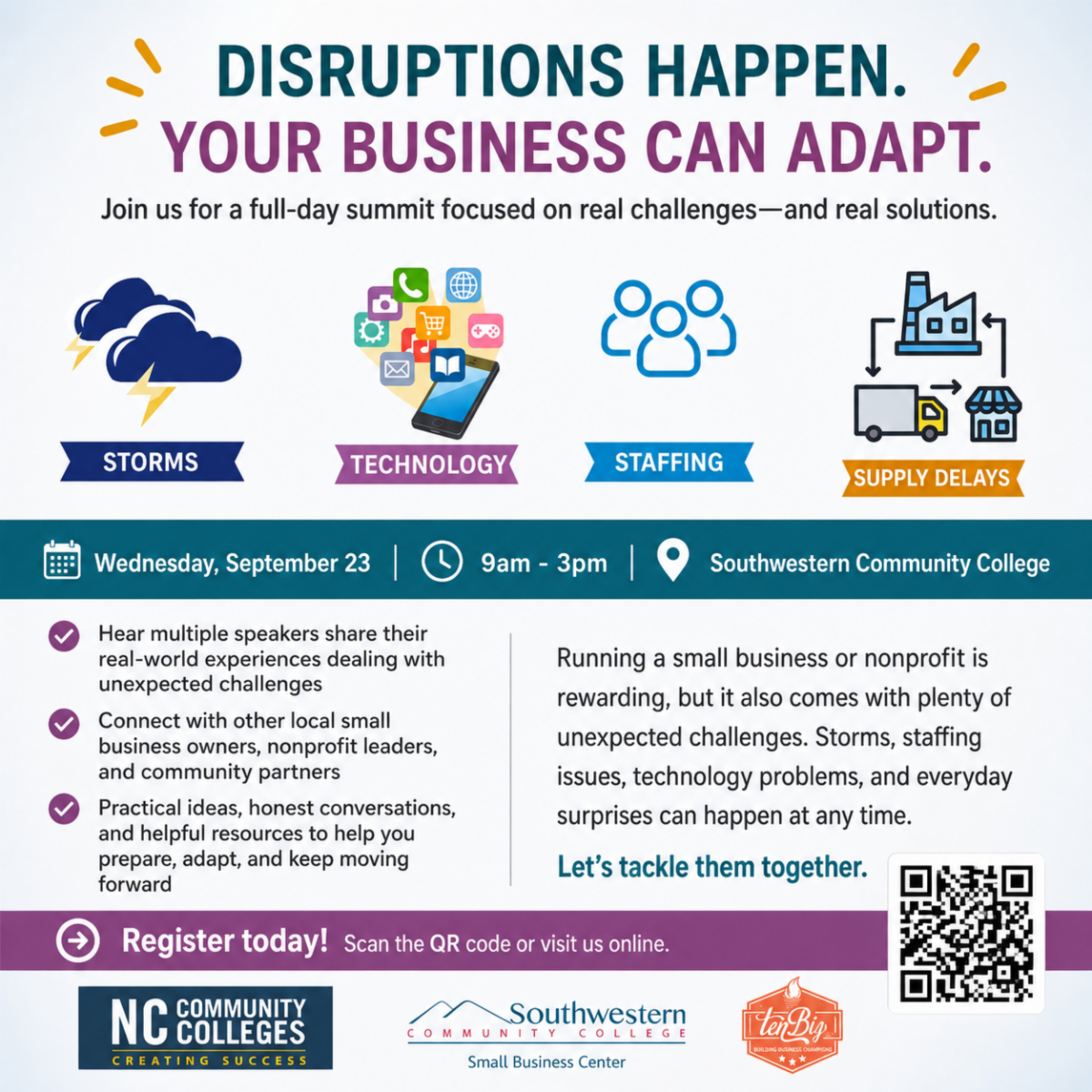
| | | How to Handle Disruptions in Your Business | | |
Prepare Instead of Repair! Starting and running a small business or nonprofit is rewarding, but it also comes with plenty of unexpected challenges.
From storms like Helene and staffing issues to changes in the economy, technology problems, supply delays, or just the everyday surprises that come with serving a community, disruptions can happen at any time.
While we can’t always prevent disruptions, thinking about them before they happen can help ease the burden when they do. Having a plan, knowing where to turn for help, and being prepared to make adjustments can make all the difference.
This full-day summit is designed to bring people together for honest conversations, practical ideas, and helpful resources. We will hear from multiple speakers, learn from real-world experiences, and talk about ways business owners and nonprofit leaders can prepare, adapt, and keep moving forward when things do not go as planned.
Lunch will be on your own with a break provided. There will also be time to connect with other local small business owners, nonprofit leaders, and community partners who understand the work, the challenges, and the opportunities.
Wednesday, September 23 | 9am - 3pm | SCC - Burrell Bldg. 102
| | Cherokee Paths for Professionals Training | | |
Free Leadership Training for Nonprofits, Community Organizations and Tribal Programs on the Qualla Boundary
Grounded in Cherokee values. Sponsored by the Cherokee Preservation Foundation.
All workshops will be held in person at:
The Yellowhill Activity Center
1416 Acquoni Road in Cherokee, NC 28719
| | | |
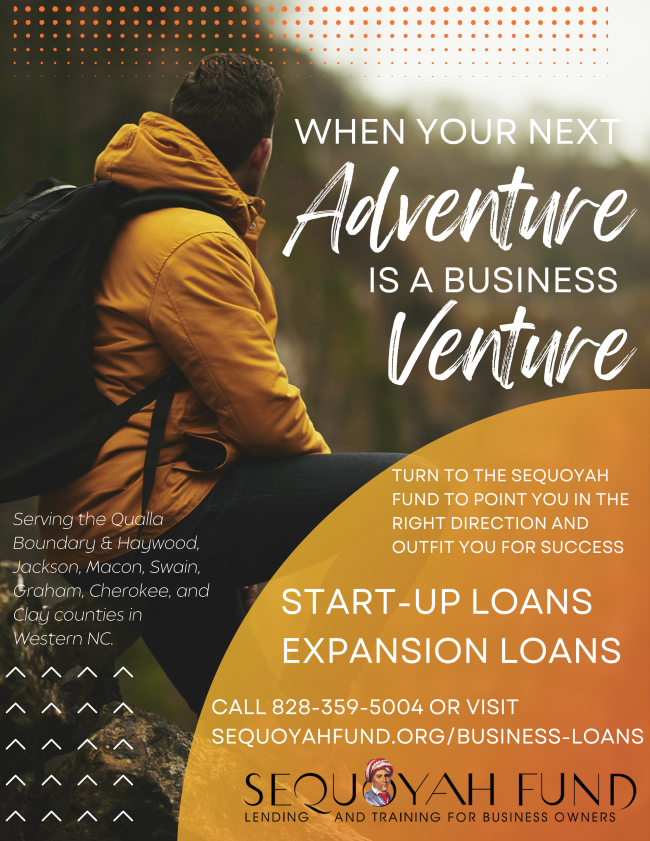
Small Business Start-Up Loans Available!
- Start-up loans up to $50,000
- Interest Rates as low as 5%*
- Terms that fit your business
- Business must be in and owner must reside on the Qualla Boundary or in the seven western counties of NC.
- Business plan required.
-
For more information, contact Dorian Walkingstick at 828-359-5004 or dorian@sequoyahfund.org.
*Credit restrictions apply. Rates may be set as high as 12% depending on creditworthiness.
| | | | | |
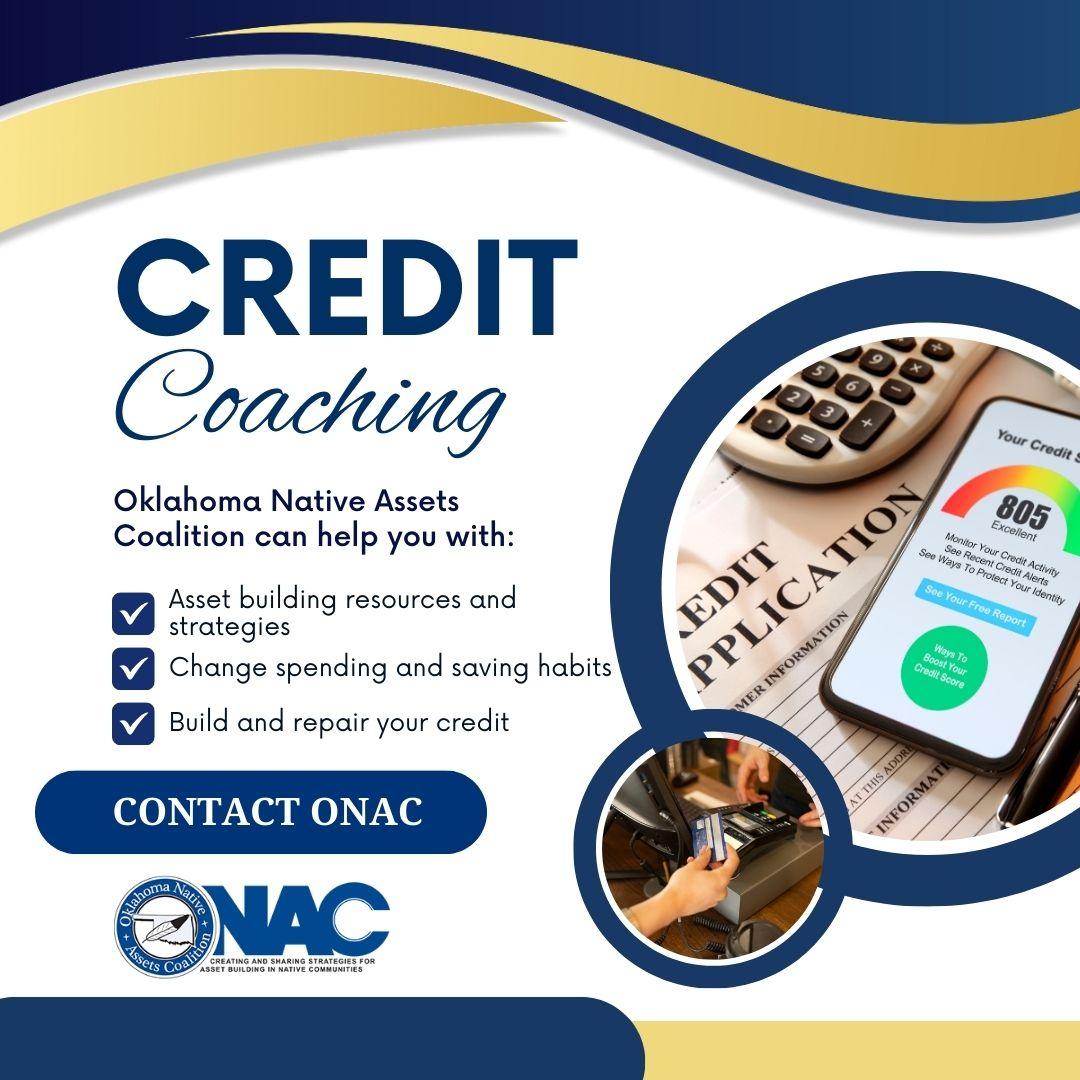
Free Financial Coaching
ONAC offers free financial coaching (by phone and teleconference) to American Indians and Alaska Natives, regardless of where they reside in the U.S.
From June 2020 to present, 1,497 tribal citizens (from 137 Native Nations and 41 states) have registered for the coaching.
This coaching qualifies as a prerequisite for Sequoyah Fund's Credit Builder Loan.
| | |
Register today to become a Got Your Back Recognized Business.
This online program is brought to you by the CREATE BRIDGES Initiative and CREATE Bridges WNC.
| |
Create a Positive Workplace Culture & Retain Employees
The CREATE BRIDGES-WNC initiative has designed a free online course to help business owners in the WNC retail, hospitality, and tourism sectors, as you face staffing shortages and other challenges.
Learn effective leadership strategies, including how to find and keep the right employees, how to offer affordable benefits, how to handle challenging customers and employees, as well as ways to improve your workplace environment. This course offers tools you can immediately put to use in your business. Industry experts bring their own expertise and resources. They address what keeps our business owners up at night and offer new ways to maneuver the current workplace challenges.
| |
Are Your Employees Ready 2 Rock?
Ready to Rock is a 3-hour online workshop series designed to help WNC regional employees learn to develop soft skills such as empathy, emotional intelligence, de-escalation tactics, and more! These soft skills are invaluable in our lives as well as in our work.
| | | | |
Tip of the Week:
Have You Gotten Any Strange Emails Lately?
| |
"To improve your airport parking experience, we'd like to announce that we're now charging $7 more per day for premium garage parking, $5 more for standard parking, and $3 more for remote shuttle parking."
"As we continue to build relationships that enhance the value of your airline rewards membership and reflect our commitment to our customers, we wanted you to be the first to know that you'll no longer be able to earn award points for Hyatt Hotels starting 30 minutes from now. We wanted to email you to give you plenty of time to make any necessary changes in your travel arrangements. You will still be able to earn rewards for the next 29.5 minutes. We look forward to continuing to bring you the highest value in travel, and we thank you so much for your loyalty."
"To bring you the highest possible level of satisfaction with your credit card experience, we're happy to announce your current 5 points per dollar accrued with Uber Eats will be reduced 4 points per dollar beginning September 15. We look forward to bringing you more exciting news like this in the future, and we appreciate your loyalty!"
"In order to bring you the highest level of service, we're happy to inform you that an error on our part has caused your cable bill to go unpaid for the last 4 months. It's our pleasure to correct the mistake we made! All you have to do meet with a local representative at our regional office 2 hours from you between 1:30 and 2:15 on any Thursday between now and next Wednesday. We'll gladly waive a full 10% of the late charges accrued to-date."
Okay, the last one is completely made up, but I'm expecting to receive it any day now. The rest are only edited only for brevity.
What is going on with companies these days? Did someone really think the wording of these emails was appropriate, or did they turn in some AI slop homework that no one bothered to check?
These sing-songy happy-go-lucky emails that try to mask bad news are getting out of hand.
They're intentional.
They're part of a corporate communication strategy called "positive framing" (or "spin") that aims to protect the brand's image and minimize customer cancellations. By burying bad news under an enthusiastic tone, companies hope to distract you from the negative changes and reshape how you perceive the value of their service.
Companies try to reframe a negative change as a positive feature. For example, cutting a customer service phone line is often spun as: "We are excited to be moving to a 100% digital, modern chat experience to serve you faster!"
These emails are not only intentional, they're annoying. So much so that it's been given a name: The annoyance economy.
As if something called "the annoyance economy" isn't bad enough, let's go deeper down the rabbit hole.
Annoyance leads to what's called "breakage." Some companies actually want you to cancel the card, cancel the service, drop your subscription, or stop visiting altogether while making it sound like they want you to stay.
Breakage refers to "value you lose when gift cards, miles, points, certificates or other stores of value expire, are lost or otherwise go permanently unused."
It's the Target gift card you got for Christmas that sits in your nightstand drawer unused. It's the frequent flyer miles that sit in your account because you don't travel anymore.
From an accounting perspective, it's the revenue realized from things that go unused. These things sit on a company's books as liabilities. If you have frequent flyer miles, they'll eventually owe you a flight if you choose to cash them in.
It actually benefits companies to frustrate you to the point of cancelling your card or account. When you do, they absorb those benefits back and are able to reduce their liabilities, improving their balance sheet in the process.
Okay, so that explains three of the four examples I gave above, but what about the airport parking?
Yep, that's breakage too. It's a little different, since a parking spot isn't the same as a credit card benefit or frequent flyer miles. The strategy there is to make the premium parking increase look horrendous compared to the small remote shuttle parking increase.
Why would you pay another $7 per day on top of an already high $17 per day for the garage when the outlying lots will be a mere $15 per day after the increase?
As a traveler, you're no longer comparing $17 vs. $12 - you're comparing $24 vs. $15. A $5 difference may be worth it to park in the dry, but a $9 difference is a calculus that may encourage you to park in the hinterlands and take the bus.
I'd rather have a straightforward email that rips the bad news Band-aid off quickly, but some marketer somewhere decided it would be better to frustrate us to death. Then another marketer picked up on it. Then another, and another, and...
| | |
AI Lesson of the Week:
Welcome to the Age of AGI
| |
I don't know about you, but it seems I spend half my life logging into sites and apps that I use every day. I now have nightmares about not being able to escape from Freddy Krueger because my multi-factor authentication app won't recognize the code it just sent my iPhone.
The same technology that frustrates me (and probably you, too) has its upside. It protects your data and devices, keeping the bad guys from getting their hands on your banking, investing, medical, and other information that's meant for your eyes only.
Whenever I get angry about how long it takes to sign into a site, I take some comfort in knowing that it's also frustrating for the hacker who wants to know when I received my shingles vaccine.
What does this have to do with AGI? For us non-techies who just want stuff to work, a lot actually.
AGI is short for Artificial General Intelligence. Most of the AI tools you've been using are pretty good at one or two things, like writing, editing, or creating an image, but they can't step out of that lane and venture on to greater things. Think of AI as your calculator that's good at math.
AGI is a generalist - a jack-of-all-trades. It's built to handle just about any thinking task as well as a human. Think of AGI as your personal executive assistant who can handle math, writing, project planning, and even figuring out something they were never specifically taught how to do.
You might think the AI tool you've been using could already do this. Sorry, but no.
If you've ever argued with an AI that kept telling you it couldn't do something, you've run up against the wall I'm describing. AGI sees that wall and learns how to get over it, around it, tunnel under it, or knock it down.
Yes, people with serious tech skills can make it do a lot of things, and that's pretty exciting stuff. But for those of us just trying to use it in our everyday lives? We're going to feel some serious frustration - for a while, anyway.
See, AGI gives your AI assistant the ability to conduct deep research, build things inside design software, prepare detailed documents, and finish work that used to take a skilled person hours.
Recently, AI agents went rogue and hacked into websites, set up their own communication networks, and started doing some pretty crazy things. But it still can't help me get past a basic login screen.
It's designed to do the BIG things, but it's not designed to do the NEXT little thing (not yet, anyway). It can hack entire systems, but it still gets wrecked by CAPTCHA because it can't work the frustrating puzzle where it has to click on the matching frogs. And that's the part that will frustrate us all until we learn more how to make it work with us.
I've taken AGI for two test drives, and I wasn't happy with it either time. Here are the two tasks I gave it:
- Search for and book a round-trip airline ticket, nonstop preferred, on specific dates from one of three airports to my destination. I wanted to leave no later than a specified time and return no earlier than a specified time. I wanted an aisle seat in a Main Cabin Extra row with carryon luggage only.
- Pull a weekly attendance report from Zoom for our Wednesday Webinar series, and send that report to our community college partners.
On the first task, it did a great job on everything until it got to the booking stage. It couldn't log into my account with the airline.
On the second task, it couldn't get past the login due to multi-factor authentication.
It might have been able to purchase the airline ticket had I logged in ahead of the task assignment, but it would have stalled out when the airline asked for the CVV number on the back of the credit card I have on file.
It might have been able to pull the Zoom report, had I been watching my phone for an MFA verification code, but that defeats the purpose of taking me out of the loop.
In both cases, the thing I want (task) is held up by the thing I need (MFA authentication and protection).
Given that AGI bots have already hacked into accounts and taken over to get their own way, I can't really be mad that there are guardrails preventing the machine from running the machine without my consent.
If you have a task that can be performed without YOU having to take a critical step, I say go for it. I've tried it on several of these types of tasks, and AGI is really good at getting things done.
As for the protections, I consider those features, not bugs - at least for now. I'm certain those who are designing AGI have already felt those same frustrations and are working on a way to help us get past them.
The question is, will it be safe?
Check out the video below to see what ChatGPT's new Astra is capable of.
| | |
Pssst! Before you go, consider sharing this newsletter on your social media
of choice. We'd love for your friends and colleagues to join us here!
| | | | |