Monday Morning Coffee and Technical Notes

October 12, 2026 View as Webpage


Upcoming Events


October 12  – Review and sign the Station Log


October 16 – FEMA Webinar


October 20 – Monthly Engineering Webinar


October 30 – ETRS Form one due

Time Change November 1st, 2026

As of today, the Senate has failed to vote on the Sunshine Protection Act which was passed by the House of Representatives in July.


This means that most of the United States will change their clocks to standard time at 2:00 AM local time on November 1st,2026.


Moving from Daylight Savings time to standard time involves moving clocks back one hour.


  Hurricane Isaias Issues


Radio and television stations along the Gulf Coast were struck by a major hurricane that made landfall near Destin, Florida, on October 9, 2026, with sustained winds of 105 mph. A weather station near Santa Rosa Sound recorded a 116 mph gust.

Despite the high winds, area engineers reported no major damage. Most problems involved power outages and internet interconnections.


As soon as conditions permit, engineers should inspect transmitter sites—especially towers—for damage or other concerns. Check for changes in transmission-line pressure and problems with tower lighting. If possible, hire a qualified tower crew to look for broken hangers, loose clamps, and antenna damage. Don’t forget guy anchors where flooding can compromise foundations.


Industry standards and safety best practices call for broadcast-tower inspections after severe wind, ice, or hurricanes to verify structural integrity, reliable operation, and worker safety.


FEMA SCHEDULES OCTOBER PLANNING SESSIONS AHEAD OF NATIONAL EAS TEST


The Federal Emergency Management Agency is staging two informational webinars this month to get stations ready for the event. FEMA's Integrated Public Alert and Warning System (IPAWS) Division will be hosting two webinars for the broadcast community to cover test logistics as well as best practices to help broadcasters prepare for the National EAS Test.

Both webinars will cover the same content and will be held virtually.


Webinar Offering #1 Friday, October 16 11:00am-12:00pm ET

Registration Link


Webinar Offering #2 Tuesday, October 20 2:30pm-3:30 pm ET

Registration Link


Please reach out to FEMA-NationwideTest@fema.dhs.govwith any questions.


__________________________________________________________________


ABA Engineering Academy


Television engineers, both newcomers and seasoned, should mark their calendars for the week of October 26th as the ABA Engineering Academy holds its fall Television Engineering Class.


Seats are still available so sign up today. We cover basic electronics, audio (analog and digital), video creation and transmission (including ATSC 3.0 and SMPTE 2110) plus transmitters and antennas.


Classes are held at the ABA Training Center, 2180 Parkway Lake Drive in Hoover AL (Birmingham). Register online here.


National EAS Test Scheduled


As we have been reporting for several weeks, the National EAS Test will be transmitted on November 17, 2026. 


FEMA will transmit the nationwide test of the EAS at 2:20 p.m. Eastern Time (ET) using the Integrated Public Alert and Warning System (IPAWS). If conditions on that date require the rescheduling of the test, it will be conducted on December 3, 2026.

Engineers should ensure the station EAS equipment receives and decodes correctly, the Required Weekly Test (RWT) from IPAWS each Monday at 11:00 AM local time.


The national test will be fed via IPAWS. 


______________________________________________________


Configuring EAS Decoders for the NPT


In a conversation with Harold Price with Sage Alerting Systems he said the Sage Endec has two programmed filters installed for NPT and EAN. The ENDEC does not need a user-supplied filter for NPT. If you decide to add an NPT filter, it needs to include 000000 or local area for the location.


If you need to verify your Sage Endec is configured correctly follow these instructions. 

Retrieve the configuration software, click on tools and then click the verify button. It will show the filter names that will match, and an indication that your settings are, or are not, compliant. This simulated alert is not logged or aired.


DasDec has a similar procedure. According to Bill Robinson with Digital Alerting System “Applying a site’s standard FIPS Group (part of the initial setup) in the CAP Decoder serves as a good pre-filter. Essentially, it tells the system to allow only the desired forwarding locations and filter out IPAWS alerts outside the desired area.


Within our Alert Agent™, customers can use a test feature to validate various input scenarios, sources, event codes, locations, and pretty much all message variables, and verify what would happen if they received such an alert. This lets them test without putting anything on air or disrupting operations”.


Digital Alerting System is creating a video to post on their website so customers can learn how to properly check and validate their settings. A link will be provided today or tomorrow. We will issue a notice of the link when ready.


___________________________________________________________________


ETRS Form Filings


All EAS Participants are required to participate in the nationwide EAS test and make required filings in the Commission’s EAS Test Reporting System (ETRS). 


All EAS Participants must submit their annual ETRS Form One for calendar year 2026 no later than October 30, 2026.


If you have any questions about the actual National EAS Test or the ETRS filings, contact the Alabama State Emergency Communications Committee


____________________________________________________________________


ABA Engineering Webinar


The October webinar will be held on Tuesday October 20th at 10:00 AM central time.

The Associate Director of Information Technology at Texas A&M University, Wayne Pecena will be our special guest on the October ABA Engineering Webinar. Wayne will be discussing Firewalls, what they are, why they are needed, and the many ways they can be configured.


Join us for this most information webinar on October 20th at 10:00 AM. Click here to register.


That applies to Broadcast Engineers as well!

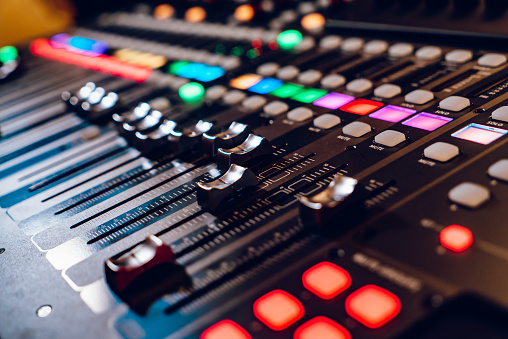
Pro Audio – Don’t Break the Mood


We often write about mixing audio for church services, where many broadcast engineers—including me—first encounter live sound.


Our radio and television engineering classes often include attendees who manage sound for church services.

An important rule is to plan each performance carefully to avoid disrupting the event’s mood. This is especially important in a church service. When unexpected issues arrive during the service, have predetermined work arounds so there is a minimum of distraction.


My preferred backup plan is a clearly designated “911 microphone” whose location everyone onstage knows. Although most praise bands now use in-ear monitors, I also keep a couple of stage wedges ready—normally off—in case the in-ear system fails.

My point is simple: we need to do everything possible to keep the mood set. As soon as we break it, we’ve failed at our job. Maybe that day a person doesn’t come forward during an alter call because we killed the mood.


I like what John Cooper, FOH engineer with Bruce Springfield says, “I don’t want the show to stop because of me. That is why my back systems have backups.”


Remember, our successful days are those when people don’t even know we’re there.

Quote of the Week

You do not have to move at full speed every day, but you should never confuse standing still with moving forward.


Inspirational Quote of the Week


  “ A gospel without belief in the living and true God; is a rope of sand”

Charles Spurgeon 


The information offered in this newsletter is that of the editor and not of any other entity or individual.

We welcome any comments or suggestions about this newsletter, send to lwilkins@al-ba.com