Monday Morning Coffee and Technical Notes

February 23, 2026 View as Webpage

Upcoming Events

February 23 – Station Log Review


March 5th – Alabama Required Monthly Test (RMT) 11:15 AM


March 8 - Daylight Saving Time Starts


March 17 – ABA Engineering Webinar


March 20th - ABA 80 year celebration tour in Dothan


March 23 – 27 Television Engineering Class


Non-Commercial Translators

The FCC has announced that later this year they will open a window to allow non-commercial FM stations operating in the reserved band (88.1 – 91.9) to file for new translators.


While filing rules are still being finalized, the commission plans to limit each applicant to 10 national applications.


Interested stations need to start planning for this window. Watch this newsletter for updated information.

Correction in last weeks Newsletter


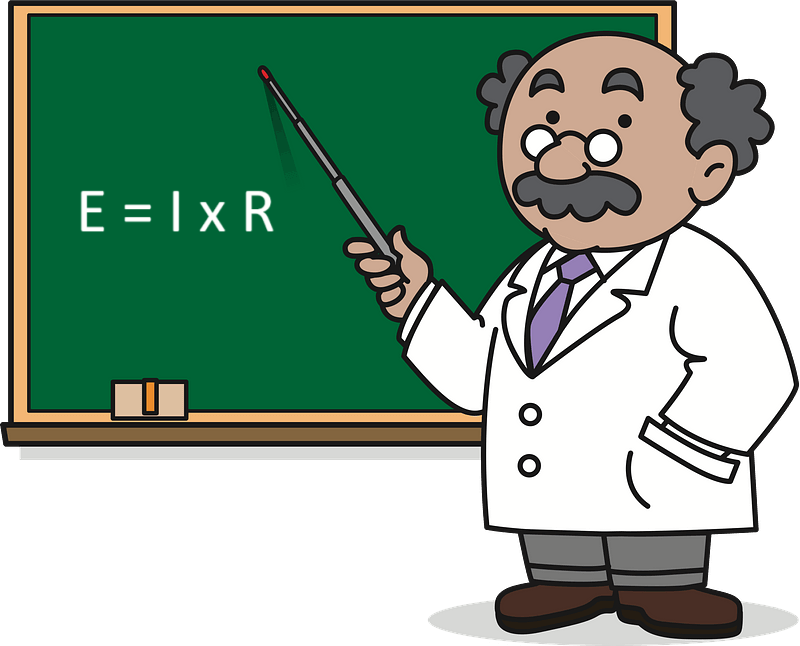
Age caught up with the proof department last week. The formula for dB was incorrect. We left off the times ten (for decibels). Correct formula should be dB = 10 * log (P1/P2). Thanks for those that caught the issue.

March Required Monthly (RMT) Test


The March Required Monthly Test (RMT) for Alabama is scheduled for Thursday March 5th at 11:15 AM. Engineers are encouraged to verify before the test, that all your monitor sources on the EAS unit are operating properly with clear audio.


We still have stations around the state that are not receiving and relaying the RMT as required by FCC rules. Don’t forget to review the station log weekly.


If you have any problems with your EAS unit receiving required test or alerts, contact the Alabama SECC for assistance.

Back to the Basics - Meter Readings


Back in the day when I got started in the broadcast business (I am dating myself now) a junior in high school, we were required to take “meter readings” every 30 minutes.


Those readings were to ensure the transmitter was operating legally and the results were kept in what was called the “transmitter Log”. That rule was later relaxed to every hour, then every three hours…finally done away with altogether.


I realize that over the years transmitters have become more reliable and most have means of reporting out of tolerance alarms to the engineer. However, we all are aware of the importance of keeping an eye on the proper operation of the transmission system.


Good engineering practices should have engineers checking the RF system daily if possible.


Increasing Your Word Power – Coulomb


Electrons moving through a material have an electrical charge. A Coulomb is a unit of electrical charge as defined by the SI, or International System of Units. 


In 1785 Charles Coulomb published a memoir on physics, one of which discussed the inverse square law of forces between two charged particles. For his work in this area, the unit of electrical charge of an electron is named after him.


Simply put…. A coulomb, a unit of electrical charge, is defined as the amount of electric charge transported by a current of 1 ampere in 1 second.

There are 6.241506×10¹⁸ (or about 6 billion trillion) electrons in a coulomb.


With that bit of information you can be a hit at parties!

ABA Engineering Academy


The ABA Engineering Academy is holding the Radio Engineering Class this week with a record attendance of around 20 students from around the country.


Our next class will be Television Engineering scheduled for the week of March 23rd – 27th. The fall schedule will include Radio Engineering scheduled for September 28th - October 2nd. The television class is scheduled for October 26th – 30th.


Special note: Due to rising costs, the ABA has instituted a $100 fee for out-of-state attendees beginning with the fall classes. 


These classes give beginners a technical overview of broadcast engineering, while experienced engineers use them to refresh their knowledge and stay current with new technology.


Each class covers basic electronics, analog and digital audio, video creation, RF systems, antennas, along with basic studio operations and FCC Rules. 

A daily schedule of subjects and online registration is available here.


Reviewing the FCC Rules – Relocating EAS Equipment


There was a strange ruling by the Commission last week. It involved a group of radio stations asking for a waiver from having an operational EAS unit in place at all times. 


The stations ask for the waiver for approximately a couple of hours to move their EAS units to their new studio location. The FCC approved some of the stations waiver but denied two because they did not give the date the units would be moved.


David Oxenford reported in his news blog, the Bureau explained in its recent decisions that Section 11.35(b) provides only for the continued operation of EAS Participants without further FCC action when EAS equipment becomes “defective.”


In each of the recent cases, the Bureau found that the EAS equipment was not defective (i.e., the equipment itself became unable to exercise its monitoring or transmission functions), but that was in good operating condition and being taken offline only so that it can be relocated. 


According to these decisions, and apparently a few cases decided before that were cited in these decisions, simply removing EAS equipment from operation does not make it defective for purposes of Section 11.35(b).  


So, if you have plans to relocate your EAS device and notify the Commission, make sure to supply compete information concerning dates and file early to give them time to review the request.

Pro Audio – Getting Started


The biggest problem in learning church audio is figuring out where to begin. Too many people end up stressed out and frustrated because all they study is mixing.


They don't understand this one truth:

“The quality of audio going into the mixer drives the quality coming out of it".


Mixing is only a part of the job. there's so much other work that needs to first be done.


Just to give a simple example, if the wrong type of microphone is placed on a kick drum or isn't placed in the right place, it will sound horrible and no amount of mixing can fix it.


There is an old saying “look before you leap”. In mixing audio it’s “listen before you add”.


All too often when we start a mix we immediately reach for our favorite plug in's. Applying EQ, compression, and other effects before we listen to the mix.


Great mix engineers will first balance the mix levels and panning before touching anything else. You may be surprised how well the mix sounds just balancing everything.

March 8th Don't Forget!

Quote of the Week

Only those who will risk going too far, can possibly find out how far one can go.


-T.S. Eliot

Inspirational Quote of the Week


The Word of God doesn’t tell us about the truth; it is truth!


The information offered in this newsletter is that of the editor and not of any other entity or individual.

We welcome any comments or suggestions about this newsletter, send to lwilkins@al-ba.com