Monday Morning Coffee and Technical Notes

March 30, 2026 View as Webpage

Upcoming Events


 March 30 – Station Log Review

April 1 - The Shift to IP-Based Operation Webinar

April 9 – Alabama RMT 12:15 AM

April 10 – 1st Quarter Issues and Programs due

April 18–22NAB Convention, Las Vegas

April 24 - ABA 80th Anniversary Reception Montgomery

To plug or not to Plug


When powering on your laptop, it is advisable to connect the AC cable before the DC cable.


Although the sequence may not appear critical, industry guidelines recommend plugging in the AC first, since this practice allows any surges generated by the rectifiers to dissipate prior to connecting the DC cable to the laptop.

The Shift to IP Webinar


The media and entertainment industry is rapidly transitioning from traditional SDI infrastructures to IP-based workflows, driven by the need for greater scalability, flexibility, and cost efficiency.


TVtechnology is hosting a special webinar “The Shift to IP-Based Workflows in Media & Entertainment” featuring speakers from several major companies.


The webinar will be held Wednesday April 1st at 2:00 PM Eastern time. Click IP webinar  for registration

Back to the Basics – Wavelength


Understanding wavelength is important, especially if you work around a AM radio station.


In broadcasting, wavelength is the physical distance between consecutive corresponding points in a periodic radio wave. It represents the actual length of a single cycle of the signal and is inversely related to frequency.


Tower heights and spacing normally involve wavelengths. In broadcasting one can easily calculate the wavelength by dividing the speed of light by the frequency that will be used.

For instance, a AM radio station operates on 740 kHz, one wave is found by, wavelength = 984/.740…..the wavelength would be 1,329 feet. Most radio stations use a quarter wave tower, so in this case the tower should be 332 feet.

New Firmware for DasDec Units


Dasdec has announced the rollout of its updated firmware.  


Version 6 for the DASDEC-III platform represents a major modernization of Digital Alert Systems’ core emergency messaging infrastructure. Built on a new 64-bit operating system with support planned through 2032, the update significantly improves system performance, security, and long-term reliability “ writes Bill Robertson with DasDec.


A key highlight of Version 6 is the inclusion of the PLUS Package for active encoder devices, which adds meaningful operational improvements. Users gain instant visibility of alerts through automatic browser refresh, expanded audio support including MP3 and OGG/Vorbis streaming, and front-panel audible notifications for faster response.


While the upgrade is not mandatory, the company continues to support its Version 5 series — fully compliant with current FCC rules; however, staying on older versions may limit access to newer integrations, security protections, and operational efficiencies”.


Contact DasDec directly for more information.

FCC Update


A broadcast engineer's primary responsibility is to ensure that their station adheres fully to all current FCC Rules and Regulations. Upholding these standards not only facilitates the delivery of high-quality content to audiences but also supports the FCC’s commitment to maintaining equitable conditions for all broadcasters.


Most recent enforcement issues include:


1. Towers not being properly painted and lighting not operating properly, along with failure to file for a NOTAM (notice to airmen)

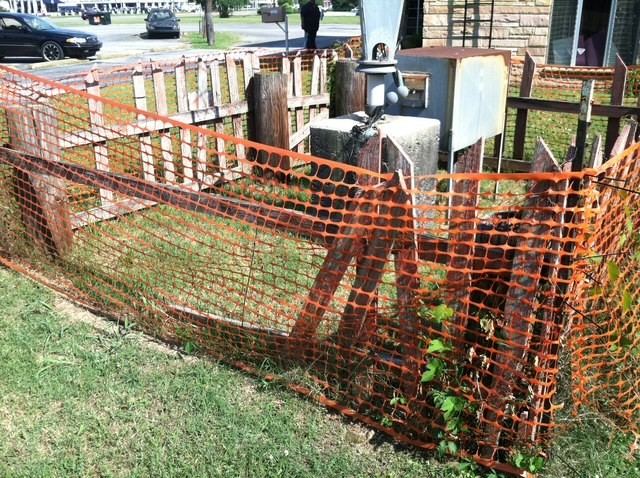
2. Improper fencing and access to AM tower bases

3. Failure to maintain proper operation of the EAS Equipment

4. Operation with transmitter power output outside of minimum and maximum levels  

Increase Your Word Power –  MIMO


An acronym for Multiple-In, Multiple-Out, MIMO communication sends the same data as several signals simultaneously through multiple antennas, while still utilizing a single radio channel.


This is a form of antenna diversity, which uses multiple antennas to improve signal quality and strength of an RF link.

MIMO increases the spectral efficiency within a single RF channel by using spatial multiplexing.


In the ATSC 3.0 terrestrial broadcast system it utilizes cross-polarized antennas such as horizontal and vertical polarization to guarantee spatially separated propagation paths with high cross-polarization discrimination (XPD).


The optional (MIMO) antenna scheme adopted in ATSC 3.0 can improve robustness or increase capacity via additional spatial diversity and multiplexing by sending two data streams in a single radio frequency channel.


Therefore, the ATSC 3.0 MIMO broadcast can achieve a nearly double data rate compared to SISO broadcast systems depending on the physical layer configurations

Pro Audio – Before you Start


If you enjoy mixing audio, noted producer and music industry veteran Bobby Owsinki has some helpful hints to complete before you ever touch a fader.


First, deactivate and hide any tracks that you know won’t be needed so they don’t soak up your computer’s system resources. This practice also assists in keeping your computer screen organized and free of clutter.


Second, reorder tracks into logical groups of instruments or vocals. The idea is to group similar instruments or vocals together. You can also color code tracks to make the groups easier to find.


Bobby reminds us to correctly label the tracks clearly. It’s really easy to mistake one track for another and turn a fader or parameter knob and wonder why nothing is happening, only to find that you’re tweaking the wrong track.


Finally double check the Digital Audio Workstation settings to ensure the auto save feature is turned on so you don’t lose important settings.


Earl, I think we need to repair this tower fence

Quote of the Week

  Your to-do list may be long, but the only one that matters is the one at the top of the list. Never move to the second one before the first one is finished.

Inspirational Quote of the Week


Our prayers may be awkward. Our attempts may be feeble. But since the power of prayer is in the One who hears it and not in the one who says it, our prayers do make a difference.

-      Max Lucado


The information offered in this newsletter is that of the editor and not of any other entity or individual.

We welcome any comments or suggestions about this newsletter, send to lwilkins@al-ba.com