|
Long time News Anchor passed away
My personal friend and co-worker in the television business, Bob Howell, has passed away.
I first met Bob while we were working at WTVY-TV in Dothan AL. Bob later moved to Montgomery in August 1976 anchoring the 6 and 10 p.m. newscasts. He spent over 30 years anchoring more than 10,000 live newscasts and serving as the News Department’s Managing Editor.
Following a broadcasting career of about 45 years, Howell retired in 2012.
The Alabama Broadcasters Association inducted Bob into the ABA Hall of Fame in 2012.
Bob passed away last Saturday May 24th. He was 76 years old
| | |
ABIP Seminar
The ABA Engineering Academy is excited to announce it will offer a special two-day seminar covering the Alternative Broadcast Inspection Program (ABIP).
This live training seminar is designed for current ABIP inspectors and those that are interested in becoming an inspector. We also have opened the seminar up to any engineer that is interested in learning more about the inspection program. The seminar is offered at no cost by the Alabama Broadcasters Association.
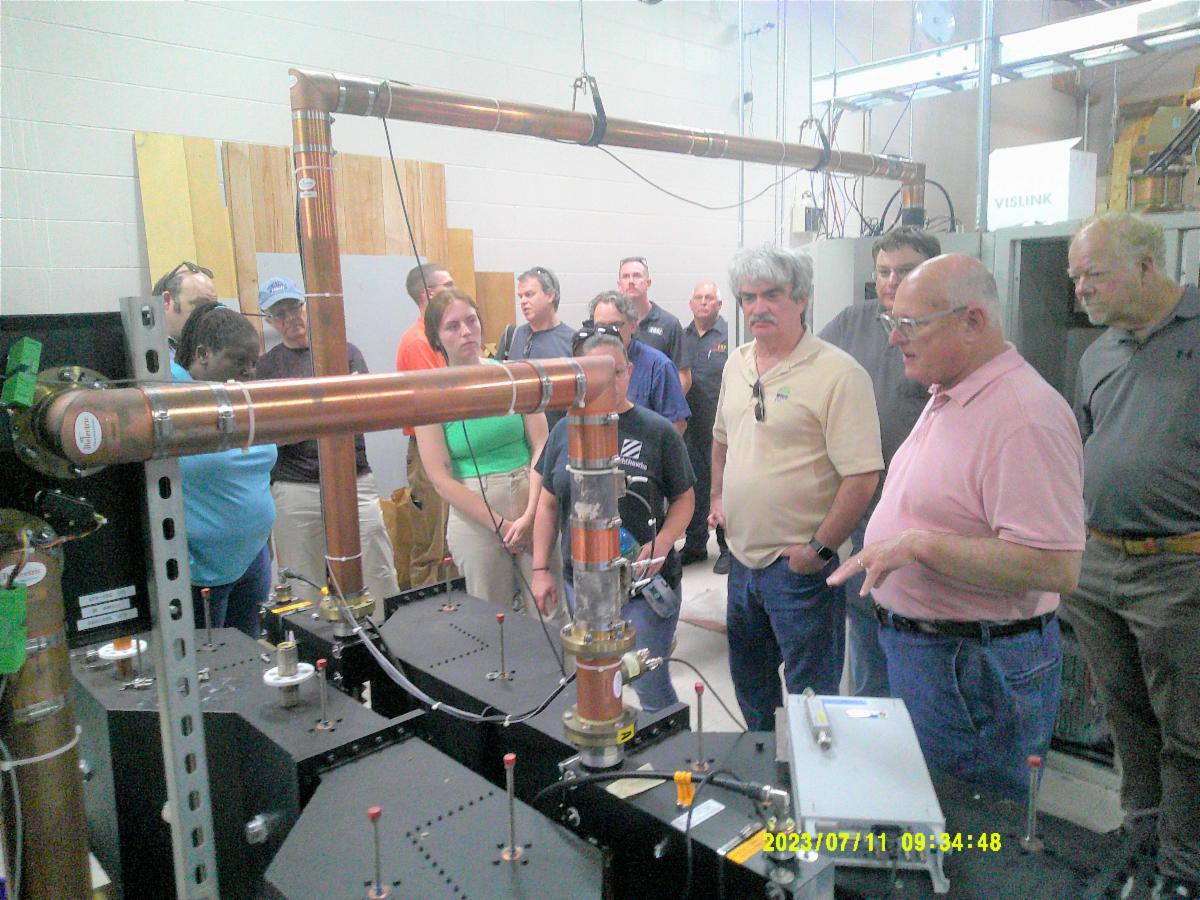
We have scheduled the seminar for August 18th & 19th, 2025. On the first day we will be in the classroom, going over the inspection details (Online public files, EAS, Transmitter site and basic operational items). The second day will feature on-site mock inspections at area broadcast transmitters (AM, FM and Television).
The class will be held at the ABA Training Center, 2180 Parkway Lake Drive in Hoover, AL (Birmingham). It will start at 8:30 AM central both days. Instructors are John George, ABIP inspector for South Carolina and Larry Wilkins ABIP inspector for Alabama.
You can register online here. On the registration page is a list of area hotels that have special reduced prices for attendees.
| | |
Roll-Out Update
As the roll-out of ATSC 3.0 continues the NAB, in an effort to speed up the adoption of Next Gen television, has asked the FCC to set a date to mandate that receivers have both ATSC 1.0 and ATSC 3.0 decoders installed.
This has triggered negative comments from the Consumer Technology Association (CTA) which continues its opposition to the mandate, saying in an FCC filing that such rules would raise prices and stifle innovation at a time when only a “small sliver of consumers … still use over-the-air reception.”
“There is no basis whatsoever for heavy-handed and risky government intervention to justify a regulatory mandate when the marketplace is working," the CTA argued in its filing. “Doing so would impose real costs for consumers, stifle innovation and levy unneeded regulations contrary to this Administration’s goals without a guarantee that consumers will tune into more broadcast video.”
According to the ATSC, 76% of the United States is now within reach of an ATSC 3.0/NextGen TV signal, however that doesn’t indicate how many in that number are receiving OTA television reception.
In another business deal Charter Communications, the largest US pay TV provider, announced plans to merge with family-owned privately-held service provider Cox Communications, expanding its service footprint and creating a chance for growth across internet, mobile and video businesses.
| |
|
The Freedman Group Acquires Lectrosonics
If you are involved with wireless microphone and IFB systems, I am sure you are familiar with Lectrosonics.
The Freedman Group, parent company of audio brands including RØDE, Mackie, Aphex, SoundField, and Event Electronics, announced the acquisition of Lectrosonics, a globally renowned U.S. manufacturer of professional wireless audio systems on May 8, 2025.
Wes Herron, President of Lectrosonics, stated, “Joining The Freedman Group represents an exciting new chapter for Lectrosonics. With its global reach and shared passion for audio excellence and in- house manufacturing, we look forward to accelerating product development and expanding our market presence while maintaining the quality and reliability our customers expect.”
| |
Remembering Composite Video
Composite video emerged in the mid-20th century as a solution to transmit television signals over a single channel. Initially, it was developed in response to the growing demand for a standardized method of broadcasting analog signals. As television technology advanced, composite video became the go-to format for consumer electronics, including VCRs and early gaming consoles. The format's simplicity and compatibility made it a household staple.
Composite video is a format that merges all video data into a single, unified signal. This includes brightness (luminance), color (chrominance), and synchronization information.
Color encoding in composite video is a crucial process that enables the transmission of color information alongside luminance in a single signal. This is accomplished using a technique called quadrature amplitude modulation, which encodes the chrominance (color) signals onto a subcarrier frequency that is then combined with the luminance (brightness) signal. The “Y” channel carries the composite sync information.
One of its primary benefits is simplicity. By combining all video information into a single signal, composite video allows for straightforward connections with minimal cabling, making setup easy and accessible. This advantage makes composite video a practical choice for many users, particularly in scenarios where ease of use and broad device support outweigh the need for high-definition output.
| |
Soldering 101
In the past, learning to solder properly was a technique that all engineers needed to master. These days engineers normally don’t do as much soldering as they used to, however learning the proper procedure is still important.
Soldering is a delicate manual skill which only comes with practice. Poor soldering can be an expensive business - causing product failure and downtime, engineer's maintenance time and customer dissatisfaction.
At the beginning, having the right equipment is important.
Wattage: Typically, they may have a power rating of between 15-25 watts or so, which is fine for most work.
Temperature Control: the simplest and cheapest types don't have any form of temperature regulation. A proper temperature-controlled iron will have some form of built-in thermostatic control, to ensure that the temperature of the bit (the tip of the iron) is maintained at a fixed level (within limits).
Bits: it's useful to have a small selection of manufacturer's bits (soldering iron tips) available with different diameters or shapes, which can be changed depending on the type of work in hand.
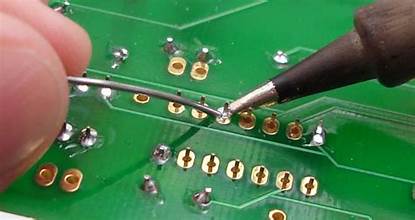
This is followed by making sure that all parts - including the iron tip itself - be clean and free from contamination. Solder just will not "take" to dirty parts! Next, the joint should be heated with the bit for just the right amount of time – during which a short length of solder is applied to the joint. Do not use the iron to carry molten solder over to the joint!
A successful solder joint is one that has an appropriate amount of solder. Too much solder is an unnecessary waste and may cause short circuits with adjacent joints. Too little and it may not support the component properly, or may not fully form a working joint. How much to apply, only really comes with practice.
A great article of learning to solder is available here
| |
Pro Audio - Meters
As audio engineers we have been taught to “mix with your ears not with your eyes”. However, audio meters play an important role as well.
The meters in your console might show signal levels in two modes: RMS and peak. RMS (or root-mean-square) readings correspond to the average levels. A VU meter approximates average levels. Peak readings, such as displayed on LED bargraph meters set to peak mode, show the level of peaks or short transients.
The average or RMS level indicates approximately how loud the sound is, while the peak level shows how close the signal is to clipping. Generally, you want the signal level to be as high as possible without the peaks clipping or distorting.
The signal-to-noise ratio (S/N) is the level difference in decibels between the average signal level and the noise floor. The higher the S/N, of course, the less hiss you hear.
The level difference in dB between the nominal (average) signal level and the clipping level is called “headroom”.
A few years ago, a new measurement tool appeared on the scene, LUFS (loudness units relative to full scale).
What is a loudness unit, or LU? In the simplest terms, loudness units are the same as decibels, with one key difference: they attempt to factor in the ways in which our ear-brain system interprets loudness based on the tonal balance of a sound.
In other words, LUFS meters respond more to the way our ears/brain hears audio. Something RMS or Peak readings can’t do.
Read more about LUFS here
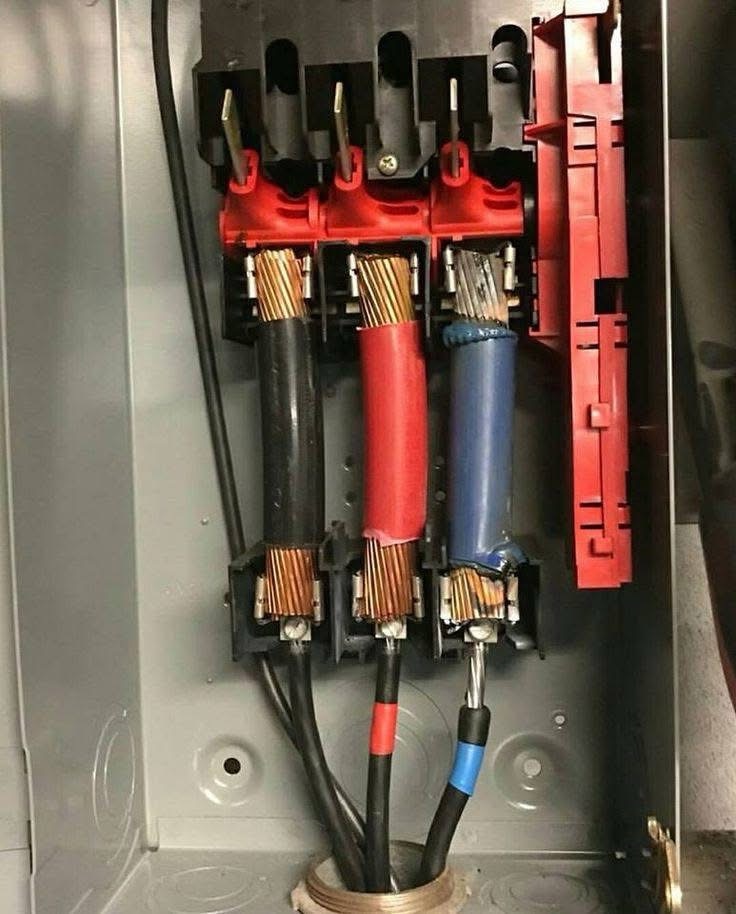
| | At least it's color codes match! | | Wisdom comes with experience; it’s usually the painful events that hold the greatest lessons. | |  | |
Inspirational Quote of the Week
Faith is like lighting the torch that passes from one person to the next. You can't light the torch of another if yours isn't burning.
- Chuck Swindoll
| | |
The information offered in this newsletter is that of the editor and not of any other entity or individual.
We welcome any comments or suggestions about this newsletter, send to lwilkins@al-ba.com
| | | | |