Monday Morning Coffee and Technical Notes

January 5th 2026 View as Webpage

Upcoming Events


January 5 – Station Log Review by Chief Operator


January 8 – Alabama Required Monthly Test (RMT) 11:15 AM


January 12 – Station Log Review by Chief Operator


January 15 – Station Log Review by Chief Operator


January 20 – ABA Engineering Webinar


February 5 - Alabama Required Monthly (RMT) Test 12:15 AM


February 17 - ABA Engineering Webinar


February 23-27 - Radio Engineering Class

New Year Resolutions


Do you make New Years Resolutions. I have read that most resolutions don’t last passed February.


As a broadcast engineer one resolution that you need to make and keep is developing a trait of becoming a “lifelong learner”. 


Technology is changing at such a tremendous rate, if you don’t keep up you will soon be out of date.


Networking with other engineers, reading trade magazines, attending SBE and other technical meetings, and taking advantage of technical seminars and webinar.


The ABA offers free radio and television classes several times during the year. Read more about the classes in this newsletter.

  Surge Protectors versus Power Conditioners


Surge protectors protect devices from sudden voltage spikes that can fry circuits. Imagine a lightning strike or a sudden power outage. Without a surge protector, your equipment could be toast.


Surge protectors work by redirecting excess voltage away from your devices. They use components such as metal oxide varistors (MOV) and gas discharge arrestors. When a surge hits, these components spring into action. They channel the extra energy into the grounding wire, keeping your electronics safe and sound.


Power Conditioners are more than surge protectors. They provide comprehensive power protection by smoothing out voltage fluctuations and reducing electrical noise. This ensures that your sensitive equipment operates optimally. Unlike basic surge protectors, Plug-in Power Conditioners include components like isolation transformers and noise filters. These elements work together to prevent system destruction and component degradation.

When installed properly, they act as a buffer between your devices and the power source, ensuring that only clean power reaches your equipment. They often use Isolation Transformers that separates the device from the power source, reducing noise and interference.


On the other hand, a UPS provides backup power when the main power goes out. It has a battery that kicks in during a power outage, giving your backup generator time to come online. In addition, like the power conditioner a UPS systems also protect against power surges and keep the voltage steady. Sometimes it is good engineering practice to use a UPS followed by a power conditioner for even better protection.


Choosing the right device is a balance between protection and cost. Assess your specific needs, consider the environment, and make an informed decision. Your electronics deserve the best care, and with the right tools, you can ensure their longevity and performance. End of the day, it’s not just about protection; it’s about ensuring your equipment perform at its best.


Tower Ownership


As a reminder if you sell or purchase a broadcast station, you must also remember to change the tower registration. 


All towers must be registered with the FCC, so that the FCC can notify the appropriate owner of any issues that may arise - and owners are subject to fines if it is discovered that the tower owner is not properly reported in FCC records.


In sales of broadcast stations and other communications licenses, towers are often included assets. However, when the focus of the transaction is the sale of a radio or TV station, for which prior FCC approval is necessary, the transfer of the tower in the FCC records may well be overlooked. 


No prior FCC approval for the sale of the tower is needed, and the tower is not included in the FCC authorizations reported on the applications for the sale of the broadcast licenses. Thus, the parties must remember that the tower registration must be amended to report the new owner after the closing of the sale of the station.

January ABA Engineering Webinar


The first ABA Engineering Webinar for 2026 will be held on Tuesday January 20th, 2026. It will feature a discussion concerning recent cyber-attacks on radio stations and ways to help prevent these attacks. Special guest will be Wayne Pecena, IT director Texas A&M University. Click here to register.


The February webinar is scheduled for February 17th will feature Cris Alexander with Crawford Broadcasting, discussing the monitor point requirements for AM directional stations.


These engineering webinars are offered on the third Tuesday of each month and feature various guest speakers covering technical topics of interest to radio and television engineers.

Back to the Basics – Soldering 101


I realize that most engineers, especially newcomers, don’t understand the importance of learning how to solder correctly. 


A lot of repairs today are completed by just changing out a module. However, there are times when you will need to plug in the iron and repair a microphone cable or change out a component on a piece of equipment.


When it comes to soldering, choosing the right soldering iron is crucial for achieving precise and reliable results.


There are several factors to consider when selecting a soldering iron, including its power output, temperature control features, and the type of soldering iron tips it uses.


The power output of a soldering iron is typically measured in watts. When you are working on smaller and more delicate components, a lower wattage soldering iron may be more appropriate to prevent potential damage. The type of soldering iron tips you choose can significantly impact your soldering experience.


When soldering always clean the surfaces to be soldered and tin component leads. Tinning the leads helps prevent oxidation and facilitate better heat transfer during soldering.


Learning how to apply the right amount of solder is key to achieving successful solder joints. Too much solder can lead to solder bridges and poor electrical conductivity, while too little solder may result in a weak joint. The goal is to achieve a “solder fillet,” a smooth and shiny concave shape formed by the solder flowing around the joint.

ABA Engineering Academy


The ABA Engineering Academy will host the Radio Engineering Class from February 23–27, 2026.


A few seats are still available so sign up now.


These free classes, held at the ABA Training Center in Hoover, AL, offer both an introduction to broadcast engineering and a refresher for experienced engineers, covering topics such as electronics, audio, video, RF systems, antennas, studio operations, and FCC Rules.


Attendees may take the SBE Certified Broadcast Technologist exam on Friday (exam requires a separate fee and is optional).


For schedules and registration, visit the ABA Engineering Class website. The Television Engineering Class runs March 23–27, 2026.

Alternative Broadcast Inspections


The ABA is setting up the Alternative Broadcast Inspection Program (ABIP) inspection schedule for 2026.


If your station has participated in the inspection program over the last few years, we encourage engineers to check the expiration date on the Certificate of Compliance. 


Should your certification be expired or will expire in 2026 contact the ABA to schedule a new inspection. If your station has never participated in the program, now is a good time to get on the inspection schedule. 


Current Alabama Broadcasters Association member stations receive the inspection for free, except for inspector travel expenses.


The inspector plans to be in the following areas over the first few months of 2026.

January Dothan area

February Florence area

March Huntsville area


Scheduling inspections while the inspector is in your area will help save on travel expenses.

Pro Audio – A Look at Equalization


EQ is a fundamental tool used by audio engineers to shape the sound of music, voice recordings, and other audio content. With equalization, you can boost or cut specific frequencies to make certain elements of the audio stand out more clearly, to make the overall sound more balanced, or to add certain tonal qualities to the audio.


EQs can be used for a variety of different ways to correct problems or as a sound design tool in your mix. Typically, EQs are used for the following operations:


·      EQs address frequency masking issues. Frequency masking is the “muddiness” that occurs when instruments with overlapping frequencies clash with each other, making it difficult to clearly perceive simultaneous sounds.

·      EQs also identify and fix problematic frequencies: sometimes you may find annoying resonances or harsh sounds that were captured during recording or processing.

·      EQs can be used to sculpt an audio signal’s timbre, acting as a creative sound design tool to achieve a desired sound effect.


EQ should generally help sources blend in a mix, not alter their original sound except in rare situations.

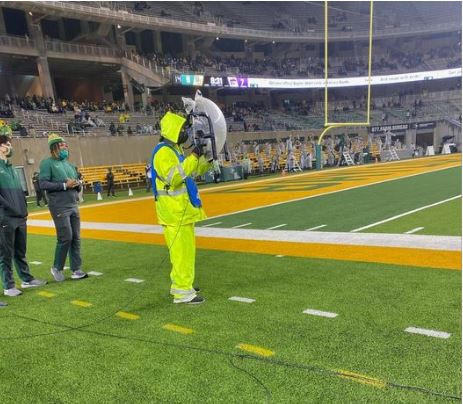
Gave Earl one simple job to do at the ball game!

Quote of the Week

The difference between a successful person and others is not a lack of strength, not a lack of knowledge, but rather a lack of will.

-           Vince Lombardi

Inspirational Quote of the Week


“Don’t worry about having the right words; worry more about having the right heart. It’s not eloquence he seeks, just honesty.”

-            Max Lucado


The information offered in this newsletter is that of the editor and not of any other entity or individual.

We welcome any comments or suggestions about this newsletter, send to lwilkins@al-ba.com