Monday Morning Coffee and Technical Notes

April 13, 2026 View as Webpage

Upcoming Events


 April 13 – Station Log Review


April 18–22NAB Convention, Las Vegas


April 24 - ABA 80th Anniversary Reception Montgomery

Important EAS Reminder


Engineers are reminded to review the settings in the EAS unit for all incoming filters, to ensure that the “Location” is set for local area only. Verify also that the “local area” tab has the correct counties for your service area.


On Saturday, April 11th, an emergency alert was issued for Escambia, AL.


The SECC EAS monitoring system noted that many stations outside the designated Escambia area also received and relayed the alert.


Selecting local area will make sure your unit only responds to tests and alerts that are for your area. National and Statewide tests and alerts will still be processed by the unit.

News from Washington


Back in April of 2013 the FCC adopted a proposal labeled “Audible Crawl Rule.” This would require television stations to provide an aural representation of visual, non-textual emergency information that is displayed during non-newscast programming, such as radar maps or other graphics, on a secondary audio stream” for persons who are blind or visually impaired.


The effective date has been delayed a number times, because a technical solution for automated descriptions of the information in such graphics does not exist.


The Commission will consider during its April 30th meeting a Third Further Notice of Proposed Rulemaking to amend the Audible Crawl Rule and eliminate a technically unworkable provision while ensuring that people who are visually impaired continue receiving the critical emergency information they need.  

ABA 80th Anniversary


The Alabama Broadcasters Association is celebrating 80 years of service to Radio and Television stations in the state. So that more people can be a part of the celebration, the ABA is traveling around the state hosting special receptions!


All broadcasters are welcome (including engineers). We’re also inviting your community partners and civic leaders from the surrounding areas, including city, county, state and federal elected officials.


The next event will be held in Montgomery on Friday April 24th. It will be held from 4pm – 6pm at The Renaissance Montgomery Hotel and Spa. Click here to register.

Back to the BasicsRemote Control


The majority of broadcast stations operate with studios at one location and the transmitter at another location. In the early days it was required to have someone at the transmitter site to monitor the transmitter operation.


This requirement is no longer required, provided that stations install and maintain an appropriate remote-control system which ensures compliance with FCC Rules 73.1350. According to these rules, “Each licensee is responsible for maintaining and operating its broadcast station in a manner which complies with the technical rules set forth elsewhere in this part and in accordance with the terms of the station authorization.”


Remote-control systems must be configured to permit termination of transmission at all times and to continuously monitor the performance of the entire transmission system.


In the event that an out-of-tolerance condition arises, these systems are required to either alert the designated personnel or terminate transmission as appropriate.


Concerns encompass factors such as transmitter output power, excessive modulation, the emission of spurious signals, as well as ensuring the proper functioning of tower lighting systems.

Stations often include other items such as building temperature, unauthorized entry, transmission line pressure, excessive reflective power, etc.


The remote-control system should be inspected for proper operation regularly, as the Commission says “as often as necessary to ensure compliance”.

ABA Engineering Academy


Although our next Engineering classes won’t begin until autumn, this is the perfect opportunity to start planning your attendance. We’re currently updating our study guides and program to include more relevant material for broadcast engineers, as well as new information about emerging technologies like IP for broadcasting, digital audio and video, SMPTE 2110, and ATSC 3.0.


We offer students the opportunity to take the SBE Certification exam on Friday if desired.


This 5-day class in held at the ABA Training Center in Hoover, AL (Birmingham). Discount rates for students are available at area hotels. More information about daily subjects covered and online registration is available here.

Increase Your Word Power – Tilde


When working with formulas, sometimes the answer may not be an exact number but an approximation. When this is the case, we often use a symbol called “Tilde” with the symbol ~.


A tilde is sometimes used before a number to mean “about” or “approximately.” For example, we may say that the maximum data rate in ATSC 3.0 is ~25 Mbps This usage is based on the math usage of the tilde symbol to mean an approximate equivalency.


Simply put the data rate could be lower or higher than 25 Mbps based on carrier to signal noise ratio.

Pro Audio – Equipment Maintenance


Proper equipment maintenance is essential in both recording studios and live sound environments. In larger organizations, a dedicated team typically oversees this responsibility, whereas in smaller operations, the front-of-house engineer often manages maintenance tasks. Regardless of assignment, ensuring the upkeep of audio equipment remains a priority for operational efficiency.


Before an event, take a day to inspect all microphone cables and stage boxes for intermittent operation and loose jacks and connectors.


Clean wind screens on microphones and check for proper operation. Battery housing on wireless mikes should be cleaned to ensure proper contact.


Connectors used on wireless belt packs for microphones and in-ear devices are fragile and need to be checked often.


When participating in live road shows, ensure that all equipment is thoroughly cleaned, as dirt and grime may accumulate over time.

Know Your Connectors


Last week we posted a look at the BNC connector used in video, audio and RF. These are designed for use involving very low power operations.


When working with transmitter outputs where power can reach thousands of watts, a special connector is often used.


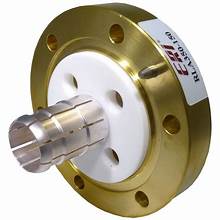
EIA (Electronic Industries Alliance) flange connectors are standardized RF interfaces widely used in high-frequency applications. These connectors employ a flanged mechanical design to achieve low-loss interconnection between coaxial cables and equipment.


Key features include stable impedance (typically 50Ω/75Ω), high shielding effectiveness (>90dB), and broad bandwidth (DC to 40GHz+). The flange design, inner and outer conductor dimensions are standardized, by EIA, in the RS-225, 50 Ω (ohm), and RS-259, 75 Ω, standards. They are commonly referred to by the inner diameter of the outer conductor.


The flange makes the electrical connection for the outer shield while the inner conductors are connected using a matching “bullet”.

The installation of EIA Flange Connectors requires precision and adherence to the recommended procedures. 

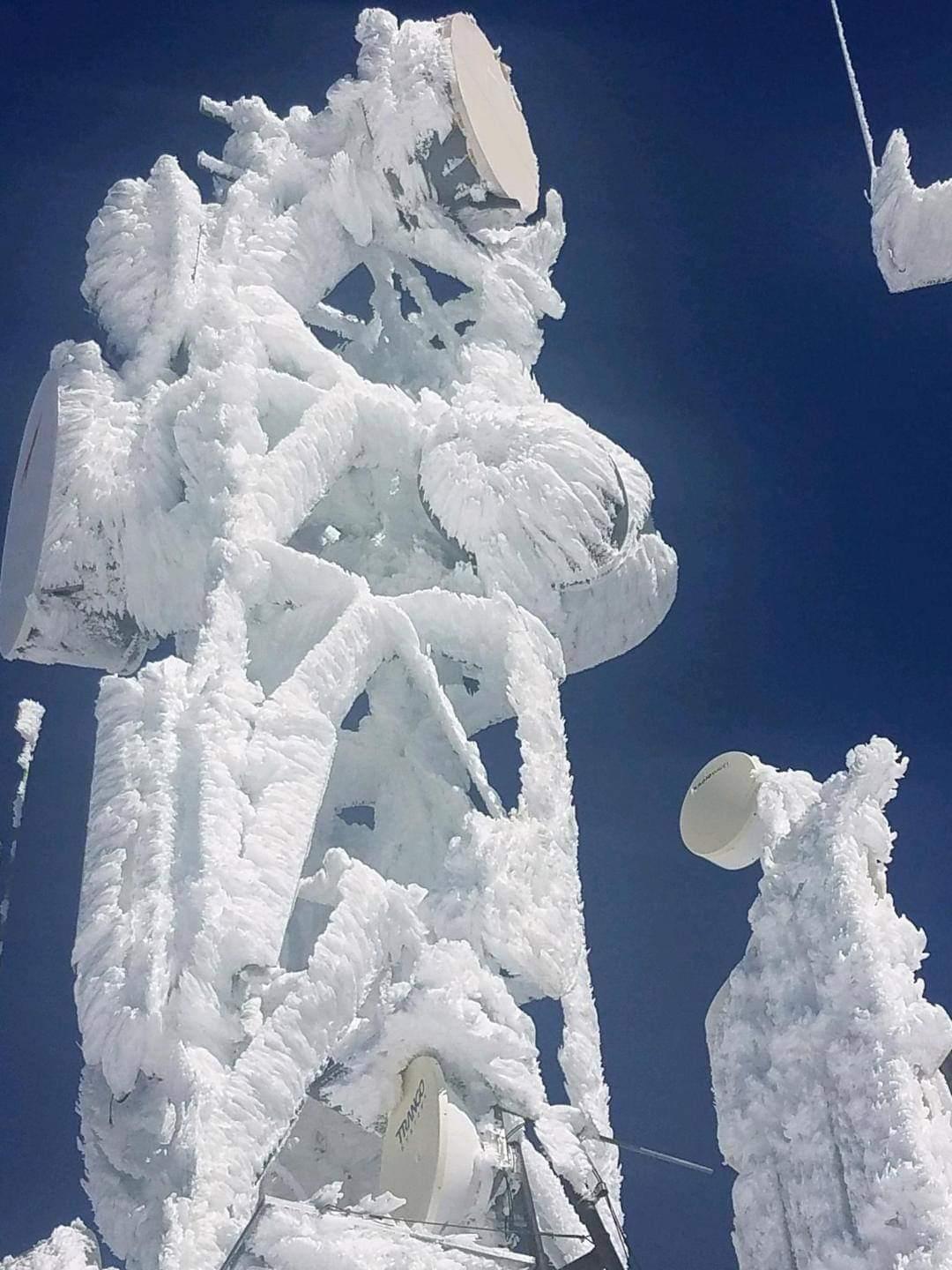
Boy am I glad....Summer is coming

Quote of the Week

With cutting-edge technology, the imperative of ensuring redundancy transcends mere best practices; it stands as a strategic necessity.

Inspirational Quote of the Week


"When culture changes around us, God's standard of living does not. Even when we're engulfed by evil, the eyes of the Lord range to and fro throughout all the earth to strengthen those whose hearts are fully committed to Him."


David Jeremiah


The information offered in this newsletter is that of the editor and not of any other entity or individual.

We welcome any comments or suggestions about this newsletter, send to lwilkins@al-ba.com