Monday Morning Coffee and Technical Notes

October 20, 2025 View as Webpage

Upcoming Events


October 20 – Station Log Review by Chief Operator


October 21 – ABA Engineering Webinar. Frank Foti, setting up proper monitoring for processor adjustments.


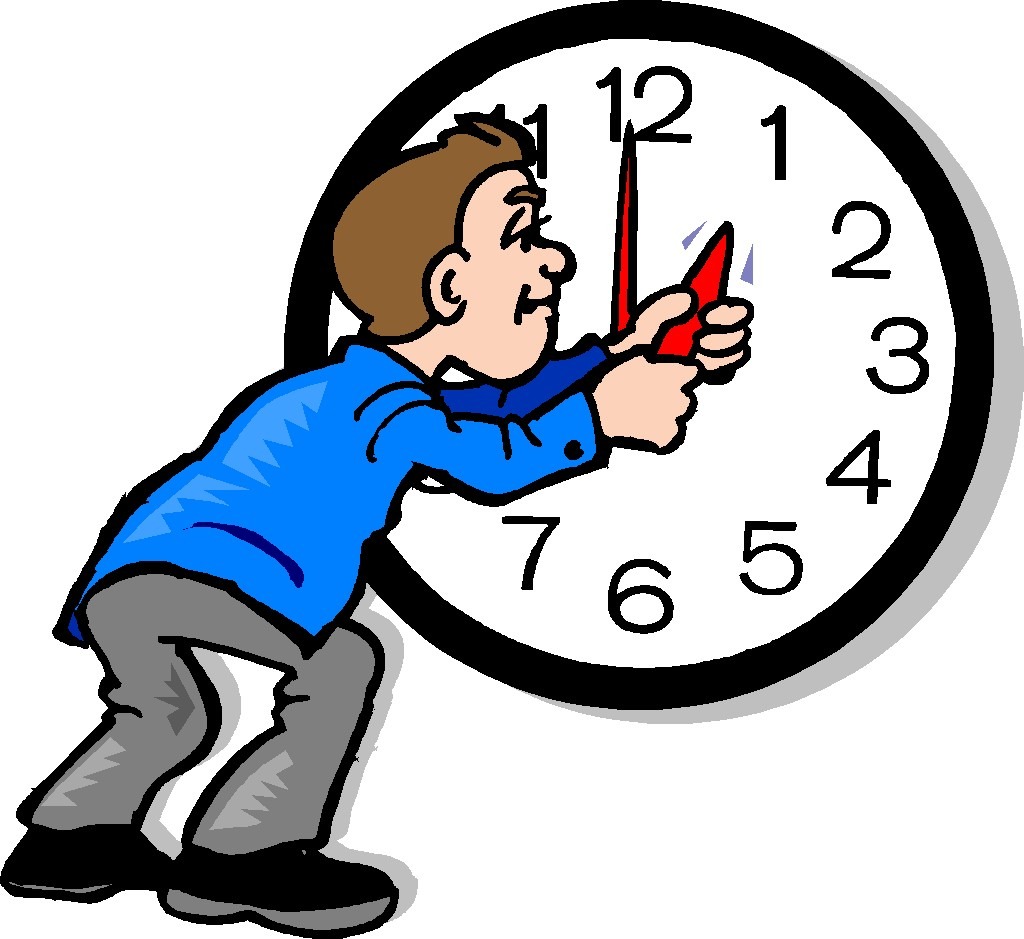
November 2 – Daylight Savings Time ends


November 3 – 7ABA Television Engineering Class

ABA Engineering Webinar


Join us tomorrow, Tuesday October 21st, for the ABA Engineering Webinar. 


Special guest will be Frank Foti with Telos Alliance. Frank, considered by many as the “God Father of the Omina Processor”, will be discussing how to set up a monitoring system to use while adjusting audio processors. All too often engineers adjust processors in the wrong environment making it impossible to create the proper “over the air” sound.


The webinar will start at 10:00 AM central time. Click here to join the webinar.

ABA Engineering Academy


As a reminder the ABA Engineering Academy will hold the Television Broadcast Engineering class the week of November 3rd – 7th, 2025.


This is an excellent opportunity for new engineers to receive valuable technical training, including basic electronics, analog and digital audio, history of television, technical operation of NTSC, ASTC 1.0 (8VSB), ATSC 3.0 and SMPTE 2110. Seasoned engineers can use it as a refresher course as well as learning about ATSC 3.0 and SMPTE 2110.


This class runs from 8:30 AM – 4:00 PM Monday through Thursday. Friday is reserved for those wishing to take the SBE Certified Broadcast Technologist exam.


The class is offered at no charge, by the Alabama Broadcasters Association. Click here to view the daily schedule and registration.

Sage Endec Time Issue


Sometimes stations report receiving EAS tests indicating “time issue”. Harold Price with Sage Alerting Systems, offers this advice on trouble shooting and correcting this issue.


“Check the ENDEC's time of day on the home page (on the right hand side). See if it matches local time (and utc time). 


If it does, then the problem is with the originator.


If local time is not right, and valid NTP addresses are on the network tab, click the network diag button - if NTP is not sync'd after 20 minutes, and IPAWS is marked as ok, then the problem is probably a firewall for UDP port 123. 


If IPAWS is not ok either, then the problem is DNS server or the internet gateway address.”

FCC Operation Update


For the most part the FCC web site remains off line This is due to a partial lapse in Federal Government funding arising from lack of Congressional Appropriations, termed a government “shutdown." 


The Commission has announced that most filing deadlines will be extended to the next business day following the resumption of normal FCC operations.


The only section that appears to be working correctly is the ETRS site. So if you still haven't file an updated Form One (which was due on October 3rd), you may go ahead and get that done.


If due to the shut down, you miss any filing date, communications attorneys suggest you prepare a memorandum stating that you had the document ready on the deadline, attempted to upload, but the system was down. Save the memorandum for future use in uploading and for reference when your station’s license renewal application is filed. When the FCC’s system is eventually up and running, upload the issues-programs list for the 3rd Quarter along with your brief memorandum. 


A copy of the FCC’s Public Notice, Impact of Potential Lapse in Funding on Commission OperationsDA 25-922, released September 30, is attached, which address filings and deadlines.

Back to Basics - Resolution


Back in 1927 when Philo Farnsworth discovered a method of capturing an image electronically and displaying it on a monitor, it was based on technology we still use today. Sampling the brightness at different points in the picture.


These samples are referred to as pixels. The number of pixels sampled is expressed as the resolution. That number is normally stated as the number of pixels you have across to the number of bits up and down on the display.

SD or standard video is 720 X 480, Total pixels 345,600


But for the purposes of counting pixels you have to subtract 16H for horizontal blanking, so the pixel count is 704 x 480 = 337,920. 


HD is 1280 X 720, Total pixels 921,600.


Full HD is 1920 X 1080, Total pixels 2,073,600 (usually called 2K referenced to the number of horizontal pixels).

Not to be confused with “2K” in the computer world, which is 2048 x 1080.


Ultra HD is 3840 X 2160, Total pixels 8,294,400 (usually called 4K referenced to the number of horizontal pixels).

Not to be confused with “4K” in the computer world, which is 4096 x 2160.

Overseas delivery Issues


Recent changes in customs laws and tariffs have been causing delays and cancellations in getting broadcast equipment parts, affecting both manufacturers and customers.


Repair parts from overseas are especially impacted. The technical department should proactively address these issues to avoid being unprepared if equipment fails due to unavailable parts.


Review your redundancy plans, should this problem come up at your facility.

Daylight Savings Time Ends


Despite movements to do away with the twice a year time change, Daylight saving time will end at 2 a.m. Nov. 2. Time will move back one hour at this time. We gain an hour in November to accommodate for more daylight in the mornings.


In addition to changing clocks and readjusting our lifestyles, broadcasters should ensure that all operations that are keyed to the time of day are adjusted correctly. This includes transmitter modes of operations, automation system, Etc.

Receive Antennas for ATSC 3.0


As ATSC 3.0 continues to roll out across the country, television station engineers should get up to speed on the proper selection and installation of outside antennas. Just like during the upgrade from analog to digital, consumers will be reaching out to stations for information on antennas.


We are aware that proper installation is important to maximize signal strength while minimizing multipath issues. While multipath can cause problems, the design of the ATSC 3.0 signal helps with this problem.


With ATSC 3.0’s OFDM, multipath performance is controlled by the broadcaster. In OFDM, the data is divided among thousands of carriers so each carrier has to carry a much smaller amount of data.


Multipath appears as interference between OFDM symbols; ATSC 3.0 handles multipath by inserting a guard interval between symbols. The guard interval (GI) is created in the time domain by taking samples belonging to the last part of the OFDM symbol and prepending them as a cyclic prefix to the original symbol.


This extra information allows the receiver to fill in the information lost due to multipath. ATSC 3.0 offers 12 selections of GI sample size. The relationship between the number of samples and the allowable time difference between multipath signals depends on the number of carriers.


However, engineers should be prepared to answer a lot of consumer calls for help.

Pro Audio –  Where to Begin


The biggest problem in learning how to mix Live audio is figuring out where to begin. Too many people end up stressed out and frustrated because all they study is mixing. They don't understand this one truth:


The quality of audio going into the mixer drives the quality coming out of it.

Mixing is only a part of the job. There’s so much other work that needs to first be done.


Just to give a simple example, if the wrong type of microphone is placed on a kick drum or isn’t placed in the right place, it will sound horrible, and no amount of mixing can fix it.

There is an old saying “look before you leap”. In mixing audio it’s “listen before you add”.


All too often when we start a mix, we immediately reach for our favorite plug ins. Applying EQ, compression, and other effects before we listen to the mix.


Great mix engineers will first balance the mix levels and panning before touching anything else. Listening intently for any sounds that don’t belong. Once those sounds are identified and removed then you can begin the actual mixing using effects (sparingly) to “season to taste”. 

Earl, get on Google and see if you can find a replacement

Quote of the Week

  "Television can be a marvelous teaching tool. There will be no excuse for illiteracy. There could be a time when we would be able to see and learn about people in other countries. If we understood them better, differences could be settled around conference tables, without going to war."


  • Philo Farnsworth

Inspirational Quote of the Week


"When you follow God's will for your life, you can see how yesterday's events prepared you for today's challenges and tomorrow's opportunities."


  • David Jeremiah  


The information offered in this newsletter is that of the editor and not of any other entity or individual.

We welcome any comments or suggestions about this newsletter, send to lwilkins@al-ba.com