Monday Morning Coffee and Technical Notes

September 28, 2026 View as Webpage


Upcoming Events


September 28  – Review and sign the Station Log


October 8 – Required Monthly Test (RMT) 12:15 AM


October 10 – Issues and Program List due date.


October 20 – Monthly Engineering Webinar

Quarterly Tower Light Inspection


Engineers are reminded to conduct their Quarterly Tower Light system inspection by the end of September.


This inspection includes not just the lights but the entire system; control, monitoring, alarming, and reporting. 


It is also important to visually check items such as wiring and fixtures. This can be conducted on most towers with a set of binoculars, observing conduits and light fixtures. 


Be sure to enter the results of the inspection in the “transmitter maintenance log”.


  Important EAS Reminders


Tuesday (tomorrow) September 29th, 2026 is the deadline to complete the required cybersecurity updates to all equipment (including EAS) in your program stream.


This update, as we have written about in previous newsletters, includes updating passwords to a new one with a minimum of 15 characters, ensuring devices have the latest firmware/software patches, plus ensure to install and properly configure a firewall device in front of all devices.


Also remember that all EAS Participants are required to submit form one in the EAS Test Reporting System (ETRS) by October 30th, 2026. This form is filed annually and includes basic information about your station and EAS operation. Visit the ETRS site here. As a reminder, make sure you have your login information, along with company FRN number and each station’s facility ID before visiting the site.

National EAS Test Scheduled


The National EAS Test will be held on November 17, 2026 . 

FEMA will transmit the nationwide test of the EAS at 2:20 p.m. Eastern Time (ET) using the Integrated Public Alert and Warning System (IPAWS). If conditions on that date require the rescheduling of the test, it will be conducted on December 3, 2026.


If you have any questions about the actual National EAS Test or the ETRS filings, contact the Alabama State Emergency Communications Committee


 Preparing for Winter


Although much of the country has endured triple-digit temperatures in recent months, winter will arrive soon.


Successful engineers act proactively rather than reactively, so now is the time to begin winterizing your transmitter site. In an article, John Bisset recommends starting with the following items.


1. Check all locks on gates and fences, adding liquid graphite or similar compounds to minimize freezing.

2. If you have outside water spigots, make sure they are turned off from the inside.

3. Checking weather stripping on your transmitter room door and  cable ports.

4. Servicing the generator is money well spent. You want this backup system to work when it’s needed.

5. Review the entrance path to the site and power lines easements for trees that could possibly cause damage during winter storms.


I am sure there are other areas and items that are specific to your site, so don’t over look them.

ABA Engineering Academy


Television engineers, both newcomers and seasoned, should mark their calendars for the week of October 26th as the ABA Engineering Academy holds its fall Television Engineering Class.


Seats are still available so sign up today. We cover basic electronics, audio (analog and digital), video creation and transmission (including ATSC 3.0 and SMPTE 2110) plus transmitters and antennas.


Classes are held at the ABA Training Center, 2180 Parkway Lake Drive in Hoover AL (Birmingham). Register online here.


______________________________________________________

Time Change November 1st, 2026


Barring any movement in the Senate most of the U. S. will adjust their clocks back to “Standard Time” November 1st. The U.S. House of Representatives passed the Sunshine Protection Act in July 2026 to make Daylight Saving Time permanent; the Senate has not yet approved the legislation.


Moving from Daylight Savings time to standard involves moving clocks back one hour.


Continuing Education


In broadcast television there are a lot of signals that engineers know are there but just take for granted. One such item is the Transport Stream ID (TSID).


The TSID is a unique digital identifier for a specific MPEG‑2 transport stream, used to distinguish one station’s signal from another and to enable receivers to identify and retune to the correct source.


Within a stations stream, the TSID is a 16‑bit unsigned integer placed in the header of the Program Association Table (PAT).

In ATSC 3.0, a Bit Stream ID (BSID) is a numeric value embedded in the stream’s metadata that uniquely identifies a specific bit stream — for example, a primary channel, a subchannel, or a special service — within a station’s transmission.

It is part of the ATSC 3.0 system’s identification framework, replacing or extending legacy PSIP/TSID functions. Missing or errors in these identifiers will render the signal useless. It is directly tied to the FCC’s assigned TSID for regulatory and technical purposes [73.1201 (e)].

ABA Engineering Webinar


The October webinar will be held on Tuesday October 20th at 10:00 AM central time.

The Associate Director of Information Technology at Texas A&M University, Wayne Pecena will be our special guest on the October ABA Engineering Webinar. Wayne will be discussing Firewalls, what they are, why they are needed, and the many ways they can be configured.


Join us for this most information webinar on October 20th at 10:00 AM. Click here to register.

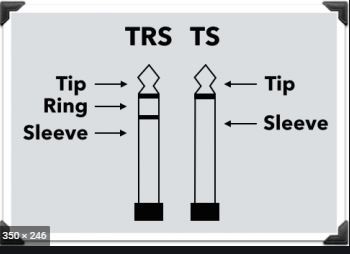
Earl reminds us there are two different types of 1/4" plugs. Make sure you use the right one for the job.

Pro Audio – Using Compression


Compression is one of the most powerful tools we have, yet it is also widely misunderstood. You may have heard someone say, “Just put a compressor on it.” Before doing so, ask, “What am I trying to achieve with the compression?”


First, remember that compression cannot fix a poor signal. A vocal mic placed ten feet from the singer, a noisy guitar DI, or improper gain staging will not be rescued by a compressor. Get the fundamentals right before reaching for compression.

Think of compression as polishing, not repair work. It’s a way to shape the dynamic movement of what’s happening through the sound system.


Compression is less about rules and more about listening. Start simple, trust your ears, and let the tool serve the song.


Quote of the Week

"Rushing never saved the time that planning did".


Ben Parris

Inspirational Quote of the Week


 Faith is like WiFi – it is impossible to see but it has the power to connect you to what you need


The information offered in this newsletter is that of the editor and not of any other entity or individual.

We welcome any comments or suggestions about this newsletter, send to lwilkins@al-ba.com