Monday Morning Coffee and Technical Notes

August 11, 2025 View as Webpage

Upcoming Events


August 16 & 17 – Huntsville Hamfest


August 18 & 19 – ABIP Training Seminar, Birmingham


September 21 – 26 – ABA Radio Engineering Class


November 3 – 7 – ABA Television Engineering Class

Attention Ham Operators


The Huntsville Hamfest called the “World’s Friendliest Hamfest” will be held Saturday and Sunday August 16th and 17th . It will feature plenty of vendor displays, flea markets with over 400 booths, and seminars.


This is the 72nd year of the Hamfest. Visit www.hamfest.org for more details.

ABA Conference Review


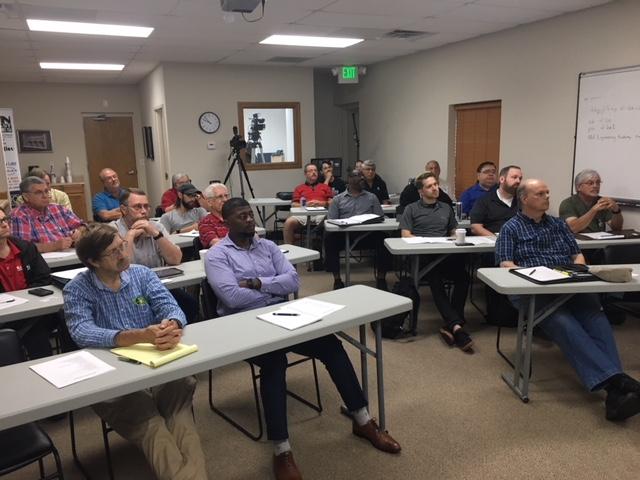
The 2025 annual conference held last week was great success. Informative presentations for all broadcast departments including engineering. Over 40 engineers heard five most informative presentations covering liquid cool transmitters, diesel generators, creating quality audio, ATSC 3.0 Datacasting and a review of chief operator requirements.


Steve Kohn Engineering Manager with WSFA-TV Montgomery was awarded the 2025 Engineer of the Year. Nick Martin general manager of Big River Broadcasting, Florence was named Broadcasters of Year.


The exhibit hall was full of vendors sharing information about their products and services.

Operating Power


It should come as no surprise to broadcast engineers that one of the major items on their “to-do list” is to ensure the transmitter is operating at the correct output power.

They must verify that the transmitter operates at the authorized output power specified on the station license.


For non-directional AM stations, the actual power is measured at the input to the antenna, which at the feed to the tower itself. The station should have a RF current meter mounted in the antenna tower unit (ATU) or have one available that can be plugged into the line feeding the tower. This meter will read the RF current in amps.


You will have to use some math (ohms law) to determine the actual power in watts. It is a very simple formula P = I2 X R. Where P is the licensed power, I2 is the antenna current squared and R is the resistance of the tower (this resistance is given on the station license).


FCC Rules (73.1560) indicate the power must be maintained as near as practicable to the authorized antenna input power and may not be less than 90 percent nor greater than 105 percent of the authorized power. Since the measurement at the input to the antenna is in amps and the licensed power is measured in watts, stations can create a table indicating the actual antenna current referenced to the licensed power limitations.


Once again, we turn to ohms law I = √P/R. Sample below using 50 ohms :


90%  4500 Watts – 9.48 amps

100% 5000 Watts – 10.00 amps (licensed power)

105% 5250 Watts - 10.24 amps


AM stations using modulation dependent carrier level (MDCL) control technology, must disable the MDCL control operation before antenna current can be read. FCC rules also require while making the measurement that there should be no modulation.


In the following weeks we will look at power measurements for AM directional operations plus FM and Television stations

Time to file ETRS form One


The FCC’s Public Safety and Homeland Security Bureau announced that October 3 is the deadline for EAS Participants, including broadcasters, to file their annual Emergency Alert System Test Reporting System (ETRS) Form One – which provides information regarding EAS Participants’ EAS equipment and monitoring assignments along with other relevant data. While there is no nationwide EAS test scheduled for this year, the FCC requires that all EAS Participants annually update their EAS information in the ETRS database by filing an ETRS Form One.


Log in to the ETRS site here. Make sure to have your login information along with the FRN and Facility ID handy.

ABIP Training Seminar


Another great event scheduled in August is our ABIP Training Seminar. This two-day seminar will cover all the items that are reviewed during a Alternative Broadcast Inspection, both legal and technical.


The first day will be in the classroom going over the checklist including details of the Online Public File. The second day will be in the field conducting “mock” inspections at Birmingham area AM, FM and Television stations.


Instructors include John George, ABIP inspector for South Carolina and Larry Wilkins, ABIP inspector for Alabama. We will also have a representative from the Atlanta FCC office with us on the first day.


The seminar is open to anyone (technical or operations) interested in learning how to keep your broadcast operation in compliance with current FCC Rules and Regulations.


It will be held Monday and Tuesday August 18th and 19th at the ABA Training Center 2180 Parkway Lake Drive in Hoover (Birmingham).


Best of all, it is offered at no cost by the Alabama Broadcasters Association Engineering Services. Log on to our website for registration and a list of area hotels.

ABA Engineering Academy


The Radio and Television engineering classes offered by the ABA Engineering Academy have two classes scheduled this fall.


The Radio Engineering Class will be held September 22nd – 26th and the Television Class will be held November 3rd – 7th. Classes held at the ABA Training Center, 2180 Parkway Lake Drive in Hoover (Birmingham) AL. Class outlines, hotel information, and online registration are available at the Engineering Academy website.


Remember these classes are offered at no cost, so we encourage you to register early as sitting is limited.

New to ATSC 3.0?


Broadcast engineers will have to understand how ATSC 3.0 works if they want to take advantage of the improved performance and flexibility it offers.

Different combinations of codes, pilot patterns and constellations can be selected to allow data rates ranging from less than 1 Mbps in an extremely robust mode working at less than zero dB SNR (signal-to-noise ratio) to over 57 Mbps when a much higher SNR is available.


A key requirement for ATSC 3.0 is the ability to change the transmission format while continuing to support legacy receivers. This is accomplished through a framing structure that includes a “System Discovery and Signaling” signal, referred to as the “bootstrap” signal before each frame. This signal has a fixed physical configuration, but carries data identifying the version of the frame following it. This could be ATSC 3.0, a future ATSC 3.1 or some other variation; even one using a different waveform.


The bootstrap is the most robust part of the signal. The bootstrap signal uses a Zadoff-Chu sequence combined with a PN (pseudo-noise) sequence to create a robust signal that allows detection and decoding at a SNR of around –10 dB or less. This means it can pull a video out that is below the noise floor.


There is plenty more to learn about ATSC 3.0, we will add more in each newsletter.

Pro Audio – Plan for the Unexpected


Writing in Worship Facility noted church FOH engineer Ron Cochran shared an interesting issue that came up in a service, that reminds us to always have backup equipment.

Many years ago, at a church far, far away—well before this season of 300 mixes—I was mixing a service where everything seemed to be going perfectly. The worship set was particularly moving, and it felt like nothing could go wrong. As the final chords faded and the worship leader prayed, the lead pastor walked onto the stage. Earlier that morning, he had eaten a jelly donut. How do I know? Because the jelly had clogged his headset mic, preventing any audio from passing through. Yes, it was as awkward as it sounds.


That moment was a hard reminder that no matter how good your mix is—how perfectly the room is moving, with the congregation fully engaged and maybe even a few tears flowing—it means little if you miss the essentials. As I’ve said before, you could have the best mix of your career, but if the pastor’s mic isn’t working, you’ve failed. And guess what people will remember from that day? Not the flawless drum mix or the soaring vocals, but the silence that shouldn’t have happened. Always major on the majors: prioritize clear, consistent communicators and vocals and ensure the basics are flawless before diving into the finer details. And always, always, always have back-up mics on hand ready to go.


One of the hardest lessons I’ve learned is accepting that some things are simply out of my hands. Out-of-tune instruments, poor tone choices, missed cues, and yes—even the occasional jelly donut incident—are all part of the unpredictable nature of live production. Once the countdown clock hits zero and every preparation has been made, there’s still a world of variables beyond my control. Pay attention for the unexpected issues!


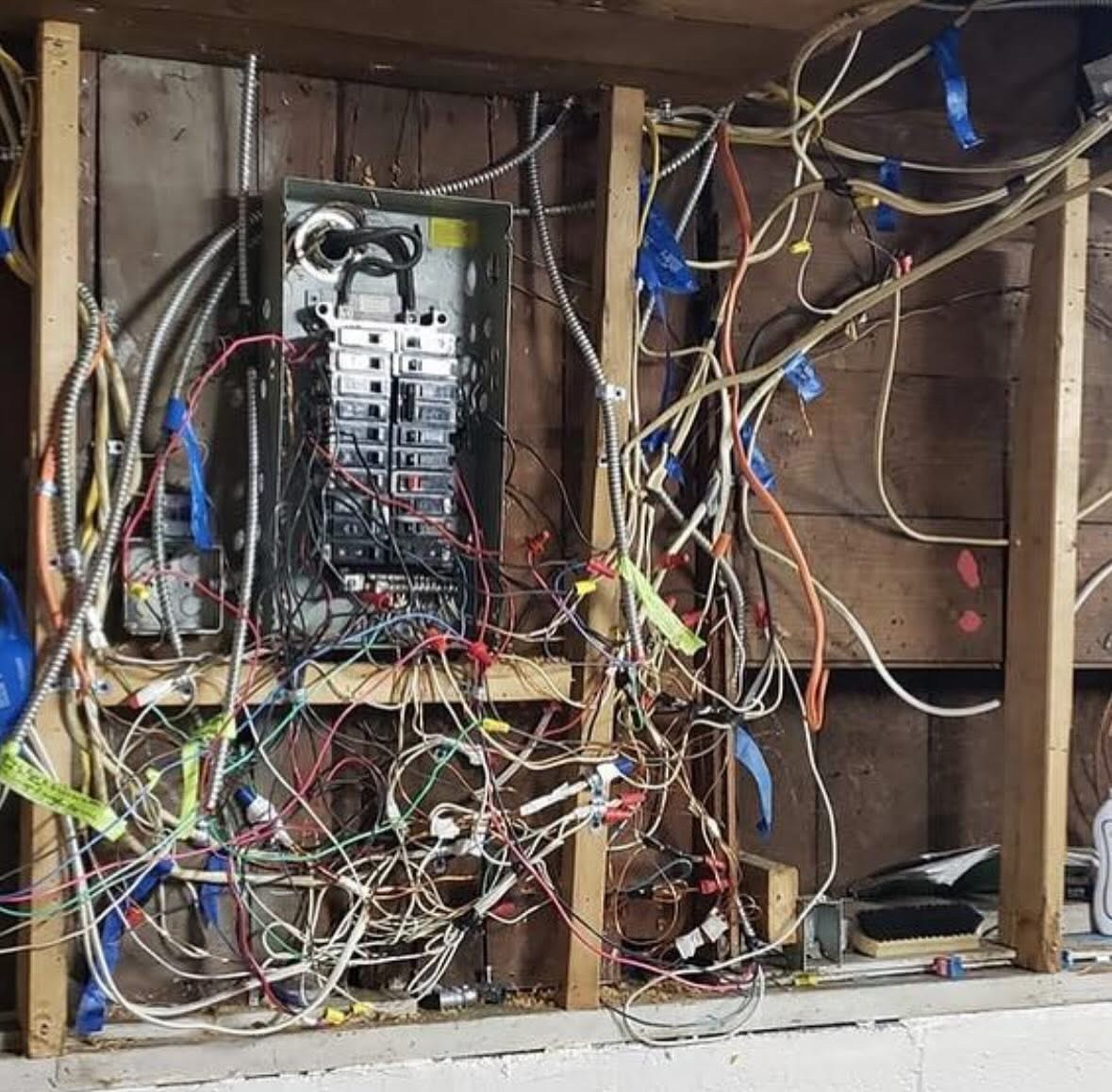
Earl we need to talk about that distribution panel

Quote of the Week

"You don't drown by falling in water; you only drown if you stay there."

  • Zig Ziglar

Inspirational Quote of the Week


"There's no greater relief than being in the center of God's will. It is the greatest place to be"

  • Chuck Swindoll


The information offered in this newsletter is that of the editor and not of any other entity or individual.

We welcome any comments or suggestions about this newsletter, send to lwilkins@al-ba.com