|
Update All Passwords and Firmware in your Air Chain Equipment
Under the upcoming FCC cybersecurity rules, broadcasters must promptly review and install software and hardware patches for internet-connected equipment in the program chain to prevent known security risks from giving bad actors access to the station’s program chain or EAS systems.
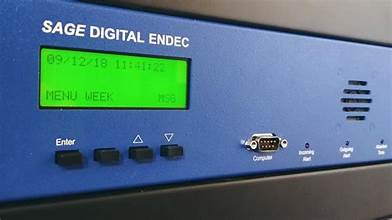
For EAS equipment the DasDec unit must be using version 5.4 or higher and for Sage Endec the unit must be using version 96.00 or higher.
For other air chain devices, including processors, STL equipment, and transmitters, contact the manufacturers for guidance on password management and firmware versions.
The Commission stated in its rulemaking that stations should use passwords of at least 15 characters, with no dictionary words or station references.
Good engineering practice has always been to use unique passwords for each piece of equipment.
| | |
ABA Engineering Academy
Registration is open for the fall schedule of Broadcast Engineering classes offered by the ABA Engineering Services. Seating is limited so get your registration in to ensure a seat.
These courses are intended for individuals at all levels of experience, including newcomers and experienced engineers, as well as those seeking to deepen their understanding of the technical aspects of broadcasting.
The next Radio Engineering class will be offered the week of September 28th – October 2nd. The television class is scheduled October 26th – 30th.
This 5-day class is held at the ABA Training Center in Hoover, AL (Birmingham). Discount rates for students are available at area hotels. More information about daily subjects covered and online registration is available here.
| | |
SiriusXM RWT's
We have heard that due the large numbe of stations across the country that are using SiriusXM as a redundant PEP source, they will reinstate sending Required Weekly Test (RWT) in the next few months.
Watch this newsletter for a start date.
| | |
Check your Equipment Firmware
As we have been reporting, the FCC has issued a notice concerning cybersecurity rule changes, which will require all stations to verify proper firmware and passwords on any equipment that could provide unauthorized access to the station air chain.
Sage Alerting Systems has issued some guidelines for implementing new passwords and firmware updates for Sage Endecs.
One important note if you are changing your ENDEC’s password to meet the new FCC requirements, do not use the ampersand (&) or plus (+) character in your new password.
Sage will release a free update later this year that fixes some bugs, including permitting the use of & and + in the password. You do not need to wait for that update to implement the new password requirements if you avoid those characters.
Click here for information on implementing the update in Sage Endec.
| | |
Occupational Health and Safety Guidance
Using proper lifting techniques is crucial in preventing musculoskeletal injuries, which are injuries affecting muscles, tendons, ligaments, nerves, discs, and blood vessels.
These injuries often occur due to improper handling of heavy objects, which can place undue stress on various parts of the musculoskeletal system, leading to strains, sprains, and other injuries.
Proper lifting techniques, such as keeping the load close to the body, bending the knees instead of the back, and avoiding twisting motions, help in distributing the weight more evenly across the body and reducing the risk of injury.
This is why understanding and practicing correct lifting methods is essential for maintaining musculoskeletal health, especially in occupations or activities that involve frequent heavy lifting.
| | |
July Engineering Webinar
Over the years the C-Band satellite spectrum (3.7 to 4.2 GHz) has been the major system used by radio and television networks to deliver programming to their affiliates.
In 2020, the FCC moved to make 280 megahertz of the 3.7 to 4.2 GHz band available for flexible terrestrial use by repacking existing satellite operations into the upper 200 megahertz of the band and reserving a 20 megahertz guard band, while conducting a public auction of the cleared spectrum.
Now the FCC has proposed rules for a further auction of the upper C band — 3.98 to 4.2 GHz — targeting completion by 2027, with Congress mandating a minimum of 100 megahertz be cleared for competitive bidding under the One Big Beautiful Bill Act signed in 2025. This upper segment still carries active satellite services serving cable and broadcast customers in the United States, meaning a second, smaller version of the 2020 reallocation process is now underway.
Mark Johnson with Linkup Communications will join us on the July 21st ABA Engineering Webinar to sort out the changes and what it will it will mean to C-band users.
The webinar will start at 10:00 AM central time. Click here to join in.
| | |
IT Security Webinar
Jeff Welton with Nautel will explore the critical intersection of IT security, operational safety, and compliance for broadcast facilities.
Learn what broadcasters need to know about protecting networks, transmitters, and connected devices from growing cybersecurity risks, including practical measures for hardening systems and educating staff.
Gain insights into how to assess vulnerabilities, implement sensible safeguards, and align your station’s practices with industry best practices to help keep your broadcast operations secure and compliant in an increasingly connected world.
Join Jeff for this special webinar, IT Security: Safety & Compliance.
Thursday July 16, 2026 12:00 PM - 1:00 PM Central. Contact the ABA for password and then register for the webinar here.
| | |
Pro Audio – Line Checks
The line check. It’s one of those things that most sound techs know they should do, or at least would like to have time to do, but often fail to get around to actually doing.
So, what is a line check? Just like it sounds, a time to check each line from the stage to the console (and back, if you have wired stage monitors). Line checks are done before the band sets up, the actual sound check is performed once the band is set up.
What’s really important is to check each line from its beginning – be that a microphone, DI (direct box) or instrument cable – to the end, the console.
Check not only that signal is passing correctly, but that each line is appearing where you expect it to on the board. In larger systems, or for those with digital consoles, this is important.
Line checks are always easiest when performed with two people, one at FOH console and one on the stage.
Things go smoother when using a wireless PL system. Check each microphone on the stage, identify each microphone by repeating its use ( kick, backup singer 1, lead vocal, etc). When line checking a DI box use a battery tone oscillator plug into the input of the DI, verify with FOH what will it will used for.
Getting this project done ahead of time, saves a lot of headaches with starting the sound check.
| | Earl You know I think your right, it does look better upside down | | Good Organization skills consistently delivers high-quality work ahead of deadlines, without compromising on quality or accuracy | |  |
Inspirational Quote of the Week
If you pray for God to move a mountain, you must be prepared to wake up next to a shovel.
| | |
The information offered in this newsletter is that of the editor and not of any other entity or individual.
We welcome any comments or suggestions about this newsletter, send to lwilkins@al-ba.com
| | | | |