Monday Morning Coffee and Technical Notes

November 10, 2025 View as Webpage

Upcoming Events


November 10 – Station Log Review by Chief Operator


November 18ABA Engineering Webinar. Special guest will be Kirk Harnack Telos Alliance


December 11 - Alabama Required Monthly Test (RMT) 12:15 AM

Engineering Webinar


The ABA Engineering Webinar for November will be held tomorrow (Tuesday November 18th) starting at 10:00 AM central time. This will be a special program as we join Kirk Harnack, Telos Alliance as he presents a live seminar at an engineering seminar in Nashville.


His topic will be "Beyond the Box, A Software-First Approach for Today’s Radio Air Chain". We appreciate the Tennessee Broadcasters Association for allowing us to be a part of this seminar.

FCC doors are open, Come on in (sorta)!


Now that congress voted to reopen the Federal Government, most

Federal agencies are becoming operational, including the Federal Communications Commission (FCC) which expects it will be fully operational by Tuesday, November 18th.


The FCC web site came back online on Friday November 14th. However, most of the links were not working. We understand the issues are being addressed. As of this writing on Sunday PM the only link working was ETRS. The online public file (PIF) and Licensing and Management System (LMS) links were still not working


Stations should be aware that, due to the government shutdown, the filing of required documents scheduled between October 1 (the date of the FCC shutdown) and November 17 (Monday) was postponed because the Commission's computer system was not operational.


Stay alert for later developments.

Back to the Basics - VSWR


A major item that broadcast engineers learn to keep an eye on is the reflective power on the RF transmission system. Sometimes called VSWR (Voltage Standing Wave Ratio), is a measure of how efficiently radio-frequency power is transmitted from a power source through a transmission line, into a load (for example, from a power amplifier through a transmission line, to an antenna).


It is a measurement of the ratio of the maximum voltage of a standing wave pattern on a transmission line to the minimum voltage on the line. The standing wave pattern is developed as a result of the interaction of the forward traveling wave with the reflected traveling wave


At different points (based on the wavelength of the station frequency) on the transmission line the reflective power will be 180 degrees out of phase with the forward power, resulting in no standing wave. However, at other points on the line the forward and reflective power will be in phase, causing a buildup of the voltage, which could damage the transmission line or transmitter.


Simply put, if a transmitter feeds 1,000 watts into the line, we would like to have all the power radiated out to our consumers. If some of the power is reflected back to the transmitter, that is not only inefficient but can cause damage as well.


Most modern-day transmitters are designed with an automatic “fold back” system which will lower the output power when it senses reflective power. Engineers should ensure that the remote-control system is monitoring VSWR and will issue an alarm when it begins to rise. This is especially important in areas of the country that have ice build up on towers and antennas

C-Band issues Heat Up


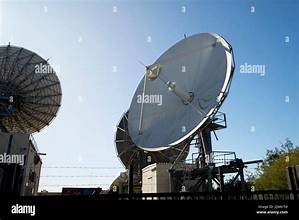
The FCC plans to auction off part of the upper part of the C-band (presently used by broadcasters and networks for program distribution begins to draw fire from both sides.


Under the budget reconciliation measure dubbed the One Big Beautiful Bill Act, the FCC must auction 300 megahertz of its spectrum holdings, including at least 100 megahertz of the Upper C-band by July 2027.


The FCC has announced that will vote during their November 20th meeting on a propose plan to auction off 180 megahertz of space, more than what the bill called for.


The National Association of Broadcasters has urged the FCC to hold the line at the 100-megahertz Congress required, warning that anything more risks destabilizing the nation’s broadcast distribution system.


Read more details at NAB Smartbrief.

Year End Reviews


As the year draws to a close, it’s the perfect time to pause and reflect on the projects that have shaped our year. Whether they were groundbreaking successes or humbling lessons learned, each one has contributed to our growth and development.


End-of-year reviews are a pivotal moment in the performance management cycle. They offer a structured opportunity to reflect on achievements, address challenges, and align individual aspirations with organizational goals.


This review can provide closure and momentum: Reflecting on the year's goals helps close loops and sets the stage for the next phase.  Completing this review will allow you to start the new year with a clean slate.

The History of Pocket Protectors


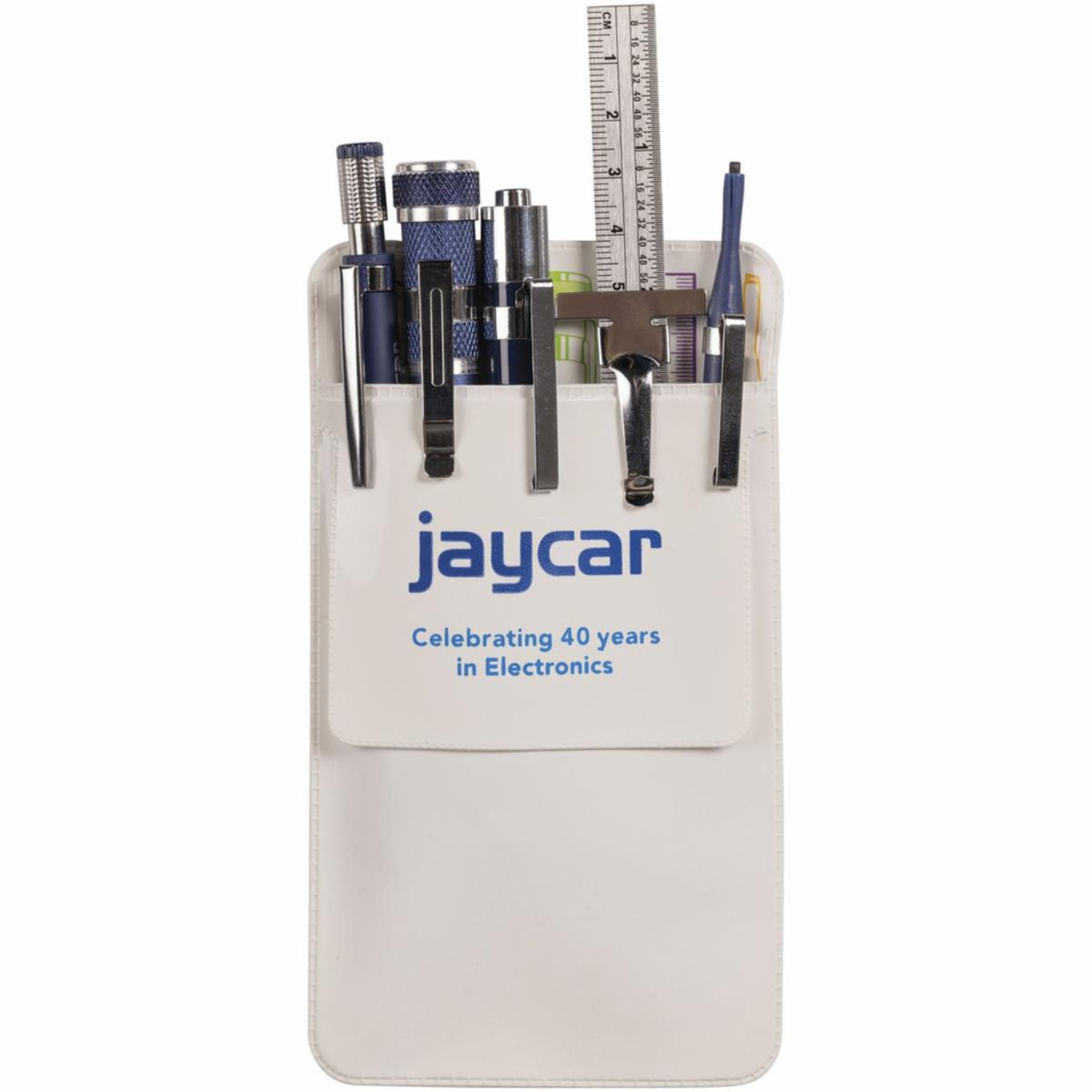
Credit for the pocket protector is generally given to Hurley Smith, who came up with his design while working in Buffalo and patented it in 1947. Fountain pens and ballpoint pens were both known for leaking at the time, so the pocket protector solved a common problem.


Engineers later used it to carry their "greenie screwdriver" and other tweakers without damaging their shirts, while manufacturers and parts dealers often placed their logo on the front for promotion.

Information courtesy of Lauren Cabral

Pro Audio –  Pink vs White Noise


Those involved in audio have heard of pink noise and white noise. But what is the difference and how do we use each?


Pink noise is acoustical energy distributed uniformly by octave throughout the audio spectrum (the range of human hearing, approximately 20 Hz to 20 kHz). Most people perceive pink noise as having uniform spectral power density -- the same apparent loudness at all frequencies. It redistributes energy in a way that mirrors how our ears process sound.


In room acoustics, pink noise is used to measure the frequency response of a space and to evaluate the performance of sound-absorbing materials. It is typically played through a speaker system and the sound level is measured at various points in the room using a microphone. The resulting data is then plotted on a graph, which allows acousticians to analyze the frequency response of the space and identify any issues or deficiencies that may need to be addressed.


Random noise with equal energy per frequency is called white noise. It tends to sound very bright and “hissy” due to our ears frequency response curve. (Each ascending octave contains twice as many frequencies as the next lower one, so there is a significant “build up” of energy in the higher octaves.)


In room acoustics, white noise can be used to mask sounds such as conversations, traffic, or other background noises that may be distracting or disruptive. This is especially useful in open office environments or shared living spaces where noise levels can be high.

Earl said he gained 5 pounds just looking through the window!

Quote of the Week

   "Success is not final, failure is not fatal: it is the courage to continue that counts."

  • Winston Churchill

Inspirational Quote of the Week


God never calls a person into His service without equipping him for the work.

  • Billy Graham


The information offered in this newsletter is that of the editor and not of any other entity or individual.

We welcome any comments or suggestions about this newsletter, send to lwilkins@al-ba.com