Monday Morning Coffee and Technical Notes

January 20, 2025 View as Webpage

January Engineering Webinar


The ABA Engineering Webinar with be held tomorrow Tuesday January 21st, starting at 10:00 AM central time.


This webinar will cover the future of EAS distribution. 


The special guest will be Ed Czarnecki with Digital Alerting Systems. Ed has been involved in the development of an IP EAS system and will talk about what is called “EAS at the Edge” and how it can be implemented in the IP world.


Register online for this important webinar.

Upcoming Events


ABA Engineering Webinar 10:00 AM central time. Future of EAS distribution with special guest Ed Czarnecki Digital Alerting Systems.


February 6 – Alabama Required Monthly Test (RMT) 12:15 AM

February 18 - ABA Engineering Webinar 10:00 AM central time. Program TBA

February 24-28 - ABA Radio Engineering Class, Birmingham AL

March 9 – Daylight Savings time begins at 2:00 AM

April 5-9 – NAB Convention Las Vegas


Understanding the RJ45 Connectors


Using RJ45 plugs and jacks is an efficient way to achieve high-speed connectivity in your Local Area Network (LAN) or Wide Area Network (WAN) systems.


But what is a RJ45? Its earlier cousin RJ11 was designed to handle telephone connections. It was smaller and only had 4 wires. The ‘RJ’ in RJ45 stands for Registered Jack. The 4 in ‘RJ45’ signifies that it has 4 pairs of cables. To decrease the capacitance formed by the closely spaced cables, 5 twists per inch are provided to the cable. Hence the number 45 in ‘RJ45’.


The RJ45 connectors fall under the category of modular connectors invented by Bell Labs in 1973 and were first used in the United States for the Universal Service Ordering Code (USOC).


There are two different pin out wiring for the RJ45. The most common is T-568A

 ABA Engineering Academy


The ABA Engineering Academy will offer our Radio Engineering Class the week of February 24 – 28, 2025. The Television Class will be held the week of April 28 – May 2, 2025. We will offer a second round of classes later in the year.


The class will cover basic electronics, analog and digital audio, history of radio broadcasting, AM and FM transmitters/antennas, EAS and FCC rules. We also offer the opportunity for students to take the SBE Certification exam on Friday.


Classes will be held at the ABA Training Center 2180 Parkway Lake Drive Hoover, AL (Birmingham). Classes are offered at no cost for beginners or seasoned engineers from across the country.


Daily class outlines and registration is available at the ABA Engineering Academy website.

Tower Light Issues


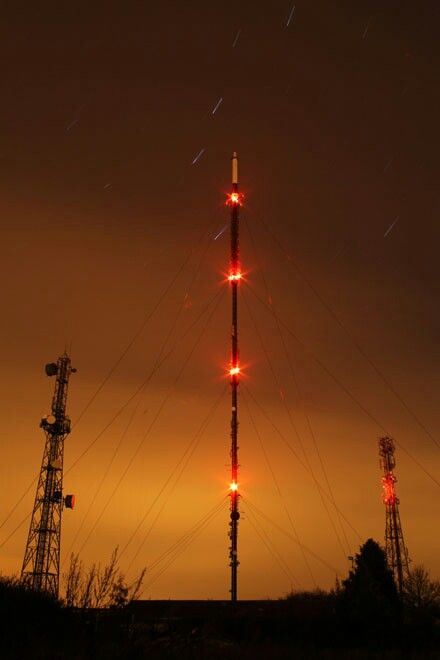
As a gentle reminder, the FCC takes very seriously tower lights issues. The Commission recently issued a Notice of Violation against a AM station after an inspection revealed that its tower’s lights were out, the station failed to maintain the tower’s perimeter fence, and the station did not notify the FAA of the light outage.


Stations are required at a minimum, to  make an observation of the antenna structure's lights at least once each 24 hours either visually or be observing an automatic properly maintained, indicator designed to register any failure of such lights, to insure that all such lights are functioning properly as required, or alternatively shall provide and properly maintain an automatic alarm system designed to detect any failure of such lights and to provide indication of such failure to the owner.


Any failure or malfunction that lasts more than thirty (30) minutes and affects a top light or flashing obstruction light, regardless of its position, should be reported immediately by either direct entry tool or by calling 877-487-6867,  so a Notice to Air Missions (NOTAM) can be issued.    

Revisiting Grounding and Bonding


Proper grounding and bonding are fundamental to the safety and functionality of any electrical system. Understanding the principles of grounding and bonding can help ensure that electrical systems are not only efficient but also safe from potential hazards like electrical shocks and fires.

There are hundreds of “how to” articles available about proper wiring around your broadcast facilities. However, these two items are key to having a functional system.


Grounding provides a low impedance path to earth for fault currents by using grounding electrodes, such as ground rods or plates. Ensure you use the correct size and length of rods and that they are spaced correctly. Connection to the rod is a prime area, a poor connection here will render the system ineffective. Most often “pressure clamps” are used, however these types of connections require continuous maintenance to ensure they are tight. A better connection can be achieved by “cad welding” the drain wire to the grounding electrode. Loose or improper connections can cause dangerous faults.


Proper bonding is equally important as it equalizes potential between conductive parts by preventing voltage differences between devices. Most damage to equipment occurs when the ground between equipment is different. When a surge appears, say from lightning, the overall ground potential can rise to thousands of volts. If all the equipment is bonded together properly, the difference in potential between equipment is still zero.


Paying close attention to both grounding and bonding is paramount to having an efficient and sage system.

 Pro Audio – Microphone Placement


This week we continue our discussion of Microphones. I feel the proper selection and placement of microphones are the most important elements in the mixing process.

We all know that “it’s what comes out of the speaker that counts”. 


But for that to happen it all starts at the source.


Although there are plenty of good techniques covering selecting and placing microphones, but sometimes you have to try new ideas to get the sound you are listening for. Experimentation is at the heart of every great recording, and your microphones are some of the most versatile tools in your studio.


The beauty of these methods lies in their simplicity, most of them don’t require expensive gear, just a willingness to step outside your comfort zone and reimagine how sound can be captured.


Whether you’re using distance to create dynamics, layering contrasting takes, or simply moving the mic to sculpt tone, these techniques remind us that recording is as much about curiosity and intuition as it is about technical skill.

Testing 1, 2 , 3

Quote of the Week

Key item to remember when working with audio "It's what comes out of the Speaker that counts". That's all!

Inspirational Quote of the Week


Faith is like Wi-Fi, it is invisible, but it has the power to connect you to what you need!


The information offered in this newsletter is that of the editor and not of any other entity or individual.

We welcome any comments or suggestions about this newsletter, send to lwilkins@al-ba.com