Monday Morning Coffee and Technical Notes

September 22, 2025 View as Webpage

Upcoming Events


September 25 – Deadline to file Annual License Fees


October 1 - Quarterly Tower Lighting System Inspection


October 3 - Deadline to file ETRS form one


October 10 – Deadline to file 3rd Qtr. Issues and Program Lists


November 3 – 7 – ABA Television Engineering Class

Time Change Coming Up


With the end of daylight saving time for 2025 around the corner, the days are beginning to get shorter as the time to “fall back” is nearing.


Daylight saving time will end on Nov. 2, in 2025 at 2 a.m., at which time it will reset to 1 a.m.


Engineers are encouraged to make plans to make any adjustments that operate with time of day, such AM station modes of operations.

ETRS Form One


The Federal Communications Commission’s Public Safety and Homeland Security Bureau has issued a reminder that Emergency Alert System (EAS) participants must submit their Form One identifying information into the EAS Test Reporting System (ETRS) no later than October 3, 2025.


Each year, the FCC requires EAS participants to provide information regarding their EAS equipment and monitoring assignments, facility location, contact information and other information.


The FCC reported that filers can access ETRS by visiting the ETRS page of the Commission’s website at https://www.fcc.gov/general/eas-test-reporting-system.

Quarterly Tower Light System Inspections


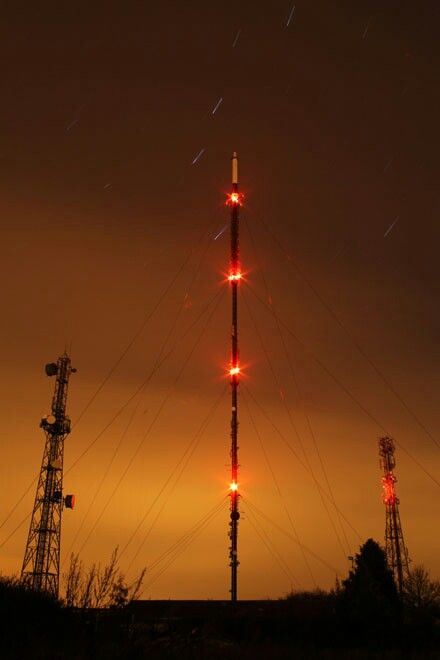
If your station owns a tower that is required by the FAA/FCC to have tower lighting, the complete lighting system must be inspected at the end of each quarter. By the complete system, this means the control system, any special sensors and alarms, interconnection to station remote control and the actual lights.


The results of the inspection must be either entered into the transmitter maintenance log or placed in a file that can be made available to an FCC or ABIP inspector  

ABA Engineering Webinars


Last week ABA Engineering Services hosted the September Engineering Webinar. Our guest speaker was Jeff Weldon, Nautel who talked about the proper use of copper strap for, including layout, connection to equipment and termination to the single point master grounding outside the facility.


If you missed the webinar or would like to watch it again it is available on the ABA Engineering Academy YouTube channel. Simply search for the academy on YouTube and all the previous webinars, plus other technical videos are posted there.

Television Audio


It appears that some television stations are having more than their share of audio issues, especially in local news programs. Issues include varying audio levels between segments, dropped audio and over driven audio.


Engineers must address audio problems because they distract viewers.   It has been said that viewers will be more likely to complain about poor audio than poor video.


Sometimes the issue is operational and not technical. Talent forgetting to turn their wireless on. There should always be a FAX (facility check) before each broadcast, which will ensure all sources and IFB’s are working properly. Policy should be “once everything is powered up, never turn it off until the program is over”.


Take pride in your station operation, listen intently to your station, make notes of issues and address them.

Pro Audio – Pro Audio


If you mix audio for live events, I am sure you have been asked to set up a system in a not so friendly venue. One of the most demanding is a gymnasium. A gymnasium has: 1) concrete walls, 2) hardwood floors, and 3) ceilings open to the rafters.


These types of rooms have two key issues: 1) lack of sound absorption materials, and 2) lack of clarity and definition with loud volumes. The lack of sound absorption means you’re working in a highly reflective room.


There’s no magical solution to getting a great mix in an acoustically challenging room where there isn’t the option of adding permanent and professional acoustic treatment.


Try to Optimize loudspeaker direction. When setting up the loudspeakers, how much of their sound field is pointed at the chairs and how much is pointed at the walls? You might be bouncing much of the sound off the walls before it ever gets to the people in the chairs. Therefore, turn those loudspeakers inward for a tighter focus of your sound.


You might also build modular panels that can be stood up across the back of the last row of seats. Cover these panels in a heavy dense cloth. They can be built with PVC pipes – they won’t stop all sound from reflecting but they can cut down a lot on the reflection.


Arrive early and plan your setup to minimize reflection issues.

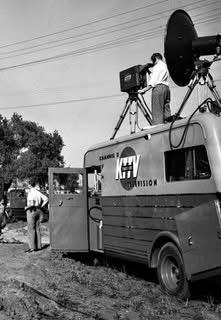
Stand by camera one....Earl, we only have one camera

Quote of the Week

 “You have no responsibility to live up to what other people think you ought to accomplish. I have no responsibility to be like they expect me to be. It’s their mistake, not my failing.”

— Richard P. Feynman


Inspirational Quote of the Week


God speaks to you and me through every situation, but hearing Him is dependent upon our anticipating and paying attention to His instruction.

-     Charles Stanley


The information offered in this newsletter is that of the editor and not of any other entity or individual.

We welcome any comments or suggestions about this newsletter, send to lwilkins@al-ba.com