Monday Morning Coffee and Technical Notes

February 10, 2025 View as Webpage

Upcoming Events:


February 18 - ABA Engineering Webinar 10:00 AM central time. Program "How we got where we are today"


February 24-28 - ABA Radio Engineering Class, Birmingham


March 6 – Alabama Required Monthly Test (RMT) 11:15 AM


March 9 – Daylight Savings time begins at 2:00 AM


April 5-9 – NAB Convention Las Vegas


April 28 – May 2 ABA Television Engineering Class, Birmingham


SBE Membership


If you are not a member of the Society of Broadcast Engineers, we strongly suggest that you check into the benefits of becoming a member.


The SBE provides a forum for the exchange of ideas and the sharing of information to help you keep pace with our rapidly changing industry.


The SBE amplifies the voices of broadcast engineers by validating your skills with professional certification, by offering educational opportunities to maintain and expand those skills and by speaking out on technical regulatory issues that affect how you work.


Visit sbe.org for more information on benefits of membership

ABA Engineering Academy


The ABA Engineering Academy will offer our Radio Engineering Class the week of February 24 – 28, 2025. The Television Class will be held the week of April 28 – May 2, 2025. We will offer a second round of classes later in the year.


The class will cover basic electronics, analog and digital audio, history of radio broadcasting, AM and FM transmitters/antennas, EAS and FCC rules. We also offer the opportunity for students to take the SBE Certification exam on Friday.


Classes will be held at the ABA Training Center 2180 Parkway Lake Drive Hoover, AL (Birmingham). Classes are offered at no cost for beginners or seasoned engineers from across the country.


Daily class outlines and registration is available at the ABA Engineering Academy website.

Radio Plant Drawings


With so many radio stations using contract engineers, it is more important than ever to create a “plant drawing”. A plant drawing is simply a line drawing that shows every piece of equipment or connections that the program goes through from the input source to the transmitter.


This drawing can be a value tool in trouble shooting an interruption in the program feed especially by a contract engineer. It can also aid in observing “weak links” in the program path. Remember redundancy is the key word in remaining on the air. Equipment in the program chain without spares, need a way to bypass easily.

Transmitter Site Visit Continued


We write often about proper and timely transmitter site visits. One item that needs to rank high on the list is maintaining proper pressure on transmission lines. 


Most FM stations and Television stations use transmission lines that require pressurization to minimize moisture build up in the line.

Engineers should check not only the pressure on the line but the proper operation of the dehydrator or nitrogen tank.


One of the best ideas is to install a pressure sensor that will issue an alarm via the remote-control system of low line pressure.

To Do List


I once attend a Time Management seminar where the speaker commented “A To-Do list is very important item to help organize your work, however, some spend more time working on the list than working on the items on the list”. He added that “having more than 5 things on a daily list is fooling yourself”. There is no way you can normally finish 5 things (from start to finish) in a single day.


That comment stuck with me as I began to realize that I often do the same thing. I would go home after a full day of work and realized that I had worked on 5 or 6 different items on my list but had not finished any.

Completing a task from planning, securing the necessary tools and equipment, finishing and testing…then cleaning up takes time. 


If you will tackle one project and complete it entirely before moving to another project can give you a secure feeling of accomplishment.

   Pro Audio – Before you Start


Have you ever been asked to look at a church sound system? The caller says we just can’t get the sound right and are always fighting that “squealing” sound.


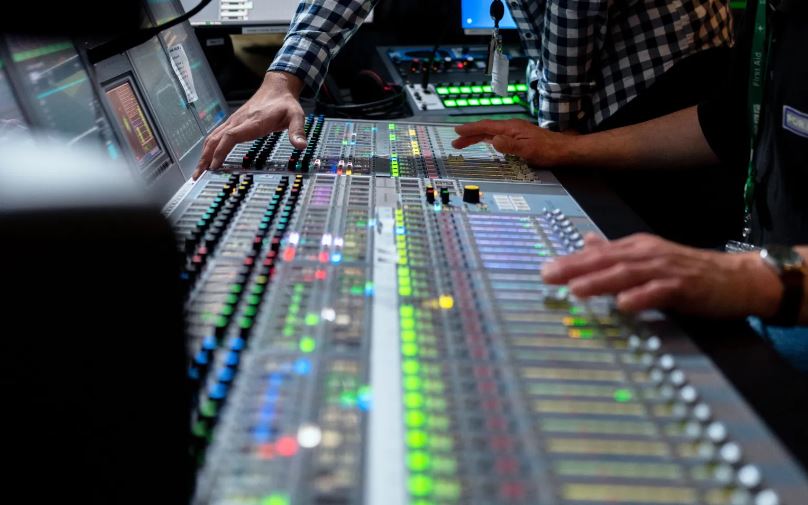
How do you start? First take a walk around the sanctuary. Making notes on the speaker system, power amp racks and mixing console. Sometimes you may ask the sound crew to demonstrate the problems they have.

We are going to assume at this point that the speaker system has been tuned by a professional sound company for the room!


The next step is most important. Set the mixing console to neutral. This means all faders down, input gain down, all dynamics removed. You may also want to set the gain on power amps to 50% (actual room SPL can be set later).


Go through all the channels, setting the input gain correctly. Feed a reference file into a channel setting the sources to peak normally, then adjust the speaker amps for the desired SPL in the sanctuary. Remember that the final mix fader is not used to set the system SPL, it is to set the output level of the mix to unity. SPL is set by speaker system amplifiers.


You can then proceed with ringing out the inputs for FOH first and then monitors second. Input gain setting may have to be fined tuned during the actual rehearsal and service. Remember to make any needed changes during the actual service in small steps.


An important note is try not to adjust input gain setting during the actual performance, since that adjustment not only effects the FOH but any aux send sto monitors and other feeds.

"The Whole World of Radio"

Quote of the Week

"The difference between a strong man and a weak one is that the former does not give up after a defeat."

  • Woodrow Wilson


Inspirational Quote of the Week


"Vision is the ability to see God’s presence, to perceive God’s power, to focus on God’s plan in spite of the obstacles."

  • Charles R. Swindoll


The information offered in this newsletter is that of the editor and not of any other entity or individual.

We welcome any comments or suggestions about this newsletter, send to lwilkins@al-ba.com