Monday Morning Coffee and Technical Notes

January 19th 2026 View as Webpage

Upcoming Events


January 19 – Station Log Review by Chief Operator


January 20ABA Engineering Webinar


February 5 - Alabama Required Monthly (RMT) Test 12:15 AM


February 17 - ABA Engineering Webinar


February 23-27 - Radio Engineering Class

Equipment Manuals


A good engineering shop should have a filing cabinet with manuals for each piece of equipment in the plant. Create a filing system (alphabetical) for easy access.


I like to keep a service document in the file, describing maintenance work completed.


At the transmitter site it is a good idea to keep manuals in a sealed storage container, so that insects don’t enjoy them for lunch.

January ABA Engineering Webinar


The January ABA Engineering Webinar will be held tomorrow, Tuesday January 20th, 2026. It will feature a discussion concerning recent cyber-attacks on radio stations and ways to help prevent these attacks. Special guest will be Wayne Pecena, IT director Texas A&M University. Click here to register.


The February webinar scheduled for February 17th will feature Cris Alexander with Crawford Broadcasting, discussing the monitor point requirements for AM directional stations.


These engineering webinars are offered on the third Tuesday of each month and feature various guest speakers covering technical topics of interest to radio and television engineers.


IPAWS RWT Issue


 Stations around the country failed to properly receive the Required Weekly Test (RWT) from IPAWS last Monday January 12th


The issue appears to involve an expired digital signature.

As individual EAS devices are required by FCC Rules to check CAP message digital signatures, the EAS device should have flagged the incoming RWT as expired.


If your station did receive the RWT, you should check the configuration in your EAS device and make sure verify signature is selected on for all CAP sources (including GSSNet Satellite). This will only affect CAP messages from issued by IPAWS.

Review station license Review


Probably the most important role of broadcast engineers is to ensure the station is operating (technically) under all current FCC rules and regulations along with the parameters of the station authorization (license).


To ensure compliance and operational integrity, reviewing the broadcast station authorization (license) is essential. Here are key reasons to conduct this review:


·      Verify compliance with federal regulations and broadcasting standards

·      Ensure the station operates within its authorized frequency and power

limits.

·      Confirm that the license is current and not expired or under renewal.

·      Assess any changes in ownership or management that may affect

licensing.

·      Identify any restrictions or conditions imposed on the license.

·      Prepare for potential audits or inspections by regulatory bodies.


Engineers are encouraged to review the station authorization to ensure all data is correct.


One area to check is the listed Transmitter Output Power or the lack of. Quite often we see the output power box empty or with a notice indicating “As required to achieve licensed Effective Radiated Power”


It is recommended that stations have documentation of how the correct transmitter power output was determined. Locate the original 302 filing in the LMS of the FCC web site which will have the calculations. Keep that information attached to the actual station license.

Reviewing the FCC Rules – Licensed Power Levels (Update)


Last week we looked at the procedures used to determine the correct transmitter power output as listed on the station authorization.


For AM stations we listed the procedures that have been used for many years. Our good friend Cris Alexander, Director of Engineering with Crawford Broadcasting Company, reminded us of a method that removes the need for using math.


Cris explained that “it is permissible under §73.51(a)(1) to determine operating power of an AM station, directional or non-directional, by… “…using a suitable instrument for determining the antenna's input power directly from the RF voltage, RF current, and phase angle.”


He added “In this day and age of solid-state transmitters, this is the far better way to monitor operating power. Modern transmitters, even those now 35 years old, provide this means of monitoring operating power. Newer models (since 2010 or so) often have Simple Network Management Protocol (SNMP) capability, and output power is invariably provided in the Management Information Base (MIB). Modern remote control systems can connect to the transmitter by IP and get the current power level by SNMP.”


If you need more information, contract Cris here. We always invite readers to issue comments or suggestions about the articles in this newsletter.

Increasing Your Word Power


In broadcast engineering there are a lot of acronyms. Sometimes when reading a technical article, you may come across an acronym that although you see a lot its meaning is not fully understood.


Starting this week, we will cover various acronyms along with their meaning, to aid in fully understanding its meaning.


This week we will use one that Cris Alexander mentioned in the article above. MIB (Management Information Base).


MIB stands for Management Information Base, a crucial component in network management. It is a database used for managing devices on a network, particularly in SNMP (Simple Network Management Protocol).

MIB also defines the structure of the management data of a device, including its capabilities and status plus enables network administrators to monitor and control network devices effectively.

ABA Engineering Academy


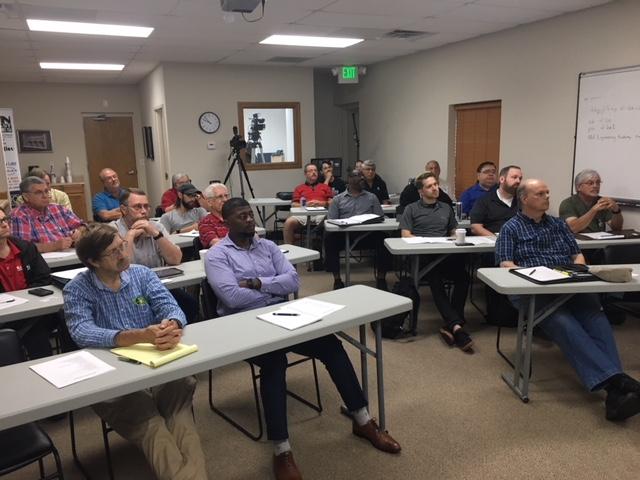
The ABA Engineering Academy will host the Radio Engineering Class from February 23–27, 2026. A few seats are still available so sign up now.


These classes, held at the ABA Training Center in Hoover, AL, offer both an introduction to broadcast engineering and a refresher for experienced engineers, covering topics such as electronics, audio, video, RF systems, antennas, studio operations, and FCC Rules.


Attendees may take the SBE Certified Broadcast Technologist exam on Friday (exam requires a separate fee and is optional).


For schedules and registration, visit the ABA Engineering Class website. The Television Engineering Class runs March 23–27, 2026.

Back to the Basics –  Plant Drawings


To effectively install, maintain and trouble shoot issues in a broadcast plant, it is important to create and maintain a “plant drawing”. Simply put, a plant drawing details every piece of equipment that the program audio or video goes through from the source to the transmitter. A companion drawing can include all supporting devices (timing generators, monitoring, power distribution, etc.)


In todays broadcast plants, where IP is the normal, adding the IP address to the drawing will be helpful. I realize depending on the size of your plant, it could take some time to create a drawing from scratch, but once you get it down it will be invaluable.  The main items is to keep it up to date. When you make a physical change make sure to edit the drawing.

Pro Audio –  Less is More


Successful mix engineers learn early on that in most cases “Less is More” when creating a quality mix. Newcomers sometimes are too eager to load up their tracks with the latest and greatest plugins. Each time you add another dynamic process to a track it can create two things, it modifies the original sound of the track and adds more to the spectrum.


To preserve the original sound, use parallel processing: keep the unprocessed track unchanged and apply effects only to a duplicate track. This lets you blend the processed (wet) sound with the clean (dry) signal without compromising quality.


As a general rule, dynamics should be used to help the source find a place to sit comfortably in the context of the mix.


After incorporating the desired elements, carefully evaluate the mix by muting the duplicate (wet) tracks to determine whether it enhances or detracts from the overall quality.

Always remember, you are mixing for the artist and producer, not for yourself. Keep that in mind and understand what they are trying to convey to the listener.

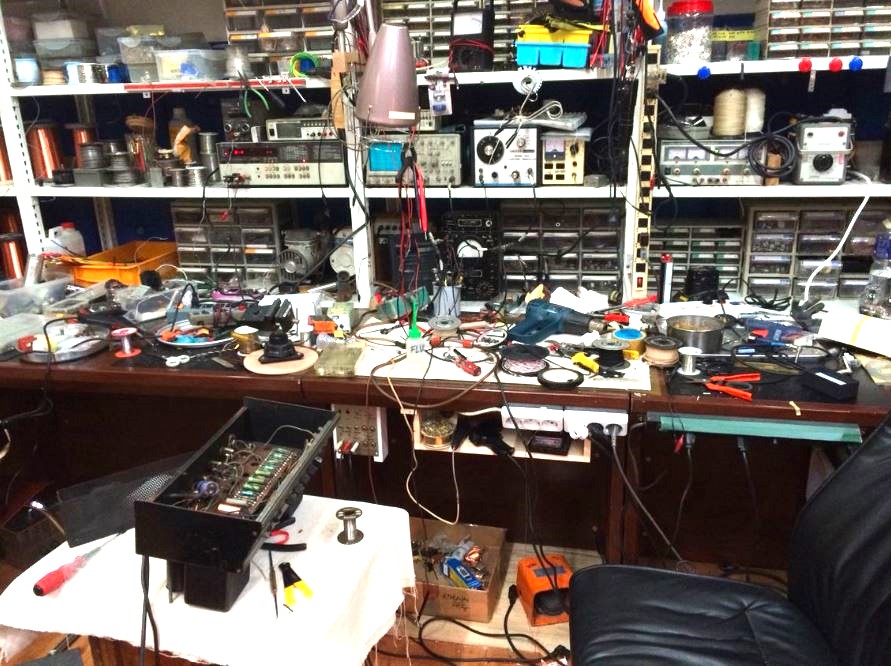
Earl we got to get this work bench cleaned up!

Quote of the Week

 "An engineer is a person who thinks outside the box—especially when there is no box."

Inspirational Quote of the Week


"When we surrender to His timing, He does mighty things in and for us, according to His will and His timing. God acts on behalf of those who wait for Him."


Charles Stanley


The information offered in this newsletter is that of the editor and not of any other entity or individual.

We welcome any comments or suggestions about this newsletter, send to lwilkins@al-ba.com