Monday Morning Coffee and Technical Notes

April 6, 2026 View as Webpage

Upcoming Events


April 6 – Station Log Review


April 9 – Alabama RMT 12:15 AM


April 10 – 1st Quarter Issues and Programs due


April 11 – Abby Awards


April 18–22NAB Convention, Las Vegas


April 24 - ABA 80th Anniversary Reception Montgomery

Being Proactive


Prior to the onset of summer thunderstorms, it is advisable to conduct a comprehensive inspection of all ground connections at the transmitter site.


Begin by verifying that the master ground point connections are intact and secure—and ensure there has been no tampering or removal.


Proceed to examine the guy anchors, confirming that the grounding of the guy wires are properly installed and firmly tightened.


Compression-type ground connections may not be reliable due to the potential for wire compression over time. Therefore, whenever feasible, I recommend using soldering or cad welding for all connections, except those involving guy wires.

News from Washington


Although this is not strictly a technical matter, here are some noteworthy topics from the FCC.


First a temporary restraining order (TRO) halting the merger between Nexstar and Tegna has been issued by a U.S. District judge in California. The ruling blocks the two companies from proceeding with integration of their operations until the court issues another ruling on a preliminary injunction in an antitrust case filed by DirecTV that seeks to block the deal.


On another front, Congress is encouraging the FCC to move ahead on setting a firm transition date for NextGen TV/ATSC 3.0.


The FCC has acknowledged the importance of the rollout of the next generation broadcast standard by seeking comments from various players on how it can streamline rules to speed along the transition. While the FCC has repeatedly highlighted the importance of NextGen TV but has not committed publicly to setting a firm date when current ATSC 1.0 signals would sunset.

Back to the Basics – Site Walkaround


Engineers are well aware of the need for and requirement of transmitter site inspections. In addition to equipment and building inspections, we should also conduct a site inspection at least quarterly.


This process requires you to walk around the area, scanning for misplaced objects like nuts, bolts, spring hangers, or anything that might have fallen from the tower. As you move around the base, also examine the concrete pier, checking for cracks or signs of erosion near the foundation.


If feasible, inspect each guy anchor for indications of rust accumulation, loose or missing nuts and cotter pins, compromised preforms, and damaged ground straps on the guy lines.


Take photographs of each guy anchor and the tower base for future documentation. While inspecting the site, record any vegetation growth near the tower base and guy anchors. Additionally, ensure you check the clearance along the guy paths; ideally, there should be 50 feet of open space on both sides of each guy line and 50 feet behind the outermost anchor.


Be sure to enter all information amount the “site inspection” in the transmitter maintenance log.

ABA Engineering Academy


Although our next Engineering classes won’t begin until autumn, this is the perfect opportunity to start planning your attendance. We’re currently updating our study guides and program to include more relevant material for broadcast engineers, as well as new information about emerging technologies like IP for broadcasting, digital audio and video, SMPTE 2110, and ATSC 3.0.


We offer students the opportunity to take the SBE Certification exam on Friday if desired.


This 5-day class in held at the ABA Training Center in Hoover, AL (Birmingham). Discount rates for students are available at area hotels. More information about daily subjects covered and online registration is available here.


Notice of Violation


Your station has received a Notice of Violation (NOV) from the FCC triggered by some reported or discovered rule violation.

Now what do you do?


In most cases a NOV requires that the station owner submit a written response to the FCC within 20 days fully explaining each alleged violation and all relevant surrounding facts and circumstances, including the specific actions taken to correct any violations and prevent them from recurring. Above all be accurate and truthful in all communications with the Commission.


The response must outline a timeline for completing any corrective actions addressing the violations, and it should be accompanied by an affidavit or declaration from an authorized officer of the station. Although the Notice of Violation (NOV) does not normally impose a monetary penalty, the FCC may pursue further enforcement measures upon review of the response, which may include issuing a Notice of Apparent Liability for Forfeiture (NAL).

Increase Your Word Power – MPLS


Multiprotocol label switching (MPLS) is a technique for setting up long-range network connections, first developed in the 1990s.


The public Internet functions by forwarding packets from one router to the next until the packets reach their destination. MPLS, on the other hand, sends packets along predetermined network paths.


Consider the process of planning a long drive. Instead of identifying which towns and cities one must drive through in order to reach the destination, it is usually more efficient to identify the roads that go in the correct direction. Similarly, MPLS identifies paths — network "roads" — rather than a series of intermediary destinations.


MPLS is considered to operate at OSI layer "2.5", below the network layer (layer 3) and above the data link layer (layer 2).

Pro Audio – dBSPL


The term, dBSPL (decibels Sound Pressure Level), is used to measure and quantify the intensity of sound. It’s often associated with how the human ear perceives the loudness of a sound.  


 Designed to measure sound pressure in the air. It's the "volume" your ear perceives, what you would measure with a sound level meter.


Reference (0 dBSPL) is the threshold of human hearing. It's the quietest sound a healthy ear can detect. This level is 20 micropascals (20 uPa)


We use the decibel scale which is a logarithmic scale. It helps represent a wide range of sounds in a way that makes more sense with how we actually hear them.


Typical Sound Pressure Levels:

Noise floor of a quiet studio (e.g., 30 dBSPL).

Volume of a normal conversation (e.g., 65 dBSPL).

Level of a rock concert (e.g., 110 dBSPL).

Threshold of pain (e.g., 130 dBSPL).

Read more about dBSPL at wavetech

Know Your Connectors


In the world of connectors, BNC stands for Bayonet Neill-Concelman. This name pays homage to the inventors of the connector, Paul Neill and Carl Concelman, who first developed it in the 1950s. The “bayonet” part of the name refers to the locking mechanism that secures the connection, allowing for a quick and reliable way to connect and disconnect components.


There are different types of BNC connectors, each tailored to specific applications.


The 75-ohm BNC connectors are primarily used for video and broadcast applications, as they are designed to work with 75-ohm coaxial cables. They ensure minimal signal loss, making them ideal for high-quality video transmission.


The 50-ohm version is designed for data and radio frequency transmissions; these connectors work optimally with 50-ohm coaxial cables. They are commonly found in laboratory and industrial applications.


75 Ohms connectors are set to use up to 2 GHz frequency signals. 50 Ohm connectors conduct signals of up to 4 GHz.

The way to determine if the BNC is a 50-ohm or 75-ohm connector? The center pin in a 50-ohm connector is smaller and tends to get larger as it approaches the crimp region, while the pin in a 75-ohm connector stays the same diameter for the entire length. In addition, the 75-ohm has Teflon as the dielectric while the 50-ohm has Delrin in place of Teflon.

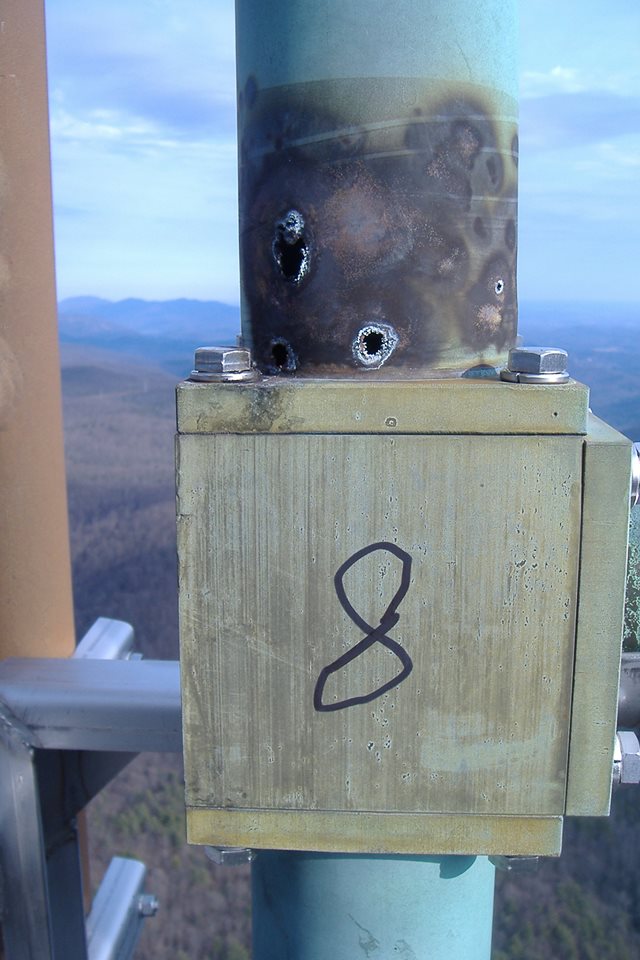
Earl, I believe that one is a little over done

Quote of the Week

“There are two fatal errors that keep great projects from coming to life:

1) Not finishing

2) Not starting”

― Buddha Gautama

Inspirational Quote of the Week


"The cross shows the seriousness of our sin—but it also shows us the immeasurable love of God.”


Billy Graham 


The information offered in this newsletter is that of the editor and not of any other entity or individual.

We welcome any comments or suggestions about this newsletter, send to lwilkins@al-ba.com