Monday Morning Coffee and Technical Notes

April 20, 2026 View as Webpage

Upcoming Events


April 20 – Station Log Review


April 24 - ABA 80th Anniversary Reception Montgomery


May 7 – Alabama Required Monthly Test 11:15 AM


May 19 – Monthly Engineering Webinar. Schedule guest is Paul Mclane Radio World – Review of the NAB Convention

EAS Monitor Sources


As a reminder, the FCC requires all stations to monitor (at a minimum) two local broadcast sources. These sources are assigned by the State Emergency Communications Committee (SECC).


As a general rule the two monitoring assignments are approved “local primary” facilities which are monitoring the state “primary entry point” (PEP) for your state.


In Alabama, the SECC has listed the monitoring assignment for four local primary stations. Station can then pick two sources which they can receive with the best signal and quality.


Monitoring assignments should be posted on the State Broadcasters Association website. In Alabama visit this link

News from Washington


As summer nears, temperatures are rising nationwide—and so is debate in Washington over sports broadcasts shifting to paid streaming services.


The four primary networks and the National Association of Broadcasters have requested that the FCC review the matter concerning the diminishing access to sports broadcasts on free over-the-air (OTA) television.

ABA 80th Anniversary


The Alabama Broadcasters Association is celebrating 80 years of service to Radio and Television stations in the state. So that more people can be a part of the celebration, the ABA is traveling around the state hosting special receptions!


All broadcasters are welcome (including engineers). We’re also inviting your community partners and civic leaders from the surrounding areas, including city, county, state and federal elected officials.

The next event will be held in Montgomery on Friday April 24th. It will be held from 4pm – 6pm at The Renaissance Montgomery Hotel and Spa. Click here to register.

Back to the Basics Remembering the 833A


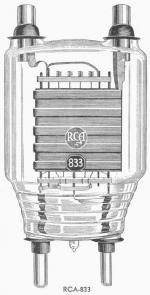
If you have been in broadcast engineering for more than 20 years and especially in AM radio, I am sure you have heard of the 833A tube.


Originally launched by RCA in the late 1930s, 833A was first intended for medium-power RF oscillation and amplification, especially as a transmitter power tube or modulation amplifier. The 833A is a directly heated triode with moderate amplification factor, employing a thoriated tungsten filament. The filament supply requires 10V, 10A DC, consuming a hefty 100W just for heating . At maximum power, it has an output of 800 watts without forced air cooling. 


Most often AM transmitters operating at 1 kW used two of these tubes as power amplifiers and two more as modulators operating in a push-pull configuration. They were recognized by their warm orange glow that varied with modulation.


But did you know that although originally an RF tube, the 833 has been embraced by audiophiles for its majestic and full-bodied sonic presentation. As a directly heated triode, it retains the typical “tube flavor”: warm, lush midrange and smooth harmonic distortion.


One of the major benefits of using 833A tubes was the long life. Just like the Energizer bunny, they just kept working and working. 


ABA Engineering Academy


The fall schedule for ABA Engineering Academy classes is now set. The Radio class takes place the week of September 28th, while the Television class happens during the week of October 25th. Students from across the country are welcome to attend these classes.


We’re currently updating our study guides and program to include more relevant material for broadcast engineers, as well as new information about emerging technologies like IP for broadcasting, digital audio and video, SMPTE 2110, and ATSC 3.0.


We also offer students the opportunity to take the SBE Certification exam on Friday if desired.


This 5-day class in held at the ABA Training Center in Hoover, AL (Birmingham). Discount rates for students are available at area hotels. More information about daily subjects covered and online registration is available here.

Increase Your Word Power – Frame Rate


Understanding frame rate is not rocket science. All engineers know that television and movies don't show actual motion so much as they do dozens or hundreds of distinct images per second like a huge flipbook.


One would think the more pictures you capture or display the smoother the motion will appear. Logic and marketing agree on this correlation, but the reality is more complicated.


The thing to remember is you can't add detail beyond what is already in the source footage, you can synthesize information with image processing, but it doesn't actually add detail that isn't there.


This is the same idea in audio. You can’t use equalization to boost highs or lows if it is not in the original source.


The majority of films are recorded at 24 frames (pictures) per second. When displayed on television, which typically operates at 30 frames per second, a process known as 3:2 pulldown is employed to convert the frame rate appropriately. This doesn’t add any more detail, just makes it play well with television.


If you walk through the television isle at a big box store you will see sets with various “refresh rates” 60, 120, and beyond. Granted the faster rates creates a smoother video on fast motion video (football games and car races) but those numbers doesn’t mean you receive additional pictures, you just the same frames repeated often.


Watch for a special Continuing Education video blog on this subject soon.

Understanding the Rules and Regulations 


The owner of any proposed antenna structure that requires notice of proposed construction to the Federal Aviation Administration (FAA) due to physical obstruction, must register the structure with the Commission. 


FAA rules (77.7) require any construction or alteration of more than 60.96 meters (200 feet) in height above ground level at its site to file with the FAA.  


Stations must first submit to the FAA a completed FAA Form 7460-1, Notice of Proposed Construction or Alteration.  

Typically, this process could take 90 plus days for approval unless there is an issue to be resolved.


The next step is the environmental process. This can take some time, 6 months or more in some cases.


Once there is an approval of the environmental, you would apply for a FCC registration number, using form 854.

The FAA determination of no hazard must be filed along with form 854. In order to be considered valid by the Commission, the FAA determination of “no hazard” must not have expired prior to the date on which FCC Form 854 is received by the Commission.


Then you can file for a construction permit. Bottom line don’t get in a hurry, these things take time.


Late word via one of our legal advisors indicates that FCC deputy chief in Audio Division said that it is all right to file an application for a CP before FAA approval. Just indicate that Form 7460-1 request is filed with the FAA and remains pending, or is in the process of being filed. 


Pro Audio – Streaming


Ever had your livestream freeze… buffer… or completely drop right in the middle of service?


The truth is, most livestream issues aren’t actually your sound or video, they’re internet related. And the good news is, a few small changes can make a huge difference.


Here are a few quick things to check:

1. Go wired whenever possible

Wi-Fi is convenient, but it’s not always reliable.

2. Test your upload speed (not just download)​

Streaming depends on upload speed, not download.

3. Reduce network traffic during service​

If possible, limit other devices using the internet

4. Lower your stream bitrate if needed​

If your stream keeps dropping, try lowering the bitrate


The goal isn’t perfection, it’s consistency! Thanks Collaborate Worship for this information.

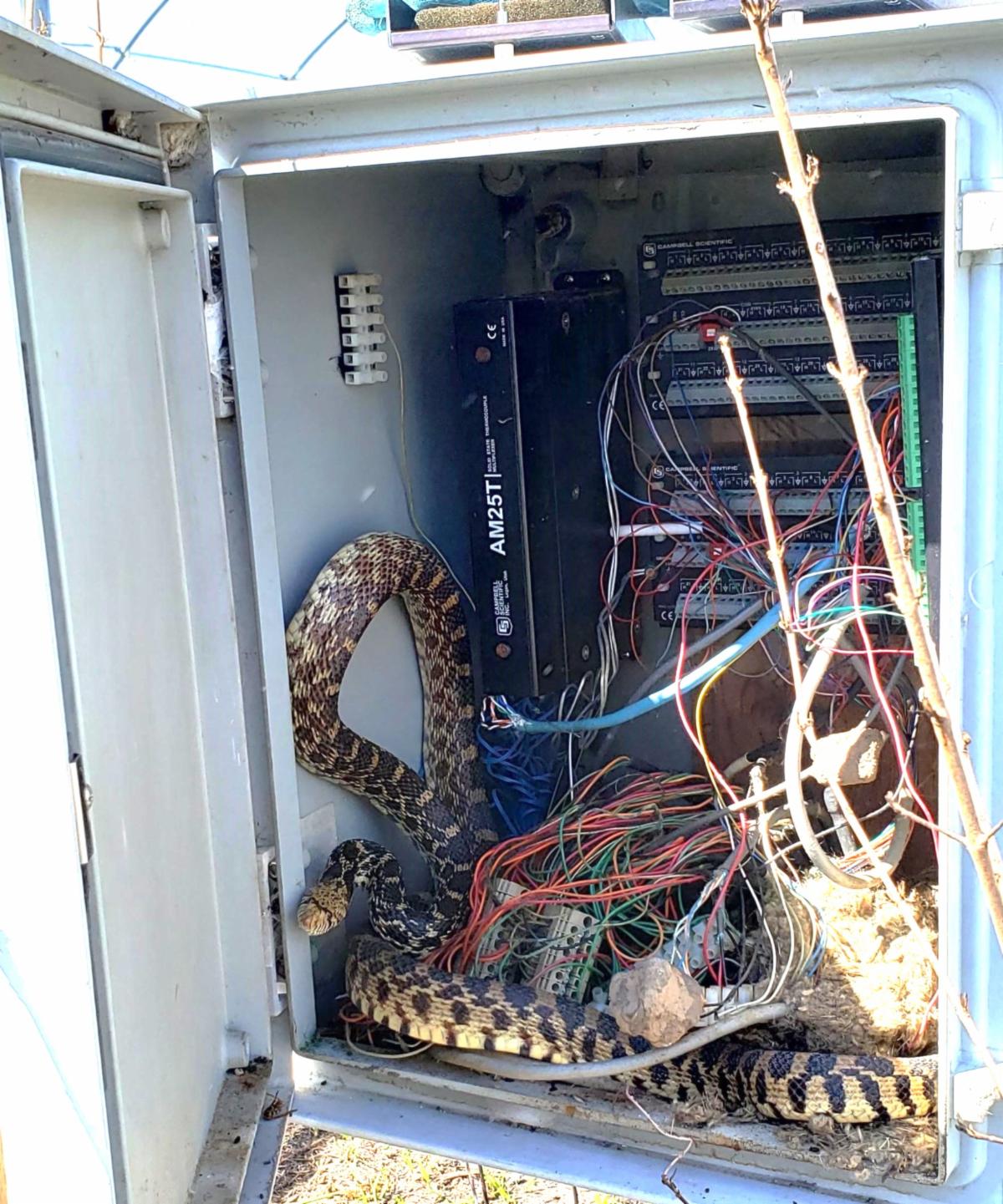
Earl get that thing out of there!

Quote of the Week

 If we consider what science already has enabled men to know-the immensity of space, the fantastic philosophy of the stars, the infinite smallness of the composition of atoms, we remain astounded by the enormous machinery of the universe.


Guglielmo Marconi

Inspirational Quote of the Week


As a sunbeam perishes when cut off from the sun, so man apart from God would pass back into the void of nothingness from which he first leaped at the creative call.


Aiden Wilson Tozer


The information offered in this newsletter is that of the editor and not of any other entity or individual.

We welcome any comments or suggestions about this newsletter, send to lwilkins@al-ba.com