Monday Morning Coffee and Technical Notes

December 30, 2024 View as Webpage

January Engineering Webinar

The first Engineering Webinar for 2025 will be held on Tuesday January 21st at 10:00 AM central time. 


The special guest will be Bill Robertson with Digital Alerting Systems. The topic will cover the plans to convert the EAS systems to all IP. This will enable stations that are all IP to integrate the EAS seamlessly.


Register online for this important webinar. Mark your calendars for January 21st.


2025 Calendar


Here are some important dates to put on your 2025 calendar.


January 9 – Alabama Required Monthly Test 11:15 AM


January 21 – ABA Engineering Webinar


February 6 – Alabama Required Monthly Test 12:15 AM


February 24 – 28 Radio Engineering Class


ABA Engineering Academy


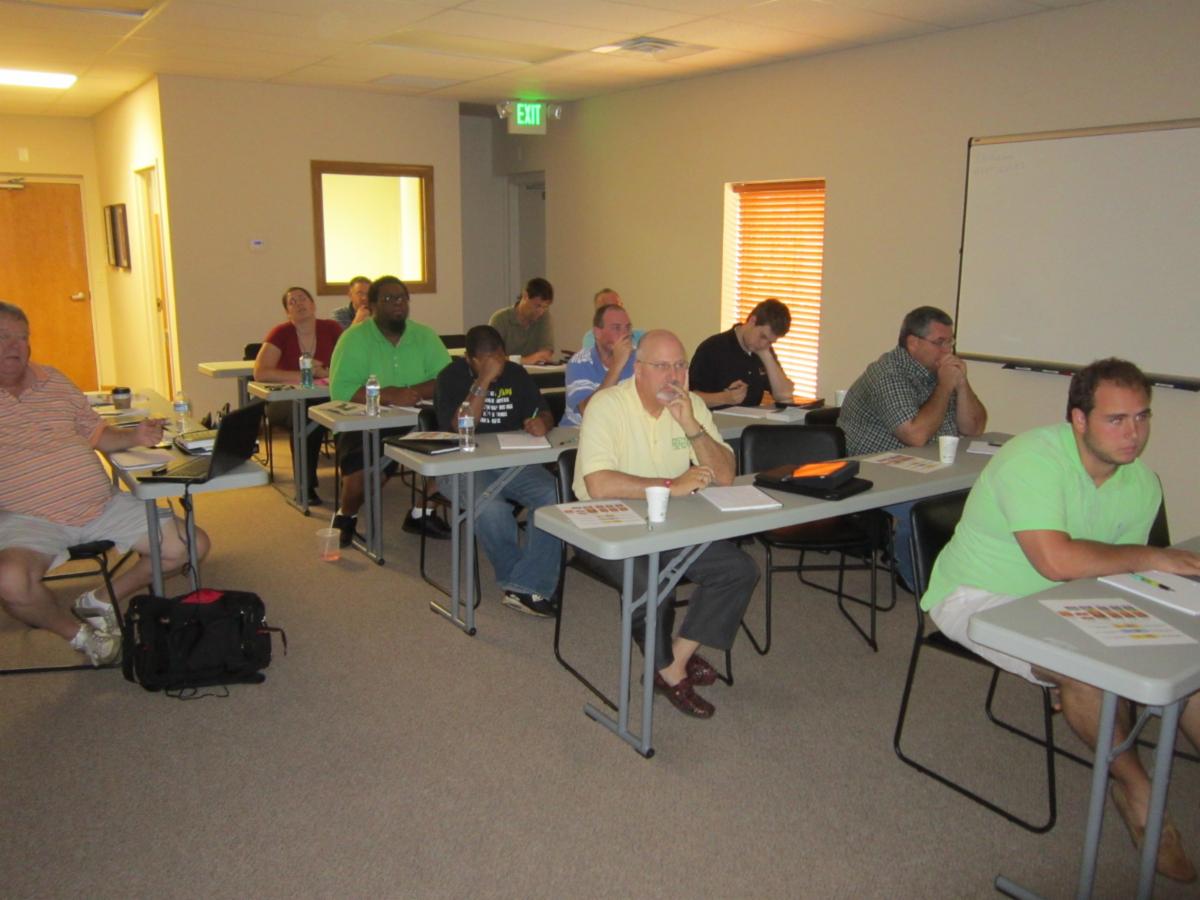
The ABA Engineering Academy has scheduled the first round of engineering classes for 2025. The Radio Class will be held the week of February 24 – 28, 2025. The Television Class will be held the week of April 28 – May 2, 2025. We will offer a second round of classes later in the year.


These classes are designed for both beginners and seasoned engineers, as we discuss early technology, basic electrons, and the latest systems such as HD radio, audio/video streaming, and ATSC 3.0


Both classes will be held at the ABA Training Center 2180 Parkway Lake Drive Hoover, AL (Birmingham). Classes are offered at no cost for beginners or seasoned engineers from across the country.


Daily class outlines and registration is available at the ABA Engineering Academy website.

 From Washington


If you are involved in a Television station in markets 101 to 110 then January 1, 2025 you must comply with the audio description requirements.


Under Section 79.3 of the FCC's Rules, stations subject to the audio description requirements must provide at least 50 hours of audio-described programming per quarter during primetime or children's programming, and an additional 37.5 hours of programming per quarter aired between 6 a.m. and 11:59 p.m. local time. The requirement applies to any of a station's programming streams, whether primary or multicast, if the stream is affiliated with ABC, CBS, FOX, or NBC.


Broadcasters also need to remember that January 10 is the deadline for all full power and Class A TV stations, and full power AM and FM radio stations, both commercial and noncommercial, to upload to their Online Public Inspection Files their Quarterly Issues/Program lists for the fourth quarter of 2024. The lists should identify the issues of importance to the station’s community and the programs that the station aired between October 1 and December 31, 2024, that addressed those issues. These lists must be timely uploaded to your station’s OPIF, as the untimely uploads of these documents probably have resulted in more fines in the last decade than for any other FCC rule violation.


January 10 is also the date that Class A TV stations need to upload to their public file documentation showing their continuing eligibility for Class A status.

 A Bit of History


Why do we divide a circle or wave into 360 degrees?


Back around 2400 BC The Sumerians watched the Sun, Moon, and the five visible planets (Mercury, Venus, Mars, Jupiter, and Saturn), primarily for omens. They did not try to understand the motions physically. They did, however, notice the circular track of the Sun's annual path across the sky and knew that it took about 360 days to complete one year's circuit. Consequently, they divided the circular path into 360 degrees to track each day's passage of the Sun's whole journey.


That's how we got a 360-degree circle. Around 1500 BC, Egyptians divided the day into 24 hours, though the hours varied with the seasons originally. Greek astronomers made the hours equal. About 300 to 100 BC, the Babylonians subdivided the hour into base-60 fractions: 60 minutes in an hour and 60 seconds in a minute. The base 60 of their number system lives on in our time and angle divisions.


An 100-degree circle makes sense for base 10 people like ourselves. But the base-60 Babylonians came up with 360 degrees and we cling to their ways-4,400 years later.

Wireless signal dropouts


Dropouts occur without sufficient signal above the noise floor. It is

essential to maintain a minimum of 20dB of signal above the noise to

lock the signal. 


In today's crowded wireless landscape, interference from other devices

like TV stations, 5G cell phones, LED lighting, and video walls/monitors

can overwhelm the receivers or compete with your signal on the same

frequency, causing dropouts.


Wireless signals have a polarization, which refers to the orientation of

the signal wave. When the orientation of the transmitted signal doesn't

align with the receiver's antenna, the signal strength can drop

significantly, leading to RF loss.


Multipath interference happens when the signal reflects off surfaces, creating multiple signal paths that reach the receiver at slightly different times. These

overlapping signals can interfere with each other, causing loss of

signal and dropouts.


Read more at rfvenue

Pro Audio – Electret Microphones


Engineers are aware of the two basic types of microphones: Dynamics and Condenser.


There is another type of microphone, known as the electret mic. Despite inauspicious beginnings, these have now been developed to the point where they can rival true capacitor quality for a much lower price. Instead of applying an electrical charge to the microphone capsule via an external power source, electret mics use a diaphragm made from an insulating material that has a permanent electrical charge. A preamplifier is still needed, but this can be built very cheaply, and will run from a battery in some cases.


Electret mics made in this way don't offer any real advantage over dynamic mics, because the diaphragms have to be quite heavy in order to carry the permanent electrical charge — but what if the permanently‑charged material was fixed not to the diaphragm, but instead to the stationary back‑plate? This way, much thinner diaphragms can be employed, made of the same metal‑coated plastic material as on a true capacitor model.


This is a back‑electret microphone, and the best of today's back‑electret models can rival conventional capacitor models in every aspect of performance. The best back‑electret models are actually just as expensive as top capacitor models (the famous Bruel and Kjaer mics are back‑electrets), but there are some less costly models around which deliver studio quality at a bargain price.


One of the most popular low‑cost back‑electret models in recent years is the AKG C1000, but don't neglect the models from other manufacturers. Currently, it's possible to buy a good back‑electret mic for around the same price as one of the better dynamic models..    

Quote of the Week


As we start to enter a new year remember, "Life" is a gift to you. The way you live your life is your gift to those who come after. Make it a fantastic one.


Inspirational Quote of the Week


The One who conquered sin for you will also watch over, strengthen, and care for you in every challenging situation you face. Trust Him.


The information offered in this newsletter is that of the editor and not of any other entity or individual.

We welcome any comments or suggestions about this newsletter, send to lwilkins@al-ba.com