Monday Morning Coffee and Technical Notes

June 16,, 2025 View as Webpage

Upcoming Events


June 17thMonthly Engineering Webinar Wayne Pecena, Texas A&M – (A look at the requirements to transport AoIP, ST-2110.)


August 7-8 – ABA Annual Convention, Birmingham


August 18 & 19 – ABIP Training Seminar, Birmingham


September 21 – 26 – ABA Radio Engineering Class


November 3 – 7 – ABA Television Engineering Class

Summer Time


We mention this every year about this time, check the filters in all your air handling equipment. 


As temperatures begin to rise, careful and timely attention to the air flow in transmitters, rack equipment and HVAC units is extremely important.


Electronic equipment, especially solid-state units cannot tolerate excessive temperatures.


Keep a supply of spare filters on hand and change them regularly. The cost of filters is far lower than repair or replacement of damaged equipment.

ABA Engineering Webinar


The monthly ABA Engineering Webinar will be held tomorrow Tuesday June 17th starting at 10:00 AM central time. 


Our special guest will be Wayne Pecena, IT director for Texas A&M University.


Wayne will focus on the IP content network looking at the requirements to transport AoIP, ST-2110. Then focus on high lightning advanced topics like QoS, multicast, PTP since they are required for both AoIP and ST-2110 content networks. Essentially, the differences in the basic business class network vs the broadcast content network.


Click here to register

ABIP Seminar


Registration is now open for the ABA Engineering Academy special two-day seminar covering the Alternative Broadcast Inspection Program (ABIP).


This live training seminar is designed for current ABIP inspectors and those that are interested in becoming an inspector. We have also opened the seminar up to any engineer that is interested in learning more about the inspection program.


We have scheduled the seminar covering ABIP for August 18th & 19th, 2025. On the first day we will be in the classroom, going over the inspection details (Online public files, EAS, Transmitter site and basic operational items). The second day will feature on-site mock inspections at area broadcast transmitters (AM, FM and Television).


The class will be held at the ABA Training Center, 2180 Parkway Lake Drive in Hoover, AL (Birmingham). It will start at 8:30 AM central both days. Instructors are John George, ABIP inspector for South Carolina and Larry Wilkins ABIP inspector for Alabama. We also will have news shortly about a special guest speaker at the seminar.


There is no cost for attending the seminar. You can register online here. We encourage you to register early since seating is limited. On the registration page is a list of hotels that have special reduced prices for attendees.

Great Inventors


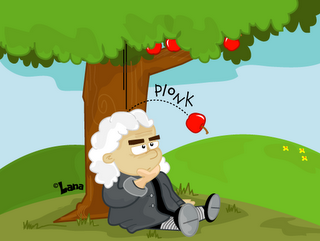
Throughout history there have been many inventors of theories and technologies that affect broadcasting. People like Edison, Telsa, Faraday and many others. One that you may not think of is Issac Newton.


Newton discovered the laws of motion, the laws of gravitation and laws of optics (white light is composed of all colors).


It is said that he once was asked why planets have ellipsesoval orbits instead of circles. Never wanting to give the wrong answer, he said “I don’t know but will get back to you”. To find the answer he had to invent integral and differential calculus.


Amazingly Newton did all this before turning 26 years old.

ABA Convention


The annual ABA convention is scheduled for Thursday and Friday August 7th and 8th


As usual we will offer a special engineering session on Thursday with great presentations covering ATSC 3.0 datacasting, the latest advancements in radio and television solid state transmitters, creating quality audio for radio and television, generator maintenance and wireless microphone and IFB systems.


The cost for engineers is only $40.00 which includes lunch. There will also be an exhibit hall with plenty of equipment and services. The convention will be held at the Ross Bridge Resort in Birmingham. Registration will be open soon. Mark your calendars for this great event.

From Washington


While this is not necessarily a technical issue, it is important that engineers are aware of these items and should make sure management is aware of this as well.


Owners of broadcast operations are aware that as of March 2020, all licensee Public Inspection File documents were required to be maintained in the FCC’s online Public File database at https://publicfiles.fcc.gov/.


However, what you may not be aware of is that applicants for a new station or change of community of license must still maintain a Public Inspection File “at an accessible place in the proposed community of license.” Once the application is granted the licensee or applicant shall place the contents of its public inspection file in the online public file hosted by the Commission.


In addition, a station must provide a link to the public inspection file hosted on the Commission's website from the home page of its own website, if the station has a website, and provide contact information on its website for a station representative that can assist any person with disabilities with issues related to the content of the public files.


A station also is required to include in the online public file, the station's address and telephone number, and the email address of the station's designated contact for questions about the public file.


The FCC does not routinely remove items from the Public Inspection File when the applicable retention period is over. Stations therefore are responsible for understanding the retention periods and determining when it is appropriate to remove an item from the Public Inspection File.


Fall schedule of the ABA Engineering Academy’s Technical classes


The ABA Engineering Academy has released the schedule for our Radio and Television Engineering class for this coming fall. The radio class will be held the week of September 21 – 26 and the television class will be held the week of November 3 – 7.


The Academy began offering these classes in 2012. Over the years it has attracted students from all across the country and Canada. While they are designed for those just starting in broadcast engineering, we have had many “seasoned” engineers attend both for a refresher course and the latest technology (including HD Radio, ATSC 3.0 and SMPTE 2110).


The classes cover basic electronics, history of broadcasting, analog and digital audio, radio/ television generation and transmission, plus overview of station operations including EAS and FCC Rules. On Fridays we offer the opportunity for students to take the SBE Certified Broadcast Technologist exam. You do not have to take the exam to attend the class.


Classes are held at the ABA Training Center, 2180 Parkway Lake Drive Hoover, AL (Birmingham)


We encourage you to register for these classes soon, as we have limited seating. Don’t forget the classes are offered at no cost by the Alabama Broadcasters Association. Click here to register. There is a list of hotels that offer special rates for students on the web site.

Contact the Academy Director for more information.

Pro Audio – Solo Button


Every mixing console and Digital Audio Workstation (DAW) has a little button normally labeled as “solo”. The solo button can be a valuable tool but can also be a dangerous tool if used in the wrong way.


Most often the solo button will allow you to listen to a channel either pre or post. Pre simply means you are monitoring the source as it comes into your console. Post indicates you are monitoring after the fader and/or any effects that have been added to the channel.


Using solo in the pre-mode is a convenient way to verify that the source is feeding a signal and what the quality of the source is, listening for any problems like hum, buzz, distortions, etc.


Listening to solo in the post mode allows a quick way to clean up frequency related problems from the source. However, you should always avoid using the solo button during the mixing stage. Mixing is all about context. You’re trying to make a group of sounds blend together as a cohesive unit. And so, it doesn’t matter how each track sounds by itself. The end listener is never going to hear each individual track anyway. All that matters is how each track contributes to the mix as a whole.


Remember you must make decisions in context, with the rest of the tracks playing.


While soloing might be fine for basic cleanup work, do the majority of your EQing with the whole mix playing. This can be hard at first, but it’s one of the easiest ways to improve your mixes.

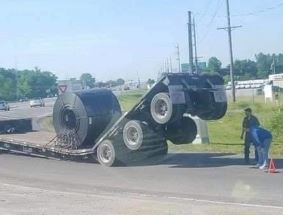
Earl, I think we gonna need a bigger truck!

Quote of the Week

  No matter how many mistakes you make or how slow you progress, you are still way ahead of everyone who isn't trying

- Tony Robbins

Inspirational Quote of the Week


Waiting on the Lord implies shifting our focus from our limitations to His limitlessness – David Jeremiah


The information offered in this newsletter is that of the editor and not of any other entity or individual.

We welcome any comments or suggestions about this newsletter, send to lwilkins@al-ba.com