Monday Morning Coffee and Technical Notes

February 9, 2026 View as Webpage

Upcoming Events


February 9 - Station Log Review by Chief Operator


February 23-27 - Radio Engineering Class


March 8 - Daylight Saving Time Starts


March 23 – 27 Television Engineering Class


February Engineering Webinar


Our special guest on the February 17th Engineering Webinar will be Crawford Broadcasting’ Director of Engineering Cris Alexander.


Cris will be discussing proper methods to determine licensed transmitter power output for both non-directional and directional operations.


Register here to join in for what is sure to be a most informative webinar.

Cyber-Attack issues in Alabama


Last Friday morning a FM radio station in west Alabama had their RBS data hacked and replaced with some very offensive words. The station engineer was able to log in the transmitter and disable the RBS data which was being generated in the software as part of the transmitter.


Later the same day a report came in that the same thing happened on two FM stations in Indiana. The offensive data was the same as the one in Alabama.


GatesAir, manufacturer of the transmitters issued a bulletin strongly urging stations to never expose broadcast equipment to the internet.


Management and engineers should take this seriously as it is increasing every day. Review you network configuration and take the steps do everything you can to block access to unauthorized access.

Watch our January Engineering Webinar with Wayne Pecena about cyber security.

Back to the Basics - Don’t Forget the Paper Work! 


Broadcast Technology and Broadcast Engineers change, but one thing remains, Don’t Forget the Paper Work! That famous line from Monsters Inc by Roz the librarian, reminds us that there are still required paper work that must be done.


Frist and foremost is the creation and maintenance of the “Station Log” which must reviewed and certified by the “station Chief Operator weekly.


Secondly is the conduction and documentation of the quarterly tower light inspection.


Records of the annual occupied bandwidth and harmonic limits (NRSC) measurements.


Also included is maintaining the station license, revewal, tower registration and other required FCC documents, normally in a station authorization notebook.


We mentioned earlier in this newsletter about a maintenance that can include various technical measurements to comply with FCC rules.


Place these items on your calendar as a helpful reminder.

Clean up around Broadcast Towers


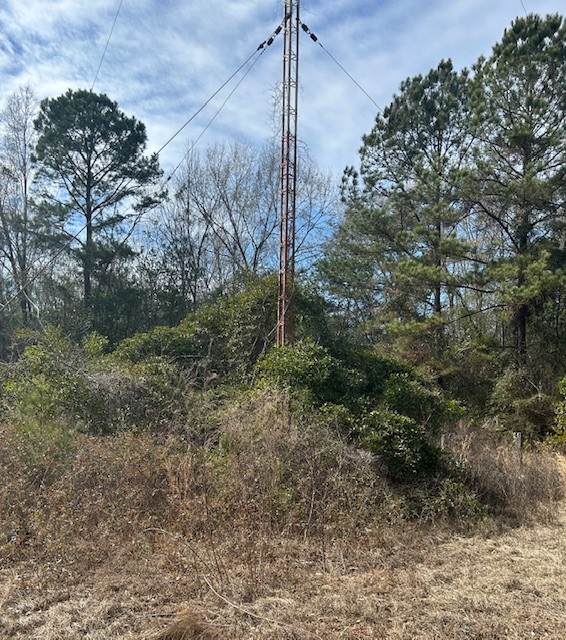
The area around all towers used by broadcast stations should be kept clean with no vegetation (trees, bushes, etc) around the base. This is not only for safety but for easy access to the tower for inspection and maintenance.


This is especially important for AM towers. These towers have RF potential at the base of the tower; there is also a antenna tuning unit (ATU) that needs to be inspected and the antenna current meter located in the ATU.


Prepare at least a 10-foot square area around the base by soaking it with vegetation killer, then lay heavy-duty ground cloth and cover with gravel.

The layer of gravel acts as an additional layer of insulation between the ground and equipment further minimizing the risk of electrical hazards.


Of course, the AM tower area must be enclosed with a locked fence.

Increasing Your Word Power - Broadcast Quality


So, what exactly is “broadcast quality”? In short, it means your video and audio meet the high technical and creative standards required for professional distribution both over-the-air (OTA) and streaming.


Technical quality means the audio and/or video should be as high quality as possible. Today’s technical equipment has reached a point where having excellent audio and video is easy to achieve. Of course, the equipment must be installed, programmed and maintained correctly to achieve that quality.


Television stations are reminded not to forget the audio; it has been said that viewers often will complain more about poor audio than poor video.


Although not a technical item, quality of the content is a big item. Managers and Programmers should keep that in mind when selecting and producing programs for air. Especially local programs like newscasts, sports, etc.


Most importantly, radio and television engineers should intently listen and view your program stream OTA to evaluate the quality on a regular basis. It’s not a bad idea to have a few non broadcast people to act as quality monitors. Sometimes these people will hear or see something that you may have missed. 

ABA Engineering Academy

Important Notice!


We have now reached our maximum number of attendees for the Radio Engineering class scheduled for the week of February 23rd, 2026. However, we still have seats available for the Television Engineering class scheduled for the week of March 23rd, 2026.


If you didn’t get your registration in for the February Radio Class, the fall Radio Class is scheduled for September 28 through October 2 and the Television class is scheduled for October 26 – 30.


Special note: Due to rising costs, the ABA has instituted a $100 fee for out-of-state attendees beginning with the fall classes. 

You can view the weekly schedule of topics and register for the classes by visiting the ABA Engineering Class website


Classes are held at the ABA Training Center 2180 Parkway Lake Drive in Hoover AL (Birmingham). These classes give beginners a technical overview of broadcast engineering, while experienced engineers use them to refresh their knowledge and stay current with new technology.


Each class covers basic electronics, analog and digital audio, video creation, RF systems, antennas, along with basic studio operations and FCC Rules.  

Reviewing the FCC Rules – Maintenance Logs


 Although the word “maintenance log” is not mentioned in the FCC Rules and Regulations (as for as I can find), good engineering practices dictates it is a very important item.


A properly maintained maintenance log can give a record of equipment performance, issues and repairs. It can also be a valuable reference for new engineers coming onboard.


Maintenance logs should be kept for both studio and transmitter sites. FCC Rules 73.1580 states “Each AM, FM, TV and Class A TV station licensee or permittee must conduct periodic complete inspections of the transmitting system and all required monitors to ensure proper station operation”.


Keeping a log at the transmitter site helps the technical department and provides evidence of compliance with part 73.1580.


Pro Audio –   Showfiles


A show file in live sound is a digital repository

containing every setting for a mixing console, ensuring consistency across venues. It stores inputs, outputs, EQ, dynamics, effects, routing, and channel layouts.

Engineers use these files to instantly recall a tailored setup,

minimizing soundcheck times and ensuring a familiar, optimized mix.

 One of the greatest features of digital consoles is total recall – the ability to store and recall every single setting of the console in a show file.


However, we should remember that the file is not the mix. It can be a great starting point, but it will always need to be adapted to new situations and environments by someone who understands not just the content of the file but also how to adapt it accordingly.


Comments courtesy of Andy Coules writing in prosoundweb


March 8th Don't Forget!

Quote of the Week

Failure is only the opportunity to again more intelligently.

-           Henry Ford

Inspirational Quote of the Week


We aren’t called to stay just as we are, we are called to become just as He is!


The information offered in this newsletter is that of the editor and not of any other entity or individual.

We welcome any comments or suggestions about this newsletter, send to lwilkins@al-ba.com