Monday Morning Coffee and Technical Notes

June 2,, 2025 View as Webpage

Upcoming Events


June 5th – Alabama RMT 12:15 AM


June 17th – Monthly Engineering Webinar (TBA)


August 7-8 – ABA Annual Convention, Birmingham


August 18 & 19 – ABIP Seminar, Birmingham


September 21 – 26 – ABA Radio Engineering Class


November 3 – 7 – ABA Television Engineering Class

Alabama Required Monthly Test


The Required Monthly Test (RMT) for Alabama will be transmitted this coming Thursday June 5th at 12:15 AM. 


The RMT will be originated and distributed by the GSSNet Satellite System and will be also be fed via IPAWS.


As a reminder, this test must be retransmitted over the station within a 60-minute window. 


If your EAS system fails to receive or retransmit the RMT, please send an email to the SECC and include the two required monitor sources. 


Engineers should check with your state's SECC about the RMT schedule.

EAS System Monitoring


Several years ago, the Alabama State Emergency Communications Committee (SECC) created an EAS monitoring service. The purpose was to create a way for the SECC to monitor EAS units around state, so it could not only keep a check on the “Health of the State EAS Distribution System” but add another set of eyes to ensure stations EAS operations is in compliance.


Presently the system monitors around 190 different EAS units in the state. The system was installed at no cost to the stations. It has been an invaluable resource in correcting distribution problems around the state.


One of the disturbing problems we discovered is the lack of local monitoring of the required EAS activities. While the FCC has special rules for monitoring and maintaining a weekly Station Log of EAS test and alerts, some stations are not reviewing and correcting issues on a regular basis. The SECC sends a courtesy reminder to stations that are missing the required activations. Some will correct the problem while others don’t seem interested.


Engineers are urged to take proper EAS operations seriously. Although EAS is not a “revenue generating system” it is a an extremely important service to the station listeners’ and viewers.

ABIP Seminar


The ABA Engineering Academy is excited to announce it will offer a special two-day seminar covering the Alternative Broadcast Inspection Program (ABIP).


This live training seminar is designed for current ABIP inspectors and those that are interested in becoming an inspector. We also have opened the seminar up to any engineer that is interested in learning more about the inspection program. The seminar is offered at no cost by the Alabama Broadcasters Association.


We have scheduled the seminar for August 18th & 19th, 2025. On the first day we will be in the classroom, going over the inspection details (Online public files, EAS, Transmitter site and basic operational items). The second day will feature on-site mock inspections at area broadcast transmitters (AM, FM and Television).


The class will be held at the ABA Training Center, 2180 Parkway Lake Drive in Hoover, AL (Birmingham). It will start at 8:30 AM central both days. Instructors are John George, ABIP inspector for South Carolina and Larry Wilkins ABIP inspector for Alabama. We also will have news shortly about a special guest speaker at the seminar.


You can register online here. On the registration page is a list of area hotels that have special reduced prices for attendees.

From Washington


Engineers should remind management that their Quarterly Issues/Program lists for the second quarter of 2025 is due by July 10th. Now is the time to start pulling all the information together for the report. Don’t wait till the last minute to get started on these reports.


Yes, the Commission does still review the operation (both technical and legal) of broadcast stations. In addition to filing required documents late or not at all, safety and technical operations are reviewed as well.


Recently a station was issued a Notice of Violation (NOV) for having incorrect contact information on their Antenna Structure Registration (ASR). This came up when the station’s tower lights failed. The station did receive a NOTAM, but never repaired the lights nor file for an extension of the NOTAM. When the Commission got involved, they had problems getting in touch with anyone at the station. When they finally found a contact, the FCC was told the contact information on ASR was incorrect. A double whammy!


Another NOV was issued to a station that was not maintaining the required “Station Log”. A further review found the EAS equipment was operating with out-of-date software and was not connected to the internet.


To quote the FCC “Ignorance of the rules is no excuse for non-compliance”.

That’s why it is important to be involved with your State Broadcasters Association. The SBA offers a wealth of information both legal and technical.


Finally, the NAB has sent a report to the FCC outlining items that need to be addressed in the Commission’s “Delete Delete Delete” initiative. Major items include Minimize the burden of the online public file and public file requirements, eliminate minimum efficiency standards that hamper AM stations and EAS participants should have the option to use a software-based ENDEC solution.


For complete list and definitions visit RadioWorld

AM Transmitter Site Visits


Weekly transmitter site visits are a vital part of engineers’ duties. If you maintain a AM station, then it has some additional items to review during the visit.


You should include a visit to the tower base itself to ensure that the Antenna Tuning Unit is in good condition and free of wasp and other uninvited guests. 


In addition, observe the vegetation grown around the tower (making sure no growth is around the tower itself). Most importantly check the condition of the required fencing and locked gates.


FCC rules 73.49 cover the fencing requirements for an AM tower.


“Antenna towers having radio frequency potential at the base (series fed, folded unipole, and insulated base antennas) must be enclosed within effective locked fences or other enclosures. Ready access must be provided to each antenna tower base for meter reading and maintenance purposes at all times. However, individual tower fences need not be installed if the towers are contained within a protective property fence.


This is one area that being proactive is highly important. Be sure to enter all inspections and activities in the transmitter site maintenance log.


Fall schedule of the ABA Engineering Academy’s Technical Classes


The ABA Engineering Academy has released the schedule for our Radio and Television Engineering class for this coming fall. The radio class will be held the week of September 21 – 26 and the television class will be held the week of November 3 – 7.


The Academy began offering these classes in 2012. Over the years it has attracted students from all across the country and Canada. 


While the classes are designed for those just starting in broadcast engineering, we have had many “seasoned” engineers attend both for a refresher course and the latest technology (including HD Radio, ATSC 3.0 and SMPTE 2110).


The classes cover basic electronics, history of broadcasting, analog and digital audio, radio/ television generation and transmission, plus overview of station operations including EAS and FCC Rules. On Fridays we offer the opportunity for students to take the SBE Certified Broadcast Technologist exam. You do not have to take the exam to attend the class.


Classes are held at the ABA Training Center, 2180 Parkway Lake Drive Hoover, AL (Birmingham)


We encourage you to register for these classes soon, as we have limited seating. Don’t forget the classes are offered at no cost by the Alabama Broadcasters Association. Click here to register. There is a list of hotels that offer special rates for students on the web site.


Contact the Academy Director for more information.

Pro Audio - Mixing Live Audio


We have noticed that a good number of Broadcast engineers also serve as sound engineers at their local church. The same goal applies for church sound as it does for your broadcast operation, that is to create a mix that allows every person in the service to hear each sound and nuance with maximum intelligibility.


This of course requires the correct setup and configuration of everything from the source to the speaker system.


First off, care should be taken in designing and installation of the speaker system itself. This needs to performed by qualified sound engineers. They do a lot of homework on the layout of the venue itself, making sure to minimize reverb issues and any buildup of frequences. Once the system is installed, they will then fine tune the system to the room. If this is not done, then you will be fighting the room every time you try to mix a service.


Secondly, the sources must be reviewed to ensure that they are set up correctly (instruments tuned correctly, free from any technical issues and placed properly on the stage). This is followed by using the correct microphones and pickups.


Remember the quality of audio going into the mixer drives the quality coming out of it.


Then comes the actual mixing process. This involves three main areas:

Tech Ability (knowing your tools)

People Skills (learn to communicate)

Audio Skills (learning your skills)


Mixing audio is a combination of science and art. The science part is the equipment, and the art is your ability to mix correctly. Volumes have been written about proper techniques for mixing.  


I will finish with the main technique: listen to the audio and remove anything that should not be there! Happy Mixing!

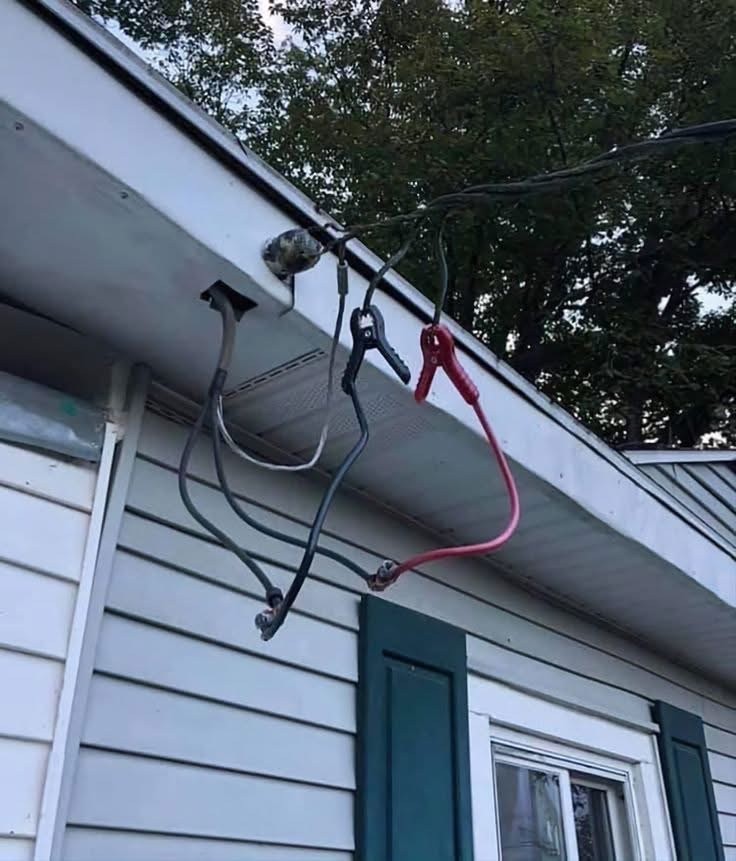
Not Sure this would pass an inspection!

Quote of the Week

   “I know you’ve heard it a thousand times before. But it’s true – hard work pays off. If you want to be good, you have to practice, practice, practice. If you don’t love something, then don’t do it. – Ray Bradbury

Inspirational Quote of the Week


  Submitting to God is not about losing freedom; it is about walking in the security of His perfect plan. He sees what we cannot see and knows what is best for us.


The information offered in this newsletter is that of the editor and not of any other entity or individual.

We welcome any comments or suggestions about this newsletter, send to lwilkins@al-ba.com