|
Joyce Zavorskas
Painter/Printmaker
Demonstration in the Monotype Process
Joyce teaches all kinds of printmaking for the Creative Arts Center at her studio in Orleans. Here is her process for creating a monotype.
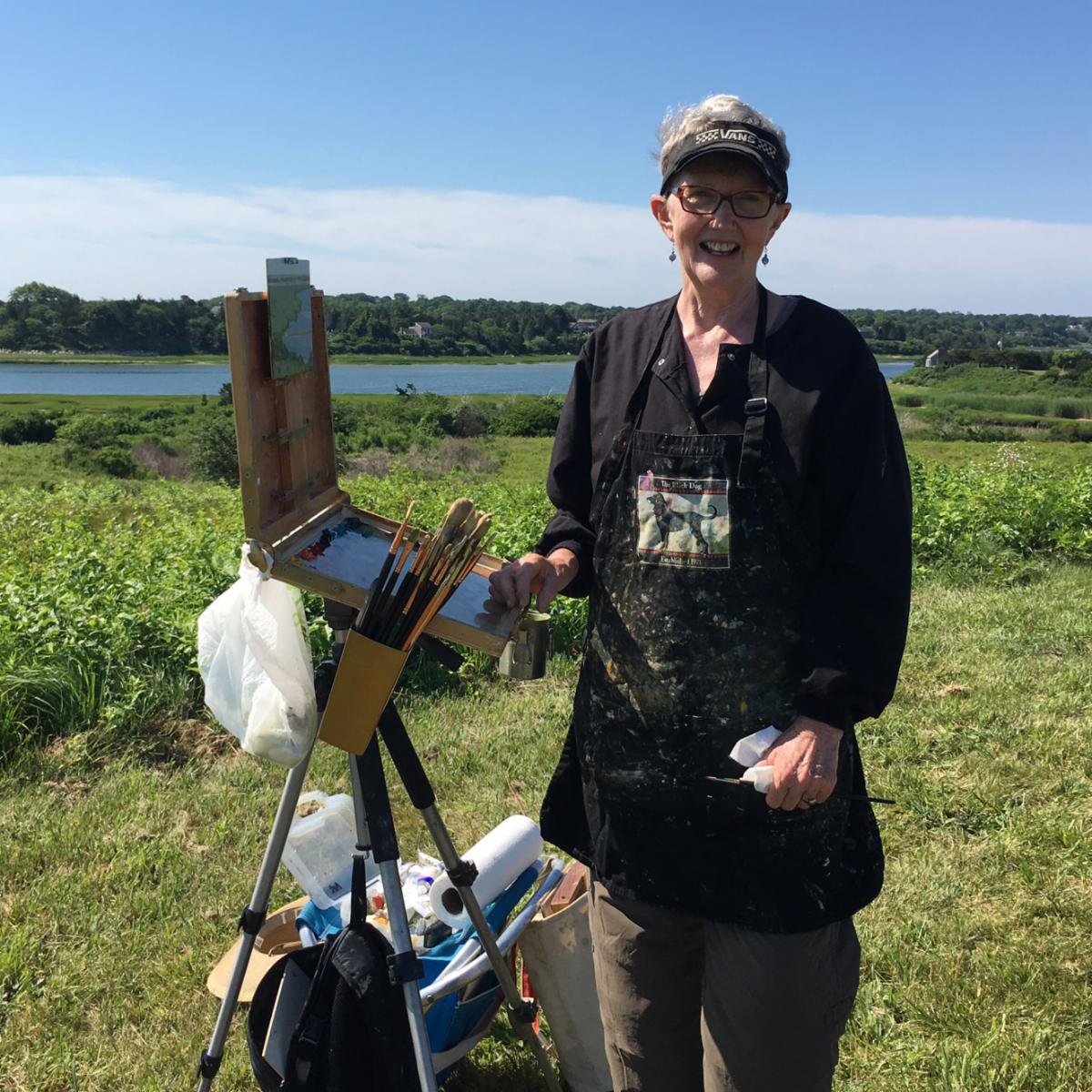
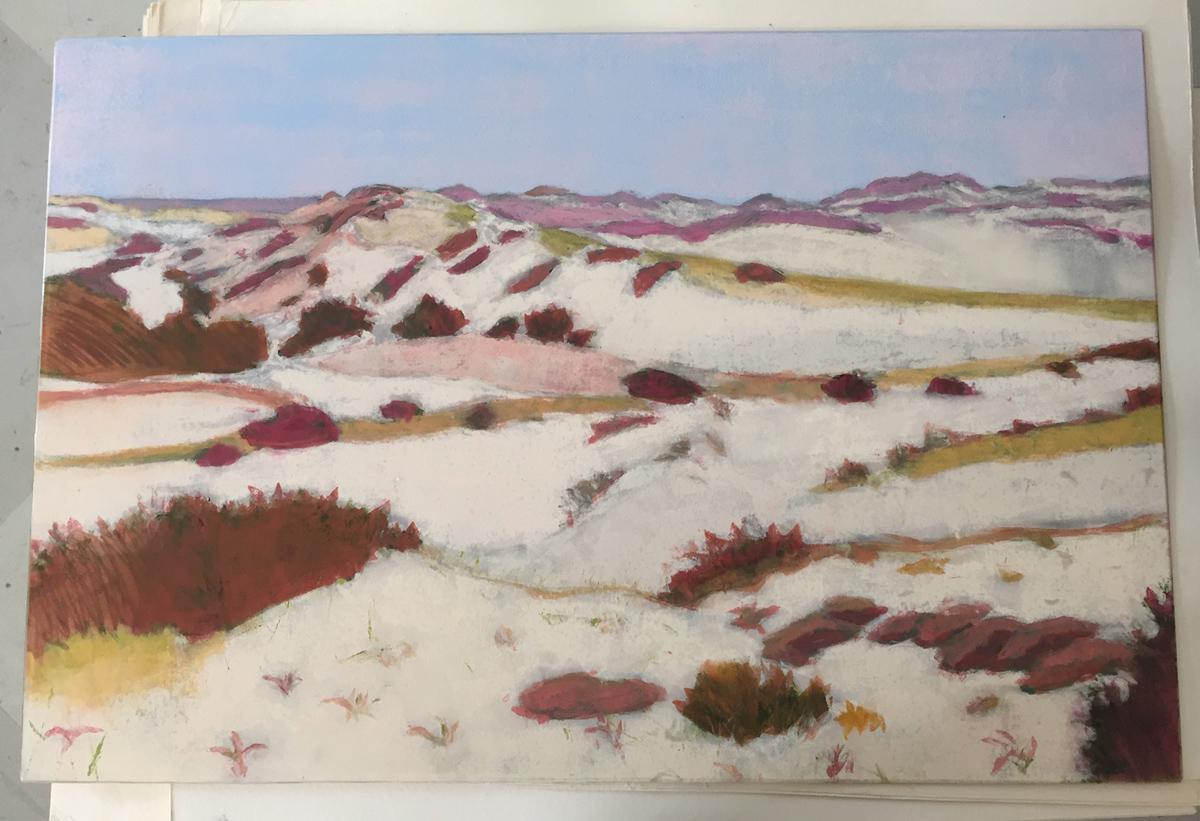
I have been quietly painting plein air for 35 years, documenting specific sites and gathering imagery for making monotypes and etchings during the colder months. I gravitate to presentations of nature surviving despite coastal storms. The humble strength of a dune or waterway endures natural onslaughts with stoic dignity.
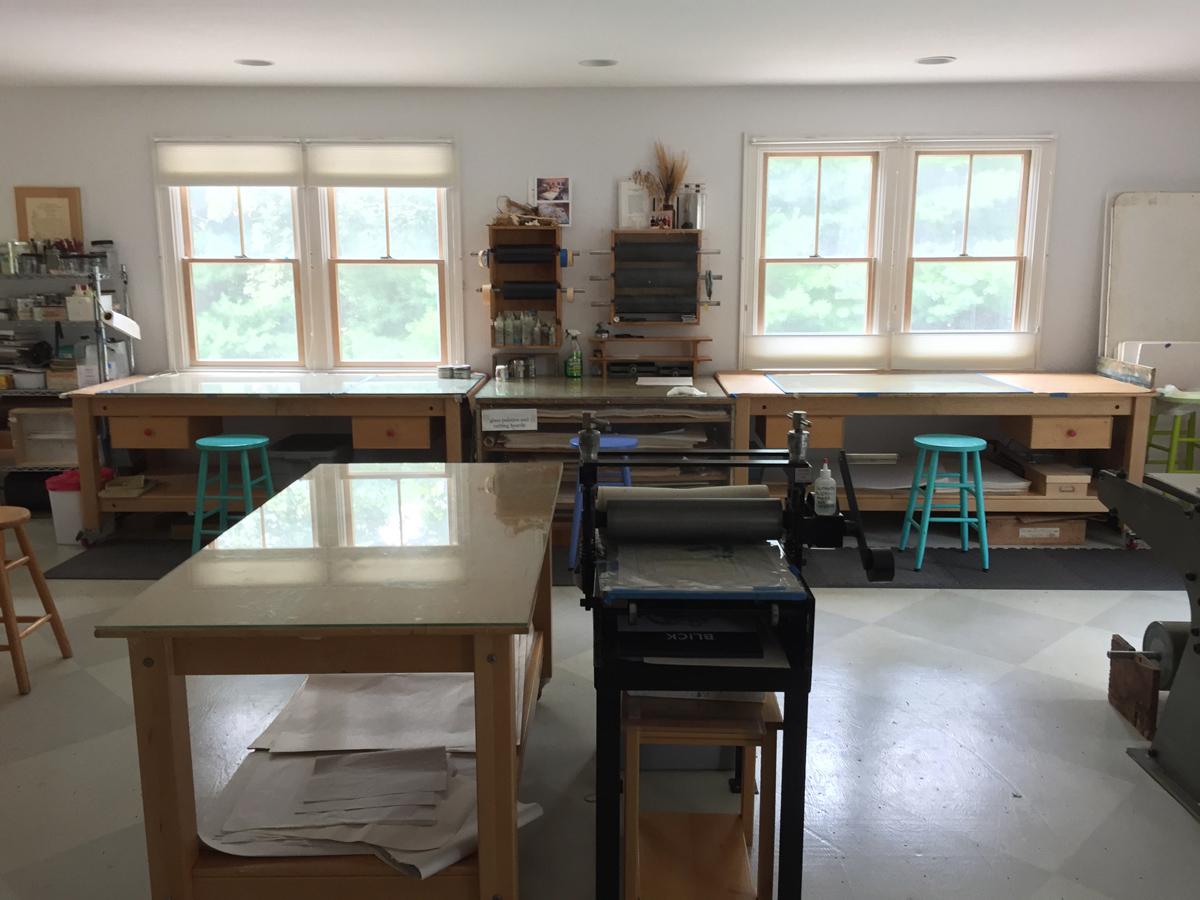
I make my monotypes indoors during daylight hours working with natural light from eight windows.
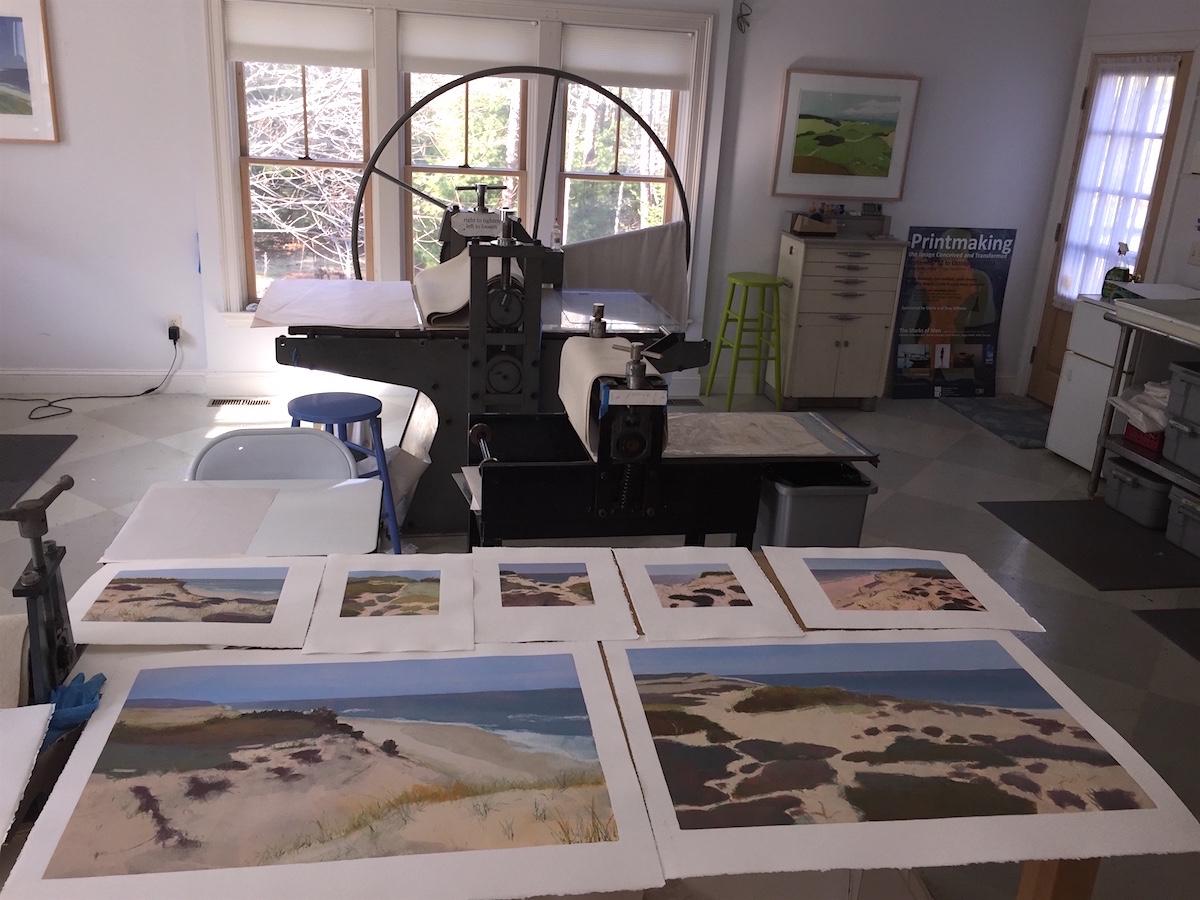
Newly printed monotypes drying. The large monotypes are printed one at a time on the 36x60" American French Tool press in the background. André Beaudoin designed and built and delivered this press to me from his workshop in Coventry, Rhode Island in 1976. It weighs 2,400 pounds. Turning the wheel moves the 500-pound press bed under a 500-pound steel roller.
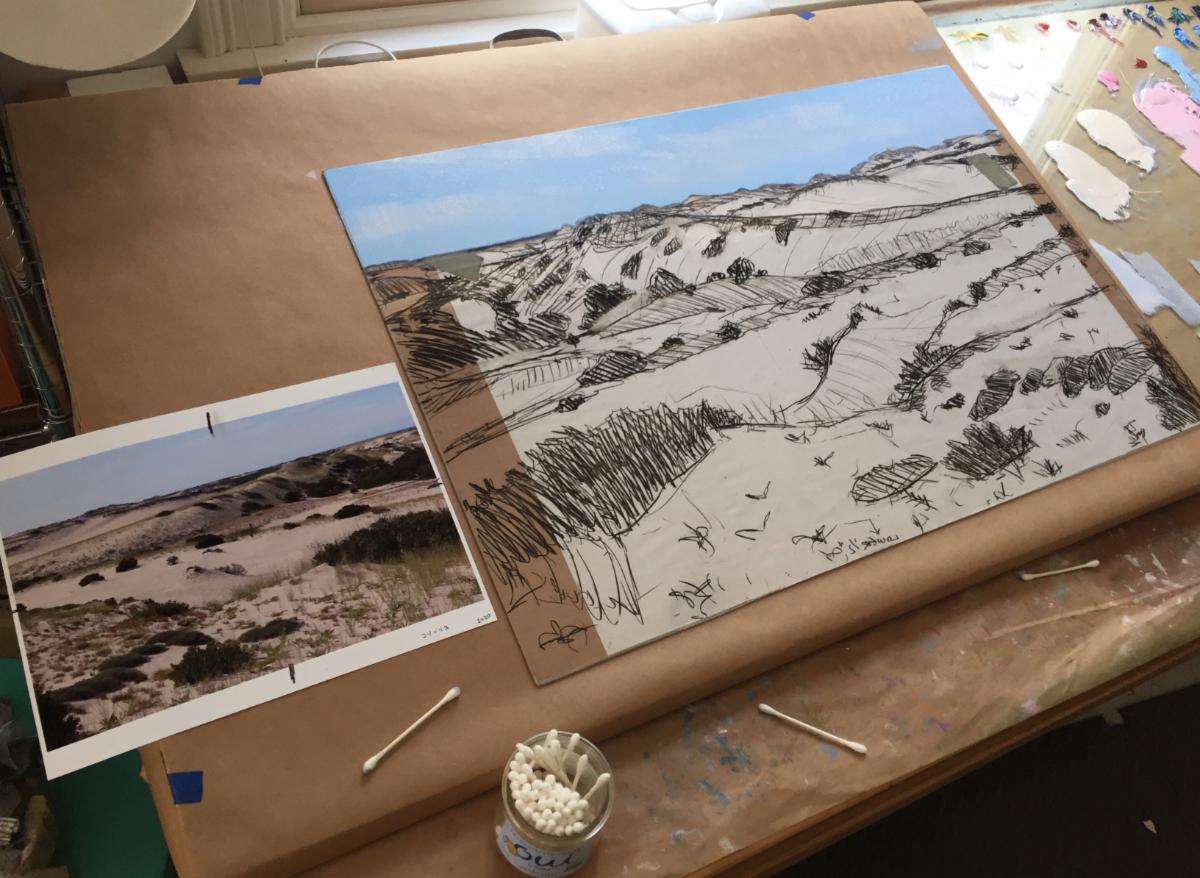
Before inking a monotype plate I select a source photo or plein air painting and make a study drawing with graphite pencils on paper, or draw with a china marker directly onto the back of a Plexiglas plate. Then I flip the plate so the finished drawing is in reverse when it gets inked. I love to draw and invest several hours developing a compelling composition with accurate values.
I put back nature's curves that the camera flattens.
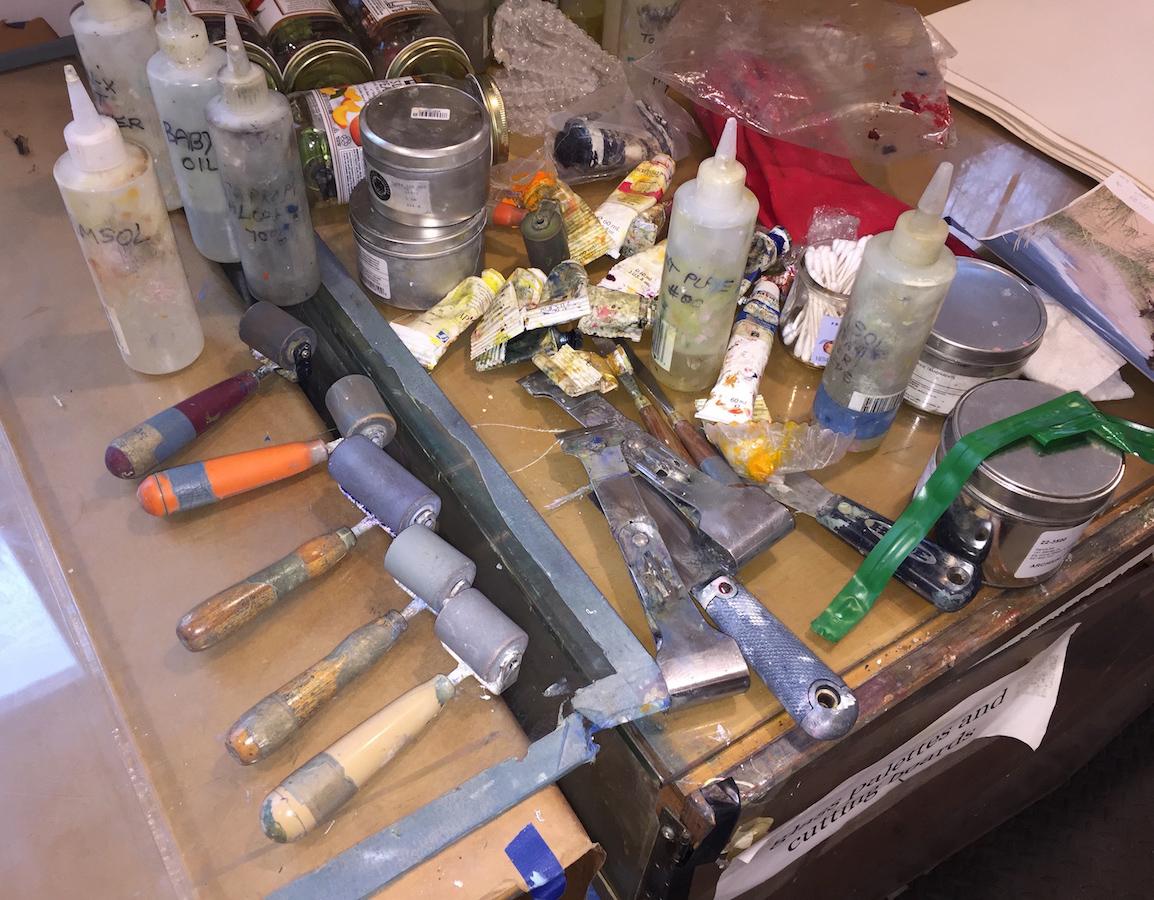
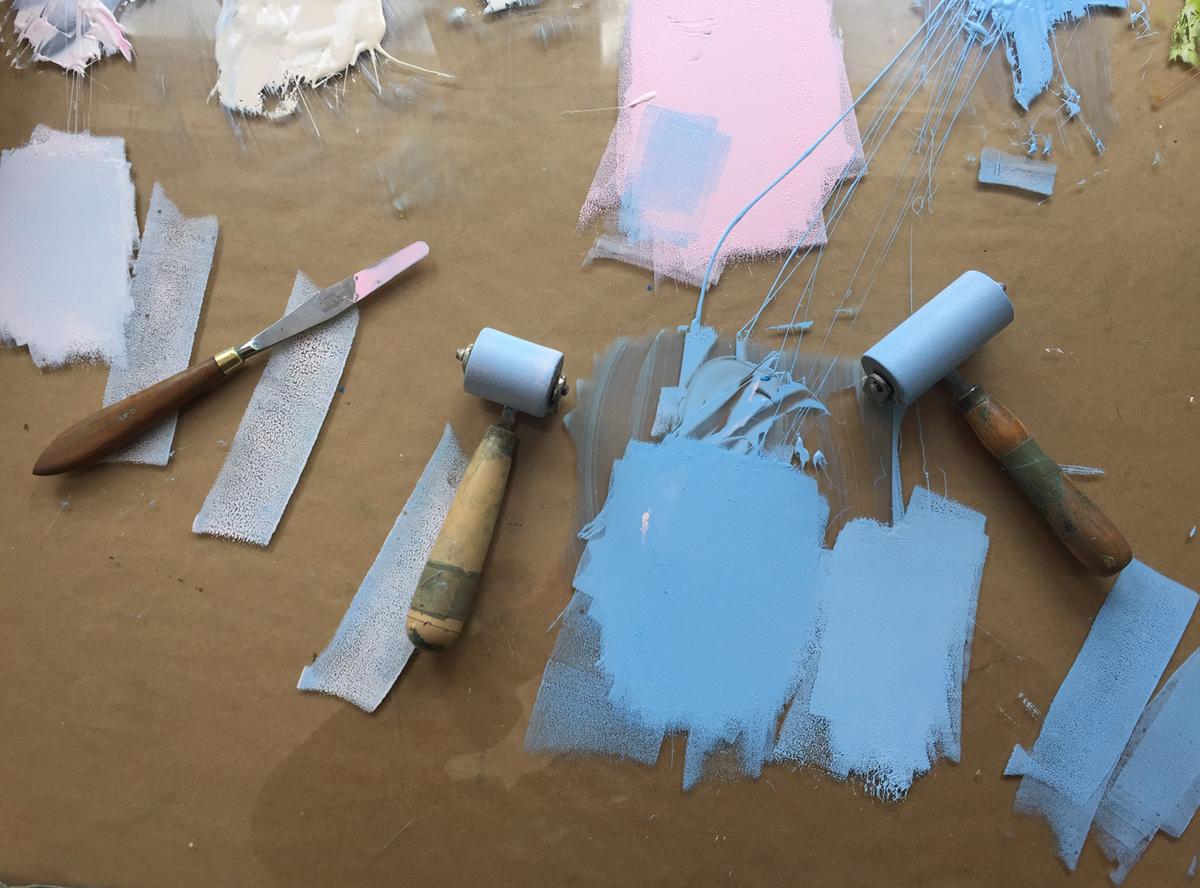
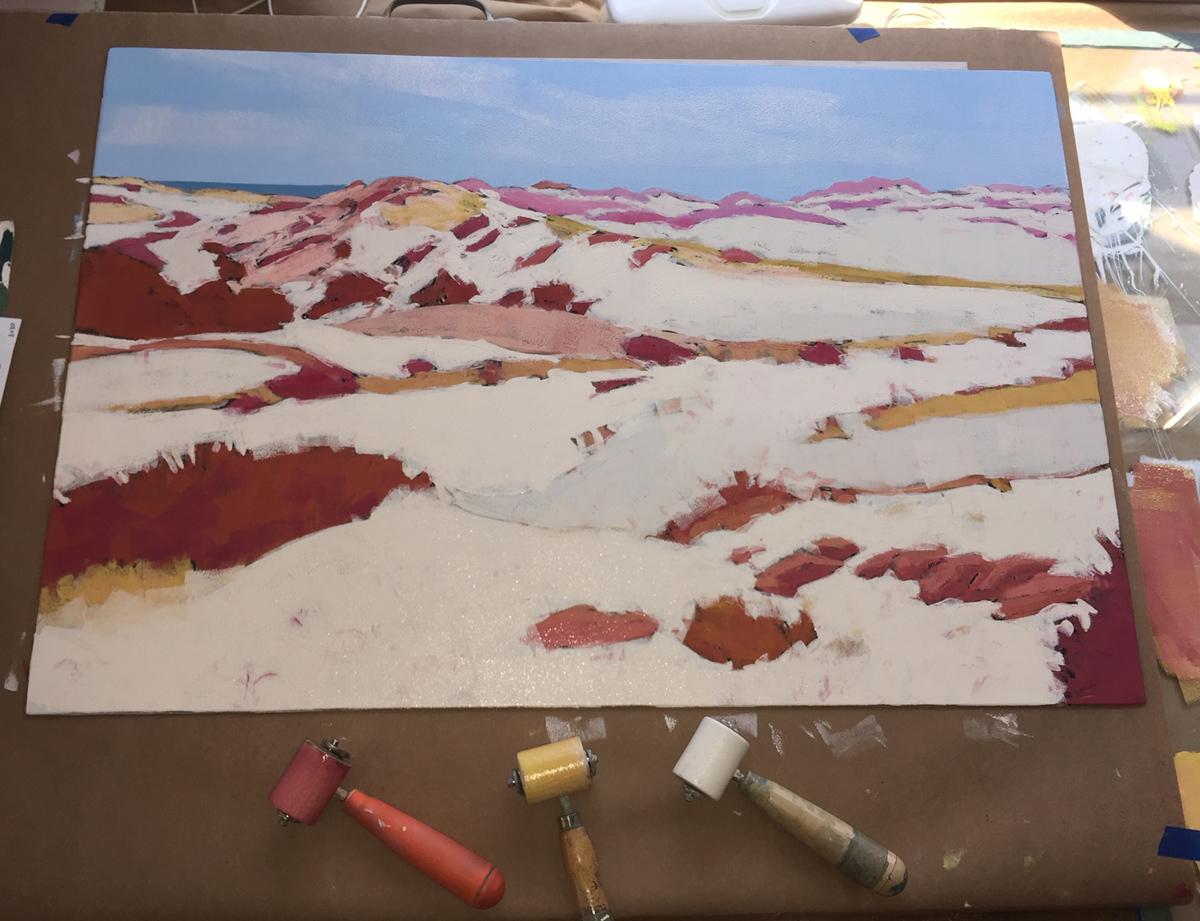
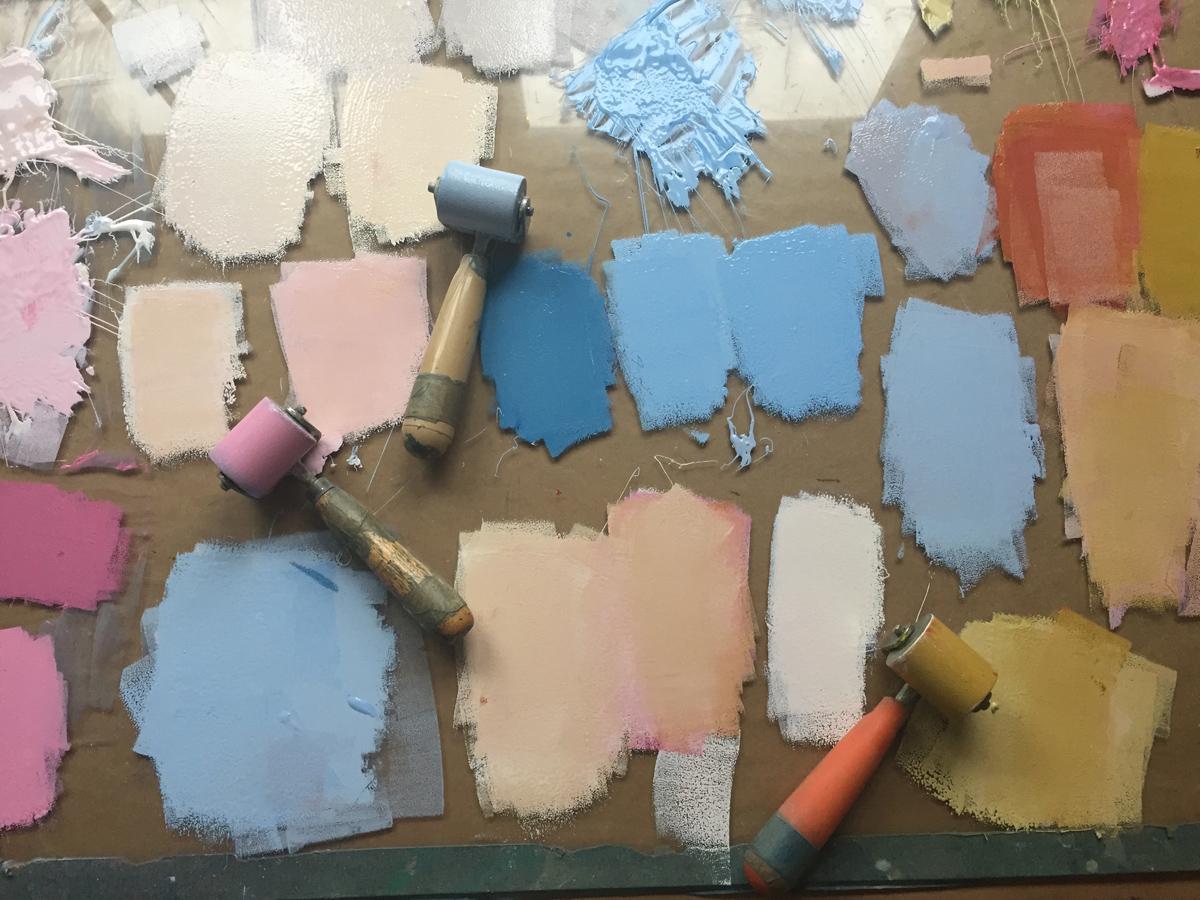
I mix site-specific colors using Charbonnell etching inks mixed with a little burnt plate oil to keep them workable. The inks are applied to the plate in thin layers using small rubber brayers. I roll on several layers of inks to achieve an impressionist luminosity, "pink under the blue", "ochre under the green".
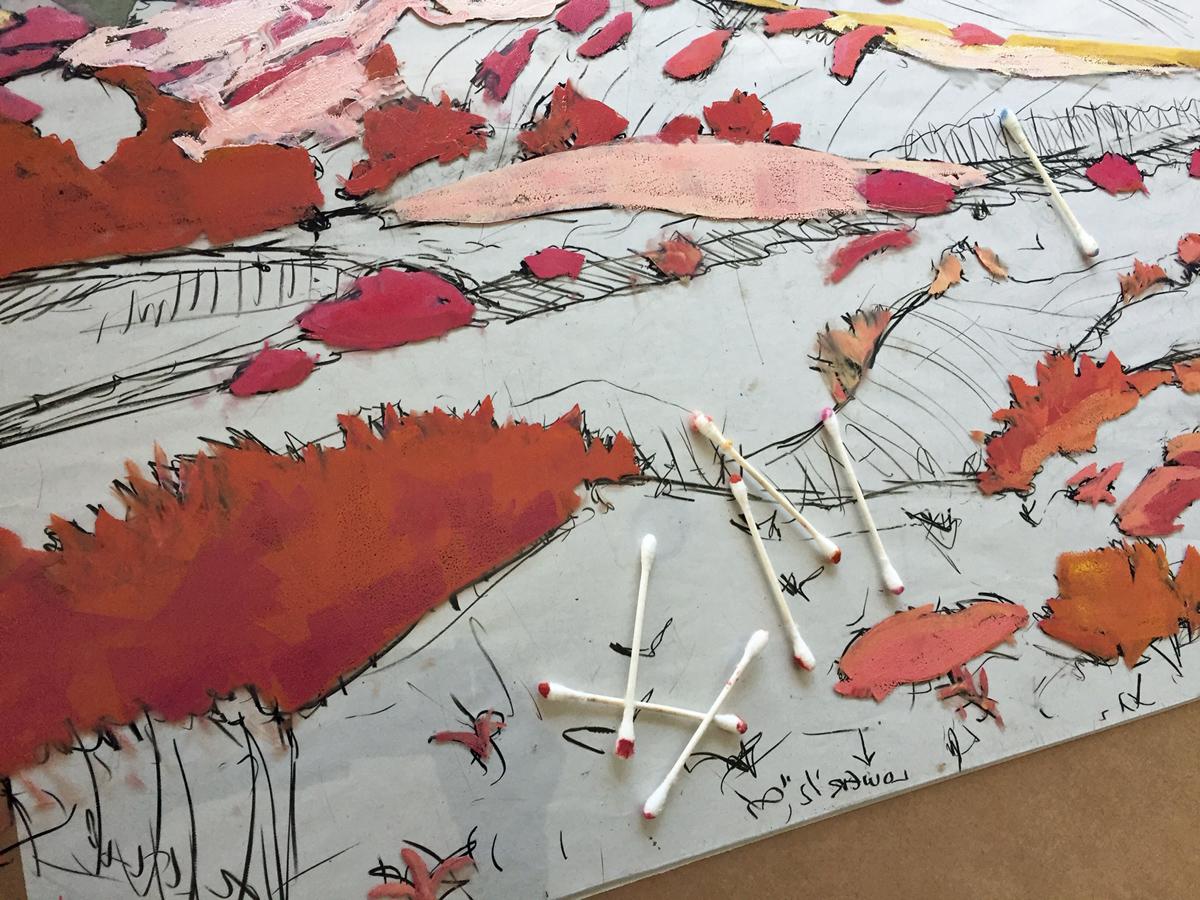
I use lots of Q-tips to clean up the edges so the shapes stay separate. First layers complete... this plate is 18x27"
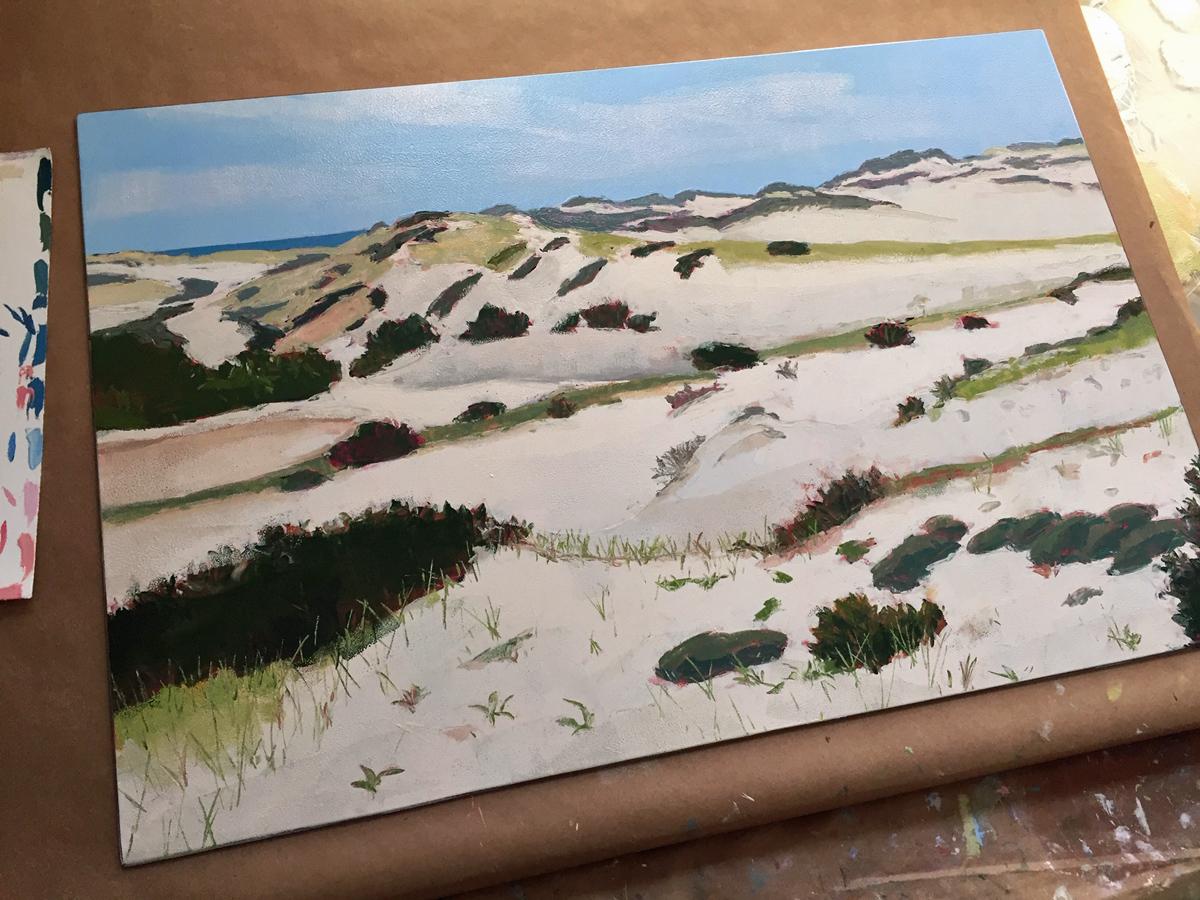
Now I mix the final actual greens of the trees and grasses. The finished layers of ink create luminosity. After many hours of brayering
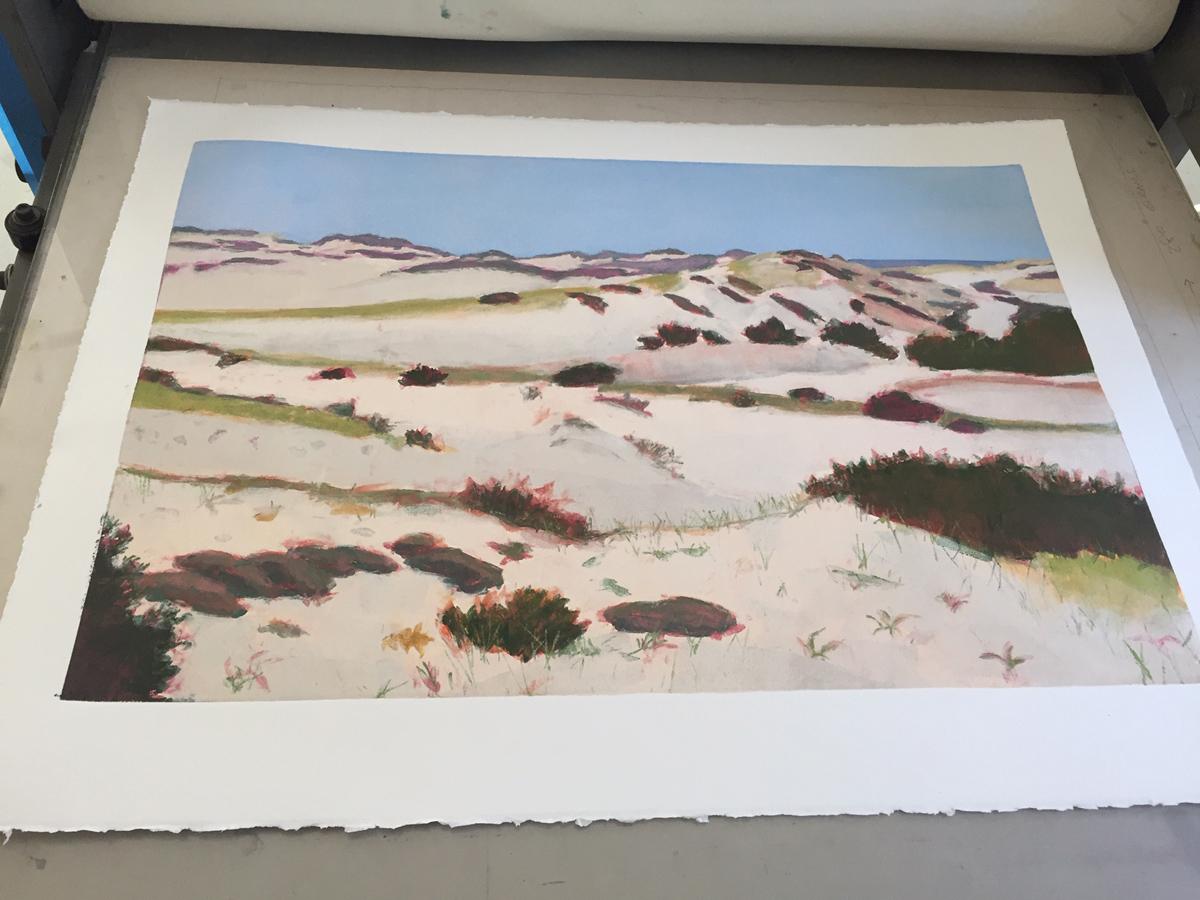
I wipe the edges of the plate and bring it to the press bed. Dampened cotton rag BFK Rives paper from France
is placed on top of the inked plate and I add two felt blankets to cushion it. I run the plate through the press with gentle pressure once only. The video below shows the manual press in motion. It shows how the reversed image prints frontwards after all!
The transferred painting on paper is a monotype, a singular impression. The painted plate now has only a ghost layer of ink left.
A monotype is a painting transferred to paper once only; mono means
one. I make my monotypes by applying thin layers of etching ink
to a plexiglas plate using small rubber brayers. Once the
painting is complete, I place dampened rag paper on top of the
plate, and run it gently through a press. The transferred painting
is now a monotype, and is the reverse of the inked plate image,
which is why I have to paint the original image in reverse.
A lot of people ask why go to the trouble of painting backward? As
a printmaker for 45 years, I'm used to reversing everything...
etchings, lithogrpahs, collagraphs and monotypes, so it's not a
problem for me. I always draw value studies and sketches first,
to establish the composition and important shapes. For the monotypes
I place a drawing under a see-thru plexiglass plate or just draw on the back
of the plate, to help me get started with the inking...where to place the tree,
path, etc. It takes several days to complete a compelling composition,
then mix all the colors of ink, and finally cover the entire plate with thin glistening layers of ink.
The major reason for doing monotypes, for me, is the luminosity of imagery imbedded in the white paper, and the
spontaneity and variety of mark-making in the image.
Joyce Zavorskas
-Viscosity Monotype/Monoprint
October 15, 16, 17
|