Montana Beaver Working Group
| | |
Connecting people and sharing resources to advance the beaver's keystone role
in watershed health
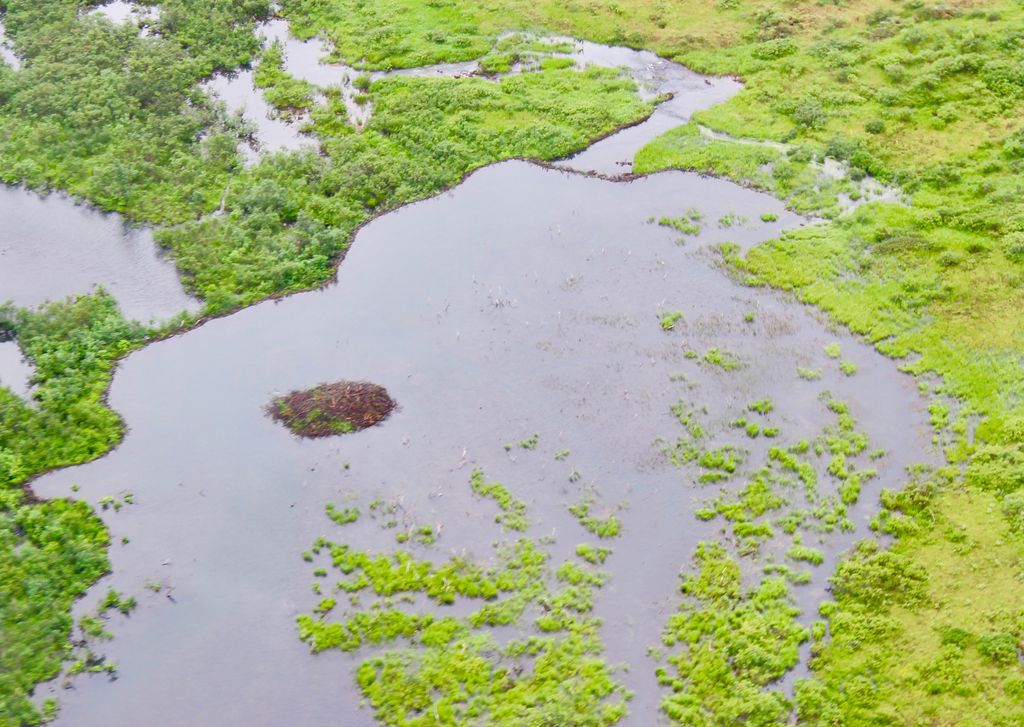
| | Photo Credit: Ben Goldfarb | | |
BLM Updates for Beaver Restoration Projects
Editorial Note: The photos and words for this story come from Claire Romanko, Project Manager for the Bureau of Land Management's Missoula Field Office. Thanks for your contribution, Claire!
Greetings Montana Beaver Working Group! I want to provide a few quick updates on all things restoration and federal project funding from Montana-Dakotas BLM. Many of you found my program updates helpful at our March BWG meeting, and I’m excited to share that most of that information is now moot. In April 2025, all (previously frozen) Bipartisan Infrastructure Law and Inflation Reduction Act funds that were already awarded into financial assistance agreements with many of our partners (many of you) were unfrozen! In Montana-Dakotas BLM, that restoration budget accounts for $38 million that went to 88 partner organizations and small business contractors. The advice I have hasn’t changed since March; keep working closely with
your federal counterparts to make sure your projects are on track, quadruple check your project payments are being processed, and check in often. Most recently, the signing of the One Big Beautiful Bill Act did rescind remaining unspent IRA restoration funding, but already awarded funds (like your existing agreements) are still in play and should be spent as planned. We’re here to help!
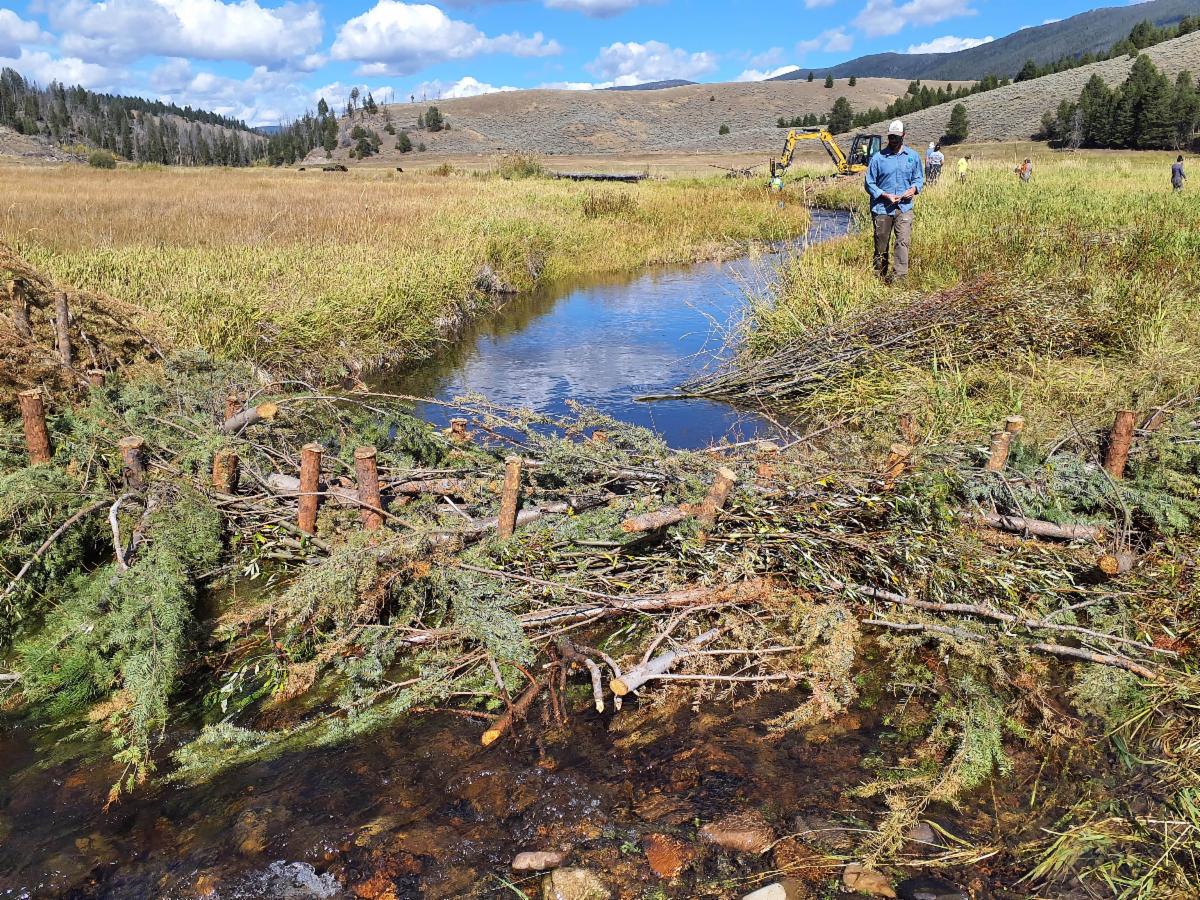
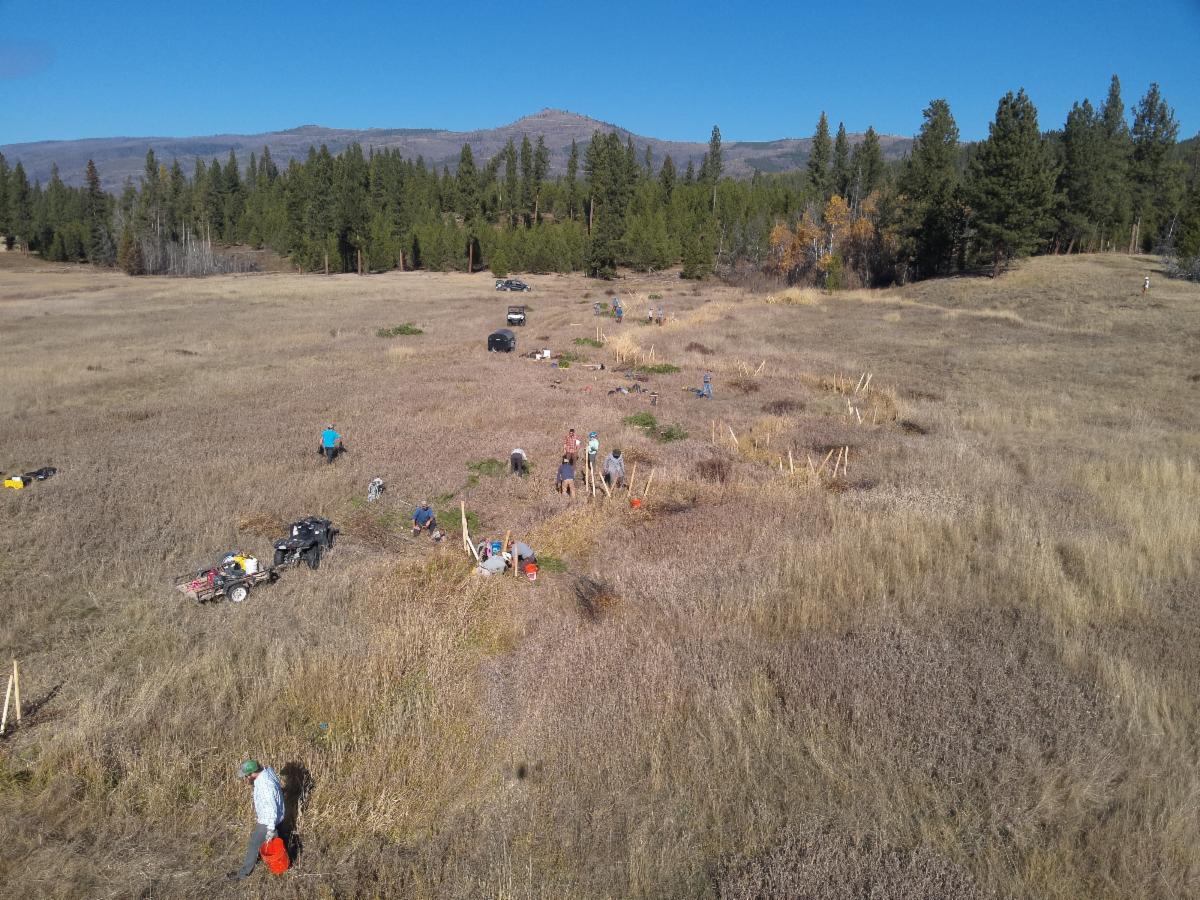
All that said, y’all have been busy! In my neck of the woods, BLM’s Missoula Field Office continues to implement many projects and I’d be remiss to not share some well-deserved kudos. A 2022 assessment of ~124,000 acres of BLM and adjacent lands in the Lower Blackfoot watershed used the Beaver Restoration Assessment Tool to estimate that lands within the assessment area could support over 800 beaver dams on 212 stream miles. That same year, our field inventory only documented 73 existing beaver dams (9% of the landscape’s capacity, assuming averages from the BRAT model). We very enthusiastically accepted that statistic as a challenge to get more LTPBR structures into public land streams! In three years, our partner team
of human-beavers, including folks from The Nature Conservancy, Montana Conservation Corps, National Wildlife Federation, Clark Fork Coalition, Trout Unlimited, and the great folks at Anabranch Solutions, LLC have incrementally installed an additional 114 beaver dam analogues and post-assisted log structures. In 2025, we’ll build 50 more BDAs and maintain our existing LTPBR projects. That’s a 21% increase in beaver dam structures on the landscape in just 3 years – go team!
Speaking of team – in my role as a project manager, I’ve experienced firsthand that this work doesn’t happen without a lot of behind-the-scenes coordination. From navigating permitting, writing grant applications, and the many administrative hours to get federal financial agreements up and running – there are several unsung heroes to this work. From me to them, please take a moment to thank your office administrators, grants managers, GIS specialists, and all those behind-the-scenes rock stars who make it easier for us to play in the field.
Thanks for all you do for public lands!
| | |
Beaver Science Speaker Series
Beaver Institute
Zoom (link here)
2pm on August 14 and September 11
The Beaver Institute's Beaver Science Speaker Series is having another strong run! Ellen Wohl, Matthew Guziejka, and Janine Castro led this year's lineup, and the next presenter will be Colorado State University master's student Katie Larkin on August 14, speaking on "The influence of beavers on river-bed functionality." This monthly series serves as resource for anyone interested in beaver science, and it offers a platform for researchers to share new findings. Each session features a guest speaker presenting their work, followed by Q&A and discussion. Please enjoy each presentation with this link at 2pm of the appointed day, and if you'd like to catch up on previous installments of this series, you can do so here.
| | |
State of the Beaver Conference 2025
Canyonville, Oregon
November 18-20, 2025
Plans are underway for the 8th Biennnial State of the Beaver Conference, to be held November 18-20, 2025 in Canyonville, Oregon. The presenter list is filling up with some wonderful people and topics, and in addition to registration, there is still room for you to participate as a speaker or sponsor. Please see more details here and reach out to Leonard Houston (beavers@surcp.org) if you have questions.
| | |
Could Beavers Be the Secret to Winning the Fight Against Wildfires?
Ben Goldfarb
National Geographic
June 2025
The North American beaver has just made a big splash in National Geographic! Around since 1888 (yes, that's right, eighteen eighty-eight), this is the magazine widely respected for its stunning photography, mesmerizing maps, and bold reporting on worldwide issues of importance to nature, science, and culture. Journalists and photographers aspire to get their work within its yellow-bordered covers, and some in the past have given beavers cameo moments. But in the June 2025 issue, Ben Goldfarb teamed up with Ronan Donovan, and the renowned duo produced a story that meets today's needs, giving beavers a starring role. Check out the full story in print or online here.
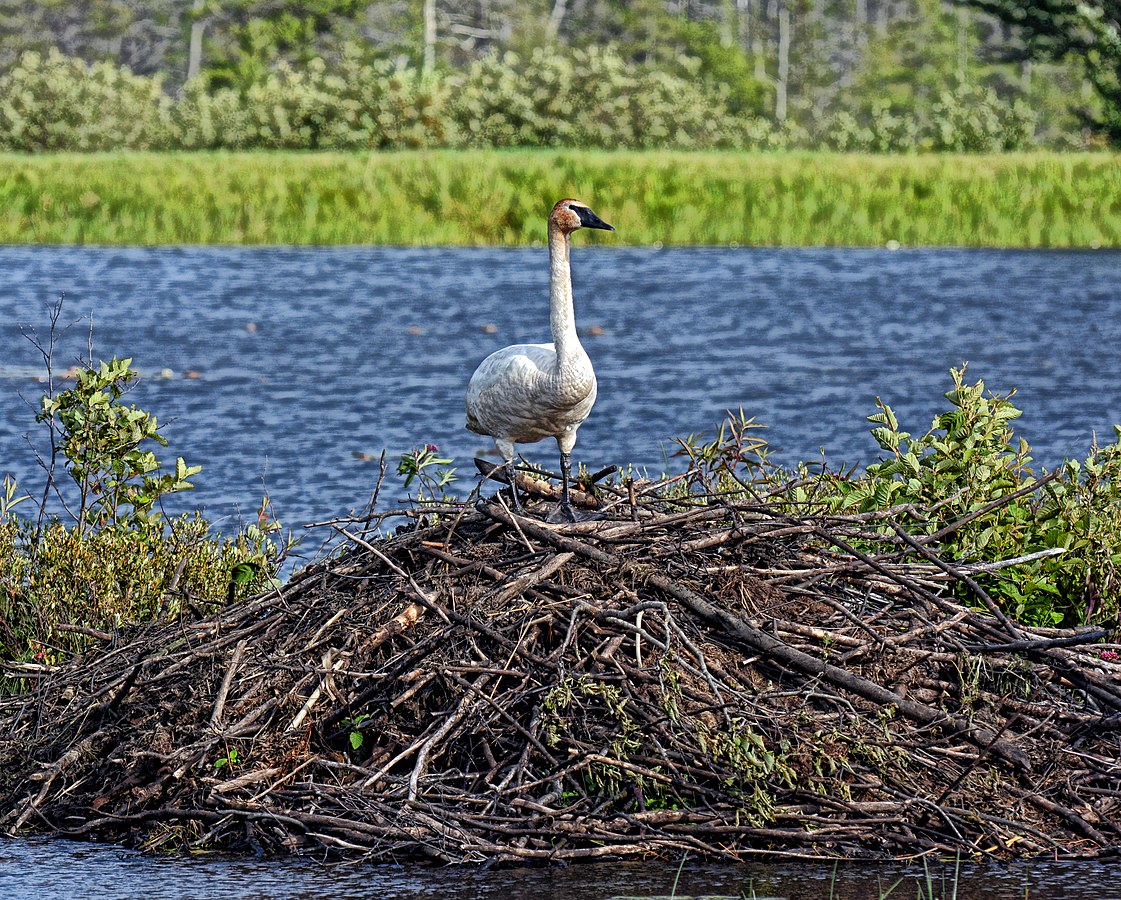
| | The trumpeter swan - a Montana Species of Concern, and largest of all waterfowl in North America - is not only known to thrive in the wetlands that beavers create, but also to nest on the lodges where beavers live. Photo Credit: Julie Christiansen / Wikimedia Commons | |
A Systematic Literature Review Invesigating the Association Between Biodiversity and Beaver Lodges
Jude Banks Wilson and Samantha Bremner-Harrison
Peer J
May 29, 2025
It's becoming common knowledge that the habitat beavers create is a haven for all kinds of life, from spiny baskettail (a kind of dragonfly) and western toads to westslope cutthroat trout and grizzly bears (all Species of Concern in Montana). But around the world, the broad biodiversity benefits of beaver habitat is also localized in lodges they create. In a new study, Jude Banks Wilson and Samantha Bremner-Harrison aimed to 1) investigate the evidence for beaver lodges being local biodiversity hotspots; 2) identify areas of future research centred around the relationship between biodiversity and beaver lodges; and 3) provide recommendations on how to monitor the relationship between biodiversity and beaver lodges within the UK. This comprehensive assessment provides insights and methods for application in the USA, and it will help you see who beavers support in a whole new way. Read the full paper here.
| | |
Beaver Versus Human: The Big Differences in Small Dams
Ellen Wohl and Sheeram Inamdar
WIREs Water
March 27, 2025
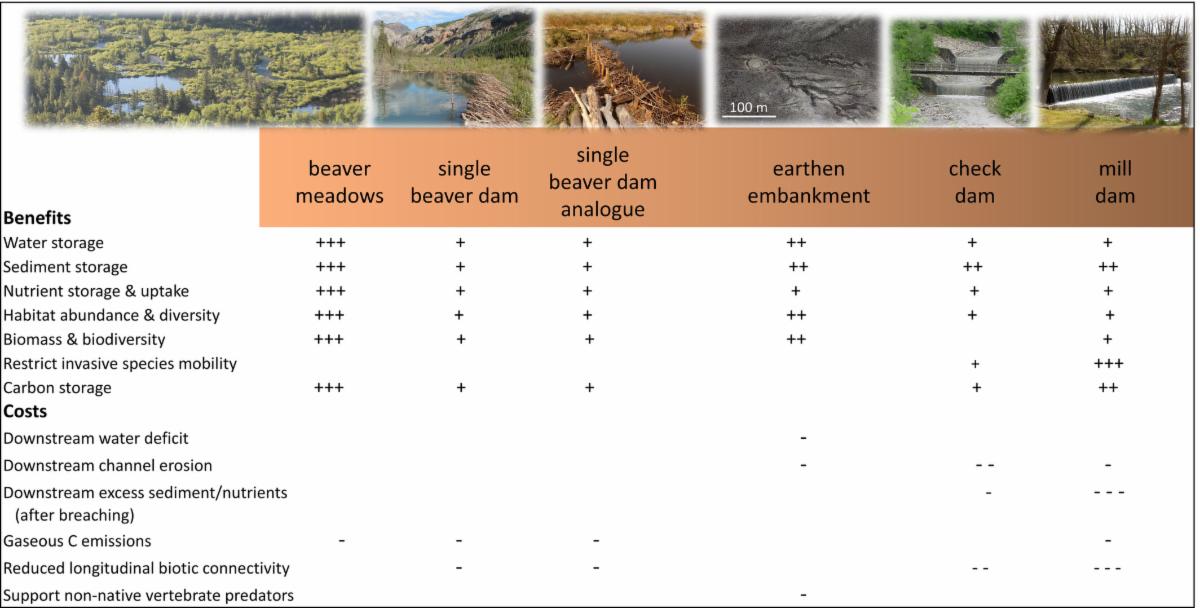
Beaver dam or mill dam? What's the dam difference? Actually, a lot! This paper used published research as a basis for comparing the effects of beaver dams and four types of human dams—beaver dam analogues, earthen embankments perpendicular to flow that are used to create stock ponds, check dams, and mill dams. The authors compared these dams with respect to water balance and three-dimensional hydrologic connectivity, sediment, particulate organic matter and carbon, nutrients, habitat, and biota. These assessments informed ranking of small dams from generally most beneficial with respect to providing ecosystem services (beaver meadows with multiple dams) to least beneficial (mill dams), recognizing that beaver meadows may not be beneficial at some sites for infrastructure and human property within the river corridor, and mill dams may be beneficial at some sites where they impede upstream migration by invasive species or provide lentic habitat in the river corridor. This comparison among dam types highlights the need for research on the cumulative effects of multiple small dams along a river corridor and across a river catchment, as well as identifying gaps in our understanding of the effects of specific types of dams, including the effects of stock ponds and check dams on carbon and nutrient dynamics. Read the full paper here.
| | |
Building a Common Voice for Healthy Stream & River Systems in the American West
Metropolitan Group
June 2025
To help you define what healthy stream and river systems are, why they matter, and how to make the case for investing in their future, a collaborative team has worked with the Metropolitan Group to create a focused messaging handbook. This is a tool that can help articulate a common langugage to unite and inspire diverse partners, with actionable tips on how to construct a message, connect to interests, personalize an approach, and make it matter locally. Many local Montanans and beaver experts contributed to this resource, and you can download it here.
| | |
Montana Conservation Menu
Montana Association of Conservation Districts and Montana Watershed Coordination Council
TSeeking a grant? Want to share a grant? Don't forget about the Montana Conservation Menu, a database of grants and funding availability curated by Montanans, for Montanans. This resource is an effort of the Montana Association of Conservation Districts and the Montana Watershed Coordination Council, and you can learn more about here.
| | |
Please send photos, stories, upcoming events, opportunities, and other resources to:
Shelby Weigand - Riparian Connectivity Manager,
National Wildlife Federation
WeigandS@nwf.org
MT Beaver Working Group newsletters are posted online here.
| | | | |