|
Dear Danielle,
Spring’s earliest familiar signals are appearing—osprey returning to their nests, migratory fish beginning their annual journeys from the ocean through our watershed, and ephemeral wildflowers popping up before trees and shrubs leaf out. As nature shifts, it reminds us that maintaining these habitats is essential, especially as changes in climate have far-reaching effects on the species that depend on them. Join us for alewife and American eel monitoring, spring cleanups, and other opportunities to take action for our environment.
We’re also pleased to share that CCOM’s advocacy team recently played a role in advancing zoning code updates to help curb overdevelopment on the East End. Thoughtful planning is essential to preserving our natural resources, and every effort to balance growth with conservation is a step toward a healthier future. This work continues CCOM’s long-standing commitment to protecting Montauk’s environment—something we could not do without your support.
Read on for exciting updates, including the ongoing dune restoration at Ditch Plains Beach, Oyster Gardening opportunities at the hatchery, the Montauk School Young Filmmakers Club STEAM Program, sustainable spring cleaning tips, and ways to take meaningful action for Earth Day.
With gratitude,
Rebecca Holloway
| | Rebecca Holloway | Manager of Environmental Advocacy | | DITCH DUNE RECONSTRUCTION PROJECT: Status Update | | |
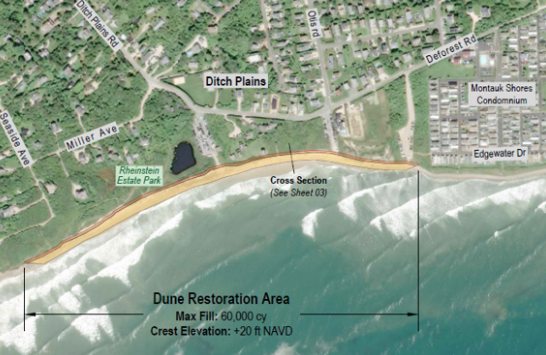
The Town of East Hampton has formally submitted its permit application to the New York State Department of Environmental Conservation (NYSDEC) for the Ditch Plains Beach dune reconstruction. Following NYSDEC’s recommendation, the project design was adjusted to shift the dune landward, reducing its interaction with the tidal zone. The Town has since coordinated with private property owners to secure necessary permissions and easements, which are now being finalized.
For more details on the project, including background and next steps, see here.
| | |
GARDENING UNDERWATER WITH OYSTERS
Clean our Waters, Grow Your Own Oysters – Join the Oyster Gardening Program!
| | |
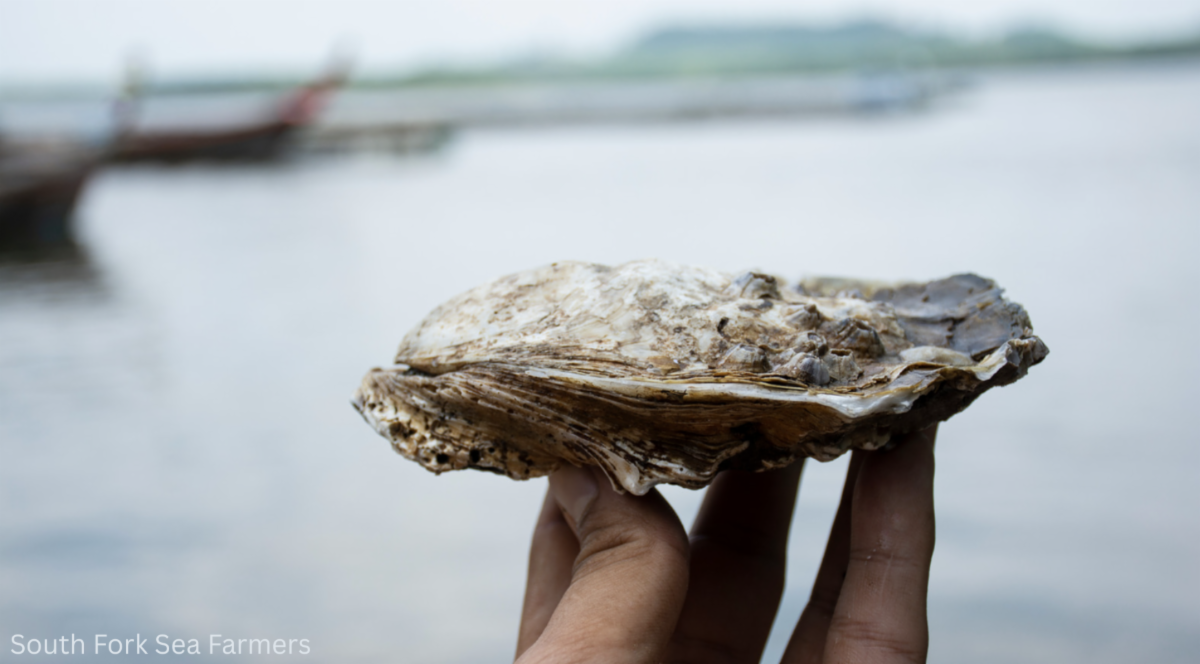
Oysters are nature’s powerhouse! Did you know an individual oyster can filter over 50 gallons of water a day, improving water quality by removing excess nutrients, algae, and suspended particles? They also create essential habitat for fish and marine life and help stabilize shorelines by reducing wave energy and preventing erosion.
If you have a dock, bulkhead, or underwater land, you can take part in oyster gardening and grow your own! Contact Barley Dunne at the East Hampton Shellfish Hatchery or check out this LTV session to learn more about the East Hampton Shellfish Education and Enhancement Directive (EHSEED) program.
| |
No waterfront property? No problem! Join the Community Oyster Garden at 159 E. Lake Dr. and be part of local water restoration efforts.
Apply as a new gardener or a returning gardener today!
| | MARCH WATER QUALITY RESULTS | | |
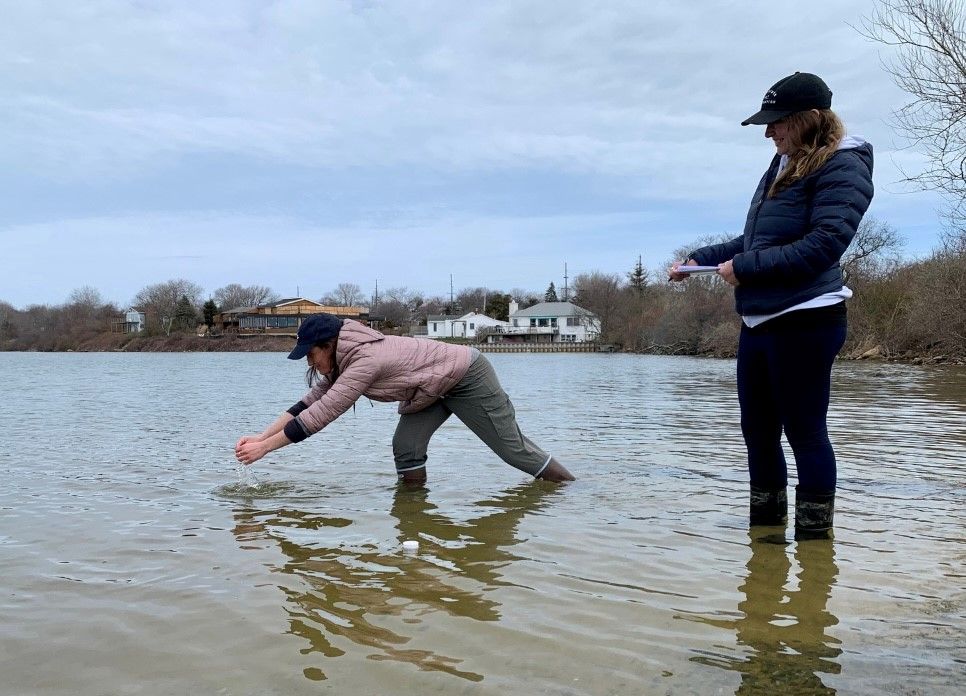
This month's water quality results showed clean conditions, with low or no bacteria detected at all sites. These findings align with improved water quality we typically see in the off-season, when conditions are less favorable for bacterial growth.
This information strengthens our year-round monitoring, which is vital for understanding water quality trends, informing policy, and guiding solutions.
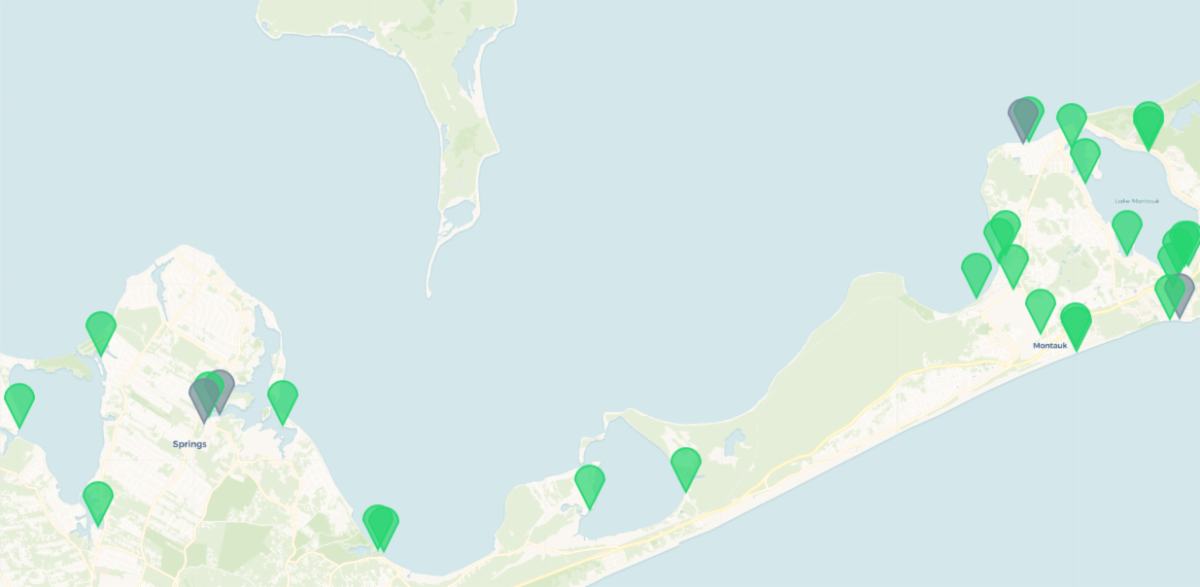
See our detailed reports, CCOM’s site map, and results from across the East End here. Thanks to our dedicated volunteers for supporting year-round sampling.
| | ENVIRONMENTAL SUSTAINABILITY | | EAST HAMPTON ZONING CODE AMENDMENT PASSED | | |
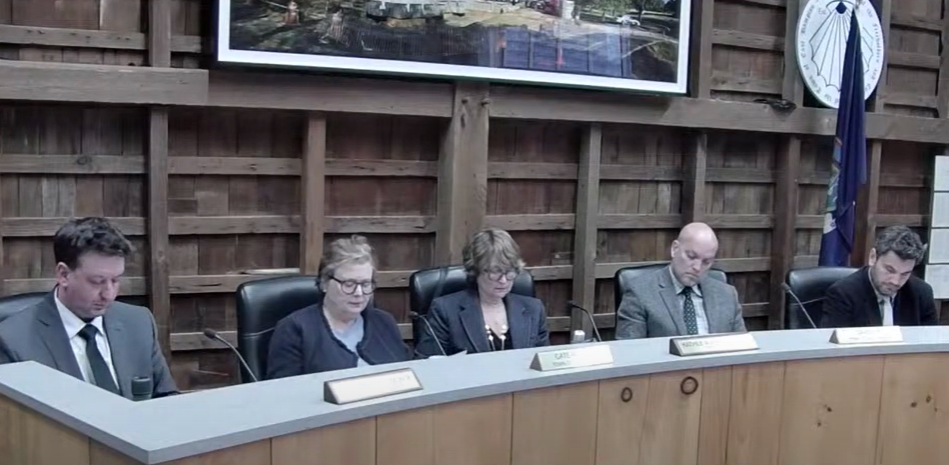
CCOM commends the East Hampton Town Board for passing the zoning code amendment to limit gross floor area (GFA) to 7% + 1,500 sq. ft. This decision marks an important step toward balancing growth with environmental preservation in our community. The March 6th public hearing saw an impressive turnout, with a strong majority of residents expressing concerns about overdevelopment and its environmental impacts, while supporting the Zoning Code Amendment Working Group’s (ZCAWG) recommendation.
While the formula passed differs slightly from the 7% + 1,300 sq. ft. proposal supported by CCOM and the ZCAWG, it is still a positive move forward. This is the first GFA amendment since 2017, and we commend the Town Board for taking this long-needed action.
CCOM urges the Town Board to maintain its support for the continued hard work of the ZCAWG in protecting the environment and ensuring future improvements to the zoning code.
Learn more about planning and sustainability here.
| | SIGNS OF SPRING: Alewives and Coastal Ecosystems | | |
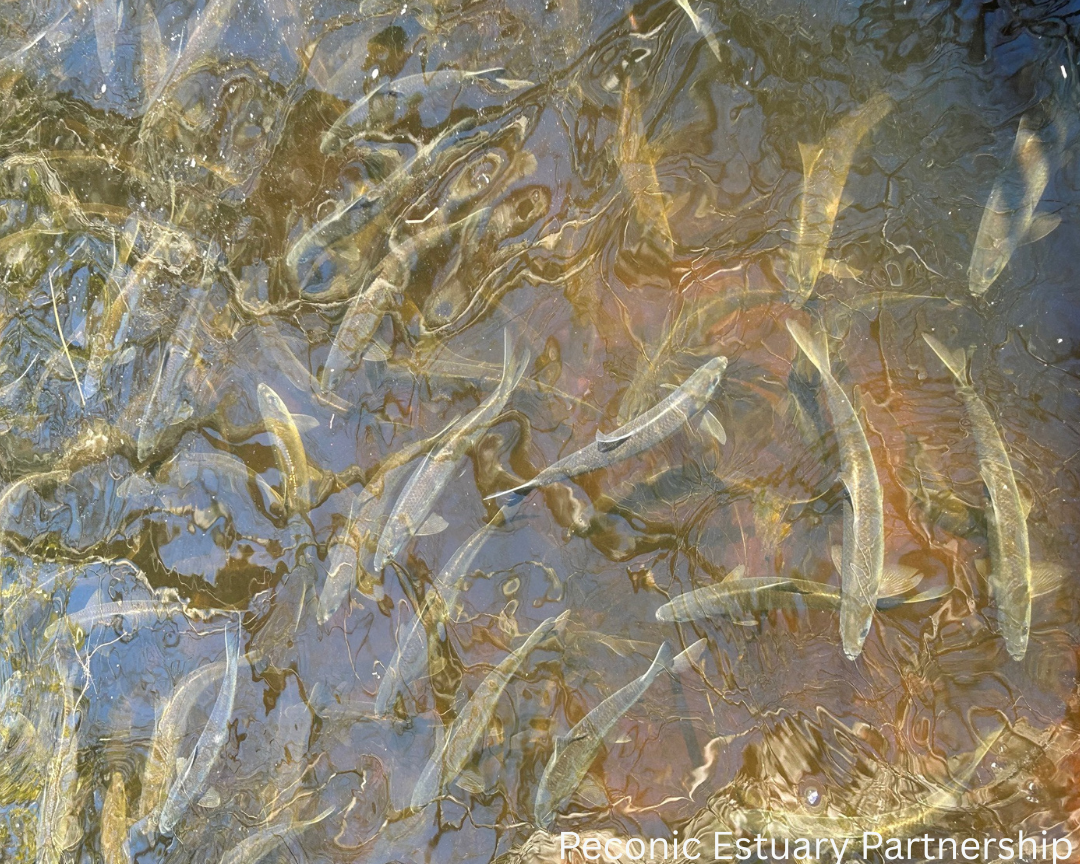
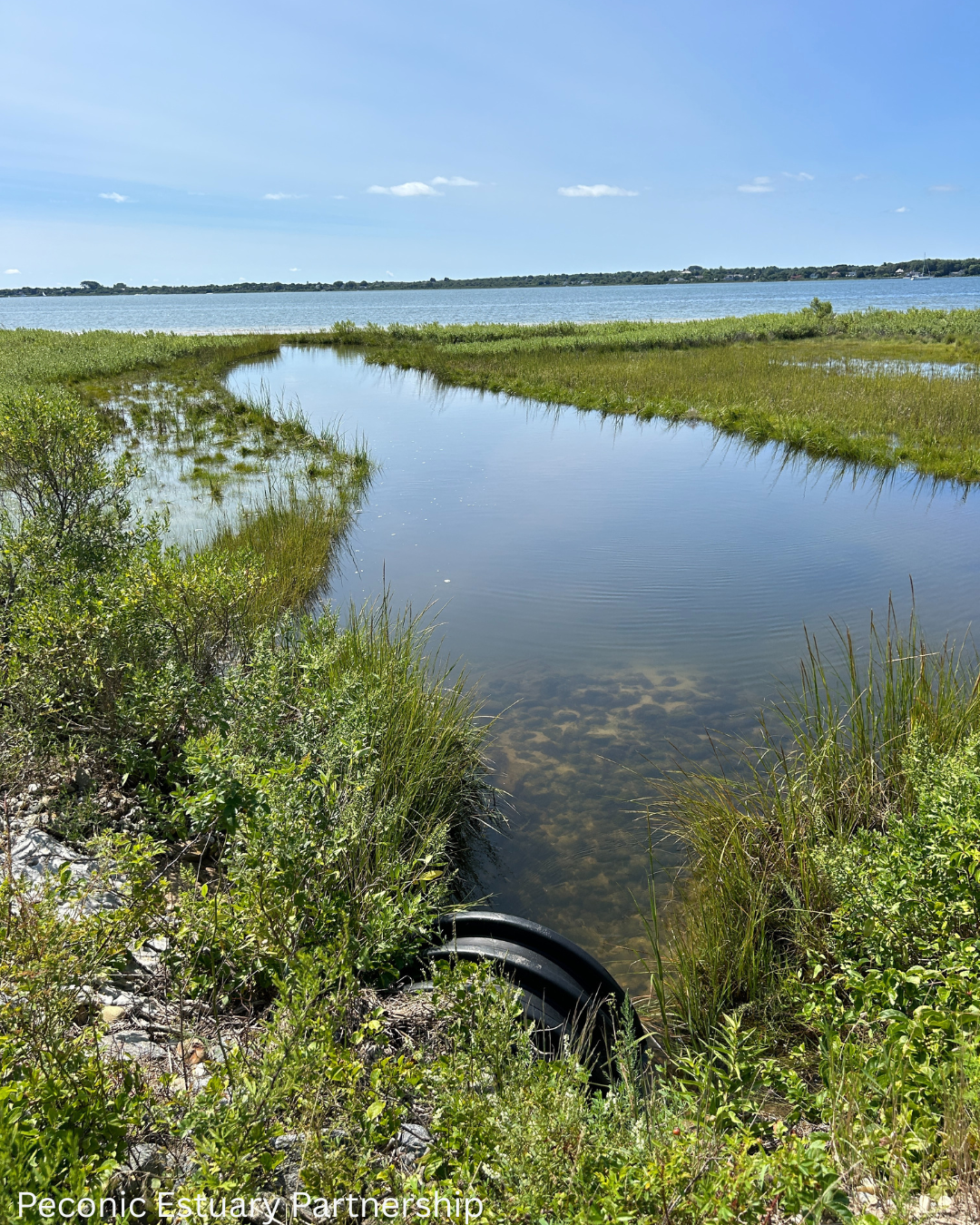
One of the earliest signs of the season is the return of alewives, a key migratory fish species. These fish, ranging from Florida to Maine on the East Coast, migrate from the ocean to freshwater annually to spawn, playing a crucial role in our ecosystem. Alewives are essential to the food web, providing vital nourishment for a variety of predators, from larger fish to mammals and birds. Their presence is an indicator of a healthy coastal environment.
As we enter their spawning season, it's the perfect time to learn more about these remarkable fish and how you can help monitor their populations. Volunteer Opportunity Details Below!
| | SUSTAINABILITY TOPIC OF THE MONTH: Spring Cleaning - Simple Swaps for a Sustainable Home | | |
Spring cleaning is a time to refresh your home—and this year, you can make it more sustainable too. A great way to start is by swapping single-use cleaning products for more sustainable alternatives. Instead of liquid dish that comes in plastic bottles, try opting for bar soap—it lasts longer and eliminates plastic packaging. You can also try swapping disposable sponges that need replacement after a few weeks with washable or compostable options.
For laundry, ditch the plastic jugs and switch to detergent sheets, which provide a powerful clean without the waste. You can also take advantage of refill services for essentials like shampoo, conditioner, and soap that cuts down unnecessary packaging.
| | |
Many conventional cleaners contain chemicals that pollute waterways and threaten human health. Natural alternatives are just as effective and non-toxic. Try store-bought natural cleaners or make your own with simple ingredients—see this guide!
As you declutter, think about donating gently used clothing, furniture, and household goods instead of sending them to the landfill. Many organizations even offer pickup services for donations! Find a local donation center to give your items a second life.
| | These small changes support a circular economy, reduce pollution and waste, and make your home healthier— sustainability starts with simple, everyday habits we can build into our routines. | | One of the most powerful ways to combat climate change is to reduce fossil fuel emissions. By making small changes in our daily lives, we can help lower emissions and advocate for broader systemic change. | |
Here are simple ways to take action this Earth Day:
● Take Action Online: Sign energy petitions, reduce fast fashion consumption, or choose plant-based meals. These actions help lower emissions and promote sustainable practices. Earth Day Actions.
● Call Your Representatives: A one-minute call for clean energy makes a true impact—they listen! Urge leaders at all levels to back clean energy solutions. Find your officials here.
● Commit to Sustainability: Adopt a sustainable practice like composting, which helps reduce food waste in landfills—one of the largest sources of powerful, warming methane emissions. In Montauk, drop off food scraps every Saturday from 10 AM - 12 PM at the Montauk Community Garden (adjacent to St. Theresa School, corner of S Etna Ave & S Edison St).
Switching to lower-emission practices and advocating for change on all levels is crucial for the health of our planet. Let's make Earth Day count!
| | 2025 STEAM PROGRAM KICKS OFF! | | |
Our Montauk School afterschool club is off to a fantastic start!
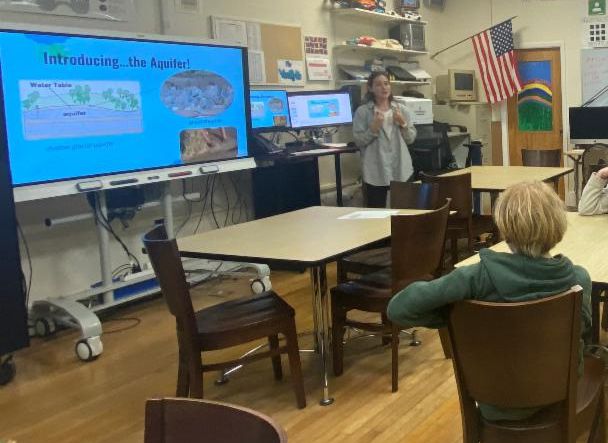
The Young Filmmakers of Montauk, a CCOM-sponsored education program, inspires the next generation of environmental stewards by engaging middle school students in real-world sustainability challenges. Guided by award-winning STEAM educator Jody Kennedy, local educators from Montauk School, and CCOM, students participate in a curriculum that integrates science, technology, engineering, arts, and math (STEAM), gaining hands-on experience in environmental science while developing arts and communication skills to advocate for meaningful change in their community.
Students collaborate to produce an environmental advocacy video, using technology and community education to inspire action. In the 2025 program focus, Clean Water, students explore local water quality issues and promote solutions such as Innovative/Alternative septic upgrades and stormwater management.
Last year’s Ditch Plains film made waves; this year, we expect STEAM students to inspire action for Clean Water.
| | JOIN US! EARTH MONTH VOLUNTEER OPPORTUNITIES | | LONG ISLAND RIVER HERRING & EEL SURVEY | | |
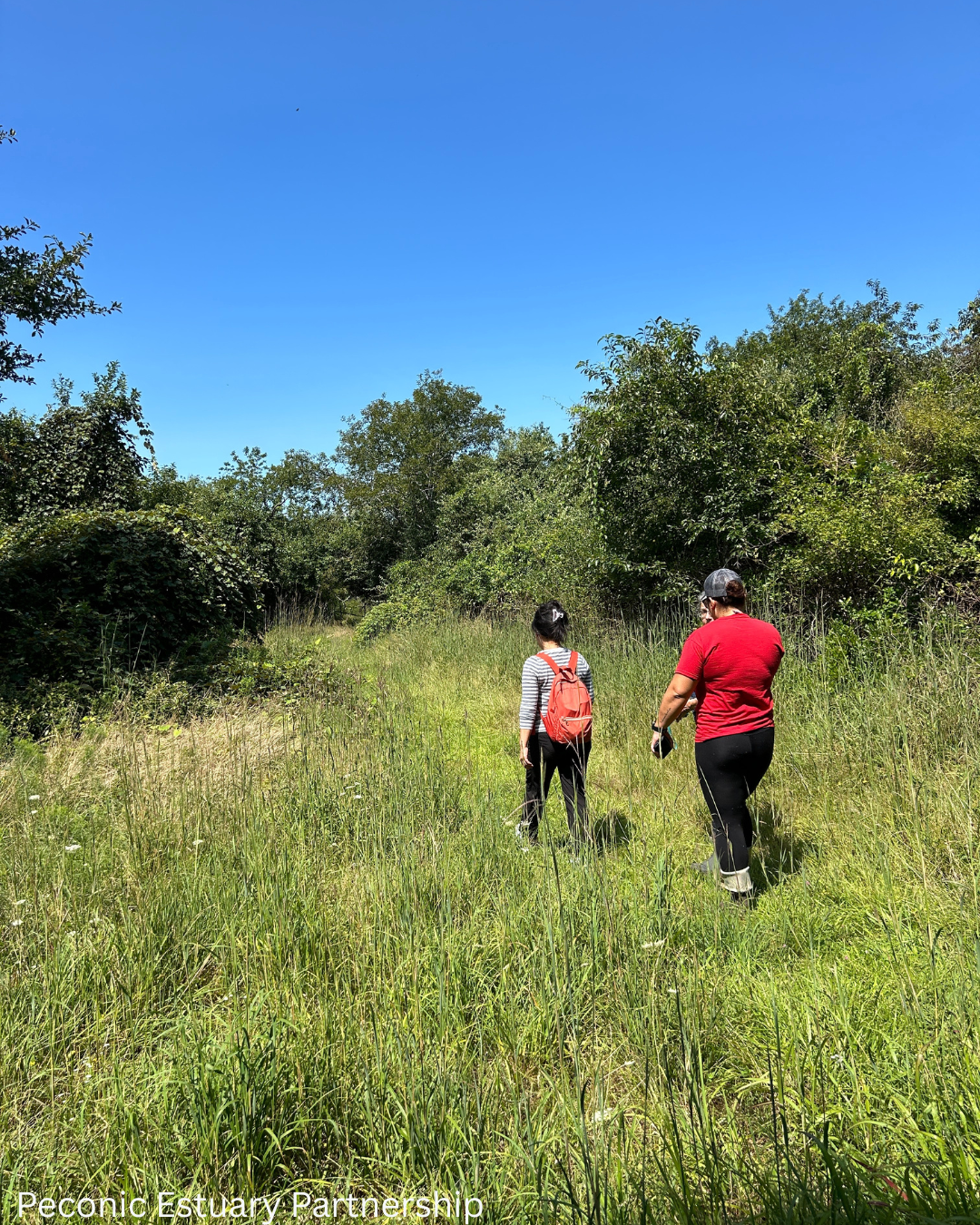
Get outside this spring, contribute to science, and help protect coastal ecosystems by joining the Long Island River Herring & Eel Survey! Survey running now through May, 31!
This community science project, in partnership with Seatuck and Peconic Estuary Partnership, monitors alewives (river herring) and American eels—key species in the food web.
| | |
Volunteers identify and record their findings using an online app, providing critical data on migration and species health.
April Training Dates:
- Wednesday, 4/2 (11 AM - 1 PM) – CCOM office
To volunteer, contact us! Learn more and sign up here.
| | PUBLIC LECTURE, WED APRIL 2: State of the Bays 2025 - Keep Calm and Carry On | | |
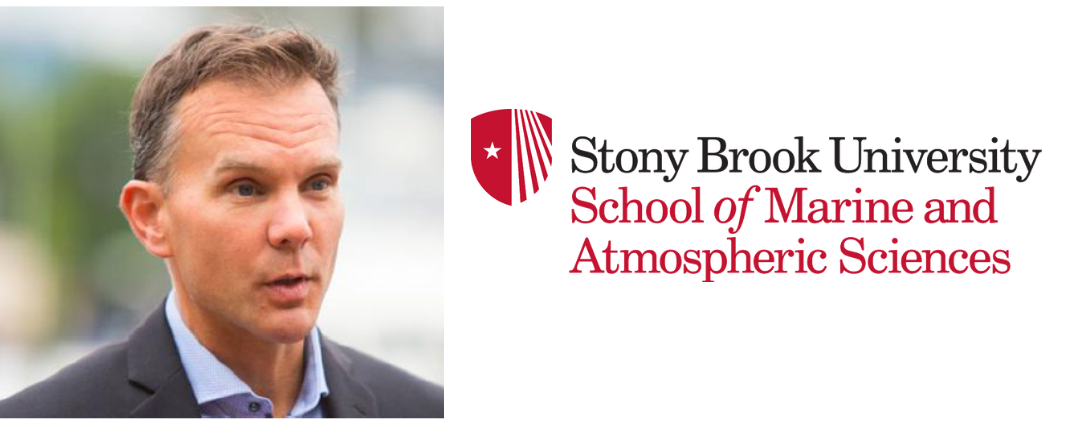
Join water quality expert and Distinguished Professor at Stony Brook University School of Marine and Atmospheric Sciences (SoMAS) Dr. Christopher Gobler for an important seminar on the state of Long Island’s waters and the challenges they face. The discussion will cover key issues, including Vibrio vulnificus, the “flesh-eating bacteria,” as well as harmful algal blooms, nitrogen pollution, and climate impacts on coastal ecosystems.
Dr. Gobler will also highlight innovative solutions, including shellfish restoration and advanced water treatment technologies, that offer hope for improving water quality and restoring fisheries.
Date: Wednesday, April 2
Location: Duke Lecture Hall, Chancellor’s Hall, Stony Brook Southampton Campus
| | THE GREAT MONTAUK CLEANUP – SATURDAY, APRIL 26 | | |
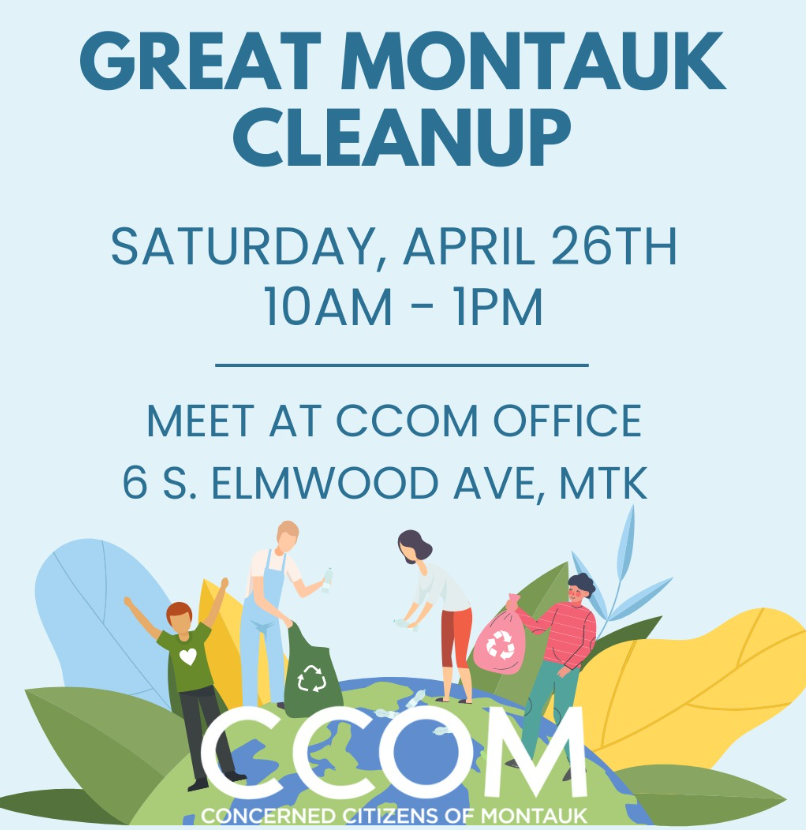
Mark your calendars! Do you have a favorite spot in Montauk? Help keep it clean and beautiful by joining our annual event The Great Montauk Cleanup this Earth Month.
Stop by the CCOM office between 10 AM and 1 PM to pick up gloves, hand sanitizer, and a reusable sack. No registration required.
As a thank-you, Montauk Brewing Company is offering a free drink to all volunteers 21 and over! Join us in maintaining the places we love.
| | NO-FLING SPRING EVENT- SATURDAY, APRIL 5 | | |
Join the Town of East Hampton’s Litter Action Committee for the Third Annual No-Fling Spring event on Saturday, April 5th, 2025, at 10 AM. The cleanup will take place on Springs Fireplace Rd, meeting on Grant Ave.
As part of the No-Fling Spring initiative, the LAC encourages individuals and organizations to engage in clean-up efforts during March 22 – April 5.
| | YEAR-ROUND BLUE WATER TASK FORCE VOLUNTEER | | |
CCOM is seeking volunteers to assist with water quality testing from September through May, with a special need for coverage at western sites in East Hampton. See sites here.
If you're local and available Monday mornings, this is a great opportunity to contribute to vital data collection that supports better water policies—no experience necessary! We provide all materials and training.
Know someone who might be interested? Spread the word! Email our office to learn more and get involved.
| | SUMMER OPPORTUNITY: REWILD LONG ISLAND | | |
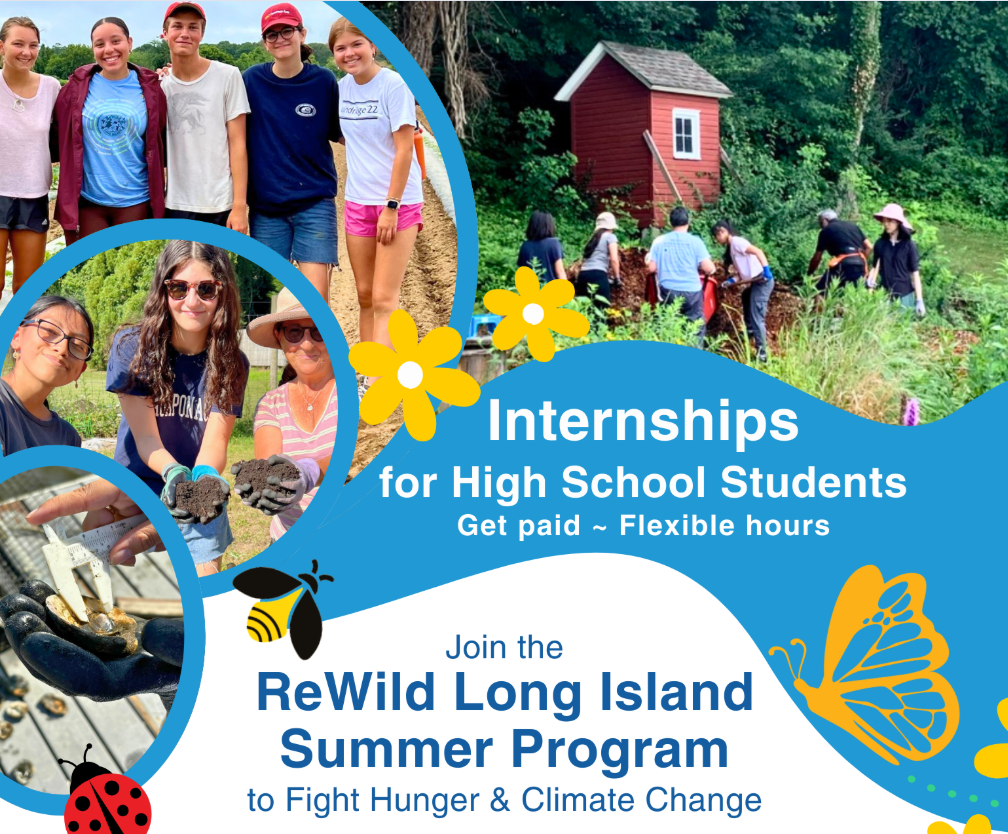
ReWild Summer Program for High School Students (Applications Open April 1, 2025)
The ReWild Long Island / South Fork Summer Program is a great opportunity for high school students interested in fighting hunger and climate change. Students will take part in projects like gardening for pollinators, organic farming for food-insecure communities, oyster and bioswale work, and composting. They'll also learn about native and invasive plants and get involved in advocacy.
For more details, visit: ReWild Summer Program for HS Students.
| | | | |
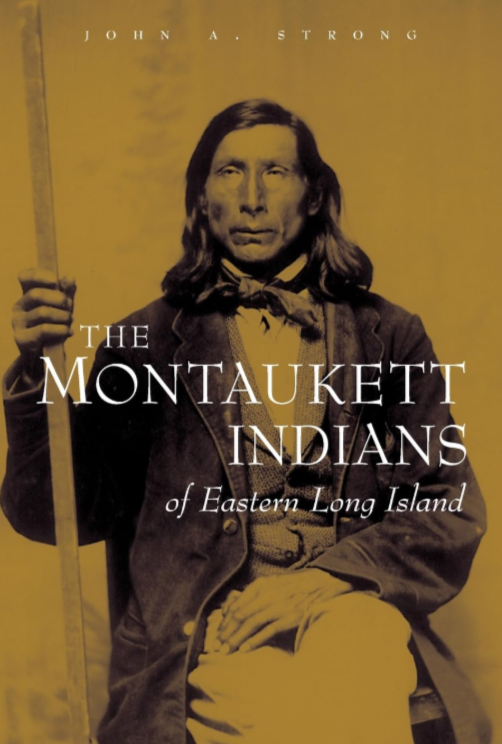
● "The Montaukett Indians of Eastern Long Island (The Iroquois and Their Neighbors)", by John A. Strong
● "The View from Lazy Point: A Natural Year in an Unnatural World", by Carl Safina
● "Dispersals: On Plants, Borders, and Belonging", by Jessica J. Lee
| | | Every order comes with a free tote bag too! Check out our website's SHOP PAGE. | | |
DONATE TODAY
Please consider making a 100% tax-deductible donation to help support our work in improving Water Quality, Coastal Resiliency and Environmental Sustainability. All contributions are much appreciated.
CCOM is a 501(c)(3) not-for-profit environmental organization. Thanks to our donors, we have been protecting Montauk's unique environment since 1970.
|
| | | | |