|
May-June 2026
Volume 6, Issue 3
| | |
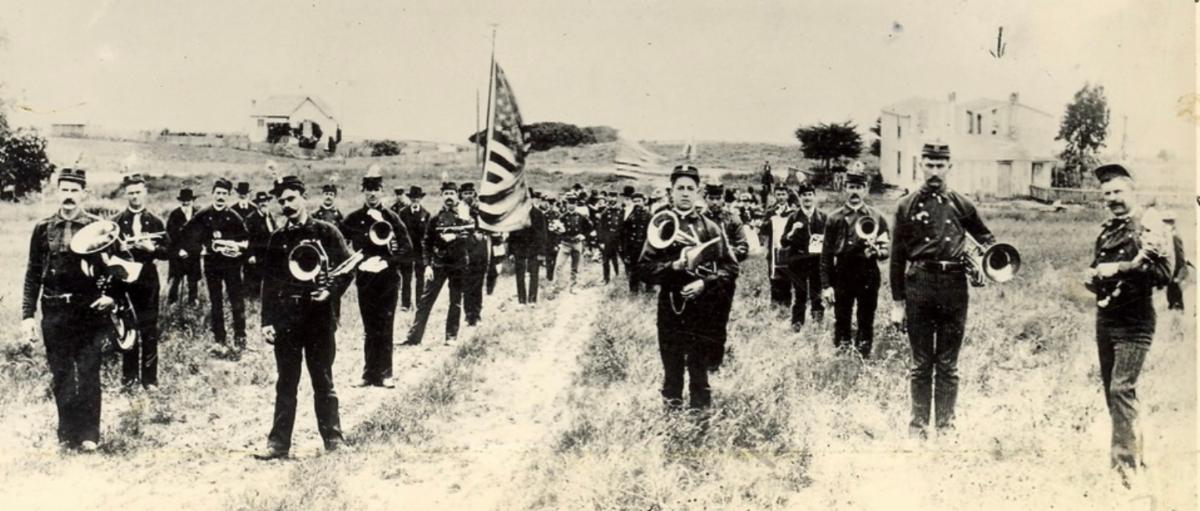
G.A.R. Parade, New Monterey 1883- Milton Little Zinc house in background (right)
Otis Mantor band leader
| |
Help Wanted
MHAA needs some help. We have a hardworking, but over-stretched Board of Directors and we are facing challenges to keep everything moving forward. At Stanton Center, we could use help with gift shop/retail management, event contracts, and special event monitoring. If you have a background in retail operations, contracting, or would just like to have something useful to fill in a few hours per week, please let us know.
Doud House Fence Replacement
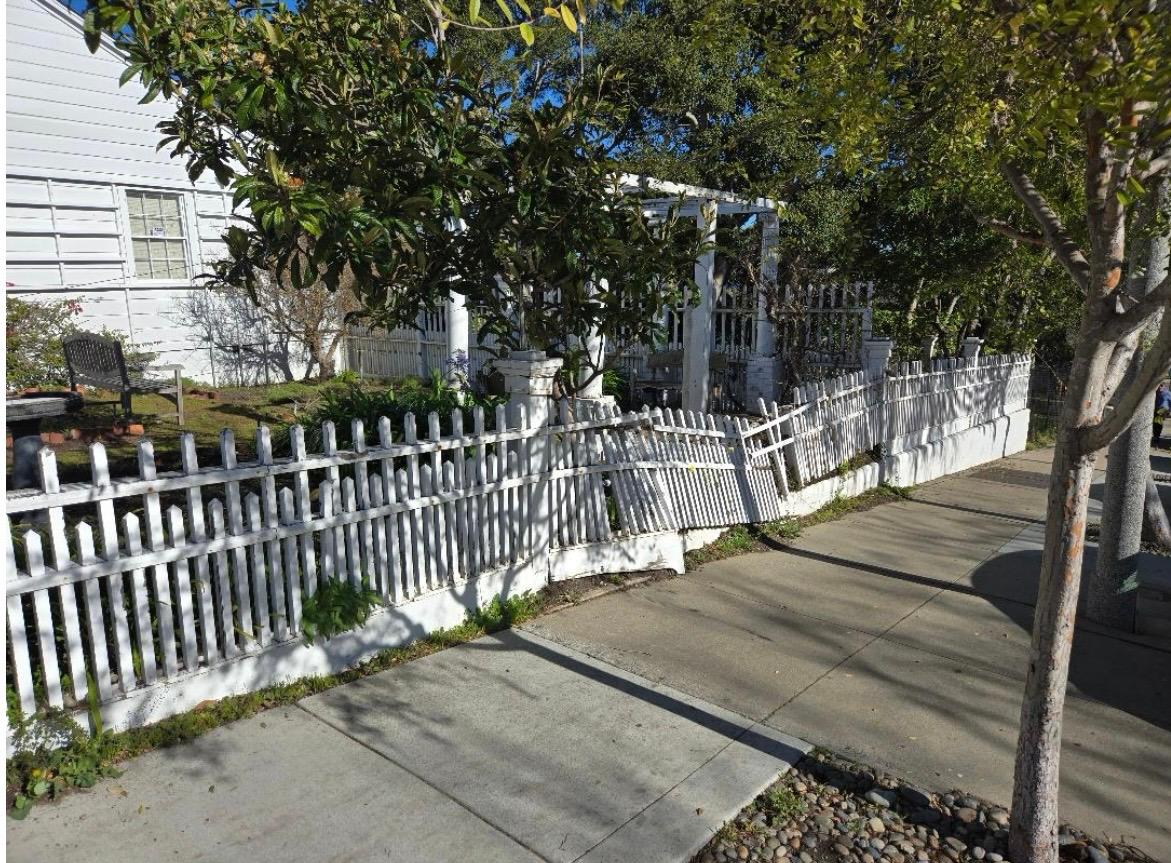
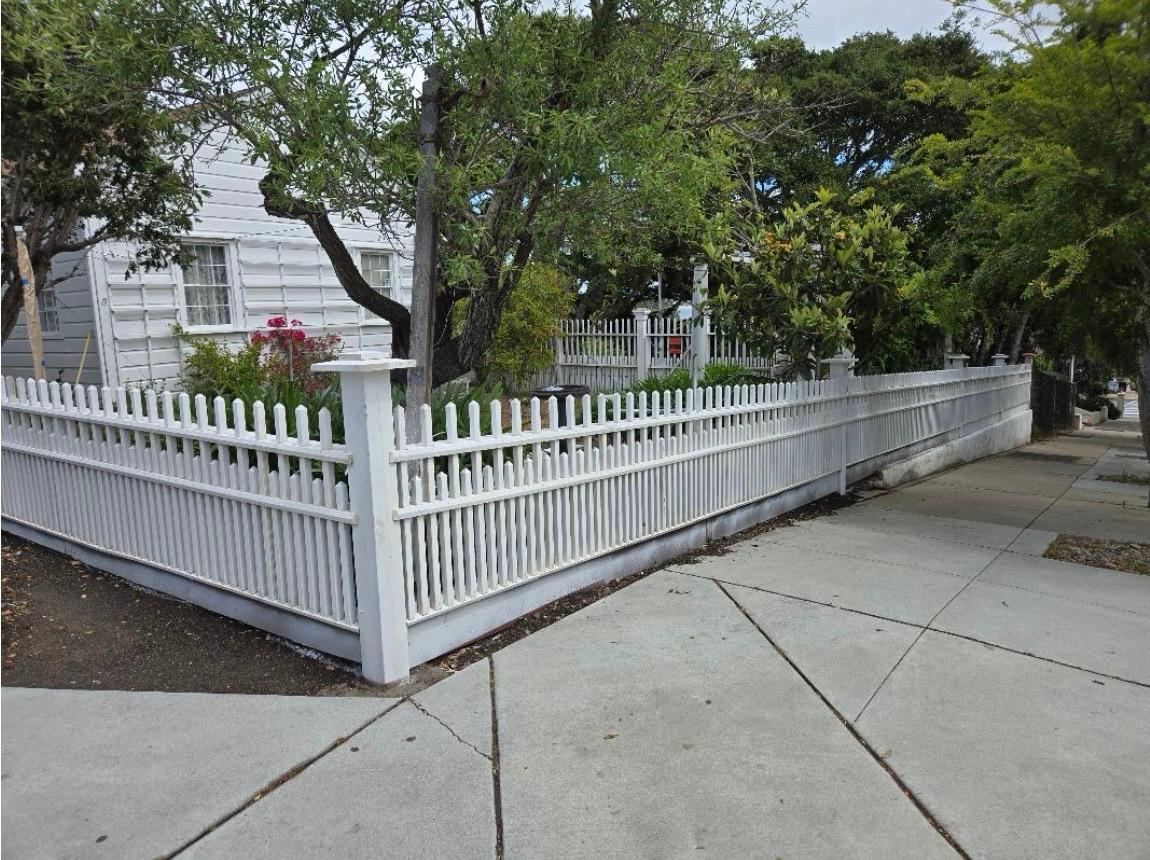
Many of you have commented on the state of the Doud House Fence. It was in terrible shape and in many places only being held up by the plants growing through the fence. The Doud House is in Monterey’s Historic District, and the city requires that new fences within the Historic District look like the historic fence being replaced. There are photos from 1906 that show the Doud fence, and although this isn’t the first time the fence has been replaced, each replacement fence has followed the 1906 fence design. Obviously, this makes replacement much more expensive than just buying an “off the shelf” picket fence. The fence has now been replaced and painting is underway. Replacing the fence was accomplished with funds granted by the Community Foundation of Monterey County.
-Gary Spradlin, President, Monterey History and Art Association
| | |
Charles Rollo Peters
(1862-1928)
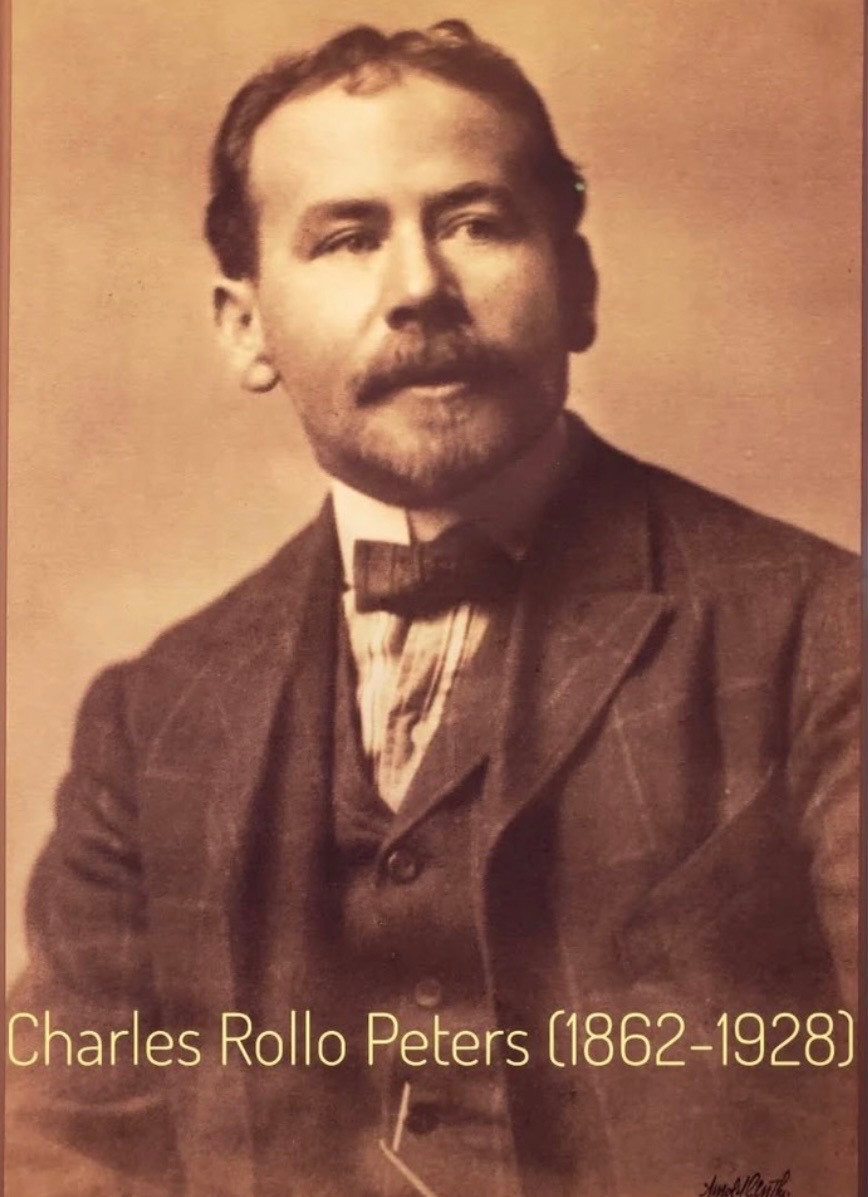
Charles Rollo Peters was the scion of a wealthy San Francisco pioneer family. He was born in San Francisco on 4/10/1862, the 2nd child born to Charles & Mary Peters. There he joined his older sister Mary who was born on 3/12/1860. Originally intended to be named after his father, Charles Rogers Peters, on christening day the minister misunderstood & stated his name as Charles Rollo Peters. Divine fate was cast & the wrong name was never corrected. He was sent to study at that city’s School of Design where he was tutored by Virgil Williams & Chris Jorgensen + privately with Jules Tavernier. Further lessons took him to Europe for advanced courses. There he was a student of Gérome & Cormon @ the Ecole des Beaux-Arts and of Boulanger and Lefebvre at Académie Julian. He was also influenced by Alexander Harrison and James McNeill Whistler (who once remarked that Charles Rollo Peters was the only artist other than himself who could paint nocturnes).
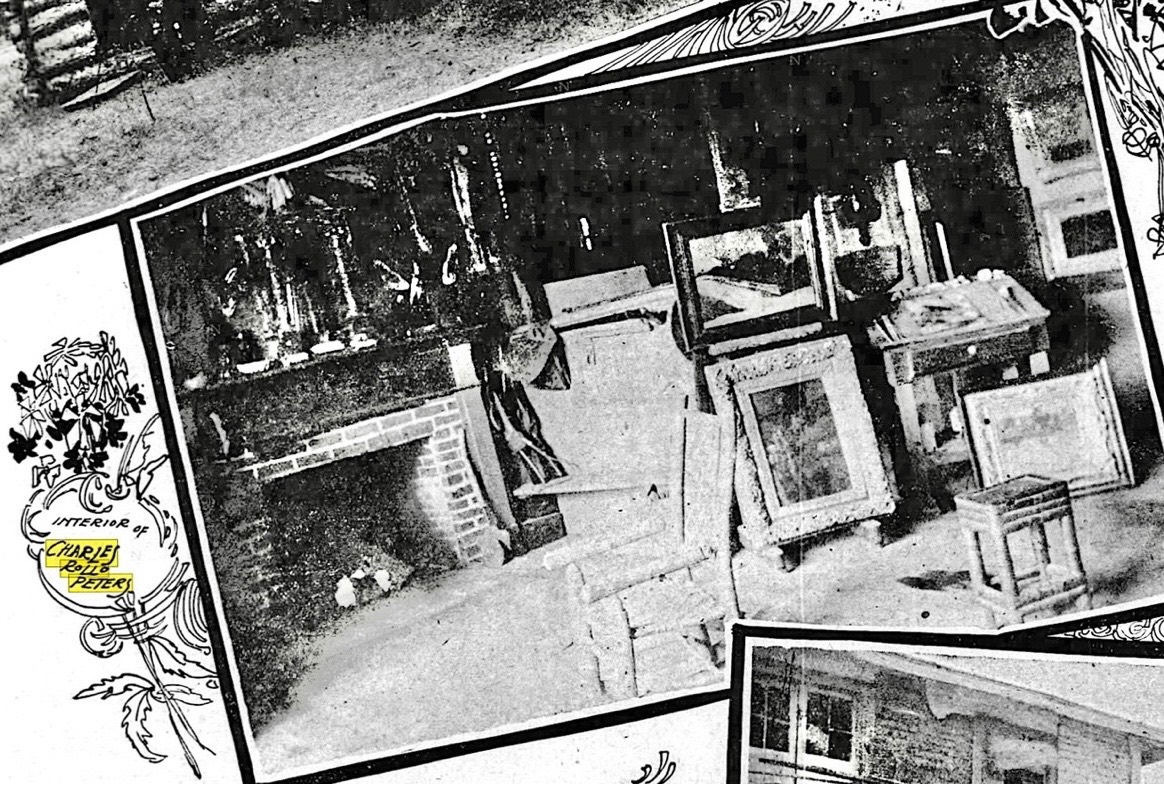
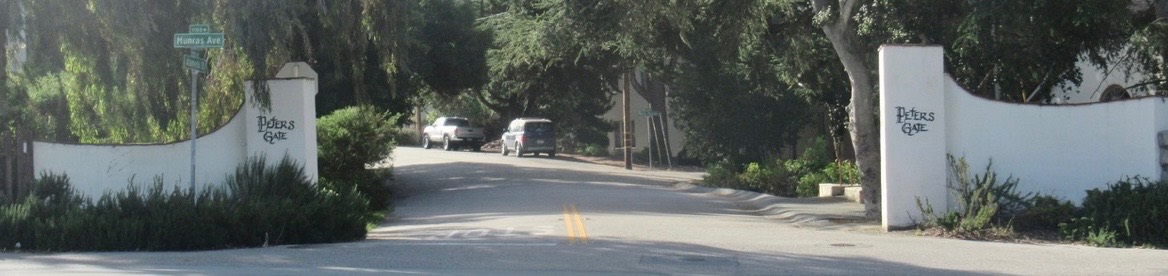
He married Kathleen Murphy on 12/30/1891 in San Francisco. On 9/29/1892 their first child, Charles Rollo Jr. was born in Paris, France. Warren Hugh, their 2nd child, was born in Monterey on 12/4/1896. In 1900 he and his wife purchased several acres of the Doud tract on hills southwest of downtown Monterey. There they built an elaborate estate (in a neighborhood now known as Peters Gate) where they were fond of entertaining other artists and members of San Francisco’s Bohemian Club. In the 8/25/1901 SF Sunday Call Bulletin their new residence is described accordingly by Harriett Quimby: “Nestled cozily in the midst of the fragrant pines can be found the home and studio of one of our best known artists, Charles Rollo Peters. It would be difficult to find a more thoroughly delightful studio than this roomy place, with its natural wood rafters, its almost priceless collection of drapery, its old fashioned fireplace with the inscription in bold letters, ‘Don’t worry’. Good philosophy, but unnecessary here, for worry is an obsolete word in this part of the world. To the right of the house is a nest of hammocks: to the rear just over the hill is situated that already well-known rendezvous Camp Daniel O’Connell. Here a cozy little tent with carpeted floor and several iron beds is placed, tables, camp chairs, hammocks are scattered about, and every Saturday night this portion of the forest is witness to gay times. Large bonfires are lighted, the long tables are arranged, the clay bank wine cellar is unlocked and under the flickering light of Chinese lanterns, roast duck and ‘extra dry’ is dispensed to the accompaniment of impromptu music and song. Camp Daniel O’Connell, with Mr. Peters as host, is a very popular place and the Del Monteans vie for invitations to these Bohemian outdoor gatherings. It has often been asked if Mr. Peters paints at night, for the marvelous fidelity with which he produces that cold, steely atmosphere of gleaming moonlight warrants the query. He does not paint but the night owls are familiar with the sight of this artist wandering about, making a study sketch here, jotting down certain tones or details and studying the different phases of light. Then, when these are still fresh in the memory, Mr. Peters bars his studio door, hangs out the ‘My busy day’ sign and sits to his canvas until every shadow is faithfully repeated in oil, and it is this study from nature that has made this name Peters famous and his signature an important addition to a gallery.”
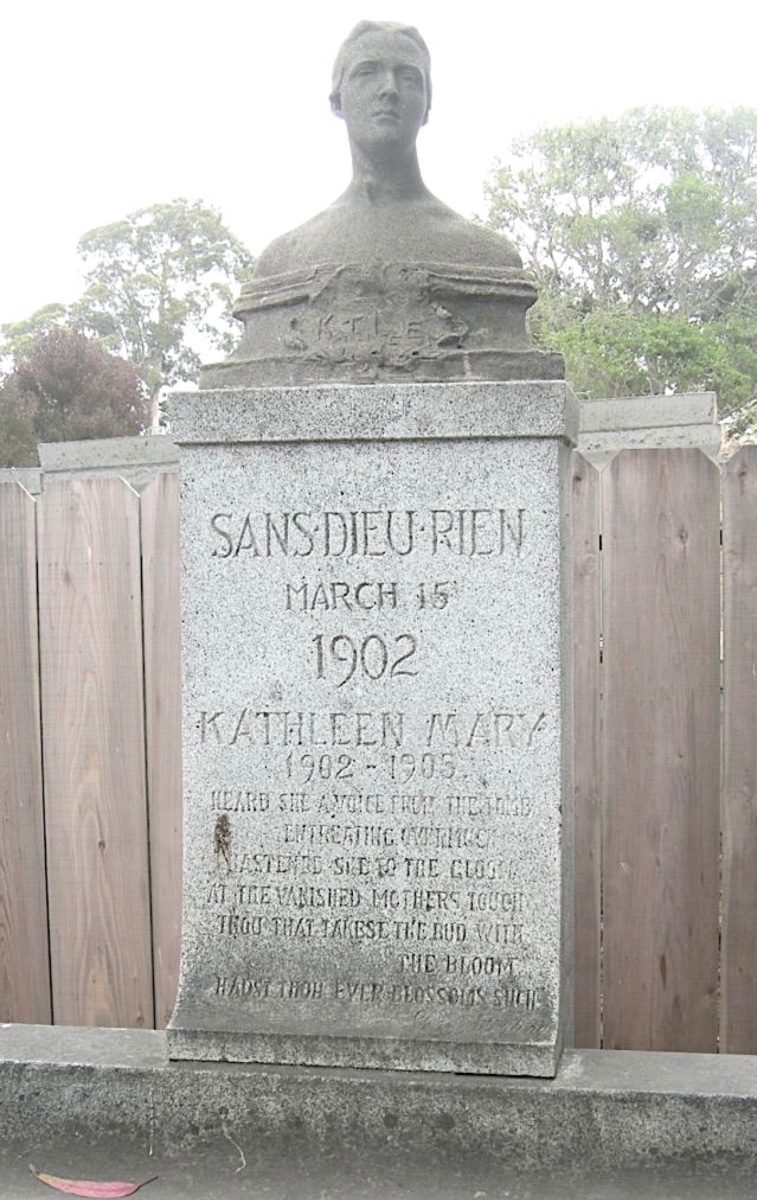
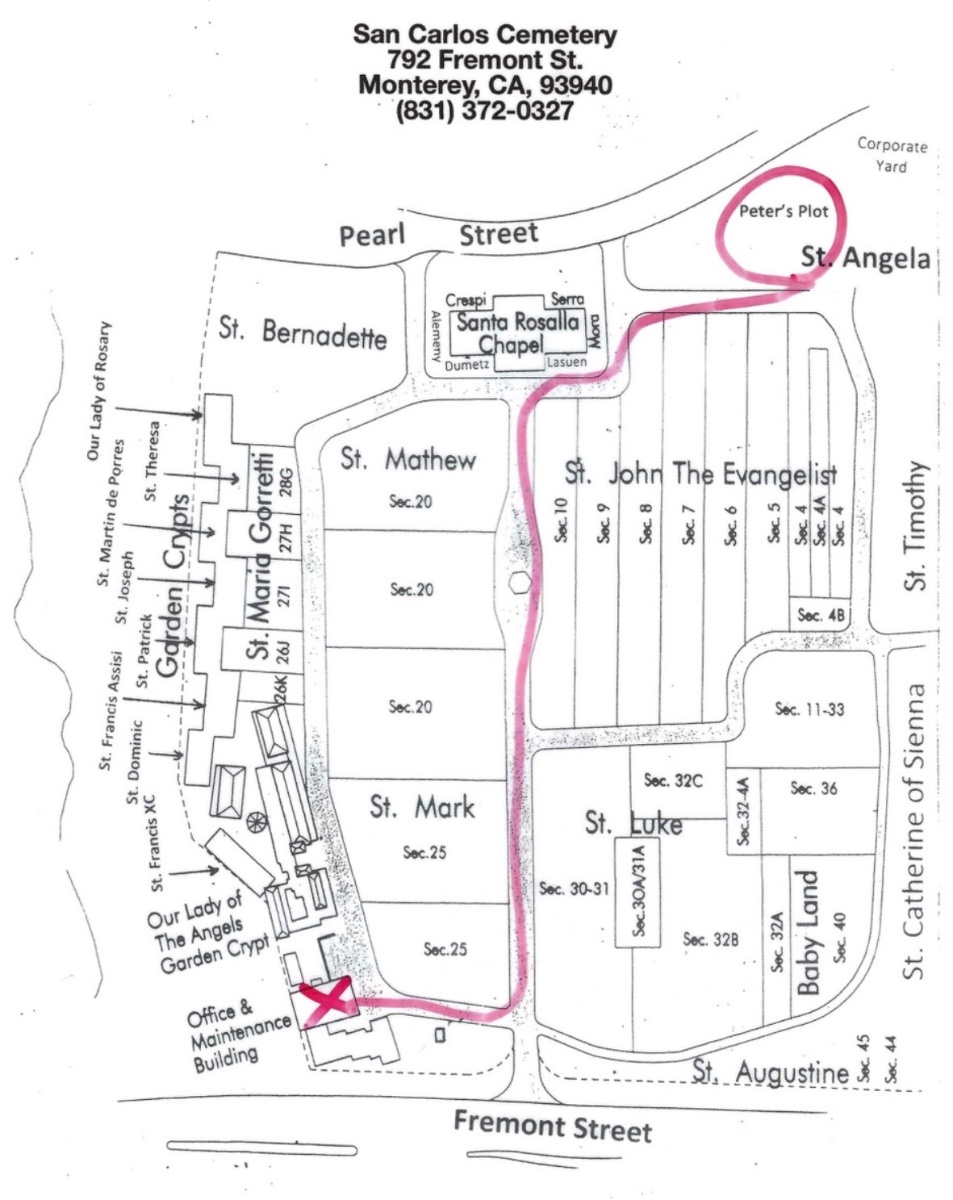
On 2/18/1902 Kathleen Murphy Peters gave birth to twins (DeWitt Clinton & Kathleen Mary). Sadly, Mrs. Peters died soon afterward on 3/15/1902. Another tragedy struck on 12/9/1904 when young daughter Kathleen burned to death after her clothing caught fire. She & her mother are buried in San Carlos Cemetery in Monterey. In the 4/21/1907 SF Call coverage of the new Del Monte Art Gallery we learn that “the work of planning and superintending the arrangements for the gallery have been left mainly in the hands of the local artist colony under the leadership of a committee consisting of Eugen Neuhaus, Charles Rollo Peters & Harry Stuart Fonda.” Later that year in the 9/6/1907 Monterey Cypress one discovers a Charles Warren Stoddard article about a painting raffle to benefit Jules Simoneau: “Mr. Charles Rollo Peters, with a generosity that is only equaled by the great heart of Jules Simoneau, has given one of his most original pictures to be raffled for the benefit of this good man. Helpless now, passing his days in an easy chair wherein he can think of his old friend Robert Louis Stevenson…I now beg of all lovers of art, literature and good old Bohemia to take a ticket. The one dollar tickets are to be had @ El Adobe, Alvarado street, Monterey, and @ the Del Monte Hotel.”
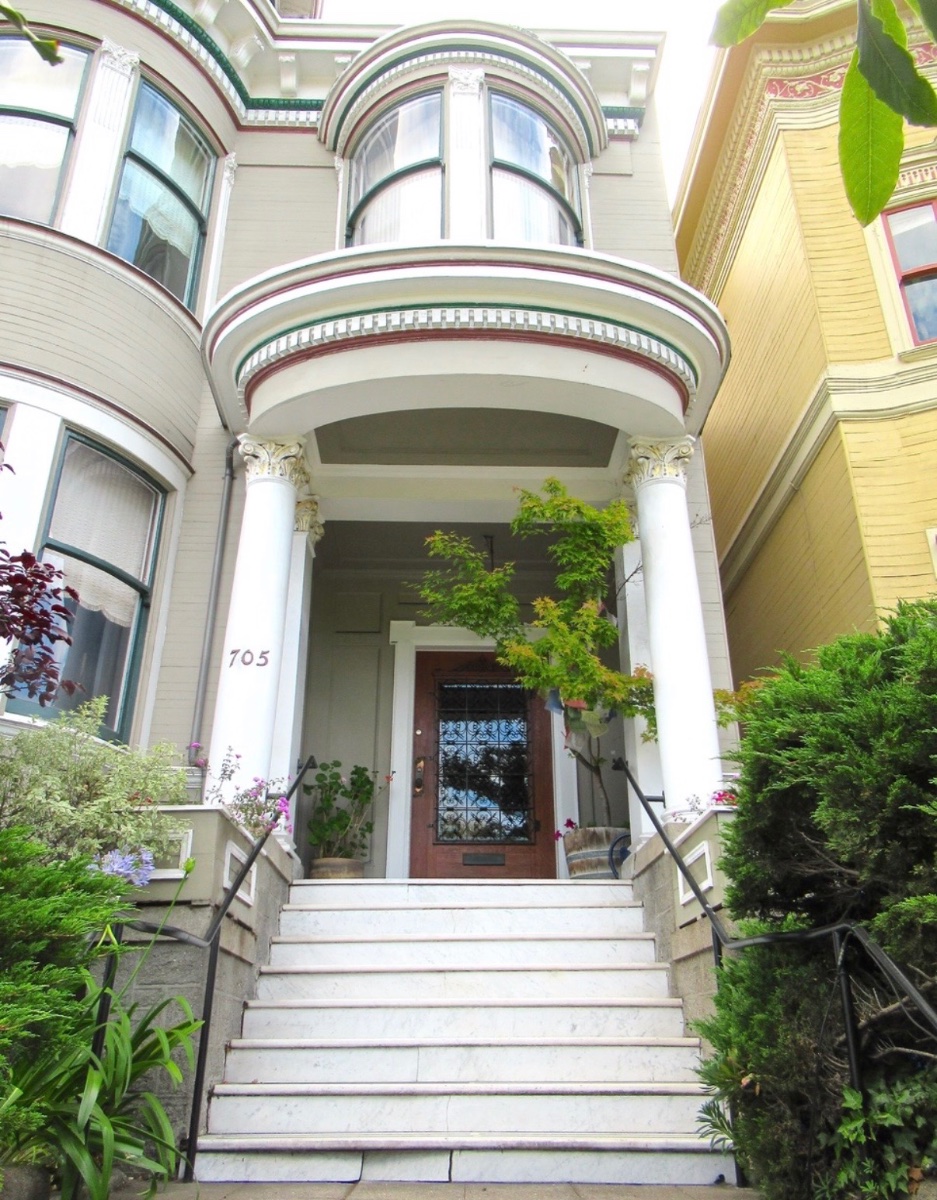
In 1909 Peters married fellow artist Constance Mabel Easley in Monterey. In March of 1911 his 14 year old son Warren died in New York after mastoid surgery. Depressed from all these tribulations the artist began to drink heavily & spend freely. Eventually he went bankrupt & left Monterey. He & Constance separated & divorced in 1920. Peters then lived in Europe, Marin County & San Francisco. California’s ‘Prince of Darkness’ died on March 1st in 1928 in a private SF home care facility at 705 Scott Street on Alamo Square. His ex wife Constance was with him when he passed shortly after 11 a.m. His remains were cremated & interred @ SF’s Laurel Hill Cemetery. They were later moved to Colma’s Cypress Lawn Memorial Park.
Prof. Eugen Neuhaus said of Peters' moonlight paintings, in his 1931 book ‘The History and Ideals of American Art’:
"We must also note Charles Rollo Peters whose contribution to California art possesses a personal quality. Peters has made a reputation by his romantic revivals of the Spanish architecture of old Monterey, where he lived for so many years. Technically of great ability, he loved to paint the crumbling facades and tile roofs of some moonlit Spanish adobe, and in developing the coherent textural and color qualities he achieved a very unique and personal style...His color-schemes are the rich analogues of the blue and purple of night with the complementary nuance of a small bit of orange light peeping through a half shut window. His pictures at best are convincing, imaginative, skillful in the handling of paint, and rich with sentiment and human appeal. Peters was essentially an original painter, whose work will take a lasting place among American artists”.
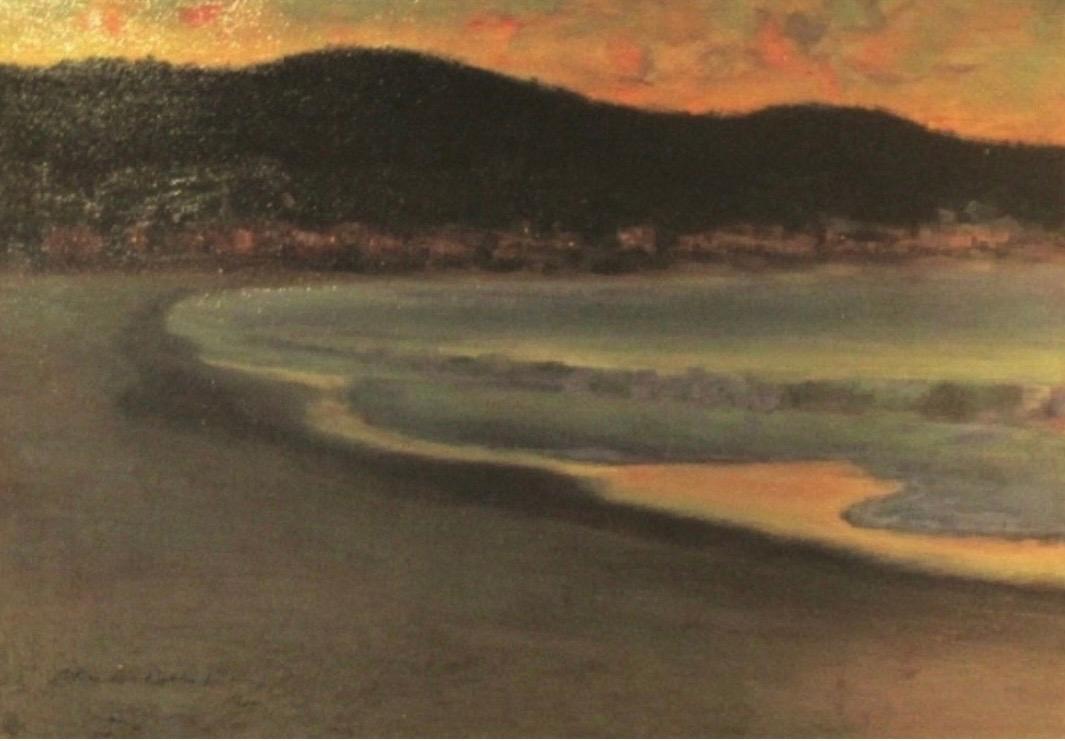
Casa Serrano is fortunate to have one of his paintings in its collection. It was a gift from Mr. & Mrs. Natale D’Ambrogio of Carmel Highlands & Berkeley. In the Monterey History & Art Association’s March 1963 Noticias bulletin the donation is described as “one oil painting by Charles Rollo Peters, size 30” x 40” a scene of Monterey Bay and the city at twilight, painted by the artist in 1901.” The painting, in its original frame, is now hanging in Casa Serrano’s parlor where members & the public have enjoyed it for 63 years.
Michael Mazgai
above photo: Charles Rollo Peters (photo credit Joaquin Turner Gallery)
| | Charles Rollo Peters 'Monterey Bay Nocturne 1901" (photo credit author) | | Charles Rollo Peters Monterey studio 1901 interior (photo credit SF Call Bulletin 8/25/1901) | | Kathleen Murphy Peters (1868-1902) & Kathleen Mary Peters (1902-1905) gravesite San Carlos Cemetery (Peters Plot) photo credit findagrave.com | | Peters Plot map (image credit San Carlos Cemetery) | 705 Scott SF (photo credit article author) | | Peters Gate (photo credit article author) | | |
Local People
Mike Brown
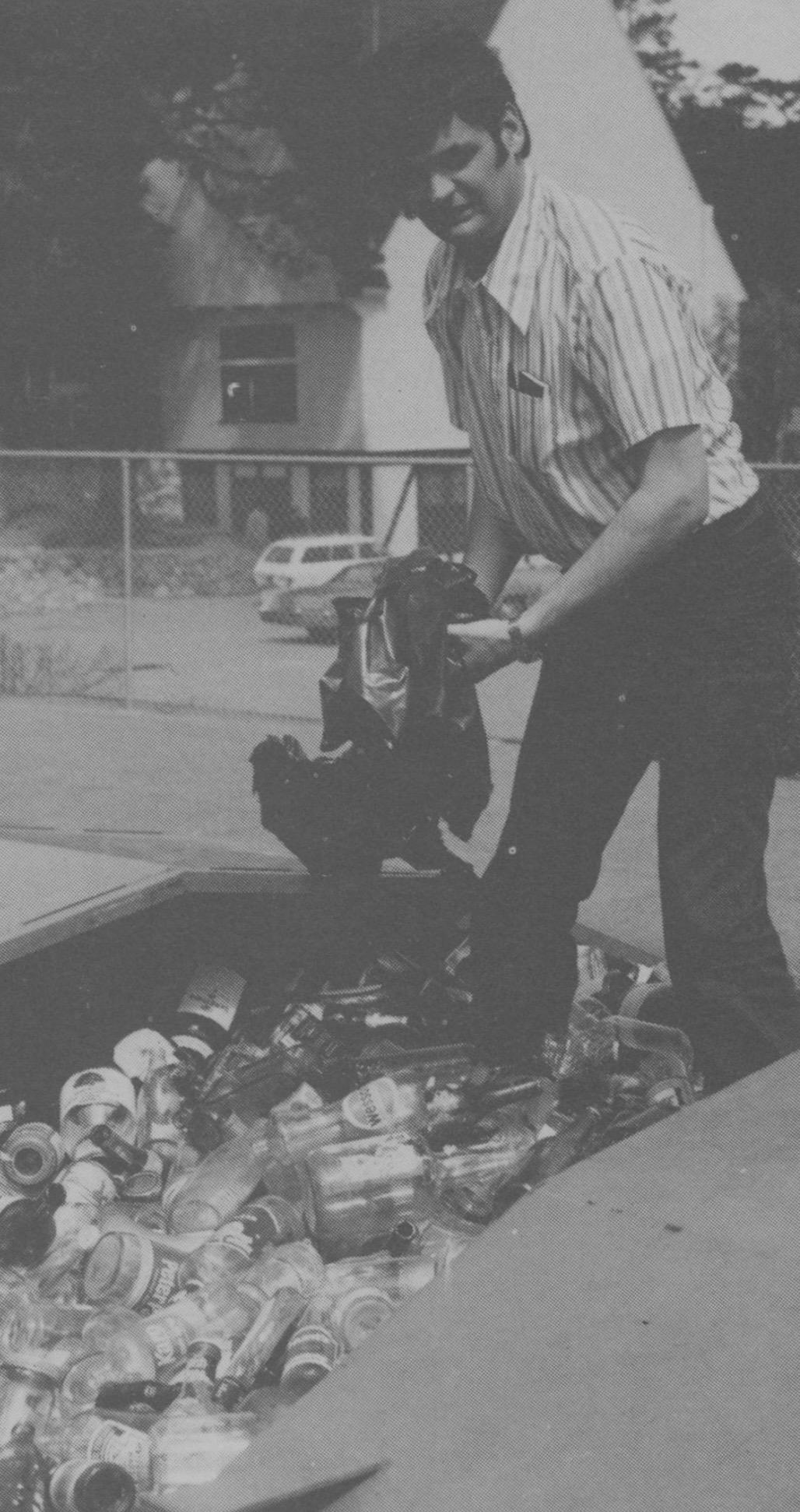
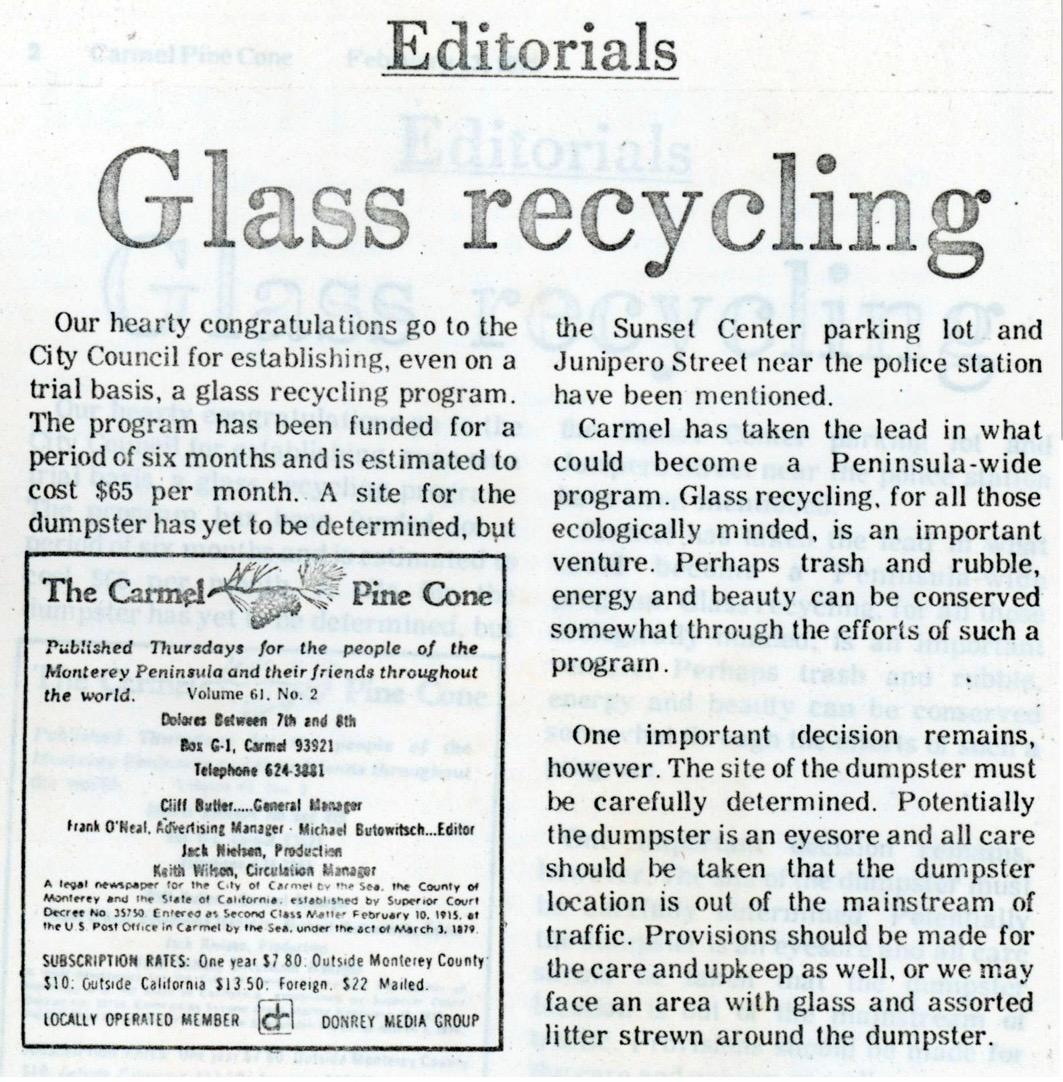
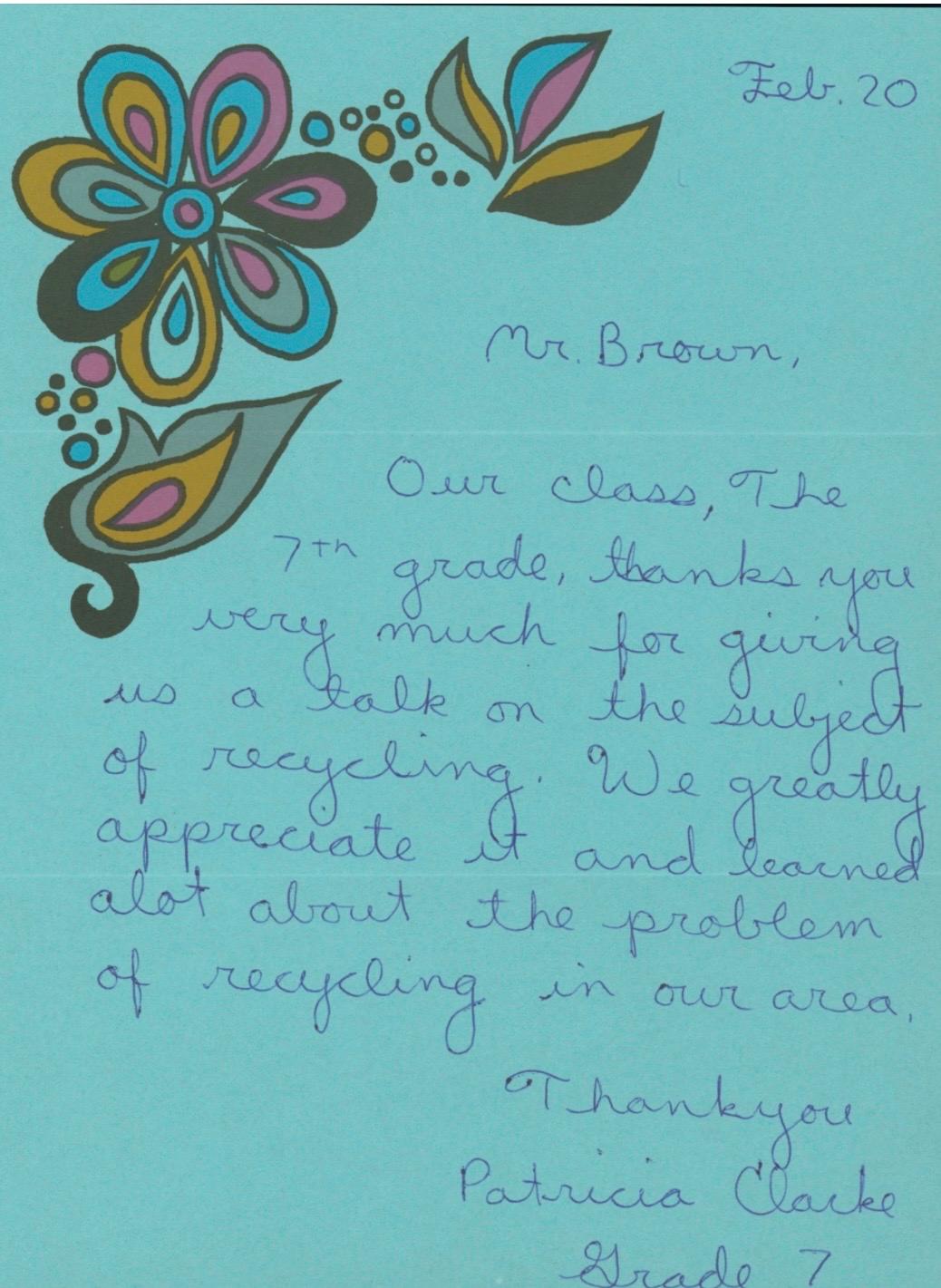
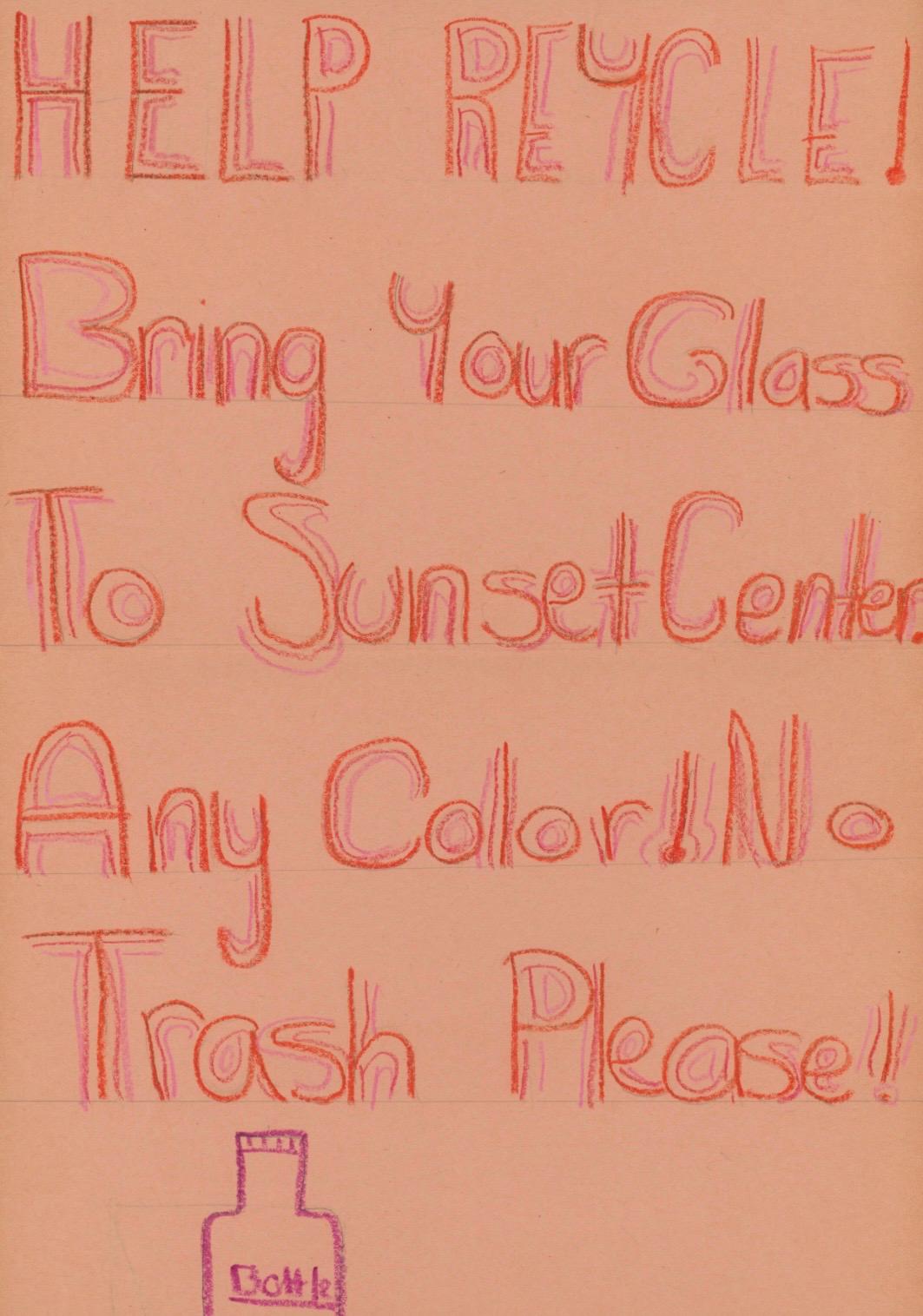
Recently, MHAA board member Scott Gale sat down at Patisserie in Carmel-by-the-Sea (CBTS) over coffee with Mike Brown, former city council member of CBTS, to discuss an unlikely topic: recycling. As it so happens, in the history of recycling, little CBTS “punched significantly above its weight” due to Brown’s efforts, and in 1974 established the first government-level recycling program in California.
In the early 1970s, Brown says recycling was in its infancy. Seattle was the only city that had a government-led program going, and Sacramento was looking at legislation to put redemption values on bottles to encourage returning them. Locally, the Ecology Center in Pacific Grove was recycling glass. Brown saw a letter to the editor, and visited the Ecology Center. Prior to dropping glass off, people were required to wash it. Once on site, glass had to be deposited into various color bins. The glass was taken to a plant in Oakland for processing. The logistics were complicated and costly, and soon the bins were permanently full. The Ecology Center could not accept any more glass.
Where others saw failure, Brown saw opportunity – a government-run program.
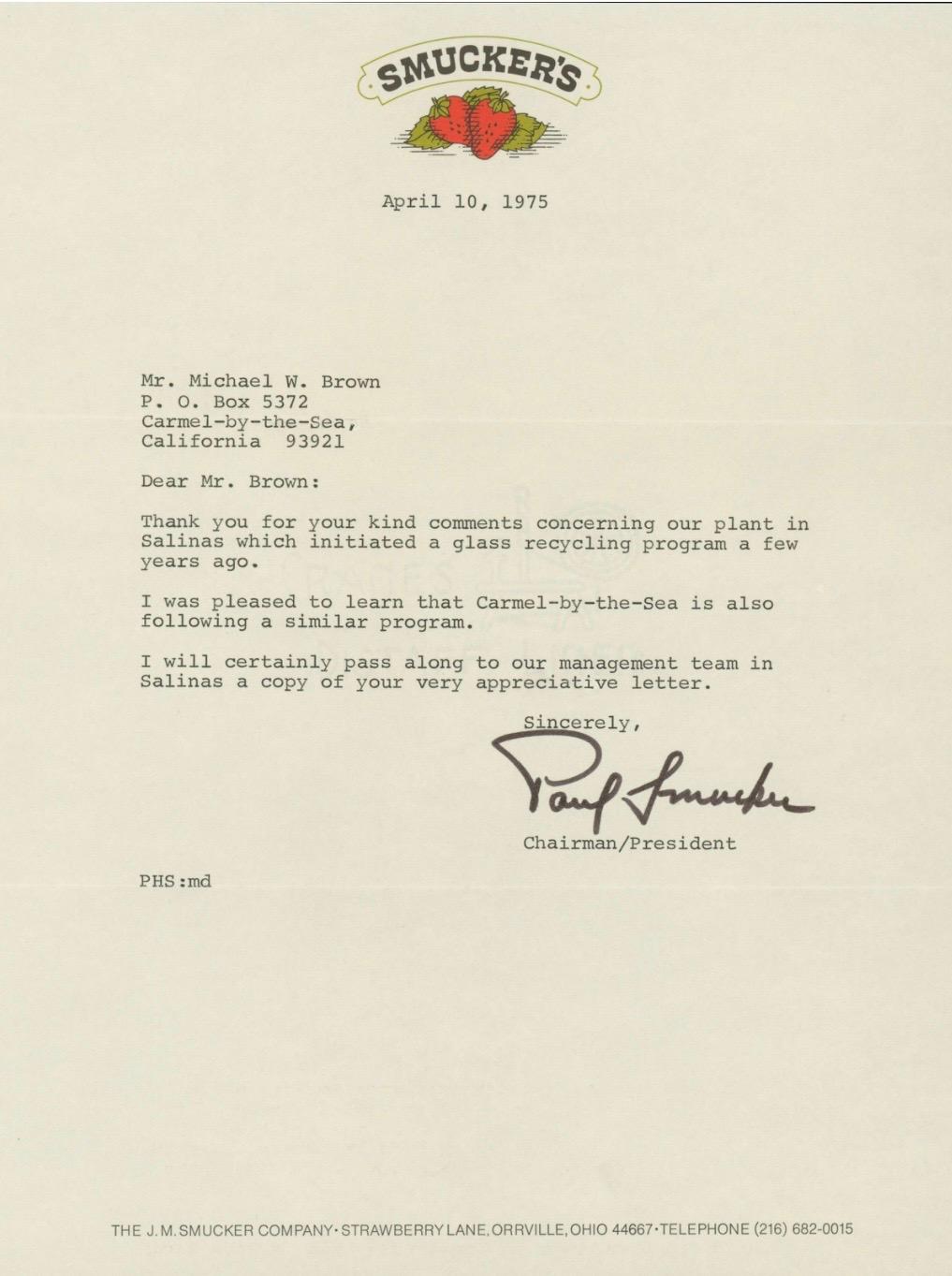
Brown learned that the Smucker’s plant in Salinas had a glass crusher, which they used for jars that didn’t seal properly. Smucker’s ran their crushed glass up to the same plant in Oakland. Brown also learned that Smucker’s accepted local glass on Saturdays and would run it through the crusher. Mike visited the operation, and began corresponding with Paul Smucker, Chairman and President, who owned a home in Pebble Beach. Soon Brown had a letter of support from Mr. Smucker, which he shared with other CBTS city council members. This letter helped win over the city council to support a pilot city-run glass recycling program. Previously, the council had zero interest in such a program.
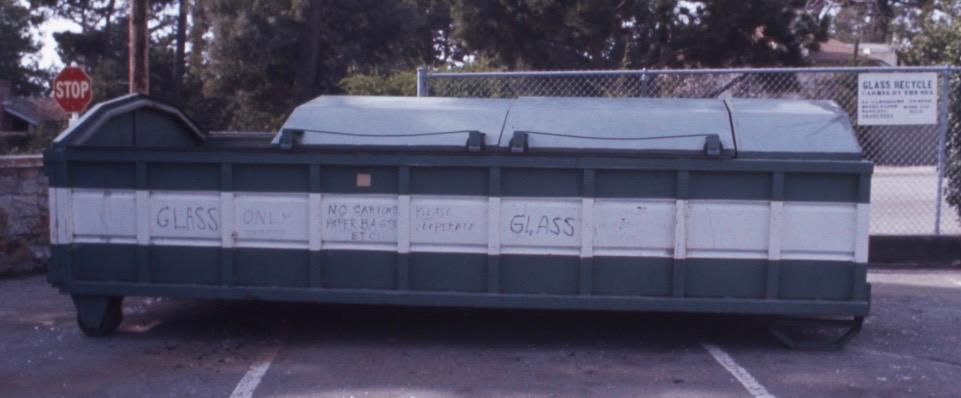
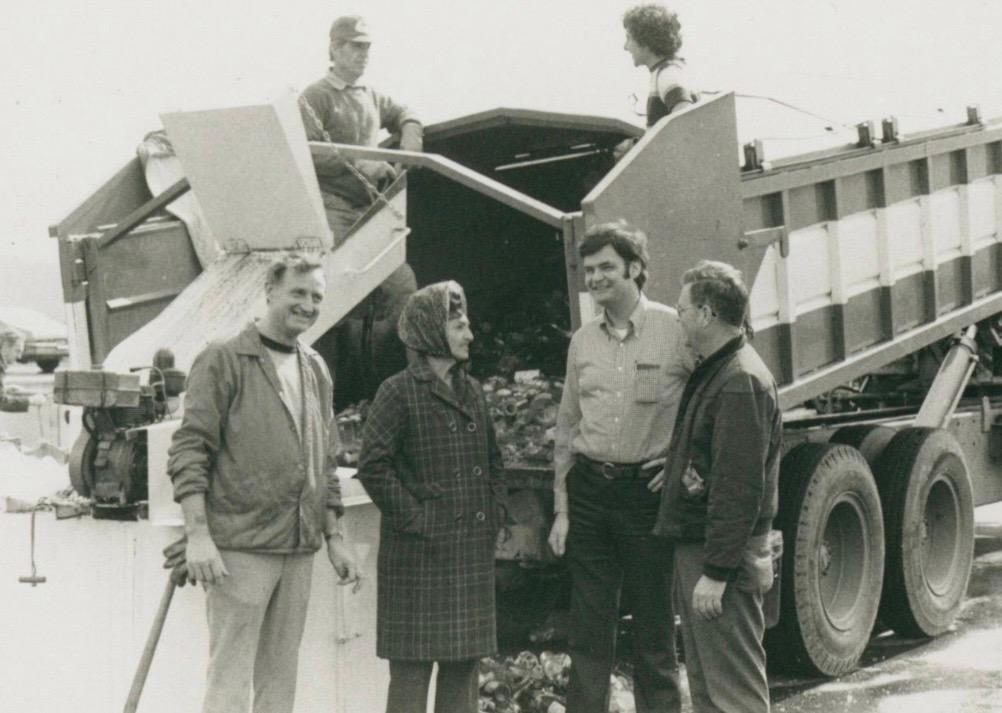
A glass dumpster was set up in the parking lot at Sunset Center. Mike and his wife tended to the dumpster daily, removing cardboard and paper bags, and cleaning up. When the dumpster was full for the first time, it was hauled out to the Smucker’s crusher in Salinas. Mr. Smucker was on site for the occasion. When the dumpster arrived, Mr. Smucker’s jaw dropped – the dumpster contained much more glass than the crusher could handle. After a couple minutes, Mr. Smucker said “No problem – I’ll buy a bigger crusher.” And so, a successful, sustainable, government-led glass recycling program was born.
Brown approached other cities to get involved. Seaside was immediately receptive, and started recycling the paper that the glass was brought in, and motor oil, in addition to glass. Next Monterey came on board. Then Pacific Grove. Then the county.
Brown worked with the dump in Marina to establish segregated areas for recyclables. Shortly thereafter, he was named to their Board of Directors.
Eventually the region started recycling aluminum. Green waste came about 20 years later. Other than green waste, Brown says everything was in place by 1978.
If you have a friend or relative who would like to share their story about living in or around Monterey, please contact Monterey
History and Art Association at MHAA.org1931@gmail.com
| | | |
Peninsula Diary
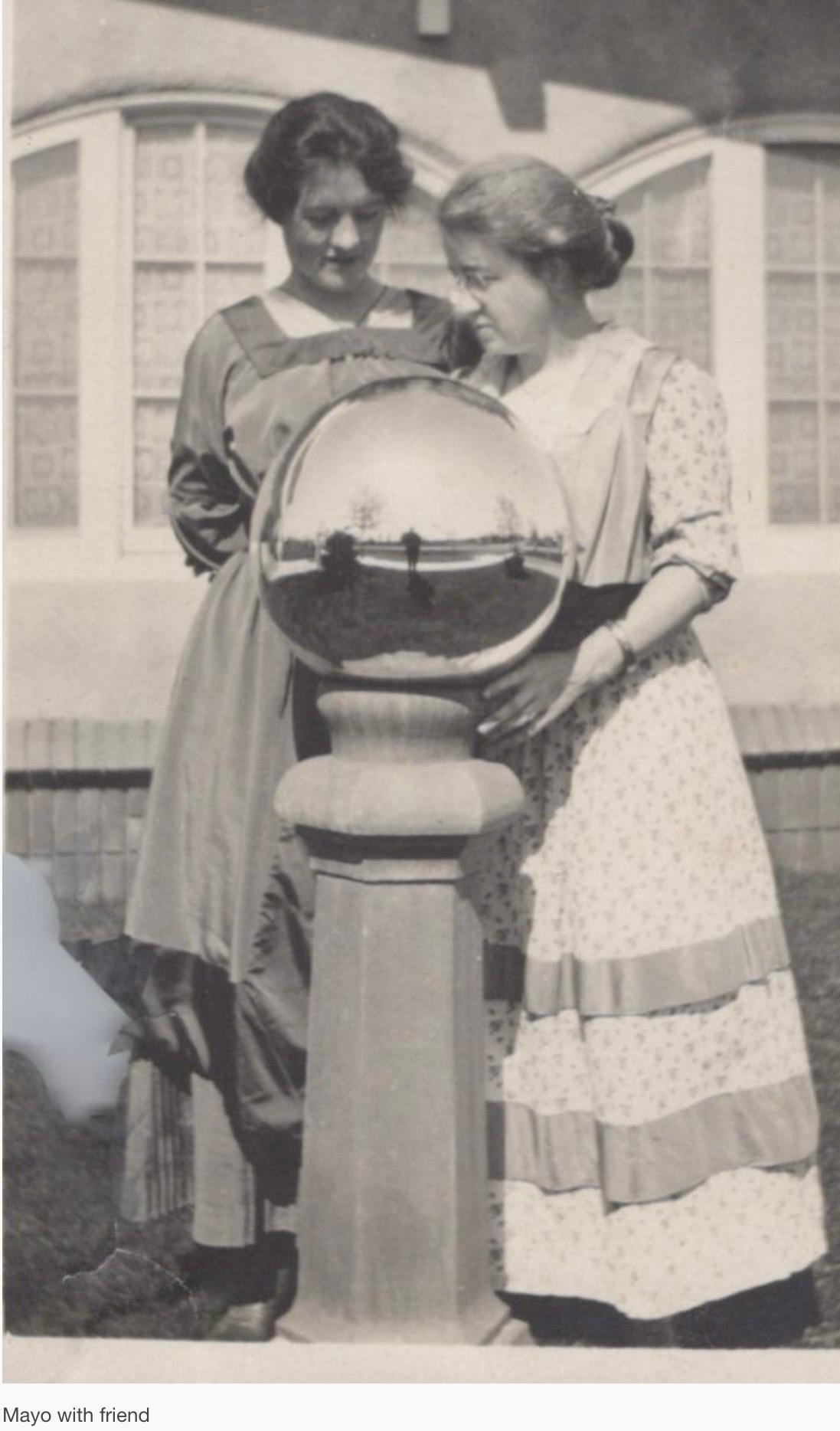
Mayo Hayes O’Donnell
This article was published by the Monterey Peninsula Herald on May 9, 1950 and features the story of the De La Torre adobe as Mayo recalls.
Adobe Once Sold for $7.50
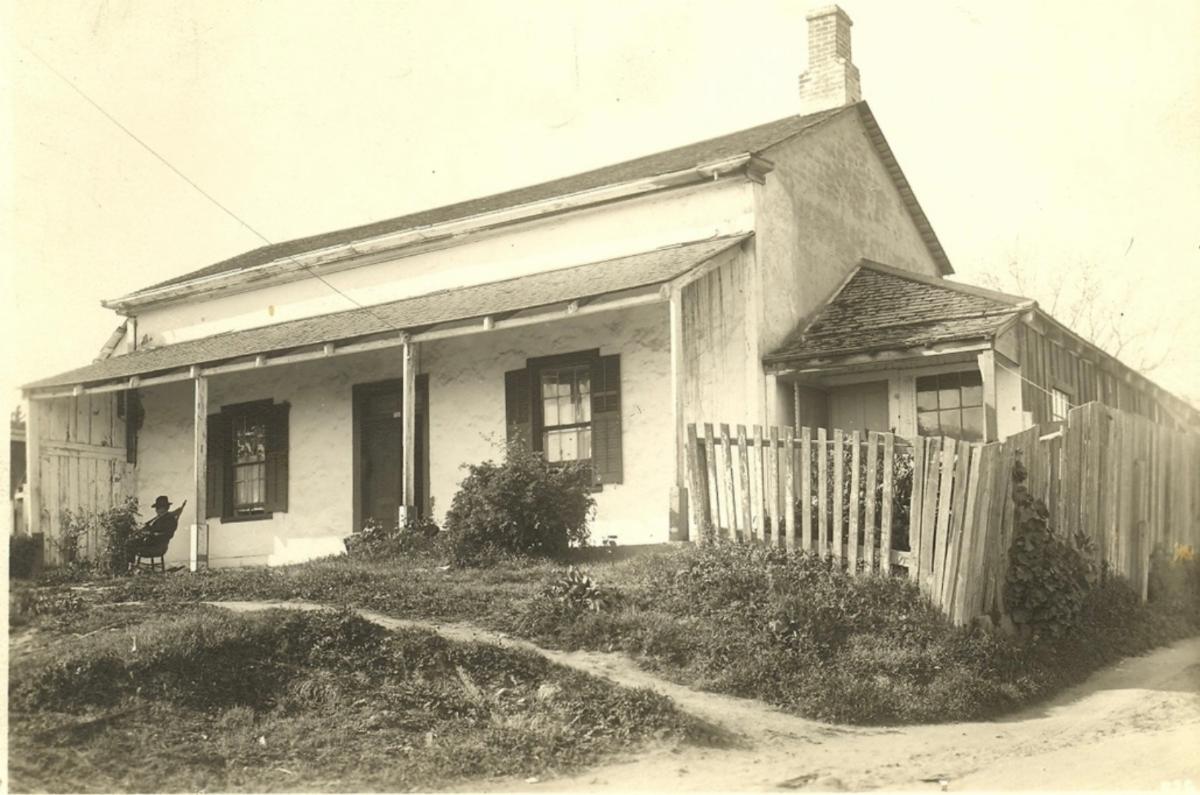
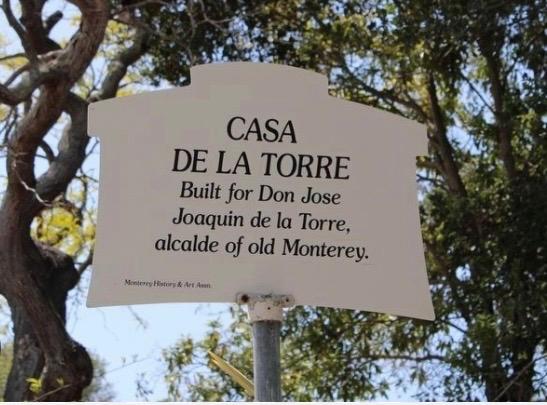
The De La Torre, or the Oliver, adobe is a charming old building on Jefferson street facing the Friendly Plaza, between Pierce and Dutra streets. It is set in a nicely planted and kept garden and is in excellent state of repair, having been done by two artists who have the feeling for the old adobes of Monterey and for their historical and artistic value to the community – Mr. and Mrs. Myron Oliver.
According to the records, the home was built in 1852 by Francisco Pinto.
In 1850, Philip A. Roach, then Alcalde, made a grant of the property belonging to Monterey to Francisco Pinto, the same being described as on “La Calle del Deste,” (now Jefferson street) with the rear portion extending to the lane (now Dutra street). According to the terms when the grant was made, Pinto was to erect a building on the premises within two years from the date of the grant.
June 12, 1851 Pinto is recorded as having sold the property to Juan Bonifacio for $150. Described as on the west side of Vallejo street, now known as Pierce street.
On February 7th, 1857, according to the historical survey, Juan Bonifacio signed a release and quit title in favor of Pinto. Two days later Pinto mortgaged the place to Jose Abrego. According to the tax records of June 30, 1858, the location was given as on the west corner of Pierce and Jefferson street. The land was assessed at a value of $7.50, and the improvements on the same for $150. Shortly after it was sold for taxes for $7.50.
Jose Abrego sold the place to Jose Torres August 1, 1862, for $250. The records had to be changed in order to take care of a correction in the name of Torres, the correct name being Jose de la Torres.
March 2, 1864, de la Torres laid claim to the property according to the new homestead law, stating he was living there at the time he made the request. This request was granted, and the property was duly homesteaded.
De la Torre and his wife, Guadalupe, deeded the property February 13, 1907, to their daughter, Mrs. Maria Hernandez.
When it was found necessary to widen Jefferson street, which had up until this time been little more than a trail, D. and Mary Hernandez deeded 11 feet to the City of Monterey for the sum of $10.
April 8, 1920, Maria and Don Hernandez deeded the property to their son, James Hernandez. The property at this time being described as between Jefferson and Gordon street.
James Hernandez and his wife, Henrietta, with his father and mother, Marie and Dan, sold the property to Katherine Osborn on May 24th, 1923. In less than a year, February 9, 1924, Miss Osborn disposed of the same to Mr. and Mrs. Myron C. Oliver, the present owners.
The house originally was of only three rooms and an entrance hall, but from time to time, several frame lean-to’s have been added, all of which remain intact today.
The house has no special history attached to it, as no outstanding historical events took place there. It is a charming part of the all together beautiful setting of Colton Hall and the Friendly Plaza and it is hoped that it, with the Gordon house, the Vasquez house, Casa Alvarado and the entire surroundings of this interesting part of Monterey will always be kept intact, and unspoiled by too much modernism and wrong architecture.
This two-story part adobe and chalk rock residence which still stands on the corner of Scott and Olivier street – the House of Gold (La Bola de Oro) was erected prior to 1849, under orders from General Manuel Castro as a barracks for his men.
At the time Lieutenant Sherman, (afterward the famous general) was stationed in Monterey, he used the building as a part of his quarters.
In 1851, according to the assessment records, the house was assessed to James McKinley as “La Bola de Oro” for $2,500. In 1855, the records show it assessed to Jose Abrego for $1,000.
There are four versions pertaining to the name of “The House of Gold” (La Bola de Oro) meaning ball of gold. First that about 1851, the building was in use as a store and gold was left there for safe keeping. Second, from the fact that about this time, it was operated as a saloon, the liquor to a great extent being paid for with gold dust. Third, it was the headquarters for the exchange of gold dust, which the miners brought from the mines after the gold rush. And fourth, in an interview which the Historical WPA worker had with the late Mrs. Elizabeth Dutra in 1937, she stated that this building was known as the “Mint” in her girlhood days. During the Civil War, a Captain Coates arrived in Monterey and established himself at the “Mint,” and began soliciting funds for the government to help carry on the war.
Mrs. Dutra’s grandfather, Francisco Garcia, who was employed at the Custom House at the time, took all his gold over to the “Mint” and placed it at the disposal of the captain. Because of the spirit of his act, her grandfather received a letter from the authorities Washington stating that he would be forever exempt from taxation. She further stated that Captain Coates came on a “wheat ship” and by reason of this was named Wheat. Men were often named after the cargo they brought.
After 1855, the property was purchased by David Jacks, and following his death many years later, the building was restored and was presented to the State of California as a historical monument by the Misses L. M. and V. Jacks. It is now occupied by the district superintendent’s office of the Division of Beaches and Parks, Department of Natural Resources.
| | |
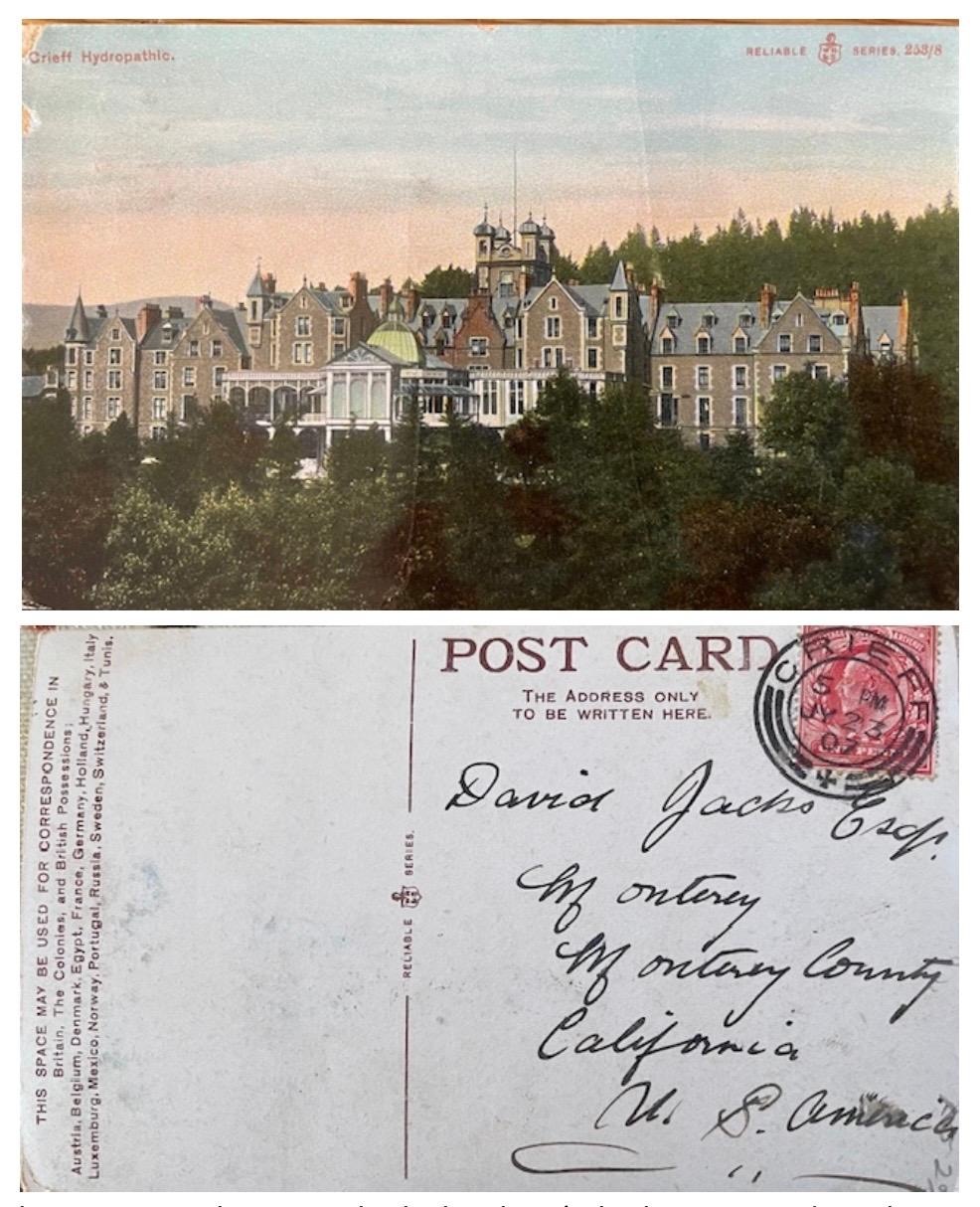
Kenneth Jack of Crieff, Scotland, a relative of David Jacks, and David Jacks researcher has graciously allowed us to republish the below article recently published in Scotland regarding a postcard he discovered for sale on the internet. Kenneth has written many articles about David Jacks, and we include his articles on our Jacks Family webpage at: https://www.mayohayeslibrary.org/jacks-family.html
INTERESTING HISTORICAL POSTCARD
A historic postcard has recently come to light. The postcard has a photograph of the Crieff Hydropathic Hotel on the front, and is addressed on the rear side to “Mr David Jack(s) Esq. Monterey, Monterey County, California, US. America.” (For reasons not yet understood, Jack added an s to his surname in the USA.) Crieff is Jack’s birthplace in Perthshire, Scotland.
The sender obviously considered Jack of sufficient import in Monterey, that a more detailed address was unnecessary. The postcard is postmarked: Crieff, July 23, 1907. There was no message on the card, or details of the sender.
No messages were permitted even on postcards destined for certain parts of the world at that time, a stricture that was relaxed in October 1907.
It was initially thought that Jack had sent the postcard to himself as a souvenir of a final visit to his birthplace. The Hydro was a popular resort for wealthy visitors from around the world, eager to sample the therapeutic treatments at the hotels innovative spa baths (hydrotherapy). The strict religious aspect of the hotel at that time, with its no alcohol policy (which remained in place until 1994), aligned with Jack’s Scots Presbyterian background (he financed the building of ‘The First Presbyterian Church of Monterey’, and financed and helped lay plans for a Methodist retreat on his land, which grew into the city of Pacific Grove).
However, further inquiries established that the postcard had been sent to Jack, by his niece Louisa, the daughter of Jack’s older half-brother, Peter, with whom he had kept up a regular correspondence, and had aided financially on a frequent basis. Just a few years earlier, in a letter to her uncle dated March 2, 1903, Louisa updated him on the health of her ailing mother, Isabella. She also commented on the harsh economic conditions in the country at the time: “Business here in Stirling is very dull, nearly all the works are on short time and there are an awful lot of men going about idle. I think that the very bad weather we have had here, has something to do with it.”
Jack’s final visit to his hometown was actually in 1896, and as a wealthy American businessman he is likely to have stayed at Crieff Hydropathic Hotel. Unfortunately, guest registers from that period are no longer extant.
Jack had finally retired from the family business in Monterey a few weeks prior to the sending of the postcard, aged 85 years.
It is satisfying to note that throughout his long life, and despite his immensely busy and successful career in Monterey, California, Jack never lost interest in his native town and his family resident there.
| |
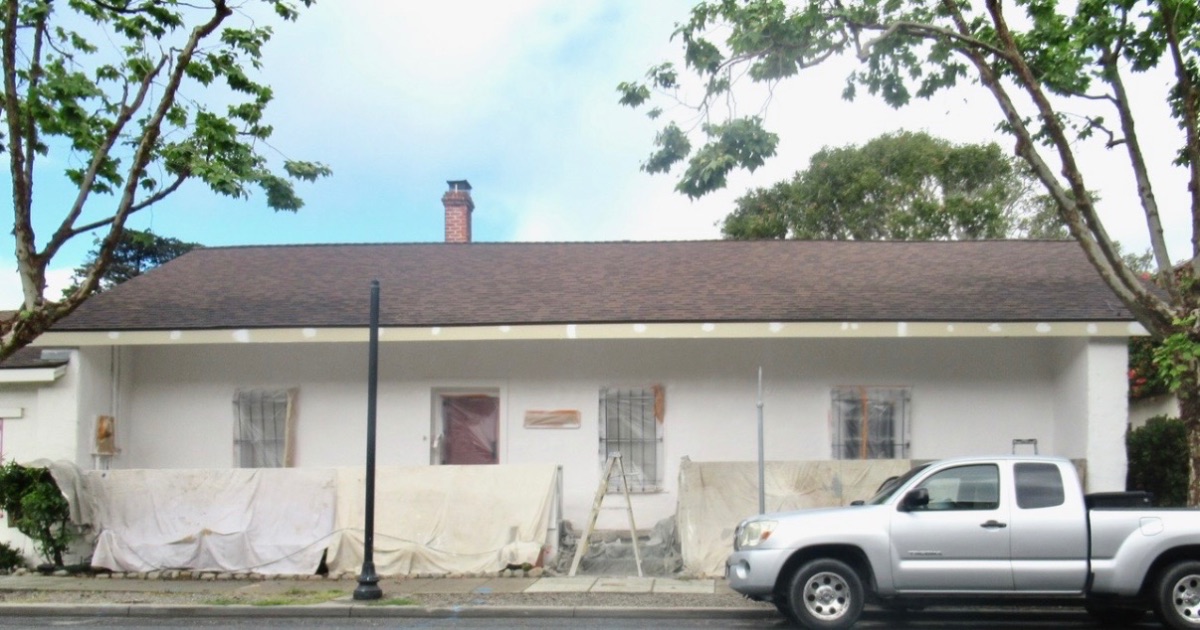
CASA SERRANO
Casa Serrano was recently painted. Los Amigos raised money to fund the painting project. We thank these members for their hard work and dedication to Monterey History and Art.
| | |
NEW EXHIBIT
EME KA UKO: TO ALL MY RELATIONS
The History and Culture of the
Costanoan Rumsen Carmel Tribe
| | |
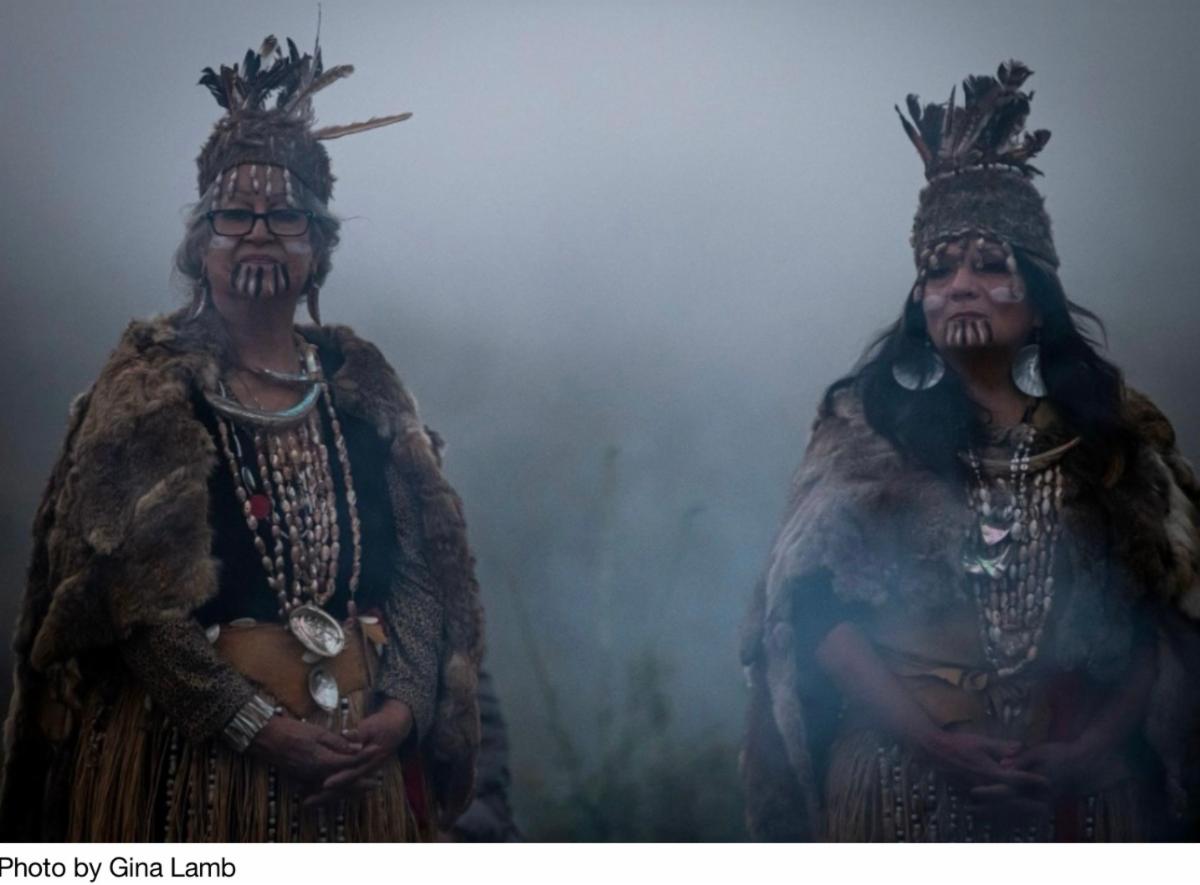
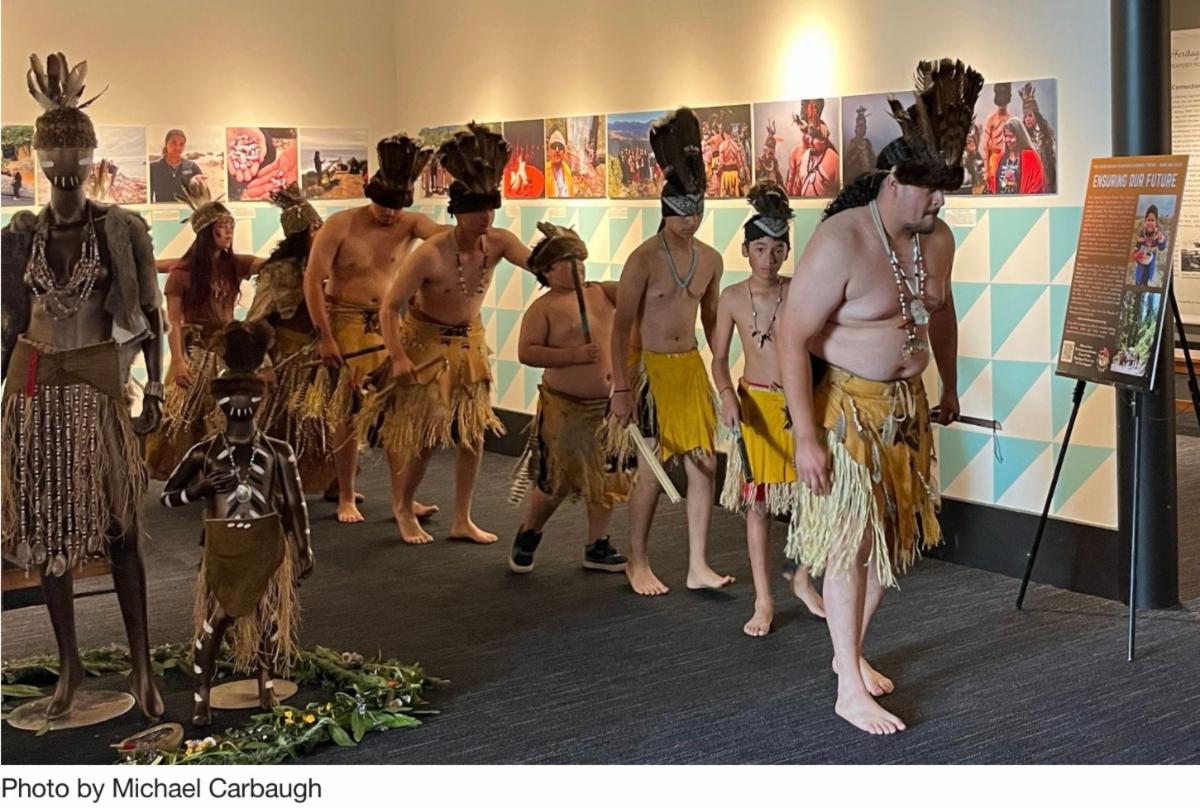
A new exhibit opened at the Stanton Center in March focusing on the history and culture of the Costanoan Rumsen Carmel Tribe. The exhibit includes photos, artifacts, paintings, videos and examples of their regalia, personalized costumes created for ceremonies. There is also a tule boat on display that was created by Ohlone youth specifically for this exhibit.
The Costanoan Rumsen Carmel Tribe inhabited the area along the Carmel River for thousands of years. There is still evidence of their habitation sites in Garland Ranch Regional Park and other areas in Monterey County. As one of the Ohlone tribelets in the Monterey region, they were instrumental in the construction of the Carmel Mission. In order to escape continued enslavement, the tribe moved south and settled in Southern California in 1864. Today, the tribe has over 2,000 members throughout California.
This special exhibit will educate the public on the history of their ancestral lands in this region, their contribution to the Mission, and their cultural practices, and will be on display until February 2027.
| | A reception was held at the Stanton Center on March 28th and featured a wonderful cultural program of native songs and dance as seen in this photo. | | |
On May 22 & 23, the Stanton Theatre isn’t just hosting a show… it’s becoming a space to celebrate your stories, your strength, your laughter, and your voice.
And we want that room FULL.
Soapbox Stageworks’ Women’s Series is more than a night at the theatre—it’s a shared experience. A chance to gather, to feel seen, and to celebrate the women who came before us, the ones beside us, and the voices still rising.
We’re bringing you three unforgettable pieces:
Water — a powerful, shape-shifting solo performance filled with fierce women, quieted voices, and moments that will make you laugh and then hit you right in the heart.
Ms. Lamar Goes to Washington — the incredible (and true!) story of Hedy Lamarr, whose brilliance helped change the future of technology… even when the world wasn’t ready to listen.
The Cannery Girls — a joyful, high-energy comedy set right here in Monterey. Two women, big dreams, and a whole lot of Lucy & Ethel-style mischief as they try to rewrite their futures.
And here’s what makes this night even more special:
We will be honoring the women in the audience—yes, YOU.
So gather your friends. Your sisters. Your coworkers. Your moms. Your neighbors. Fill a row. Fill a section. Let’s fill the theatre with the energy of women showing up for each other.
Early Bird Special: Buy now and enjoy complimentary champagne & appetizers.
Group Discount: Bring 5+ and get 20% off.
Let’s pack the house. Let’s celebrate loudly. Let’s make this a night people talk about long after the curtain falls.
Get your tickets now—don’t wait. As a 501c supporting us enables the theatre to continue with meaningful programming and relevant performances
We can’t wait to celebrate with you!
| | |
Monterey History and Art needs volunteers at:
Stanton Center: volunteers are needed to monitor and host events.
Casa Serrano: docents are needed to staff the adobe on Sat. and Sun. from 2-4 pm and to staff special events.
MHOD Library: volunteers are needed Wed. thru Sun. from 1:30- 4 pm to welcome visitors and help with research questions. Other tasks include: scanning material to place on our website and sharing the history of the library and Monterey.
Training will be provided for volunteers at each of these sites.
email us at MHAA.org1931@gmail.com
THANK YOU
| | |
Come visit our exhibits at Stanton Center.
Free admission for MHAA members!
| | |
P.O. Box 1082
Monterey California, 93942
montereyhistory.org
| | | | | |