|
May - June 2024
Volume 4, Issue 3
| | |
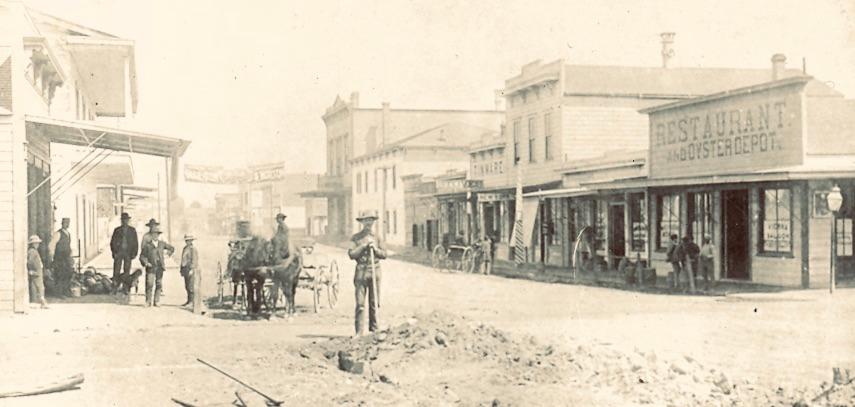
Alvarado Street north from Franklin,1887 | |
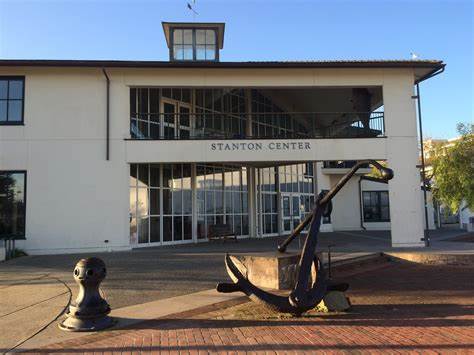 | |
Open House at Stanton Center
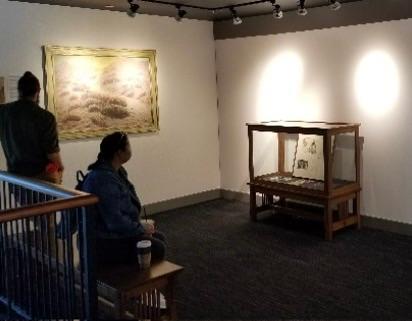
On April 20th, MHAA hosted an “Open House” event at Stanton Center, Casa Serrano, and the Mayo Hayes O’Donnell Library. Several things clicked into place just prior to the event, these included the arrival of our four new display cases on Wednesday, removal of most of the “Animaldom” exhibit on Thursday, and installation of the Jo Mora carte exhibition on Friday. As they say, “timing is everything”.
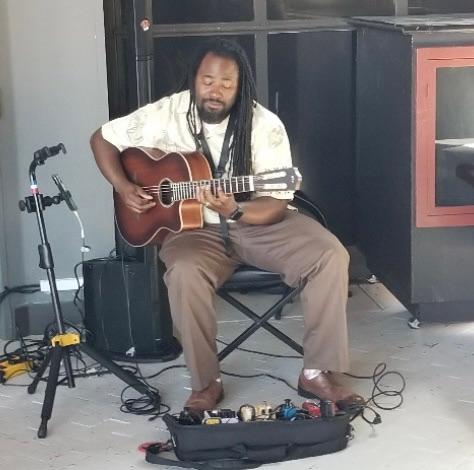
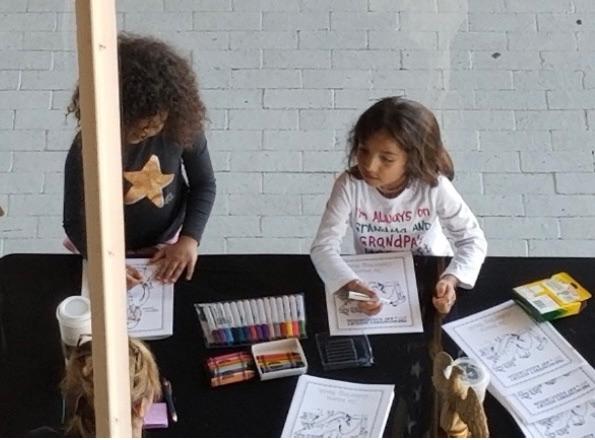
Using a generous grant from the Arts Council, we were able to print new brochures for Stanton Center, a new supply of Jo Mora coloring books for children, pay for advertising the Open House event in the Monterey Weekly, produce new multi-use “Open House” banners to hang outside Stanton Center, and fill the museum with music from a live guitarist playing in the lobby.
All of our open venues had lots of traffic during the event; at Stanton Center there were 352 visitors between 10am and 4pm, including many children who were given the Jo Mora coloring books.
- Gary Spradlin, President, Monterey History and Art Association
| |
Musician Glenn Bell playing in the lobby | |
|
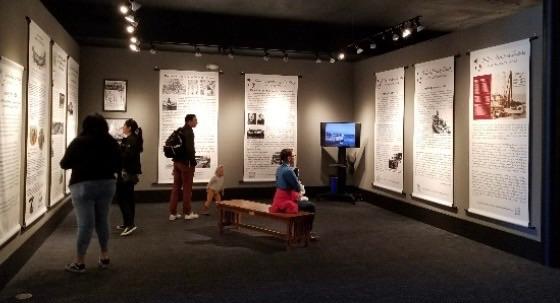
Visitors in the "Bounty of the Sea" Exhibit. | |
|
|
The Art of
Casa Serrano
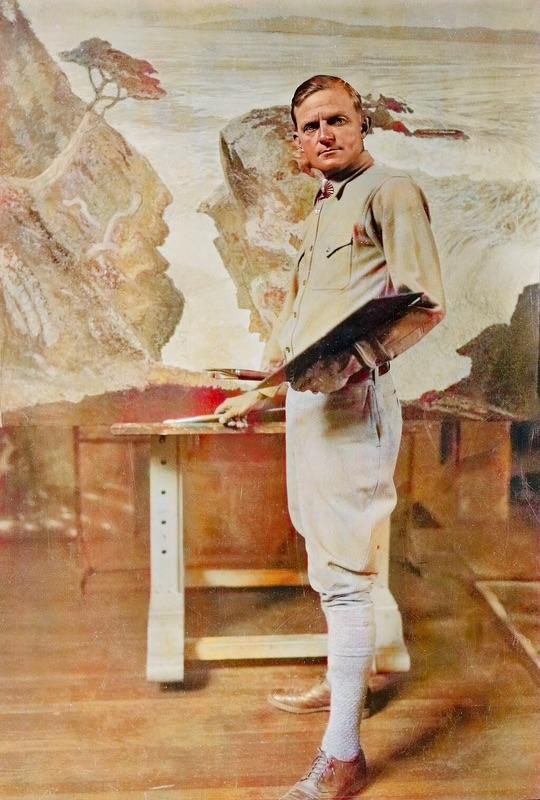
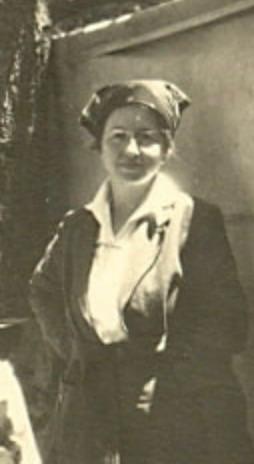
Ferdinand Burgdorff (1881-1975)
Ferdinand ‘Ferdy’ was born to parents Frederick & Ida Burgdorff in Cleveland, Ohio in 1881 where he joined his siblings William & Sophie. He studied both at the Cleveland School of Art & with René Ménard & Florence Esté in Paris.
In 1907 the 5’ 6” blond haired & blue eyed artist moved to California. First, he settled in the art colony in Carmel. In 1920 he designed a home for himself on Ronda Road in Pebble Beach. He asked his architect friend (& fellow Bohemian Club member) Bernard Maybeck to look over his plans. Maybeck travelled to the site & provided enhancements for his ‘studio-home with its very high pitched ceiling, big stone fireplace & huge north window.’
From the years 1907 to 1924 Burgdorff made numerous trips to the southwestern deserts, including the Hopi and Navajo reservations and the Grand Canyon. Those visits supplied boundless subject matter for future artwork. During the same time he was an illustrator for the new publication, Sunset Magazine, where many of his designs were featured on its cover.
He was a founding member of Carmel’s Forest Theater where he played Nadab in Constance Skinner’s play ‘David’ in 1910. From 1909-1924, he participated in 8 of the juried Carmel Arts & Crafts Club’s exhibitions. Several of his paintings were also displayed in the Del Monte Art Gallery between the years 1908-1928. In 1923 he was commissioned by the Santa Fe Railroad Company to paint Arizona’s San Francisco Peaks. In 1926 he & artist Gunnar Widforss were featured @ LA’s Stendahl Art Galleries. Art critic, Anthony Anderson, had this to say: ‘Burgdorff is the poet, Widforss the consummate and meticulous craftsman. Burgdorff’s Arizona nights—as in “Corral in Moonlight”—are full of a brooding enchantment, his Arizona days, as in “Rain Clouds” and “Desert Storm” show us the great desert’s dramatic panorama. A fine colorist always, he is at his simplest and best in “Arizona Golden Rocks,” giving us a deeply blue and luminous sky—a sky as rich in texture as a slab of lapis lazuli—above a slope bathed in sunlight.’
In 1934 he was employed by the CWA to create backgrounds for each of the exhibit cases representing the five life zones of Yosemite National Park. These provided instruction & pleasure for the thousands of tourists who visited the Yosemite Park Museum. That same year he & Jo Mora designed & painted 7 lobby panels at Hotel Del Monte which depicted subjects from Chaucer’s ‘The Canterbury Tales.’
During the remaining decades Burgdorff participated in several shows including the following venues: SF’s Bohemian Club, Stanford Art Gallery, Golden Gate International Exposition on Treasure Island, Santa Cruz Art League, Avenue of American Art in Pasadena, Salinas Fine Arts Club, Carmel Art Association, Villa Montalvo in Saratoga, & the California Historical Society. In 1959 Burgdorff had a solo exhibition at the Carmel Art Association. Among the works was a large painting of the Hartnell College adobe ruins. The school, originally called El Colegio de El Patrocino de San Jose, opened in March 1834 on Rancho Alisal near today’s Old Stage Road in Salinas. It is considered to be California’s first publicly supported college.
An accomplished artist known for his many oils, pastels, watercolors & etchings of California & the Southwest, Burgdorff died on May 12, 1975.
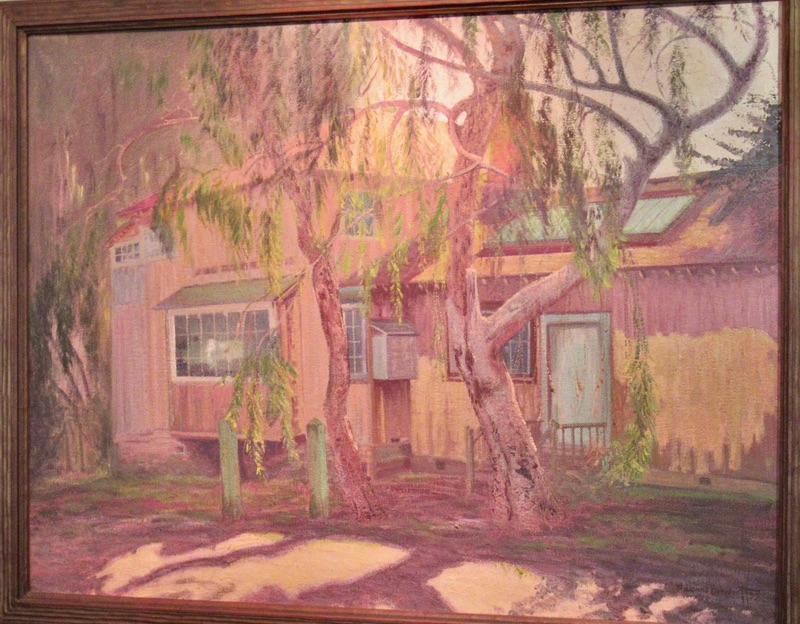
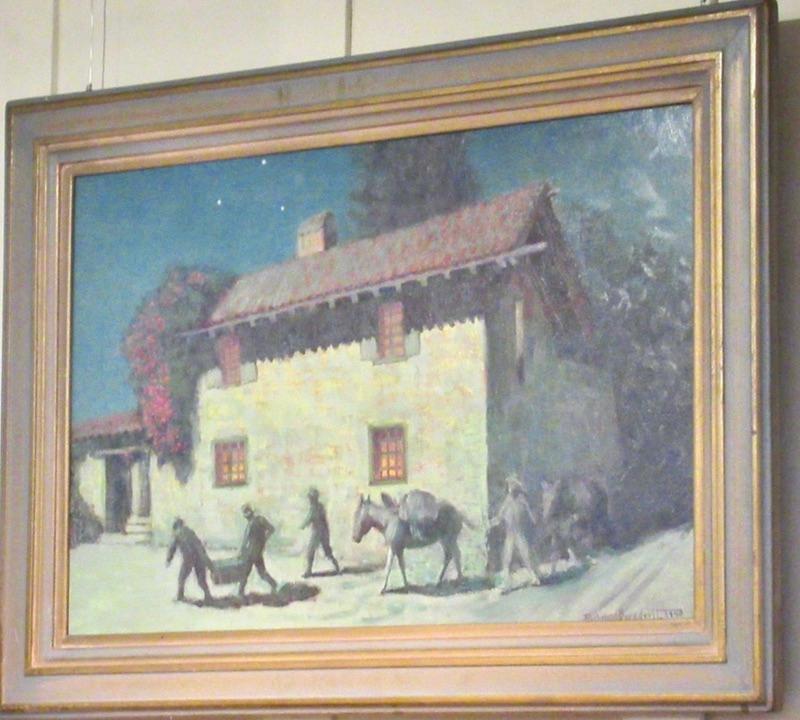
2 of his oil paintings are presently displayed inside Casa Serrano’s Sala Grande. The first one, titled ‘The Home and Studio of Charles Rollo Peters’, was completed in March 1936. The second work, ‘The Gold House’, Burgdorff finished in 1948.
Michael Mazgai
| |
|
Notation on the back of painting:
March 1936
The home and studio of Charles Rollo Peters, Montrey, California occupied by Mr. Peters.
Painted by his old friend.
Ferdinand Burgdorff- Pebble Beach- California
| |
|
Notation on the back of Painting:
The "Gold House"
Monterey-California
Ferdinand Burgdorff- Pebble Beach- California
| |
Local People
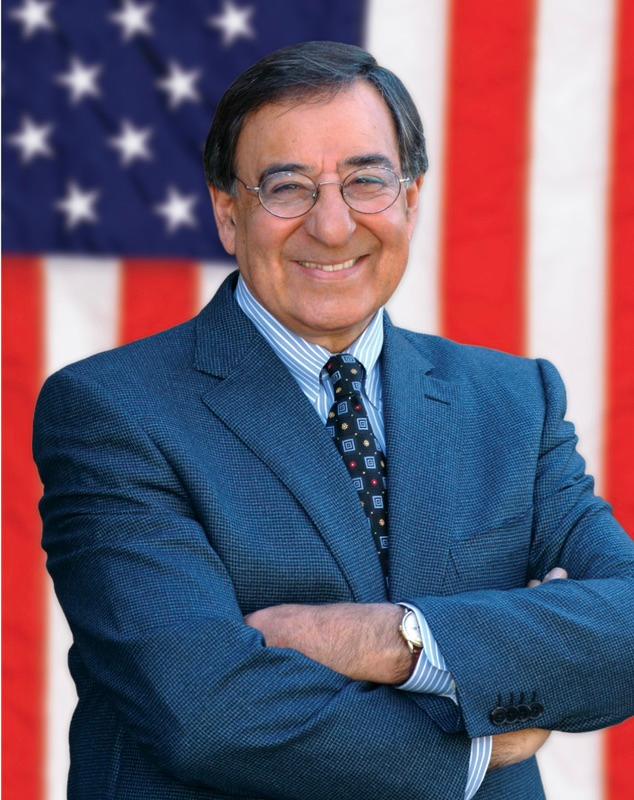
Secretary Leon Panetta
Secretary Leon Panetta was born in 1938 to Italian immigrants. His mother, Carmelina, was from Siderno and his father, Carmelo was from Gerace. His father was 13th in the family and when he and Carmelina came to the United States, it was the tradition to visit the oldest brother first. His oldest brother lived in Sheridan, Wyoming. It wasn’t long before they decided to leave Wyoming for warmer temperatures and vist his brother Tony in Califonia.
Carmelina and Carmelo opened a restaurant in Monterey called Carmelo’s Cafe on Alvarado Street. Leon remembers washing dishes as a child standing on a chair when he was about 6 years old. The restaurant did well and was busy with many of the soldiers from Fort Ord. Some of these soldiers would spend Christmas with the Panetta family at the Panetta’s house. Secretary Panetta would recall these times years later when he was in a position to send soldiers into harm’s way.
After World War II, the Panettas decided to sell the restaurant and moved to a bare 12 acre lot in Carmel Valley to grow walnuts. It was Leon’s job with his brother Joe to gather the walnuts after his father shook the trees. When Leon began his career in public office in Washington his father said he was “well trained to dodge nuts”.
Leon attended San Carlos Catholic School and Junipero Serra School. Joe’s Taxi was the bus service from Carmel Valley. At that time Carmel Valley and Big Sur were part of the Monterey School District, despite the fact there was a high school in Carmel. At Monterey High School, Leon played basketball and baseball. As a Junior he was vice president of the student body and became president in his Senior year. He held a job at the Mediterranean market in Carmel, serving the customers, slicing the meats and cheeses.
Mr. Panetta went on to major in political science at Santa Clara University which at that time was an all men’s school. It was here that he met his wife, Sylvia, when she was attending Dominican College in Marin and she came to an open house at Santa Clara. They have been together for 64 years. They have 3 children, 2 are lawyers and 1 is a cardiologist. They are also the proud grandparents of six grandchildren.
Secretary Panetta has had a long and varied political life and continues to be active in the Panetta Institute as well as other community activities. He is still living among the walnut orchard although grapes have replaced the walnuts. He finds the time to play the piano, something he has done since grammar school.
If you have a friend or relative that would like to share their story about living in or around Monterey, please contact Monterey History and Art Association at MHAA.org1931@gmail.com
| | |
|
MHAA New Acquisition
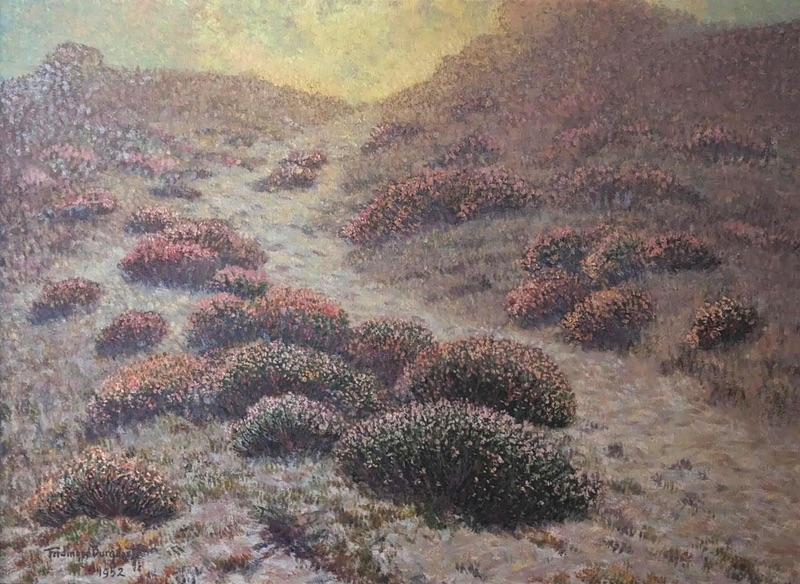
Monterey History and Art Association has recently acquired a beautiful painting by artist Ferdinand Burgdorff. Its title is "Wild Buckwheat on 17 Mile Drive Sand Dunes, in August" 1952. It measures 45"X32". It is believed to be at or near the present-day Asilomar Sand Dunes. It is currently on display at the Stanton Center Museum.
| | | |
|
Peninsula Diary
Mayo Hayes O’Donnell
This article was originally published in the Monterey Peninsula Herald on May 1, 1951
They Slept on the Beaches That May Day
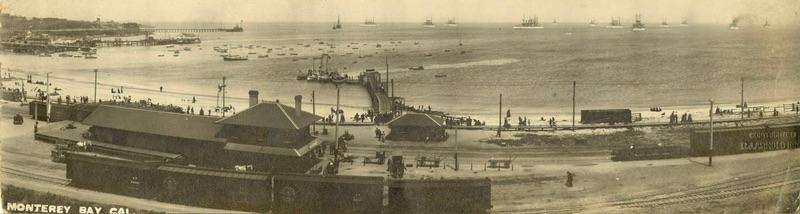
Forty-three years ago today was a big day for the citizens of Monterey and hundreds of the city’s guests on that memorable day. This date, May 1, 1908, the great United States “round the world” Armada dispatched by President Theodore Roosevelt on a good will tour to hundreds of foreign countries, and commanded by Admiral Evans, was scheduled to steam into Monterey Bay early in the morning and the old town was host to more than 30,000 visitors (so the news items declared), all eager to see the grand fleet.
Hotels were filled to capacity and thousands of visitors had been forced to make impromptu sleeping arrangements in vacant lots and on the beaches.
A grand reception was given for the fleet, Mayor Jacks was to sail out into the harbor to welcome the fleet, according to the program, and a throng of ladies of the town had millions of poppies which they scattered in the path of the great ships as they entered the harbor. Governor Gillett and Adjutant-General Louck were the guests of Del Monte, having come to the peninsula to welcome the fleet.
The old town was fairly smothered with decorations consisting of flowers, bunting, flags and hanging plants. A grand ball was held in the dining room at Hotel Del Monte on the 2nd of May.
The San Francisco paper on May 1st, 1908, contained several columns of news of the event held here for the reception of the fleet. Pictures of a number of Monterey’s historic buildings and pictures of prominent citizens including: A.B. Gunzendorfer, B.F. Wright, George Gould Jr., Stanley G. Clifford, W.E. Parker, David Roderick, J.K. Oliver, Jacks and T.F. Field.
“Fighting Bob” Evans, hero of that famed long race of the Oregon from the Pacific Coast to Cuba at the beginning of the Spanish American War in 1898, came to Monterey with the fleet’s visit but due to illness did not come ashore, much to the disappointment of the townspeople.
The Admiral had been ill a great part of the cruise around the Horn, and lay on a stretcher on the deck of his flagship when the fleet of sixteen war ships steamed into Monterey Bay.
In honor of the Admiral and his officers, a grand ball was given at Del Monte, attended by California’s Governor and his staff, by naval officers and the officers of the Monterey Presidio, and hundreds of men and women of the social centers of all California. “It was one of the most resplendent social functions I have ever attended,” wrote the late B.F. Wright in his Memoirs.
The members of Junipero Parlor of the Native Daughters of the Golden West were hostesses at a Leap Year Ball in honor of the officers of the Atlantic Fleet on the evening of May 7th.
The members also sent baskets of flowers to the captain of each ship, the Connecticut, Kansas, Alabama, Illinois and New Jersey, each of whom sent greetings and notes of appreciation to the Parlor. These noted from Rear Admiral Charles M. Thomas, Rear Admiral Sperry, Captain J.M. Bowyan, Captain Osterhauer, Captain T.H. Southerland and Captain Greeland, are treasured in the minute book of Junipero Parlor.
| |
|
"Monterey Waterfront, panoramic postcard of the Great White Fleet visiting Monterey, 1908"
Editor's note: The Great White Fleet was the popular nickname for the group of US battleships that completed a journey around the globe from December 1907 to February 1909, by order of President Theodore Roosevelt. The primary mission was to make friendly visits to many countries and display the US naval power to the world. The nickname came from the ships' white hulls.
| |
|
Library News
A deaccessioning activity by Carmel Valley Historical Society resulted in a great donation of books to the library. The donation yielded many titles which have been added to the collection with other titles going on our BOOK SALE carts in the library. Some of the donations are south-county specific and the library is passing this material along to the San Antonio Valley Historical Association in King City.
The OPEN HOUSE hosted by MHAA on April 20 from 10 am to 4 pm was a success for the library with 46 visitors walking up Scott and down Van Buren to visit with us. Our note cards featuring the 25 Path of History watercolors have sold very well; there are a few sets left at Stanton Center Gift shop and the library.
We will be choosing art works to feature in our next production run of note cards and welcome suggestions from the membership on what they would like to see included. 5 cards per box - single artist sets, or mixed sets featuring several artists, or [YOUR SUGGESTION HERE]. We will also be adding postcards to our offerings in the Gift Shop and will let you all know when they are available.
2 more boxes of donated books await evaluation.
| |
|
‘ADOPT A PAINTING’
ART RESTORATION INITIATIVE CONTINUING AT CASA SERRANO
The artwork hanging in Casa Serrano is a wonderful legacy to the artists who made the Monterey Peninsula their permanent or temporary home and left us their impressions of the beautiful place we call home.
If you are interested in joining this initiative and adopting a painting, please send an email to: mhaa.org1931@gmail.com
| |
|
MEMBERSHIP RENEWAL REMINDER
Our membership year is October 1 to September 30; please remember to renew your membership to continue receiving our newsletter, invitations to lectures and events, and FREE ADMISSION to Monterey History and Art at Stanton Center.
| | |
Come visit our exhibits at Stanton Center.
Free admission for MHAA members!
| | |
P.O. Box 1082
Monterey California, 93942
montereyhistory.org
| |
| | | |