|
Greetings,
"Tin Can Coast" - I think that's a pretty great title for a book about the fisheries history along the California Coast. Although I often think of Monterey with the canneries, we had them throughout the San Francisco Bay Area as well.
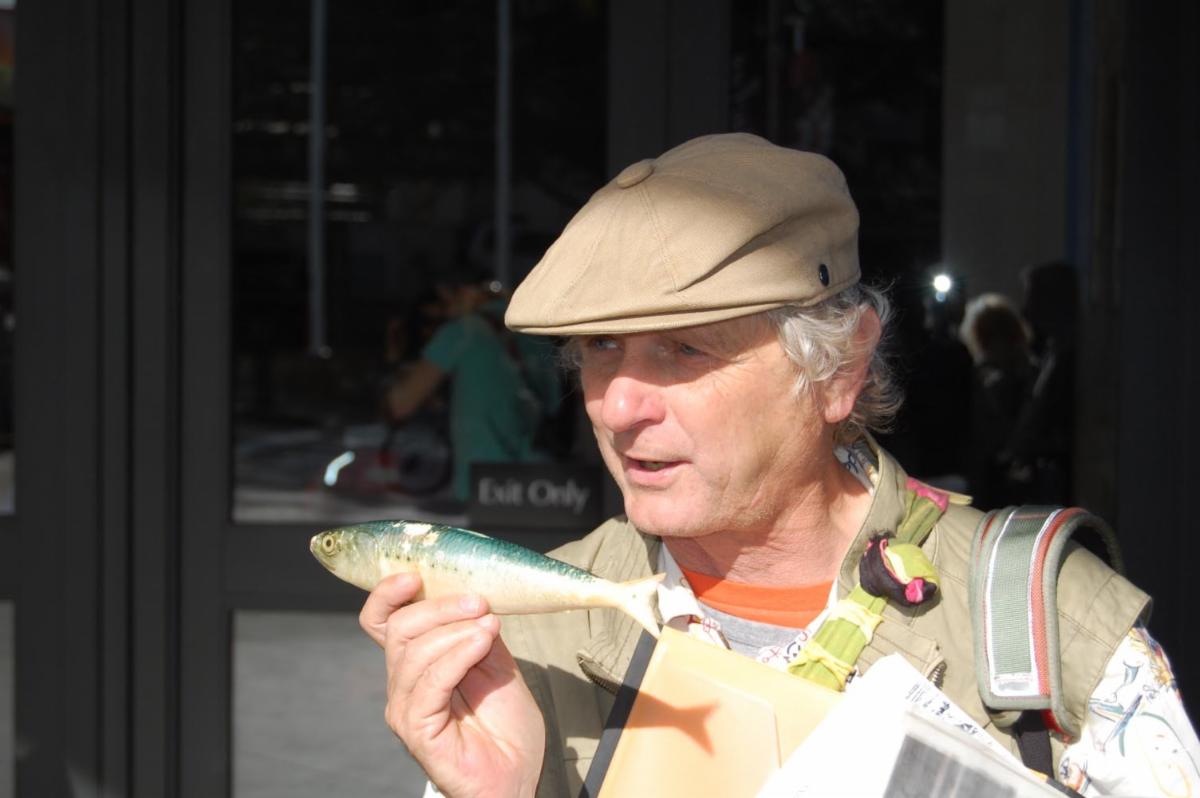
We hope that you join author Joseph Ogilvy for a talk about his book Tin Can Coast : A History of Industry, Greed, and Fishing in the Golden State. The talk will be held Saturday July 25th at the Japanese American Citizens League (JACL) at 424 Adams Street from 1-3pm, in partnership with Monterey Public Library, JACL, and Monterey History & Art Association. You can also read an article about his book by Pam Marino in this week's edition of the MC Weekly, or meet him at the upcoming Abalone Fest at JACL.
I think about how the Monterey Public Library contributes to creating content, not just people consuming content. What do I mean by that? Well, I know that our own Dennis Copeland worked with the author Joseph Ogilvy on some of the content for the book. His legacy continues to live on! My friend, colleague, and fisheries historian Tim Thomas also contributed to content for the book. The stories, photos, articles, and memoirs in the California History Room continue to contribute to the understanding of Monterey's history and future. To me, that is the most exciting part of "California's First Public Library" - we've worked for decades to collect unique stories to provide truly unique content for others. Our local historians in Monterey help to tell and re-tell the stories of the people, environments, and actions that connect us all today.
As part of my job, I often lead tours of the Pacific Biological Laboratories at Cannery Row, or tours/discussions about early California history at Colton Hall. And when you look at the return of Spain to Alta California in 1769-1770, one of the driving forces was the fear of Russians expanding to Alta California. The Russians did reach Alta California in 1812 and began fishing and hunting of sea otters in Alta California. Fishing and the sea are intertwined with our history. Some of our earliest canneries were for salmon, not sardines. Generations of families currently here in Monterey arrived and transformed the community through the fishing industry. The California current fed soldiers during WWI and WWII directly through canned fish, but also through the expansion of fish as fertilizer and chicken feed. During my tours along Cannery Row, we often talk about the ecology of the area - how life is interconnected. (I also like to connect that Steinbeck wrote about the ecology of people, while Ed Ricketts wrote of the ecology of the sea). Today the Monterey Bay Aquarium is know worldwide and a leader in marine conservation.
The people in our community have a deep connection to the tin can as well as the sea. Our fisheries story is incredibly diverse: Portuguese, Sicilian, Italian, Croation, Chinese, Japanese, Indigenous, Norwegian, Vietnamese, Mexican, and others have all contributed to the Monterey story. As someone who also enjoys to get on the water and fish (even though I have no sea legs), I appreciate the sustainable aspect of our local fisheries and sea captains. In a land of bounty, it's still important for us to understand the ecology of people, place, and environment. Continue to tell our stories to let people know why the California Coast is truly a special place to be, and a bounty to us all.
Warmly,
Brian
|