Greetings Angelenos,
As the second most populous city in the nation’s most populous state, Los Angeles relies on accurate Census data. The Census determines our proportional representation in government, our allocation of social services, and our share of federal funding. It also informs our decisions about where to invest and build.
Our size also makes the Census challenging. Aside from the sheer magnitude of the task, our City’s diverse communities include many “hard-to-count” populations: those who are less likely to participate in the Census or harder for Census workers to reach.
These tend to be the most vulnerable among us. Crowded households may not report some family members if their size exceeds the legal limit for the space they occupy. Some foreign-born Angelenos will be reluctant to disclose their identities to a government agency—especially when they are the targets of cynical attempts to intimidate. Renters are harder to count than homeowners because they move more often, and people who are already underrepresented are liable to slip through the cracks for any number of reasons.
For more information about the 2020 Census, I encourage you to visit the websites
Together, we are
Planning for LA.
|
|
Vince Bertoni,
Director of Planning
|
|
|
|
On February 28, City Planning published its 2019 Annual Report. The document reviews last year’s accomplishments in the context of City Planning’s three main policy priorities: housing, equity, and sustainability.
The Annual Report takes stock of City Planning’s progress combating the housing shortage on a number of fronts—streamlining approvals for affordable housing projects, providing incentives for developers to build affordable units near mass transit, and developing new zoning that will accommodate more housing. It describes City Planning’s efforts to strengthen environmental protections during 2019, implementing internal process improvements, promoting climate-adaptive strategies, and adopting tougher regulations.
The report also examines the steps City Planning took throughout the year to build trust with Los Angeles’s communities and increase transparency. By introducing efficiencies to avoid delays, adding staff in strategic areas, and stepping up outreach, City Planning has sought to strengthen ties and provide better service.
|
|
|
|
On February 27, City Planning issued a joint memorandum with the Los Angeles Department of Building and Safety (LADBS) outlining the implementation of the City’s recently adopted
Accessory Dwelling Unit (ADU) Ordinance.
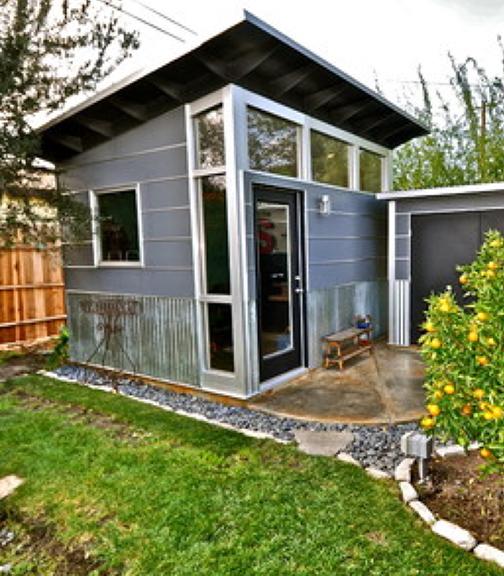
In December of 2019, the City Council adopted a citywide ordinance to regulate the construction of Accessory Dwelling units, also known as casitas or granny flats. The City's ordinance follows the adoption of new statewide regulations that facilitate the construction of ADUs on single-family and multifamily lots, and Junior ADUs.
The ADU Ordinance provides standards to alleviate barriers to the construction of ADUs while taking into account the unique characteristics of each geographic area of Los Angeles—an effort to increase options for those who need housing that also supports homeowners' financial stability. The newly released memorandum supersedes and replaces all documents previously issued by City Planning and LADBS pertaining to implementation of ADU and second dwelling unit regulations.
|
|
|
|
Ventura-Cahuenga Specific Plan Amendment
|
On February 20, City Planning formally launched a new work program to amend the Ventura-Cahuenga Specific Plan. The program would streamline the planning approval process for existing businesses along a 17-mile stretch of Ventura Boulevard—spanning the neighborhoods of Woodland Hills, Tarzana, Encino, Sherman Oaks, and Studio City.
One of the main goals of the program is to encourage and facilitate economic development opportunities for small businesses along the corridor. City Planning is working closely with local businesses and neighboring residents to identify enhancements that may shorten entitlement timelines without changing the original policies or the intent of the Specific Plan.
Nearly 60 people attended the community workshop held earlier this month, sharing their thoughts on how the City can support the corridor’s economic interests, in balance with the needs of the surrounding communities. For news about the Specific Plan, visit City Planning's
website or email
planning.venturacahuengaspa@lacity.org.
|
|
|
|
City Planning began enforcing the Home-Sharing Ordinance (HSO) in November 2019. In less than three months, online listings have dropped by nearly 50%—from about 36,700 short-term listings in November 2019 to approximately 18,700 as of February 1, 2020.
In total, City Planning has sent over 6,000 initial warning letters since November 2019 to hosts and owners of non-compliant properties. These letters were sent to both single- and multi-family properties, directing hosts and property owners to comply with the HSO or face penalties. City Planning began mailing follow-up letters in December, notifying offenders that failure to comply with the HSO could result in new fines and penalties.
Based on a review of listings on February 12, 2020, the warning letters achieved an 80 percent compliance rate: of the approximately 6,000 hosts sent initial warning letters, about 4,800 subsequently either registered or removed their non-compliant listings.
|
|
|
|
On February 13, the City Planning Commission (CPC) considered an amendment to the City’s cannabis regulations that proposes to update the location rules for commercial cannabis activity adopted in 2017. The changes concern minimum distancing requirements from sensitive sites and location requirements for grandfathered dispensaries predating Los Angeles’s rules on commercial cannabis activity.
After taking public testimony, the CPC voted to continue the item to an uncertain date. Staff were asked to return with additional information on what qualifies as a sensitive use, and at what point an imminent, but not yet operating, sensitive use would require distancing.
|
|
|
|
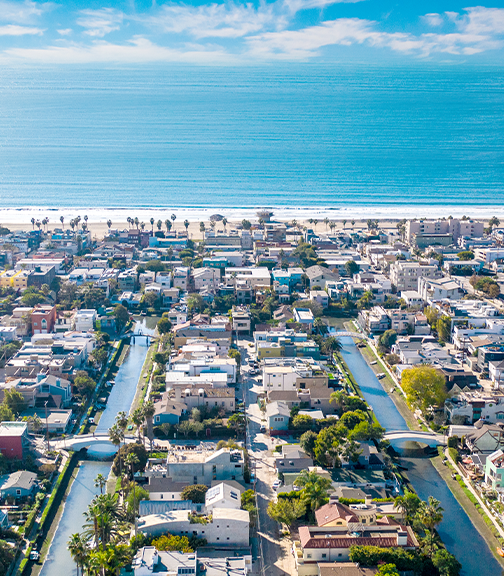
In January, City Planning held community events to inform stakeholders about the proposed ordinance that would implement the Mello Act in the coastal neighborhoods of Venice and San Pedro. The City’s proposed ordinance aims to replace the project review requirements that have been in place since 2000.
California adopted the Mello Act in 1982 to preserve and increase the number of affordable dwelling units in the State’s Coastal Zone areas. Since 2000, as the result of a settlement agreement, City Planning has been using Interim Administrative Procedures (IAP). The IAP outline a series of procedural steps to ensure that projects subject to the Mello Act are properly evaluated. In 2015, the City Council requested that City Planning prepare a permanent ordinance implementing the Mello Act.
For additional information, contact
|
|
On February 8, City Planner Justin Bilow delivered a presentation on the implementation of Senate Bill 330 (SB 330) to the PlanCheck Neighborhood Council. SB 330, the “Housing Crisis Act of 2019,” shortens the discretionary review timeframes for eligible housing development projects that meet all applicable objective zoning standards. The bill prevents the approval of housing development projects that would result in a net loss of affordable and overall housing units. It also establishes an option to vest new planning applications, allowing them to “lock in” the zoning regulations and policies in effect at the time of filing.
The bill took effect on January 1, 2020, and its provisions will sunset on January 1, 2025. For additional information, email
planning.PARP@lacity.org.
|
|
CicLAvia in South Los Angeles
|
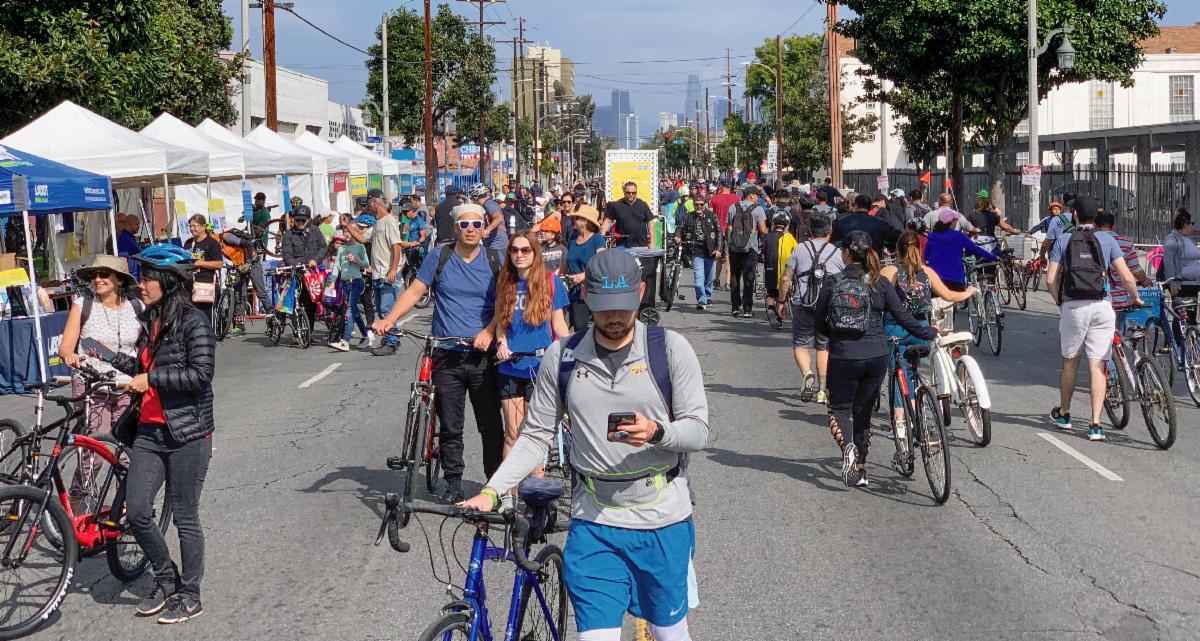
On February 23, the
Slauson Corridor Transit Neighborhood Plan (TNP) team staffed an informational booth at CicLAvia in South Los Angeles. The team spoke with community members about how to stay involved with the Slauson Corridor TNP and provide input during its implementation. The team is particularly interested in suggestions about connecting active transportation and land use.
|
|
International Delegation from India Visits Los Angeles
|
On January 31, Mayor Garcetti’s Office of Protocol and City Planning hosted an international delegation from New Delhi, India. Principal City Planner Ken Bernstein was invited to present on the work of the Urban Design Studio and the Office of Historic Resources. He was joined by Mayor Garcetti’s Chief Design Officer Christopher Hawthorne and City Planning Deputy Director Arthi Varma. Among the topics discussed were housing, urban design, and historic preservation, with Los Angeles serving as a case study on land use and zoning for the international delegation.
The visit was facilitated by the National Institute of Urban Affairs, a think tank that works closely with the Indian Ministry of Housing and Urban Affairs to inform policy makers about land use considerations and the development of master plans for many of India’s growing cities.
|
|
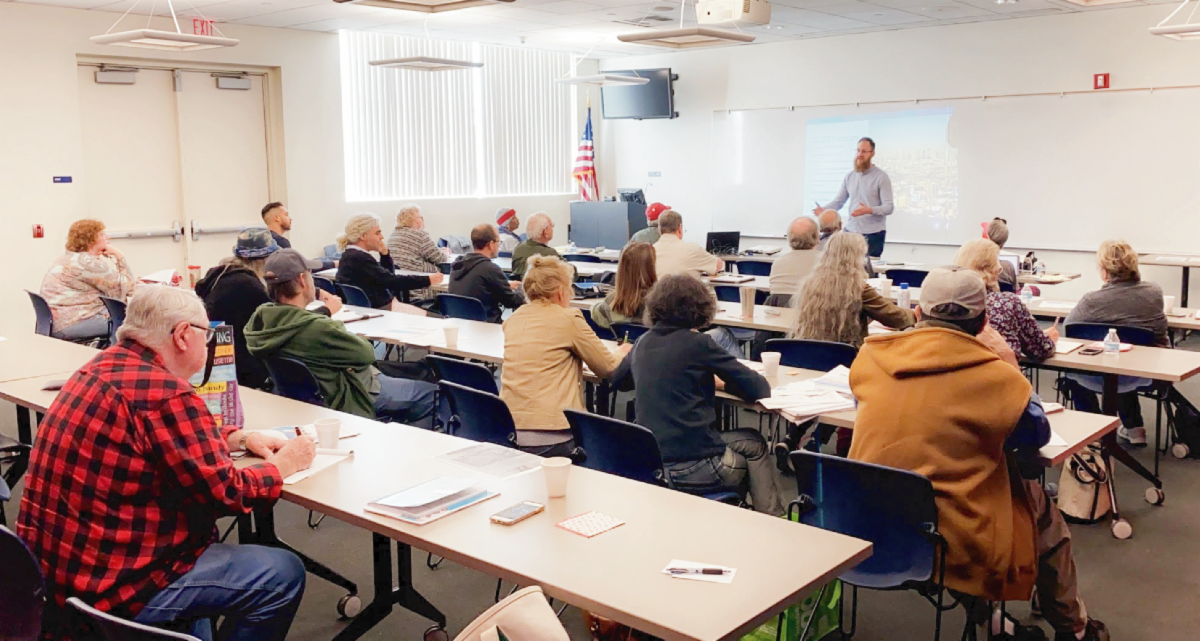
City Planning hosted three office hours events in February to discuss the proposed principles and land use concepts for the three Community Plans in the southeast portion of the San Fernando Valley. Nearly 160 community members attended the events, providing feedback and guidance that will inform City Planning’s final set of recommendations to the City Council.
|
|
|
|
- Tentative release of draft zoning and updated policy document (Spring 2020)
|
|
|
|
- Scoping Meeting conducted in August 2019
- Preparing Draft Environmental Impact Report (EIR)
|
|
|
|
- Preparing Draft Environmental Impact Report (EIR)
|
|
|
|
- Concepts Workshops to be held in March 2020
- EIR Scoping meetings to be held in April
|
|
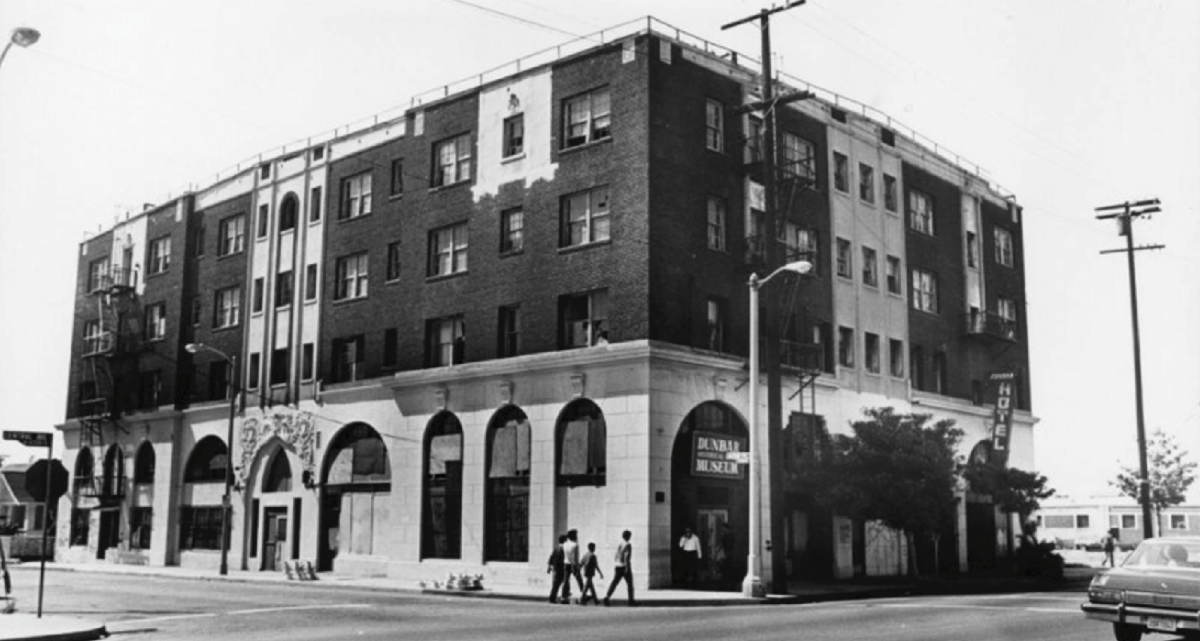
The Dunbar Hotel, originally known as the Hotel Somerville, was the focal point of the African-American community in Los Angeles during the 1930s and 1940s. For many years, the Somerville was the only major hotel in Los Angeles that welcomed African-Americans.
Shortly after opening, the hotel added a nightclub that became the center of the Central Avenue jazz scene. During its heyday, the Dunbar hosted Duke Ellington, Billie Holiday, and Louis Armstrong, among other jazz legends. It was the location of the first conference of the National Association for the Advancement of Colored People (NAACP) on the West Coast.
Over the years, the hotel fell into disrepair, closing its doors in 1974—the same year it was designated a Historic-Cultural Landmark by City Planning’s Cultural Heritage Commission. The plaque affixed to the building refers to the hotel as “an edifice dedicated to the memory and dignity of black achievement.” In 1990, the hotel was repurposed as an apartment building that provides low-income housing for individuals and families in their mid-fifties and older.
|
|
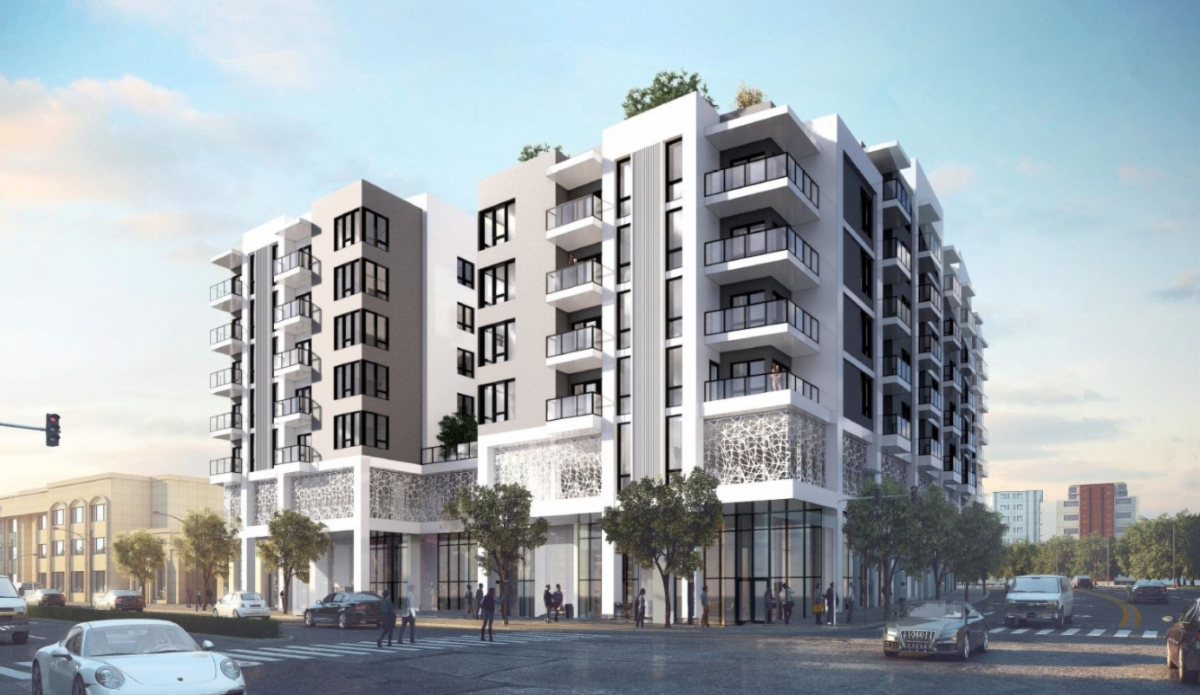
On February 13, the City Planning Commission approved a mixed-use, mixed-income building with 137 dwelling units, including 16 units restricted to Very Low Income households and 2,478 square feet of ground-floor commercial space. The proposed project is located at 511 South Harbor Boulevard within the San Pedro Community Plan Implementation Overlay (CPIO) area.
The new eight-story structure includes 25 studio, 85 one-bedroom, and 27 two-bedroom units. The project provides unbundled residential parking, offering residents the option to pay for a parking space rather than have one assigned to them automatically.
The project follows the development and design regulations of the San Pedro CPIO. In particular, this project would foster 4,025 square feet of publicly accessible retail plaza, connecting the surrounding restaurant and retail space with the San Pedro waterfront.
This project will provide much-needed housing in the San Pedro neighborhood while activating a portion of Harbor Boulevard through new job and housing opportunities.
|
|
City Planning is leveraging new technological capabilities to broaden support for key programs, responding to citizens’ needs while achieving greater accountability in the workplace. These technological enhancements have proven beneficial in fostering open lines of communication—a two-way conversation in which City Planning informs community stakeholders about important updates and solicits their input.
Earlier this month, a revised interactive
Events Calendar went live on City Planning’s website. With a clean, modern, and legible design, the improved calendar is intended to make it easier for just about anyone to access upcoming events.
Technological advances have made it easier for planning departments to interface with community stakeholders in real time. Fostering open and transparent communications has helped strengthen trust in, and increase engagement with, City Planning’s work.
|
|
|
|
Housing Element Update Open House
|
|
|
|
Housing Element Update Open House
|
|
|
|
Westside Community Plans Open House
|
|
|
|
Westside Community Plans Open House
|
|
|
|
Westside Community Plans Open House
|
|
|
|
Westside Community Plans Open House
|
|
LOS ANGELES CITY PLANNING
@PL
ANNING4LA
|
|
|
|
Sign up
to receive citywide
planning updates by email
|
|
|
|
|
|
|