|
Dear Angelenos,
The Los Angeles City Planning Commission (CPC) unanimously adopted three ordinances (Citywide Housing Incentive Program (CHIP) Ordinance, Resident Protections Ordinance, Housing Element Sites and Minimum Density Ordinance) on September 26 related to the Housing Element Rezoning Program, marking a critical milestone in a multi-year effort to implement policies that will address the City’s significant housing needs, provide greater housing access, meet its state housing obligations, and expand tenant protections.
One of the most critical pieces of this program is centered on ensuring equitable opportunities for the production of housing across the city by creating additional housing in higher-resource areas. City Planning's recommendation expands housing options, particularly in the City’s high resource areas that are served by transit options and neighborhood serving uses to give more Angelenos access to a better quality of life.
In addition to incentivizing more affordable housing in high resource areas, the approved Resident Protections Ordinance (RPO) would establish consistent protections for residents at risk of displacement citywide and would expand access to new affordable housing for Angelenos. The proposed ordinance strengthens and expands housing replacement requirements and occupant protections, including a tenant's right to remain, receive relocation assistance, and return to a new constructed housing development.
Staff's rezoning recommendations at CPC, and now moving on to Council’s Planning and Land Use Management Committee, are a culmination of more than two years of thoughtful, multilingual outreach that included 50 face-to-face events, multilingual live and recorded webinars in Spanish and Korean, and continued outreach via email updates and social media. We appreciate staff and community members working together on these recommendations that can result in increased housing production and affordable housing options.
To buttress CHIP initiatives, the City Planning Commission has also recommended approval of the citywide Adaptive Reuse Ordinance, which facilitates the conversion of underutilized commercial buildings to residential use, and the Landscape and Site Design Ordinance, which creates people-first design standards that support neighborhood walkability, healthy communities and climate-adapted design.
Together, we are #Planning4LA.
Sincerely,
| |
|
Vince Bertoni,
Director of Planning
| | |
|
Boyle Heights CPU - Adopted By Council On Sept. 25 | |
The Community Planning team is celebrating a significant accomplishment with the City Council’s adoption of the Boyle Heights Community Plan Update (Plan) on September 25, 2024. The Plan’s adoption represents the success of many years of thoughtful community engagement and a planning process developed to ensure that the voices of existing community members are prioritized. Among the Plan’s key strategies are approaches to safeguard residential neighborhoods, target future housing growth near transit and commercial corridors, and preserve employment opportunities in existing industrial areas while allowing for housing growth in opportunity areas near the Los Angeles River. Guiding future housing growth in Boyle Heights is a new Community Benefits Program to ensure that the majority of new housing will have affordable, and family-sized units, including units at the acutely low income affordability level (households making 0-15% of the Area Median Income).
Additionally, the Plan has new regulations to address long standing environmental justice issues, including: the compatibility between industrial and residential land uses, air quality, and soil contamination. The Plan also aims to protect the neighborhood identity of Boyle Heights with tools to preserve historic corridors and residential areas, maintain spaces for small businesses, and allow the limited introduction of tienditas (corner stores) in residential neighborhoods. Most of these strategies will be implemented using the new Zoning Code, of which the Plan is the second Community Plan in the City to adopt, that provides a streamlined approach for development.
The Plan’s implementing ordinances have been referred to the City Attorney for finalization, and it is anticipated to become operative by mid 2025. For more information, to sign up for email updates, and access final ordinance documents, once available, see: Boyle Heights Community Plan Update or Council File No. 23-0861.
| | |
|
Housing Element Rezoning Program Recap | |
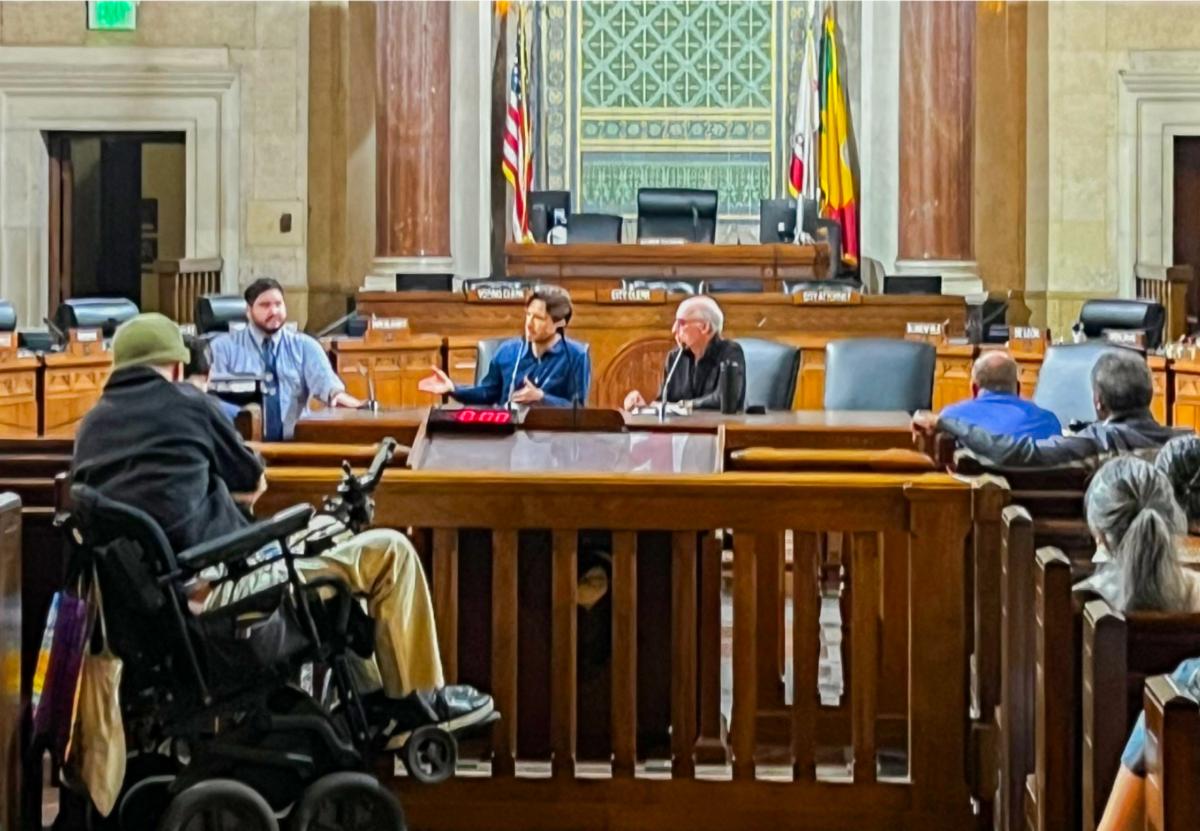
After a marathon CPC meeting on September 26, 2024, the Los Angeles City Planning Commission (CPC) unanimously adopted the three ordinances related to the Housing Element Rezoning Program. The vote was carried out after nearly four hours of public comments from Angelenos eager to weigh in on the future of housing in the City.
CPC President Monique Lawshe said that it is equally important to consider the impact of new programs on existing residents and how to best assist with access to resources that will lead to improved housing conditions and an affordable rent, within their community or in other Los Angeles communities that they may choose.
"As commissioners, we must consider all of the factors that affect housing production – including the potential dislocation of current residents and the pressing need for new housing in all areas of Los Angeles,” Commissioner President Lawshe said. “We have a responsibility to support new initiatives that can result in increased and expedient housing production that is attractive, of good quality, and offers affordable housing options.”
The Commission heard from a diversity of stakeholders and that feedback will continue to be helpful as City Planning’s recommendations move forward through the legislative process. The CPC voted to adopt the ordinances, which have now been transmitted to the City Council, and are anticipated to be considered by the Planning and Land Use Management (PLUM) committee and the full City Council this fall. The Housing Element Rezoning Program is state-mandated to be adopted and in place by Feb. 12, 2025. More information about the ordinances is available below.
Housing Element Rezoning Program
The Citywide Housing Incentive Program (CHIP) Ordinance (CF 21-1230-S5) proposes several new programs that would streamline review procedures and introduce bold new incentives for eligible project types in order to expand access to affordable housing near transit, jobs, along major corridors, and in higher opportunity areas. These programs include the State Density Bonus Program, the Mixed Income Incentive Program, and the Affordable Housing Incentive Program.
State Density Bonus Program: Since the adoption of the City’s Density Bonus Ordinance in 2008, numerous state bills have made significant amendments to the State’s Density Bonus Law. The program aims to make key revisions to align with the State Density Bonus Law.
Mixed-Income Incentive Program: The Mixed-Income Incentive Program intends to codify new incentives for housing development projects along Opportunity Corridors and projects constructing Missing Middle typologies in Higher Opportunity Areas. Additionally, this program will memorialize transit-based incentives currently housed in the Transit Oriented Communities (TOC) Affordable Housing Incentive Guidelines.
Affordable Housing Incentive Program: The Affordable Housing Incentive Program offers new incentives for 100% Affordable Housing Projects with additional incentives for Higher and Moderate Resource areas. This program will also provide citywide tailored incentives for sites where residential uses are currently restricted, including sites owned by faith-based organizations or community land trusts, publicly owned land, and sites zoned for parking.
The Housing Element Sites and Minimum Density Ordinance (CF 21-1230-S6) is intended to enact state housing element law for different types of sites related to the most recent Housing Element of the General Plan. In particular, it addresses housing element law requirements around housing replacement, no net loss, by-right development for 20% affordable housing projects, and minimum densities. The various requirements apply to three different kinds of Housing Element Sites, including the Inventory of Sites, sites located on Prior Inventory of Sites, and Lower Income Rezoning Sites. In addition, the draft ordinance would add minimum density requirements to various multifamily zone classifications to facilitate the implementation of state law as well as ensure new development in these areas complies with policy objectives.
The Resident Protections Ordinance (CF 21-1230-S8) would establish consistent protections for residents citywide and would expand access to new affordable housing for Angelenos. The ordinance would establish longer affordability terms (99 years), and ensure the equitable distribution and quality, including the size, location and amenities, of affordable units. It would also strengthen and expand housing replacement requirements and occupant protections, including a tenant's right to remain, right to relocation, and right to return for all housing development projects.
The ordinances were developed following the 2022 certification of the 2021-2029 Housing Element. City Planning staff has been working to develop and implement the ambitious programs identified in the Plan to House LA. The Plan identified that there is a significant housing need in Los Angeles, reflected by high rents, overcrowded conditions, and increasing housing instability, which has resulted in displacement, homelessness, and unattainable homeownership.
| | |
|
Housing Element CEQA Streamlining Checklist Form and Instructions | |
Los Angeles City Planning recently published an updated Housing Element Streamlining Checklist Form (CP-4089), which is used to show that a project and its environmental effects are within the scope of the program and impacts analyzed in the Program Environmental Impact Report (EIR). Essentially, the form streamlines California Environmental Quality Act (CEQA) clearances for projects. The Department also published a set of instructions (CP-4091) to help complete the form.
The updated Housing Element Streamlining Checklist Form is available here. The instructions are available here.
| | |
|
Environmental Justice Team at the Nate Holden Performing Arts Center | |
Arts, culture, and environmental justice were embraced at the Nate Holden Performing Arts Center on Monday, Sept. 30, where the Environmental Justice Policy Team joined the Department of Cultural Affairs (DCA) to participate in the inaugural Leimert Park Cultural Hub Festival of New Works.
Two South Los Angeles playwrights were commissioned by DCA to develop short plays on environmental justice, including the topics of health, air quality, and open space. Deadly Gangs by Stephan Collins-Stepney gave a face and a voice to irresponsible corporate behavior that has disproportionately targeted communities of color while exacerbating the effects of climate change. Climate Café by Allison M. Keating presented a collection of vignettes with characters who personified the collective emotional toll of enduring the damaging effects of climate change.
Principal City Planner and Chief Equity Officer Faisal Roble and City Planner Gabriela Juarez joined Black Planners of Los Angeles member Ivory Rose Parnell-Chambeshi on panels after each play to provide a planning perspective on the issues highlighted. Faisal Roble discussed the lasting legacy of the systemic discriminatory practices of Los Angeles’s past, while Gabriela Juarez provided insight into how City Planning’s Climate Vulnerability Assessment (CVA) has captured the lived experiences of vulnerable communities in a way that was well reflected in the plays. “It was emotionally moving to see how on point the characters portrayed so many perspectives we have heard from our most vulnerable and most climate hazard exposed community members that are also so under-resourced for resiliency and sustainability,“ Juarez said.
City Planning’s Environmental Justice Policy Team is grateful to DCA and particularly to Director Yvonne Farrow, who served on City Planning’s Environmental Justice Technical Advisory Committee and heeded the call to action on advancing creative environmental justice solutions. The performance was a space for learning, reflecting and healing through the arts, inspiring the CVA team all to continue their work towards planning for justice.
| | |
|
Planning Wins Public Outreach Award of Merit at State APA 2024 Conference | |
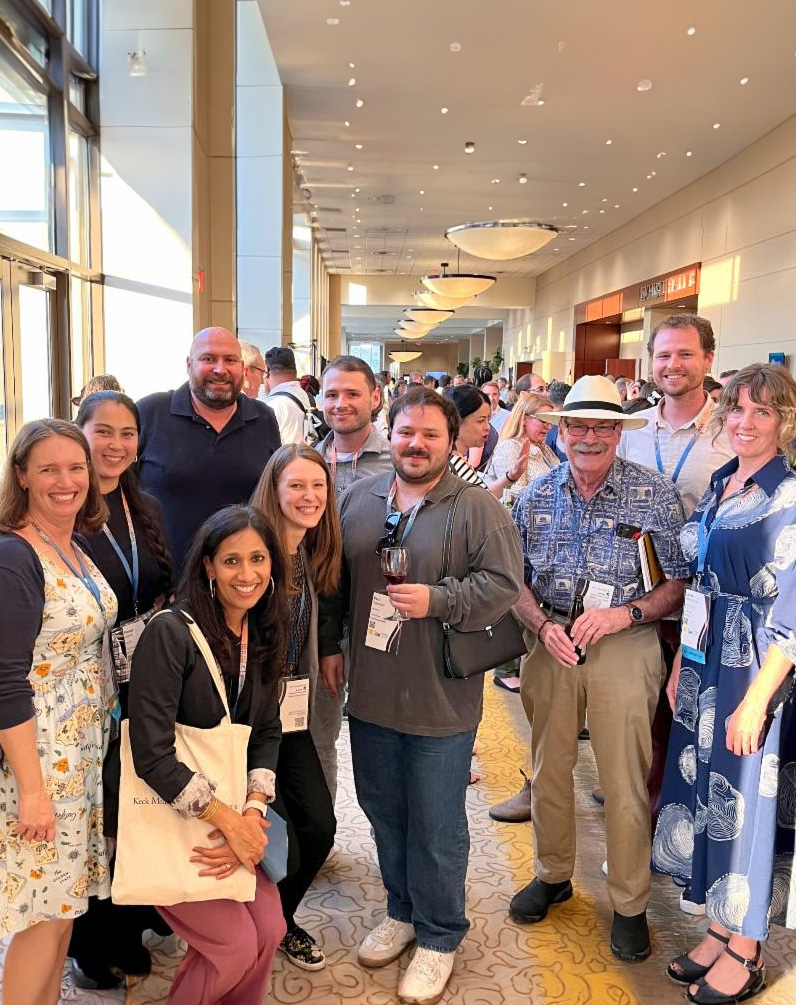
Los Angeles City Planning recently sent 20 planners to the American Planning Association (APA) California 2024 Conference in Riverside, where the Department picked up an award of merit for its public outreach efforts on the Citywide Housing Incentive Program (CHIP). Deputy Director Arthi Varma accepted the award on behalf of the Department at the conference, which was held September 28 to October 1. The Black Planners of Los Angeles (BPLA) also picked up an award of excellence in the category Advancing Diversity and Social Change in Honor of Paul Davidoff.
Planners attended sessions on environmental justice, public engagement and empowering communities, objective design standards, artificial intelligence, urban ecology, lessons from the 6th cycle of the housing element, sea level rise, and more. The 2024 Legislative Update session was an especially critical topic for attendees. The legislative session information is available here.
Deputy Director Haydee Urita-Lopez served on the panel Leadership - Empowering All for Thriving Careers and Communities. The session was part of the Planning Leadership Academy, a program designed to clear a path for the next generation of leaders that equips participants with skills to succeed in their careers and benefit the communities they serve.
The 2025 APA conference will be held in Monterey.
| |
New Zoning Code Takes Center Stage at Congress of Neighborhoods | |
|
Senior City Planner Erick Lopez and City Planner Alex Heath recently led a workshop at the Congress of Neighborhoods, titled Navigating the New Zoning Code: Real-World Examples and Community Empowerment. Moderated by Jeff Kalban from the Sherman Oaks Neighborhood Council, the session drew a crowd eager to learn about the upcoming changes to Los Angeles's zoning regulations.
Lopez and Heath provided a comprehensive overview of the New Zoning Code, highlighting its user-friendly design and adaptability. They emphasized the importance of community input in shaping the new code and showcased its potential to address diverse development needs while preserving neighborhood character. Attendees gained insights into the various zoning districts, relief mechanisms, and public benefit systems that form the core of the new code.
Real-world examples of the New Zoning Code's implementation in Downtown LA, Boyle Heights, and the Harbor area illustrated its practical applications and potential impact on communities. A preview of the interactive, web-based zoning code platform demonstrated its accessibility and user-friendly design.
A lively Q&A session followed, with attendees raising questions about specific development projects, community planning integration, and the role of affordable housing programs and state laws like Senate Bill 9. Concerns were expressed about the potential for these programs to override local zoning regulations and waive critical design standards, undermining community planning goals.
Key takeaways from the session included the importance of proactive community engagement, balancing flexibility with predictability, addressing the affordability gap, and providing ongoing education and support. Lopez and Heath emphasized the need for continued collaboration with community members and stakeholders to ensure the New Zoning Code's successful integration into Los Angeles's evolving landscape.
| |
|
Los Angeles City Planning was excited to join the 2024 Taste of Soul Family Event, one of the largest one-day festivals in the LA area. Representatives from multiple programs attended, including staff from the Development Services Centers, the Office of Historic Resources and Citywide, Community and Project Planning. Team members from the Office of Racial Justice Equity and Transformative Planning, Government Relations and Graphics were also in attendance, along with members of the Black Planners of Los Angeles. The teams engaged with the public in a space where an estimated half a million people gathered. Staff shared introductory information about City Planning and encouraged sign-ups for the Department’s newsletters and virtual counter appointment system.
A special thank you to the Los Angeles Sentinel for inviting the Department to participate for the second year in a row. City Planning appreciates the opportunity to connect with the community and looks forward to being a part of this event annually.
| |
Environmental Justice Policy Team at 9th Annual P-22 Day Festival | |
On Sat., Oct. 19 the Environmental Justice Policy Team engaged with community members at Griffith Park during the 9th Annual P-22 Day Festival to share information about the City’s targeted update to the Open Space Element and next steps for the Climate Vulnerability Assessment. The event was the culmination of Urban Wildlife Week with a day of learning, activities, and celebration. The team collaborated with LA Sanitation’s (LASAN) Biodiversity Program team to highlight concurrent City efforts that support climate resiliency, a healthier environment and urban wildlife. | |
OFFICE OF RACIAL JUSTICE, EQUITY, AND TRANSFORMATIVE PLANNING | |
In Recognition: Faisal Roble, LA City Planning’s First Chief Equity Officer | |
|
Through 36 years of civil service, Faisal Roble established himself as a progressive force in City Planning. Faisal retired on October 5, leaving behind a remarkable legacy as the first Black Principal City Planner for the Department and the first Chief Equity Officer to oversee the Office of Racial Justice Equity and Transformative Planning (ORJETP). His appointment to chief equity officer by Director of Planning Vince Bertoni was in response to Mayor Eric Garcetti's Executive Order No. 27 on Racial Equity in City Government, marking a significant step toward inclusivity in urban planning.
In his decades of service to the City of Los Angeles, Faisal advocated for diverse community voices and staff, addressing systemic racial injustice and economic disinvestment in communities of color. As head of the ORJETP, he actively worked to reform historic planning practices that have led to spatial inequities across the City’s 35 community plans, focusing on equity in urban design, housing, health, mobility, and economic opportunities for people of color. Under his leadership, over 20 transformative projects have emerged, notably the redevelopment of Jordan Downs, which transformed 700 public housing units into a vibrant mixed-use neighborhood with 1,073 units, a grocery store, essential services, and parks. This project revitalized the community and showcased a historically significant housing development in South Los Angeles. Faisal's impact extends beyond individual projects; he has also developed Specific Plans and written extensively about political and social movements impacting Somalia and adjacent east African countries. It is fitting that Faisal’s next role will be leading the urban agenda as a member of the East African Legislative Assembly, representing Somalia.
Faisal’s legacy is one of empowerment and transformation. As he embarks on this new chapter, his contributions will continue to inspire future generations of planners committed to equity and justice in Urban Planning.
| |
Applications filed decreased by 7.1% and applications completed decreased by 12.6% between August and September 2024. Proposals for market rate and affordable housing units declined by 26.6% and 41.2% respectively, while the number of affordable units approved by Los Angeles City Planning decreased by 50.4% month-over-month. | | |
|
- The City Council adopted the Boyle Heights Community Plan on September 25, 2024. The plan’s final ordinances were referred to the City Attorney to be finalized. The plan is anticipated to go into effect during the 2025 calendar year.
- The PLUM Committee recommended approval of amendments to the Boyle Heights Community Plan on September 17, 2024, following which the City Council also recommended its approval on September 25, 2024. The Plan will then enter the “form and legality” process where its implementing ordinances (zoning regulations) are reviewed and refined by the City Attorney's Office.
- On May 30, 2024, the Mayor approved the City Planning Commission’s action and transmitted the Boyle Heights Community Plan for the PLUM Committee and City Council’s consideration of the amendments to the Community Plan, Framework Element, Community Plan Text, General Plan Map Land Use Change and Matrices.
- The City Planning Commission disapproved modifications to the City Council adopted amendments to the Boyle Heights Community Plan at its meeting on January 11, 2024.
- The PLUM Committee recommended approval of the Boyle Heights Community Plan with amendments on December 5, 2023, following which the City Council also recommended its approval on December 12, 2023. The City Council’s actions on the Boyle Heights Community Plan Update are summarized here.
- Following the Mayor’s approval, the Boyle Heights Community Plan has been transmitted to the PLUM Committee for adoption (Council File 23-0861).
- On November 7, 2023 Los Angeles City Planning held an Open House event in partnership with Council Member Kevin de León - Council District 14, and the Boyle Heights Neighborhood Council, as part of the Boyle Heights Community Plan Update.
- Final Environmental Impact Report (FEIR) was published on August 10, 2023
-
Proposed Plan was unanimously approved by City Planning Commission on April 20, 2023
- Held a public hearing on the Draft Community Plan text, zoning regulations, Draft Land Use Map, and Draft Community Plan Implementation Overlay (CPIO) on October 27, 2022
- Published Draft EIR on July 28, 2022, and the EIR comment period ended on October 11, 2022
| | |
|
- Consideration of DTLA’s final ordinances by the PLUM Committee and City Council is anticipated to occur during the fall of 2024.
- PLUM approved the report on Fashion District Campus Style Sites (CF-22-0617-S3) and the report on Community Benefits in Skid Row (CF-22-0617-S4) on October 15, 2024.
- The report on Fashion District IX3 Production Space Requirement (CF-22-0617-S2) was continued to November 5.
- The City Attorney is reviewing the Downtown Community Plan Implementing Ordinances and the New Zoning Code. After City Attorney Review, documents will be transmitted to the City Council for final approval and an effective date will be established.
- Per direction from City Council, transmitted reports on topics such as Adaptive Reuse, and Public Open Space in September 2023, to inform further refinements to the Community Plan
- The Planning and Land Use management (PLUM) committee recommended approval of the Community Plan with amendments on April 24th, 2023, following which the City Council also recommended its approval on May 3rd, 2023
- Transmitted Director of Planning's Memo to PLUM in September 2022, and a Director of Planning's Supplemental Memo to PLUM in March, 2023 describing a few amendments to the CPC Recommended draft
- Transmitted Letter of Determination, Final EIR (FEIR), and CPC's recommended Community Plan to the Mayor and City Council for adoption on September 27, 2022
- City Planning Commission recommended the plan and new zoning for approval in September 2021
- Released revised materials in advance of City Planning Commission hearing, including Zoning, Plan Text, Land Use Map, and Community Benefits Program, in June 2021
| | |
|
- Preparing for the Planning and Land Use Management (PLUM) Committee
- Preparing Final Environmental Impact Report (FEIR)
- The Proposed Harbor Community Plans were considered and recommended for approval by the City Planning Commission on February 8, 2024
- Hosted a virtual information session and public hearing - November 2023
- Released the Draft Environmental Impact Report (DEIR) for public review and comment – September 2023
- Hosted Virtual and In-Person Office Hours – September 2023
- Released the proposed Harbor LA zones and new zoning tutorial video series in September 2023
-
Released Harbor LA StoryMap with new zoning information in December 2021
| | |
|
-
On May 3, 2023, the Los Angeles City Council unanimously adopted the Hollywood Community Plan Update. The City Council also recommended an amendment requested in the motion from Council District 13 (Soto-Martinez) and a follow up report requested in the motion from Council District 4 (Raman). Additional information about the requested amendments is summarized here.
- The implementing ordinances have been reviewed and are being finalized by the City Attorney to ensure clarity of regulations and consistency with state law. These ordinances will be back before the City Council in November.
| | |
|
-
Ongoing outreach meetings with various stakeholder groups and neighborhood councils across all three community plans to implement our Outreach Strategy Plan including sharing the General Plan Land Use Maps through the StoryMap, May - December 2024
-
Staff hosted in-person and virtual office hours on September 17th, 19th, 23rd, and 24th for more detailed, one-on-one discussions about the Draft GPLU Designations with stakeholders.
- Drafting Policy Documents
- Preparing Draft Zoning
| | |
|
-
Released an interactive draft Zoning Map, draft Plan Policy text, and updated draft General Plan Land Use Designations map for public release in Spring 2024.
- Ongoing outreach efforts with various stakeholders, including neighborhood councils and community organizations, and hosting virtual office hours to answer questions and hear feedback on the recently released draft documents.
- Staff hosted two Scoping Meetings for the Draft Environmental Impact Report in October.
| | |
|
- Conducted Neighborhood Council outreach throughout the summer across the four Community Plan Areas, providing an overview of the Spring 2024 Draft Land Use Maps and the Community Plan process.
- The team is planning to host an upcoming Westside Community Plans Advisory Group (WCPAG) meeting on October 29th.
| |
|
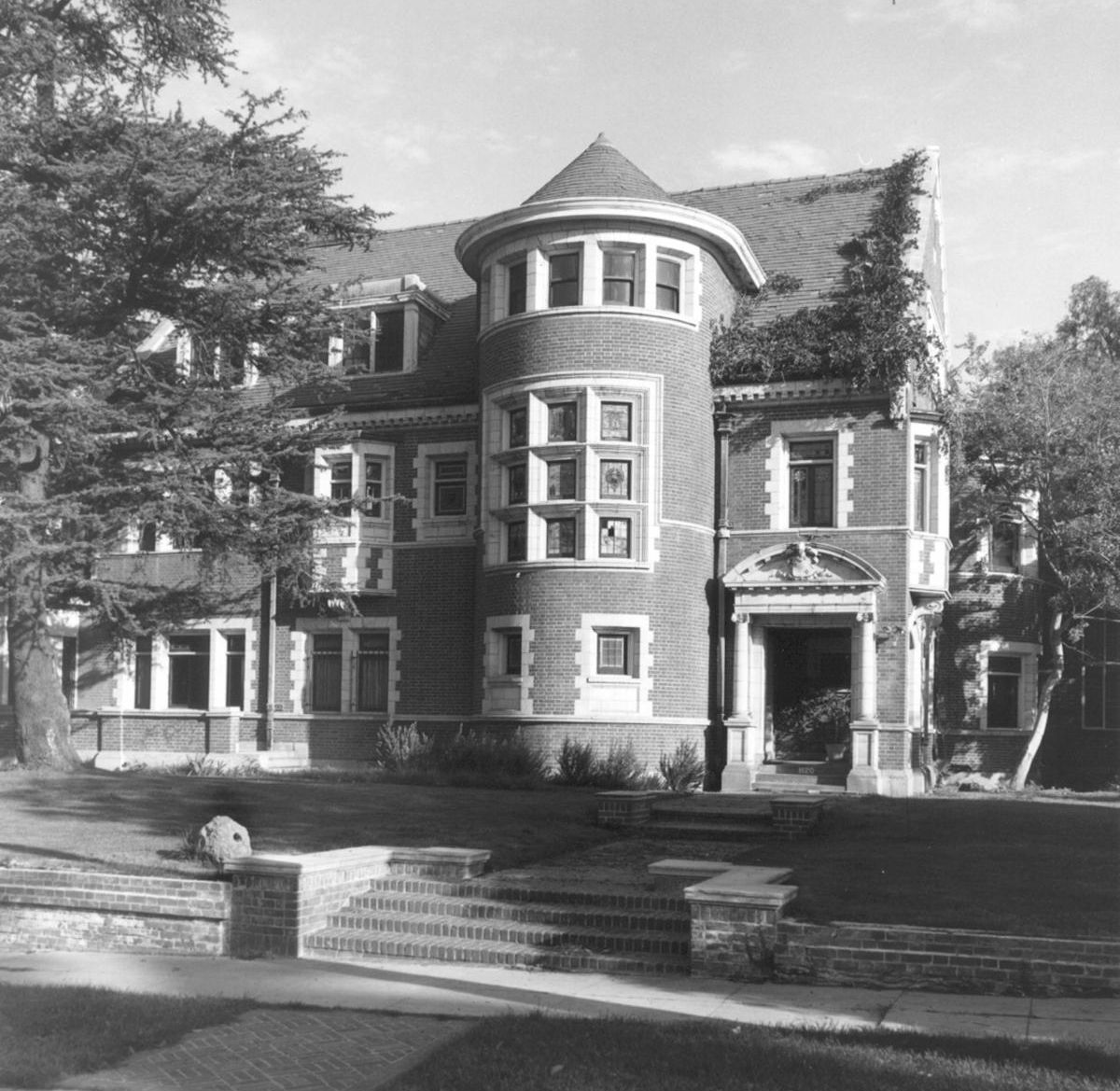
This month’s #OurLA subject is an architectural tribute to spooky season. The Rosenheim Mansion, immortalized on the silver screen as the stately but cursed “Murder House” in Season 1 of the anthology series American Horror Story, is located at 1120 Westchester Place on a block once known as Billionaire’s Row in the Country Club Park HPOZ. The grand estate was designed in an eclectic Romanesque-meets-Tudor Revival style by the architect Alfred F. Rosenheim as his personal residence in 1908. Rosenheim’s other notable work includes the Hellman Building and the Hamburger’s Department Store, both located in Downtown Los Angeles and both part of adaptive reuse projects. The City Planning Commission recently recommended approval of an updated version of the Adaptive Reuse Ordinance that would expand the program citywide and establish a faster approval process for the conversion of existing buildings that are at least 15 years old to housing.
The Rosenheim Mansion features Italian brickwork, Tiffany stained glass, exotic wood finishes, six Batchelder fireplaces, and a spectacular conical-roofed turret on an expansive 30,000-square-foot lot. It was used as a convent by the Catholic Order of Nuns in the mid- to late-twentieth century, during which time a large addition was constructed to the rear of the historic residence.
In addition to American Horror Story, the Rosenheim Mansion has been featured in countless film and television productions over the years, including The Twilight Zone, Buffy the Vampire Slayer, and The X-Files. It was designated Historic-Cultural Monument No. 660 in 1999. To learn about other historic film locations in Los Angeles, explore our Filming Locations Associated with the Motion Picture and Television Broadcasting Industries, 1908-1980 Context Statement.
| |
|
This month, the City Planning Commission approved a 3-story mixed-use residential structure located at 4006 North Verdugo Road in the Northeast Los Angeles Community Plan Area of Council District 13. The building will include 14 dwelling units, including two dwelling units set aside for Very Low Income Households. The 14 dwelling units in question will comprise one studio, seven one-bedroom units, and six two-bedroom units. The project will also contain ground-floor commercial space measuring 1,071 square-feet and will have 2,188 square-feet of common open space on the roof deck level.
Staff Report
| |
November City Planning Commission Meetings | |
|
November Area Planning Commission Meetings | |
|
Central: November 12
South Los Angeles: November 19
South Valley: November 14
West: November 6, 20
East: November 13
Harbor: November 19
North Valley: November 7, 21
| |
November Cultural Heritage Commission Meetings | |
|
|
LOS ANGELES
CITY PLANNING
| |
Sign up to receive citywide planning updates by email | |
|
@Planning4LA
Planning4LA.org
| |
| | | |