Sept. 3, 2026

U.S. Bureau of Reclamation issues long-awaited Colorado River guidelines, framework. Next steps remain uncertain

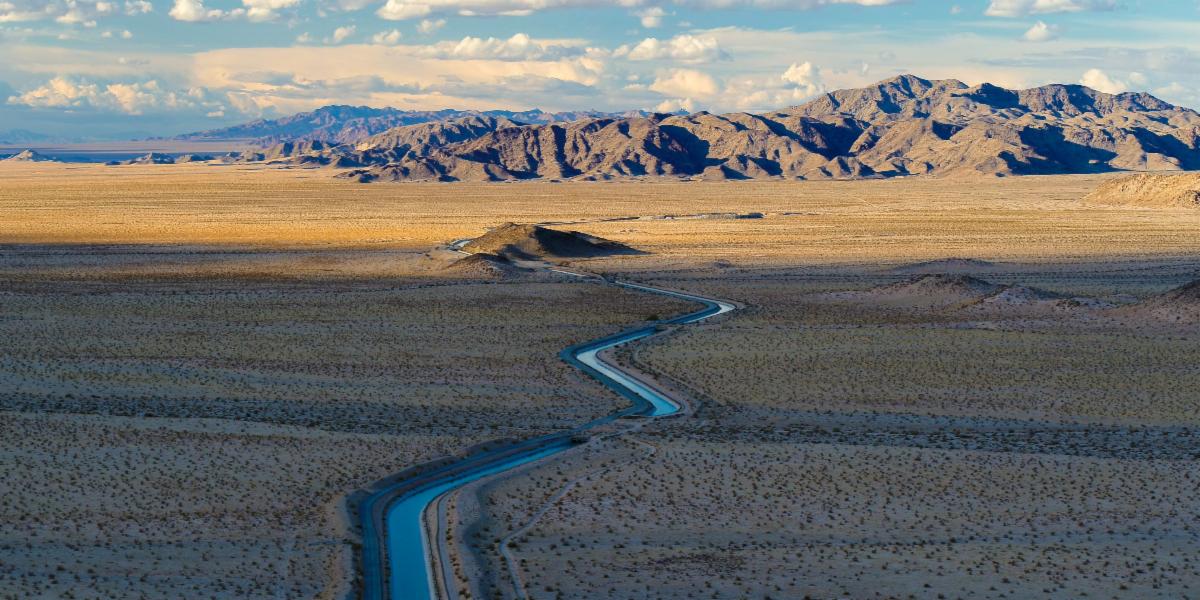
Metropolitan's Colorado River Aqueduct winds through the desert.

After months of anticipation, the U.S. Bureau of Reclamation released on Aug. 21 its post-2026 plans for managing the Colorado River. A prolonged drought and a changing climate has reduced flows in the Colorado River, while record-low snowpack this year worsened conditions, leading to historic low water levels at Lake Powell and Lake Mead.


In the short term, Reclamation's 2027-28 Operating Guidelines are based on a proposal from the Lower Basin states of California, Arizona and Nevada to make 3.2 million acre-feet of water supply reductions over the next two years to manage the immediate crisis on the river. The Upper Basin States of Colorado, Utah, Wyoming and New Mexico are not contributing to the plan.  


Reclamation's longer 10-year preferred alternative in the Final Environmental Impact Statement (FEIS) lays out a broad framework for managing the river and critical infrastructure, such as Glen Canyon Dam, but gives the federal government and states flexibility to develop the next set of two-year guidelines based on river conditions, hydrology and negotiations.


What happens next, however, is uncertain. Nevada filed a lawsuit on Aug. 24 challenging Reclamation's analysis in the FEIS and it's not clear how the legal challenge will affect the 2027-28 Operating Guidelines. Metropolitan will work with our Lower Basin partners to develop a plan for the next two years. Ultimately Metropolitan continues to believe that the only path to a sustainable Colorado River requires all seven Basin states to work toward a consensus agreement for the long-term management of the Colorado River.


Read Metropolitan's Aug. 21 statement on Reclamation's 2027-2028 Operating Guidelines and Record of Decision. Listen to Metropolitan's Manager of Colorado River Resources Bill Hasencamp explain what Colorado River negotiations could mean for Southern California in The Drop Podcast.

"Through creative problem solving, shared sacrifice and a renewed commitment to collaboration, a long-term agreement is possible. That remains our goal and the best way to avoid a crisis."


Metropolitan General Manager Shivaji Deshmukh

Metropolitan celebrates 4,000 trees planted through rebate program

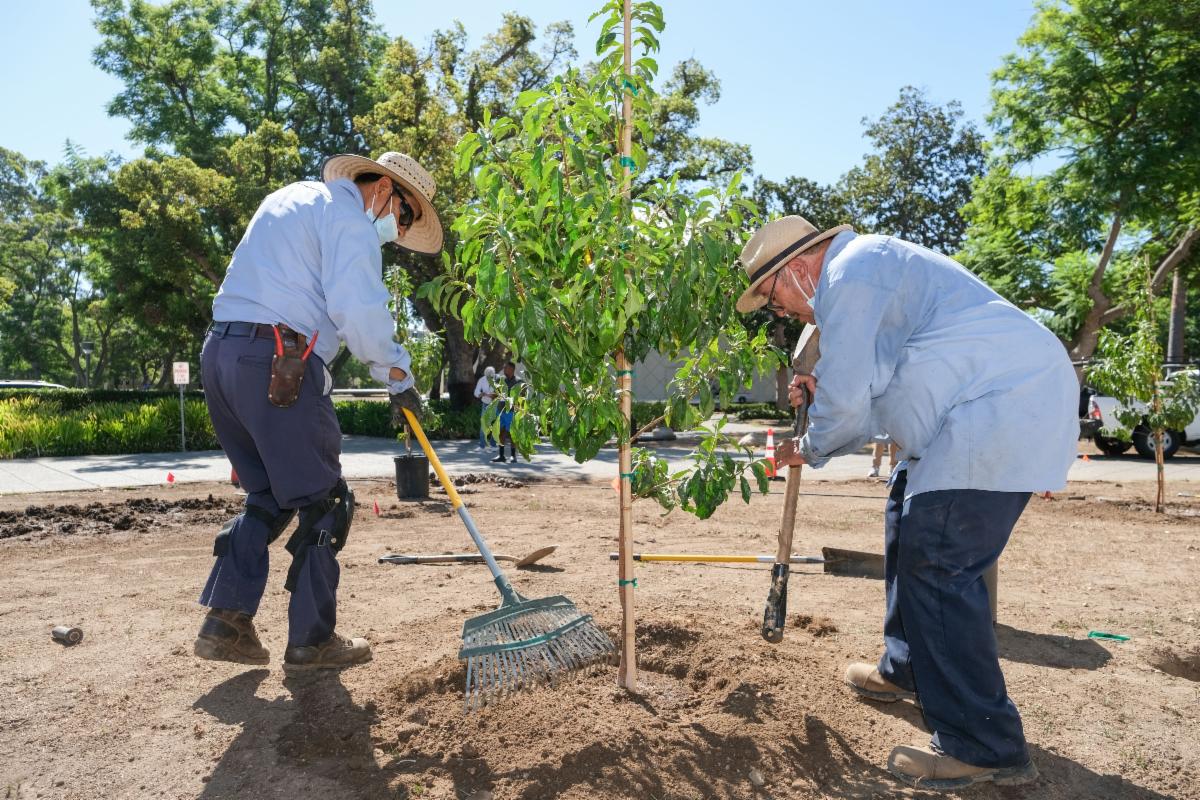
Above, Caltech’s grounds staff plant a tree on the Pasadena-based campus on Aug. 19 as part of the institution’s turf replacement project.

Metropolitan's program to grow Southern California's urban tree canopy has reached an impressive milestone, with the planting of more than 4,000 new trees by participants in the district's Turf Replacement Program.


In August, Metropolitan marked the milestone at the California Institute of Technology, which has launched an ambitious effort to replace nearly 100,000 square feet of unused grass and plant 59 new trees. The project on the Pasadena campus helped Metropolitan reach 4,000 trees planted since the district launched the rebate program two years ago.


Metropolitan offers $100 for each eligible tree planted, on top of the rebate for replacing grass with water-efficient California Friendly® and native plants, which starts at $2 per square foot of grass removed. Up to 70% of the water used in Southern California is used on outdoor irrigation. Sustainable landscaping, with a water-efficient irrigation system, uses up to 80% less water compared to a traditional lawn.


Read the press release and view a fun Instagram video.

Chair Adan Ortega talks about Metropolitan's Turf Replacement Program

Above, watch a video of board Chair Adán Ortega Jr. discussing Metropolitan's tree rebate.

State Water Board to consider new approach to managing Bay Delta

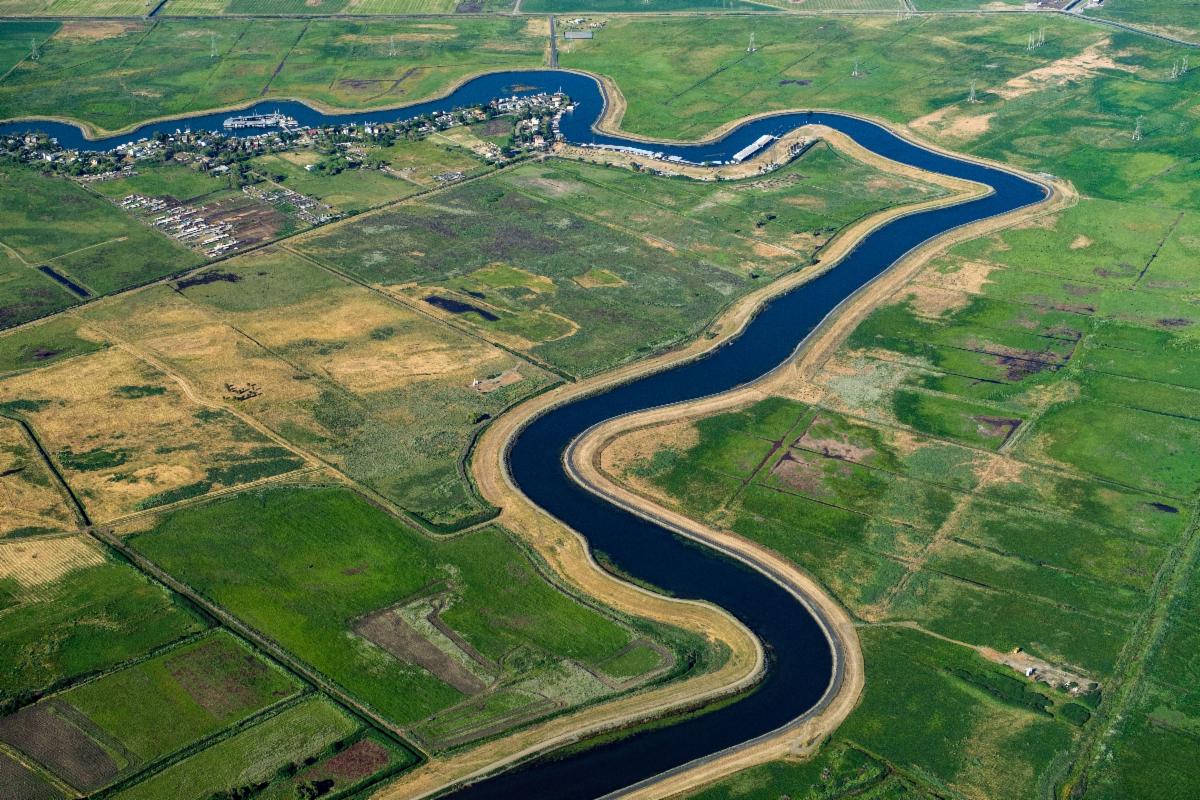
The State Water Resources Control Board released last month a new draft update of the Bay-Delta Water Quality Control Plan, which incorporates the Healthy Rivers and Landscapes Program. The board will consider the proposed amendments at its Oct. 28-29 meeting.


Metropolitan has worked on the development of the HRL Program since 2022, recognizing that a more holistic approach to managing the watershed would benefit the Bay-Delta and urban and rural communities.


“We look forward to reviewing how the State Water Board has incorporated the HRL program into the latest draft of the Water Quality Control Plan and are hopeful a more comprehensive approach will translate into improved reliability and a better environment,” Metropolitan General Manager Shivaji Deshmukh said.


Read Metropolitan's statement.

Metropolitan names ozone treatment building after former Beverly Hills Director Ina S. Roth, who championed safe drinking water

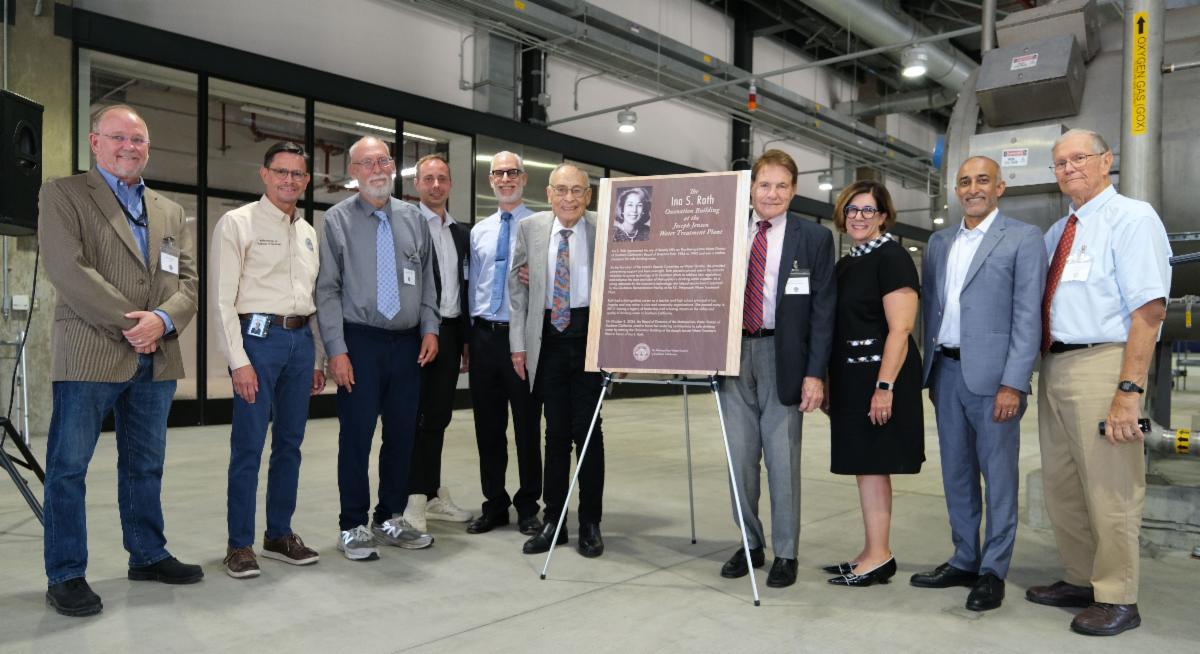
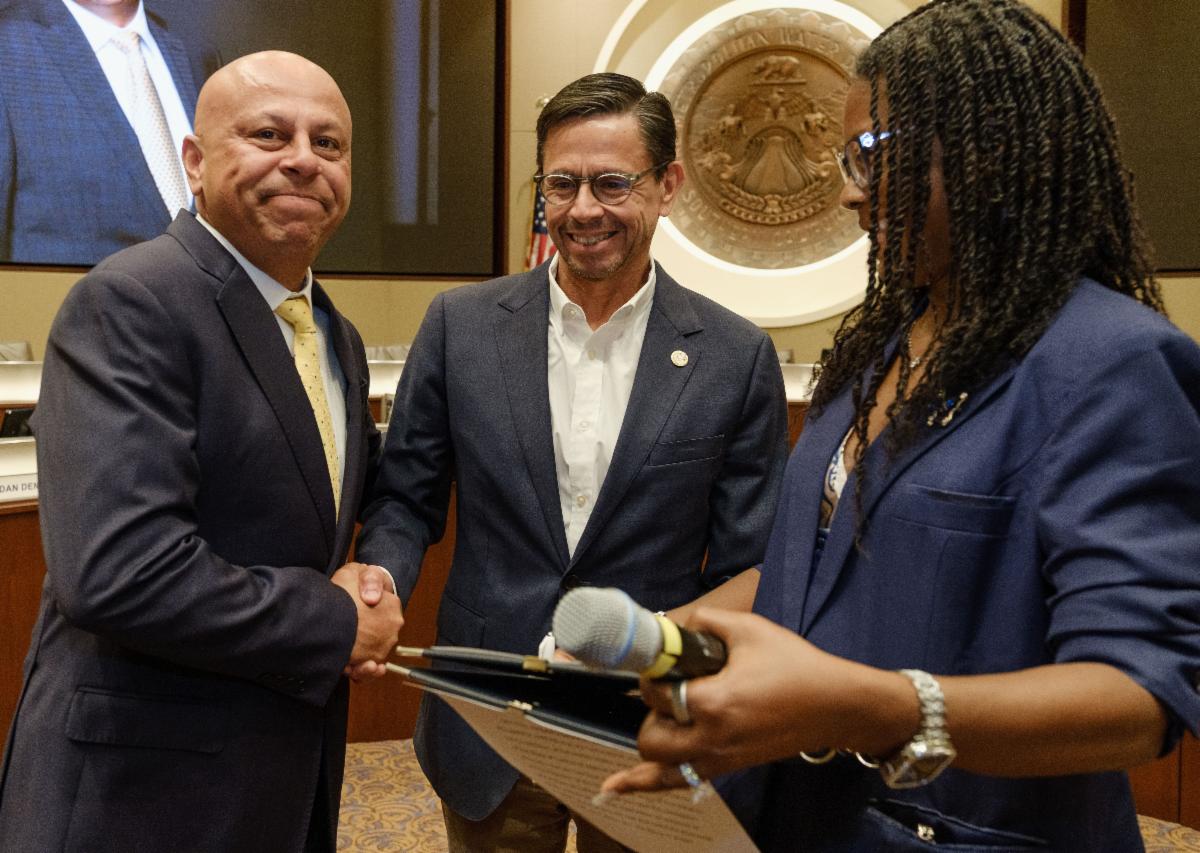
From left, Metropolitan Assistant General Manager Shane Chapman, Metropolitan board Chair Adán Ortega, Jr., family members David Roth, Aleks Roth, Phillip Roth and Herb Roth, Metropolitan Director Tony Fellow, Beverly Hills Director of Public Works Shana Epstein, Metropolitan General Manager Shivaji Deshmukh, and former Metropolitan Director of Water Quality Dr. Michael J. McGuire attended the Aug. 20 dedication of the Ina S. Roth Ozonation Building.

Last month, Metropolitan dedicated the Ozonation Building at the Joseph Jensen Water Treatment Plant in Granada Hills in honor of former Beverly Hills Director Ina S. Roth for her leadership and advocacy in advancing safe drinking water.


Roth, who passed away in 2012, served on Metropolitan's Board of Directors from 1984 to 1992 and was the first chair of the board’s Special Committee on Water Quality. She played a pivotal role in Metropolitan’s transition to ozone treatment to address new regulations and enhance the taste and smell of drinking water.


During Roth’s tenure, Metropolitan made the decision to replace chlorine with ozone as the primary disinfectant in the water treatment process, beginning a nearly two-decade effort to retrofit all five of the district’s treatment plants. Ozone treatment reduces disinfection byproducts, provides increased protection from pathogens and improves the taste and odor of delivered water. 


Read the news release.

New director representing the City of Santa Ana joins Metropolitan Board

Santa Ana Deputy Public Works Director Cesar E. Barrera was seated on Aug.18 as the City of Santa Ana’s new representative on Metropolitan's Board of Directors.


Barrera, who is also Santa Ana’s acting city engineer, has served the city for nearly 30 years and brings extensive experience in water resources, operations and maintenance, and infrastructure management.


Read the news release.


Metropolitan to host Pitchfest to match public water agencies and university faculty for water research projects

Metropolitan has partnered with the nonprofit Pilot City to launch Pitchfest: Water Innovation this fall.


The Oct. 20 event at Metropolitan's downtown Los Angeles headquarters is designed to connect public water agency staff with university faculty so they can collaborate on water research projects.


A one-slide submission of a research idea is due by Sept. 25. Following the event, the Pitchfest team will match agencies with Southern California university faculty based on mutual interest and expertise. Matched faculty may work with their agency partners to apply for up to $25,000 in potential funding per project to support their shared project vision.


Learn more and reserve a spot.

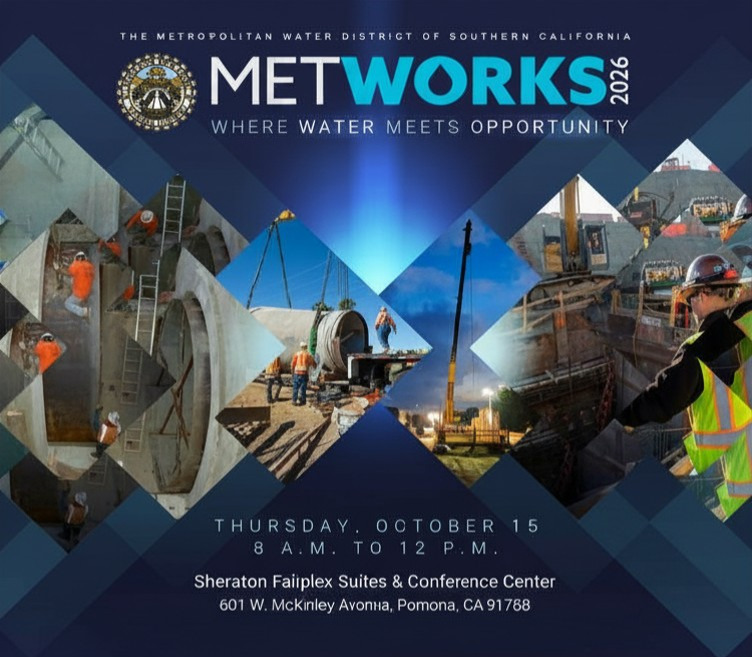
Contractors, consultants and suppliers are invited to MetWorks, a free event for businesses to learn about contracting opportunities with Metropolitan.


MetWorks is 8 a.m. to noon on Oct. 15 at the Sheraton Fairplex Suites & Conference Center in Pomona. Learn more and register.

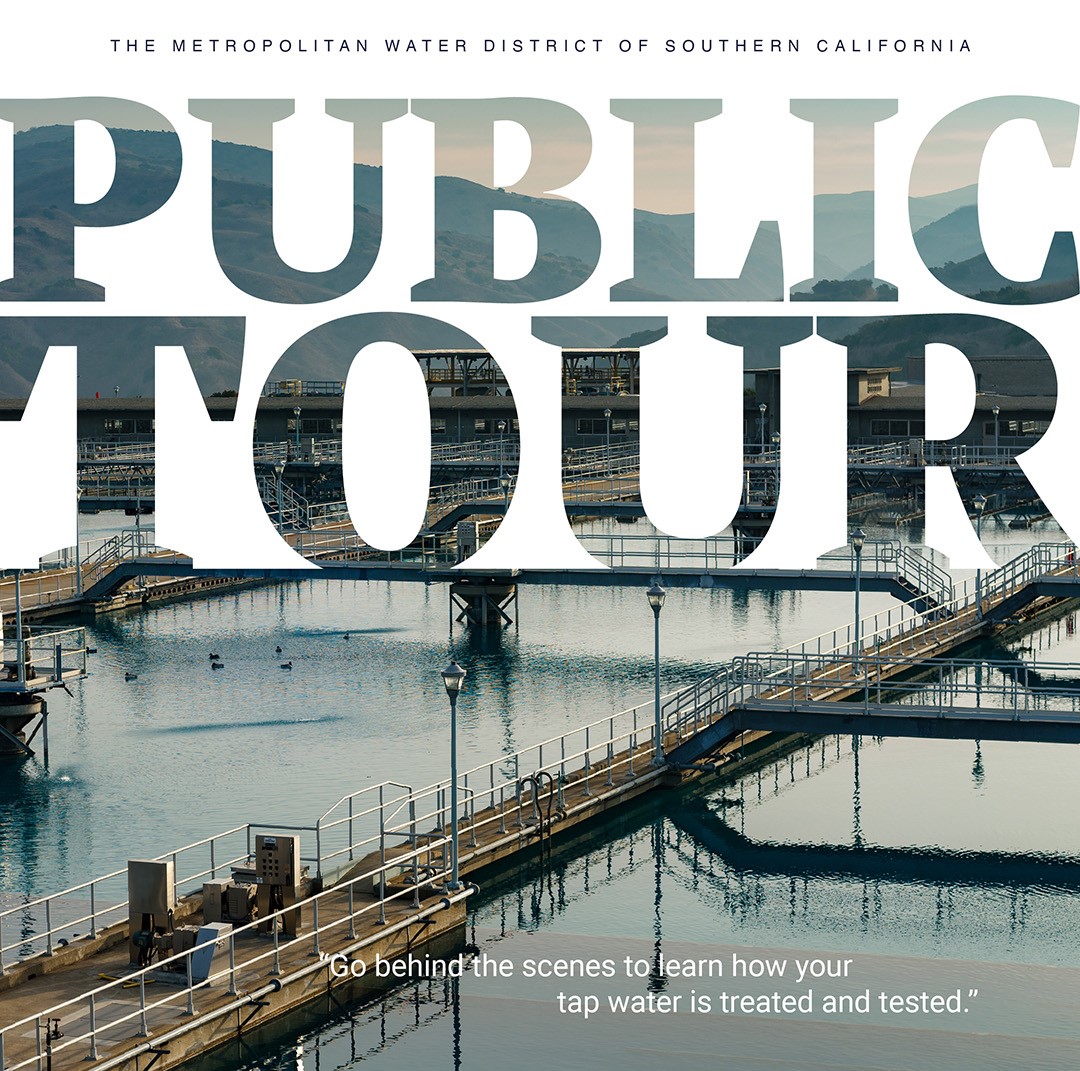
Metropolitan's second public tour is being held on Sept. 18 at the Robert B. Diemer Water Treatment Plant in Yorba Linda. 

The tour is fully booked, but you can add your name to the waitlist by emailing Jannine Rojo.

Metropolitan_welcomes_public_participation_p5.png
Facebook  X  Instagram  Linkedin  Youtube