|
|
Monthly Newsletter
Making the Connection Between Opioids and Suicide
|
|
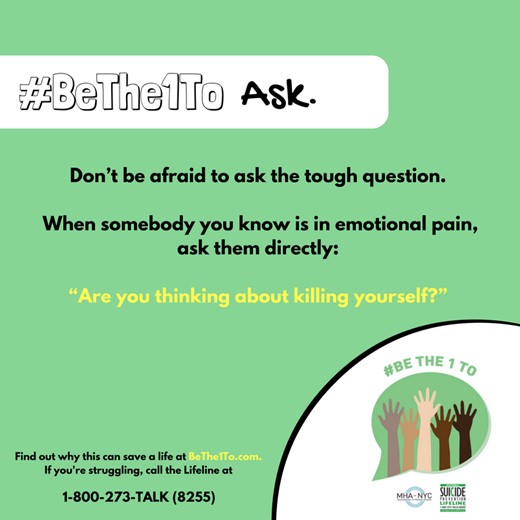
September is National Suicide Prevention Month
|
|
This month we promote prevention efforts to support National Suicide Prevention month and World Suicide Prevention day. We've gathered resources to raise awareness about the scope of the issue in our nation and provided additional information about how you can become involved. Throughout this newsletter are links to training and resources. We encourage you to make a difference this month in a new way. Let these resources be your guide.
What is one thing you can do this month to help make a difference?
Email us at
pttc@ou.ed
u
to let us know what you have done.
|
|
Opioid Overdoses and Suicides
|
|
|
The article,
U.S. Life Expectancy Drops Amid ‘Disturbing’ Rise in Overdoses and Suicides
describes a grim outlook on the connection between increasing rates of opioid overdoses and suicide.
More than 70,000 people died of drug overdoses last year, according to the Center for Disease Control and Prevention (CDC). That number marks a nearly 10 percent increase from 2016 and the highest ever in the United States for a single year. By comparison, only about 17,000 people died of overdoses in 1999, the earliest year for which the CDC offered data.
At the same time suicide rates have also steadily increased, making it the 10
th
leading cause of death in the U.S. and the second most common cause of death for people ages 10-34. That age range dovetails with the data on drug use, which shows people 25 to 54 years-old dying at higher rates than their older counterparts.
Read more and view the CDC reports
here.
|
|
Additional Resources - Prevention Outcomes Using Brain Science
|
|
Rural Suicide Prevention Toolkit - Rural Health...
This toolkit compiles evidence-based and promising models and resources to support organizations implementing suicide prevention programs in rural communities across the United States.
Read more
www.ruralhealthinfo.org
|
|
|
|
|
Suicide Prevention Month: Ideas for Action
This two-page resource offers information to help you get involved in Suicide Prevention Month in September. It includes tips on how to take action to help prevent suicide in your community.
Read more
www.sprc.org
|
|
|
|
|
|
Zero Suicide - In Health and Behavioral Healthcare
SAMHSA's Center for the Application of Prevention Technologies (CAPT) and the Suicide Prevention Resource Center (SPRC) hosted a national webinar series that explores the intersection of opioid misuse, overdose, and suicide-with an in-depth look...
Read more
zerosuicide.sprc.org
|
|
|
|
|
Take A Course
Mental Health First Aid is an 8-hour course that teaches you how to help someone who is developing a mental health problem or experiencing a mental health crisis. The training helps you identify, understand, and respond to signs of addictions
Read more
www.mentalhealthfirstaid.org
|
|
|
|
|
|
Other Useful Resources
National Suicide Prevention Lifeline 1-800-273-8255
The National Suicide Prevention Lifeline is a national network of local crisis centers that provides free and confidential emotional support to people in suicidal crisis or emotional distress 24 hours a day, 7 days a week. Is it on your contact list?
App: Suicide Safe
Substance Abuse and Mental Health Services Administration
Suicide Safe is a free mobile app that helps primary and behavioral health care providers integrate suicide prevention strategies and offers tips on assisting patients who are suicidal. Use the link above to learn more.
Video: Suicide Lies :20 Prevent Suicide
Substance Abuse and Mental Health Services Administration
Suicide is a liar. It makes you feel alone or guilty when you’re not. But it can be stopped. See the lies suicide may be telling you and your loved ones, and what you can do to prevent suicide.
Crisis Text Line -- 741741
Also on Facebook @crisistextline
Resources for National Suicide Prevention Awareness Month
|
|
Product and Training Highlights
Free online courses offered through HealthEKnowledge.
- Prevention in Action Series: Teaching the SAPST at a University
- Minecraft, not Ms. Pac-Man: Transforming Prevention Presentations for Today's Audience
- Early Childhood Development: Toxic Stress and Adverse Childhood Experiences
- Introduction to Substance Abuse Prevention: Understanding the Basics
Webinar Recording: Supporting Prevention Interventions with Mental Health First Aid Training
This recording is from a regional webinar training delivered on June 25, 2019 by the South Southwest Prevention Technology Transfer Center (PTTC).
It focuses on the Continuum of Care to identify the role of prevention in Mental Health First Aid. The substance abuse preventionist can expect to identify how the Mental Health First Aid course interventions address prevention at the primary, secondary, and tertiary levels of service.
Product: Preventing Prescription Drug Misuse: Understanding Who is at Risk
The non-medical use of prescription drugs (NMUPD) has become an increasing public health concern in the United States, with abuse rates rising rapidly since the late 1990s. Yet preventing and reducing prescription drug misuse represents a major challenge for several reasons. First, we know less about the factors that contribute to NMUPD than about those that contribute to other drug use. Also, because of how prescription drugs are made available, these factors may differ from those that are associated with alcohol misuse and illicit drug use. This tool provides a starting point for understanding those factors that the research literature has identified as being associated with NMUPD and its consequences. Understanding these factors can help us assess, plan for, and select interventions designed to address them.
The factors included in this tool have been organized according to the socio-ecological model, a multi-level framework that allows us to consider the different contexts in which risk and protective factors exist.
Central East PTTC Webinar Recording
Opioid Overdoses and Suicides-Two Overlapping Public Health Crises Recorded August, 2019
Rates of both opioid-related overdoses and suicides are increasing in the U.S. These two adverse outcomes share common risk factors and many opioid-related overdose deaths labeled as accidents may actually be suicides. In this webinar, researchers will describe the context of the opioid crisis, identify links between opioid-related overdoses and suicides, and learn about how integrated screening and follow-up for depression, suicidal behavior, and substance use in primary care can help to identify opportunities for prevention.
|
|
Other Highlights
Integrating Primary and Behavioral Health Care through the Lens of Prevention (IPBHC)
November 13-15, 2019
New Orleans, Louisiana
This conference is attended by professionals involved in prevention, behavioral healthcare, and physical health care. The conference differs from similar ones because it explores prevention’s role in health integration. Also, its emphasis is on presenting information demonstrating the benefits and necessity of placing the field of professional prevention on par with behavioral health and primary healthcare into the practice of integrated health care. Additionally, IPBHC has a reputation for attracting diverse professionals who are committed to breaking down silos and serving as a vehicle addressing the need for interdisciplinary cooperation and respect involving prevention experts, substance use disorder professionals, primary care practitioners, and behavioral healthcare specialists. Sponsored by the University of Oklahoma’s Southwest Prevention Center.
The National Association for Alcoholism and Drug Abuse
(
NAADAC) 2019 Annual Conference Features Sessions in Spanish!
September 28 – October 3
Orlando, Florida
If you have counselors, clinicians, psychologists, psychiatrists, social workers, peers, prevention specialists or any others who are providing ,or want to provide, services in Spanish, please have them attend this conference. It is imperative that individuals who provide services in a language other than English also receive training and supervision in that other language
.
|
|
|
Epi Corner
Beverly Triana-Tremain, PhD
Epidemiologist
South Southwest Prevention Technology Transfer Center
|
|
Understanding Disease Using the
Epidemiology Triangle
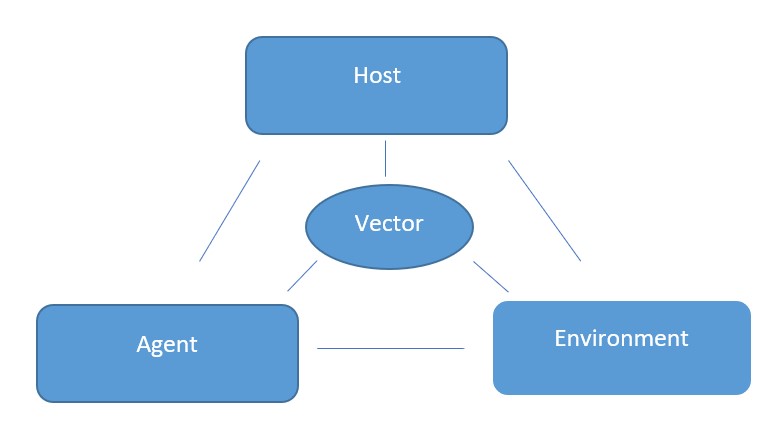
Epidemiology is the study of the spread and distribution of diseases or conditions that affect society. The epidemiology triangle (Figure 1) is a good way to understand infectious diseases, where an agent is transmitted to another person through touch or through the air. We can understand more about non-infectious diseases, such as suicide and the opioid epidemic using the triangle. The triangle has three parts: The host, the agent, and the environment.
[1]
The
agent
, in the triangle, is opioids. Opioids are a group of drugs that include heroin, fentanyl and pain relievers such as oxycodone, codeine, morphine, and others. Opioids are extremely addictive and can easily be overdosed. Addiction and the specific nature of these drugs is a medical disorder that alters the brain and changes behavior. There are biological reasons why people desire to take drugs and continue to take them. Addiction has been said to “hijack” the brain and introduces cravings and a continuation even after destruction of their life (Harvard Health Publishing, 2011).
[2]
The
host
is the person taking the opioids. People are influenced by the genetics contributed by their parents. The CDC has identified individual-level factors that can protect a child from poor health outcomes, such as mental disorders, substance use, and death by suicide. These protective factors are positive personal qualities, cultural identity, and connection, engagement in positive meaningful activities, positive self-concept, high-grade point average.
[3]
,
[4]
,
[5]
,
[6]
These factors are part of the host and can influence their approach to keeping themselves healthy.
The
environment
can be thought of as a physical environment and a social environment. People, or hosts, are often influenced genetically but also environmentally, by their parents and how they were raised and the communities in which they live. Early exposure to traumatic experiences as a child is conducive to addiction as an adult (Khoury, Tang, Bradley, Cubells, & Ressler, 2010).
The
vector
are elements (i.e., pharmaceutical marketing and physician overprescribing) in the environment and can be thought of as something that brings the agent closer to the host. An overabundance of supply and easy access to opioids is an important part of the triangle.
As one can see, focusing on the parts of the epidemiological triangle helps improve understanding about how to change the agent, host, and environment to reduce the likelihood of addiction, overdose, and death by suicide.
[1]
2017 National Survey on Drug Use and Health. Mortality in the United States. 2016.
[2]
Harvard Health Publishing. (2011, July). How addiction hijacks the brain. Harvard Medical School. Retrieved from https://www.health.harvard.edu/newsletter_article/how-addiction-hijacks-the-brain
[3]
Resnick, M.D., et al. (1997). Protecting adolescents from harm: Findings from the National Longitudinal Study on Adolescent Health.
Journal of the American Medical Association, 278
(10), 823-832; National Longitudinal Study of Adolescent Health (1995-2003) Series of Monographs.
[4]
Rutter, M. (1985). Resilience in the face of adversity.
British Journal of Psychiatry,
147, 598-611.
[5]
Kirby, D. (2001). Emerging answers: Research findings on programs to prevent teen pregnancy. National Campaign to Prevent Teen Pregnancy.
[6]
Hawkins, D., et al. (1993).
Communities That Care,
curriculum. Developmental Research and Programs, Seattle, WA.
[7]
Corriel, D. (2017). Doctors are taking the blame for the opioid epidemic. It’s time to push back. KevinMD.com [Online article]. Retrieved from https://www.kevinmd.com/blog/2017/09/doctors-taking-blame-opioid-epidemic-time-push-back.html
[8]
Hadland, S., Rivera-Aguirre, A., Marshall, B., & Cerda, M. (2019).
Journal of American Medical Association Network
[Online article]. Retrieved from https://jamanetwork.com/journals/jamanetworkopen/fullarticle/2720914
|
|
|
|
|
|
|