Overview from the Mayor
Gilroy’s Finance Department, with a team of 13 employees, provides a variety of quality services to internal City departments, employees, and the public. The Department manages and protects the City’s financial resources and taxpayer dollars in a prudent and responsible manner.
The Finance Department is responsible for functions such as preparing and monitoring budgets, financial reporting, business licenses, payroll, general ledger accounting, cash and treasury management, debt and investment management, utility billing, permit payment processing, and accounts payables/receivables. In addition, the City’s Finance Department provides these same financial services to the South County Regional Wastewater Authority (SCRWA), a joint authority formed by the cities of Gilroy and Morgan Hill. The financial reporting that comes from the Finance Department tells us how much we receive in revenues and from what sources, and also tells us where we spend it in any given year. The City’s budgeting process is not unlike what we do for our own households. We all need to know the amount of income we have before we can decide where and on what we spend, and how to prioritize our spending on the things most important to us. There’s never a shortage of ways to spend money, but as in our own households, the City is limited by the income we have and the essential services we must provide first.
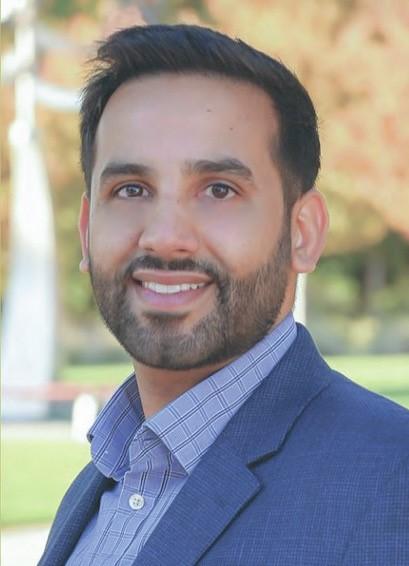
Message from the Finance Director
I am honored to be a part of the Gilroy team and am proud of how much we’ve accomplished as a department, an organization, and a community over the last year. The Finance team is a group with a strong sense of camaraderie and cohesion. The team strives to provide excellent customer service to customers inside and outside of the organization. I look forward to developing and leading our Finance team by ensuring we have the right tools and training to continue providing quality services.
The City Council and the City Administrator have made some tough yet prudent decisions in recent years, such as implementing the General Fund Fiscal Recovery Plan to ensure the financial sustainability of the city when the pandemic hit. My goal is to build upon and further the Council’s goal to develop a financially resilient and fiscally responsible organization for years to come. Together, we will address challenges such as rising pension costs and other post-employment benefits, ensure the City is able to recover costs for services it provides, and develop financial policies that ensure funds maintain adequate balances/reserves and continue to allocate available resources to further Council’s strategic priorities.
What follows are highlights of some of the current workplan items of the Finance Department.
Enterprise Resource Planning (ERP) System Implementation
An ERP is an integrated system of software/s that organizations use to manage day-to-day activities, such as budgets, accounting, procurement, payroll, human resources, and project management, typically all under one umbrella. In recent years, City Council authorized significant investments to modernize the City’s antiquated technology across various departments, including the current ERP system -Sungard (20+ years old). The Finance Department is tasked to implement the ERP system in three phases, a multi-year process with coordination across all departments. Phase 1 (Finance) went live in October of 2021, Phase 2 (Human Capital Management and Payroll) is scheduled to go live this summer, and Phase 3 (Utility Billing) is scheduled to go live this fall. Although this is an internal process enhancement and not visible to the public, the project is a significant undertaking by the staff as the implementation occurs in addition to performing their regular tasks. As a result, the City expects to automate tasks, eliminate manual and paper-based processes, and make more services for the public available online.
American Rescue Plan Act (ARPA)
The ARPA included direct allocation of funds to state and local governments to compensate for lost revenues and to help stabilize the budgets. Gilroy is slated to receive $10.9 million. The City Council authorized use of these funds for pavement rehabilitation, for ending the previously instituted employee furlough, to restore deleted positions, and to address homelessness and housing challenges. The much-needed funding has indeed helped to stabilize the City’s budget while the local economy continues its recovery from the pandemic induced recession.
Pension Obligations
Rising pension costs are one of the most pressing financial issues facing California public agencies today, including the City of Gilroy. The Unfunded Accrued Liability (UAL) represents the Actuarial Liability minus Actuarial Value of Assets or “how much we currently have vs. how much we should have.” Since 2014, the City’s UAL for pension has grown from $58.5 million to $99 million. As such, the City Council included in its strategic plan to analyze the reduction of unfunded pension liabilities by refinancing the pension obligations at lower interest rates via pension obligation bonds. In January 2022, the Council granted initial authorization to proceed with the issuance of pension obligation bonds and the related judicial validation process. The use of Pension Obligation Bonds has several objectives:
- Generate cash flow savings to the City and taxpayers through historically low interest rates (currently 4.0-4.3%) relative to the CalPERS interest rate assumption (currently 6.80%)
- Create a repayment schedule for the City’s pension liabilities that enhance budget predictability and long-term fiscal sustainability by creating smoother and lower repayment
- Provide an opportunity to set aside a portion of the projected savings to address other City Council priorities, such as capital project funding, economic development, public safety and or other strategic plan objectives
Preliminary analysis projects that refinancing our total current pension obligations can provide an average annual savings of $1.7 million to $2.3 million. However, these savings are subject to reinvestment risks. Ultimately the actual savings will depend on two factors: 1) actual interest rates at the time of pricing/issuing the bonds; and 2) future CalPERS returns, which is an unknown at the time of bond issuance. The City Council will decide at a public hearing on a future agenda whether or not to actually refinance, taking into account the risks. The general rule of thumb is that the City will be better off if CalPERS earns above the POB interest rate (3.00-3.50%) over the term of the debt. While past performance doesn’t guarantee future results, CalPERS historical returns are 6.9% on average over the last 20 years and 8.4% over the last 30 years. Assessing and mitigating reinvestment risk will be a key objective as the City evaluates and refines the bond structuring options.
Other Workplan Items
-
User Fee Study: The City’s last comprehensive user fee study was conducted in 2014. Many of these fees have remained unchanged, while the cost of providing the services has increased. The City is completing a comprehensive user fee study for all Departments and expects to present to the City Council for review and adoption in the coming months.
-
Utilities Rate Study: The City provides water and wastewater (sewer) utilities to the community. Both utilities continue to be financially healthy but are expected to require significant capital investment to maintain their aging infrastructure and are experiencing increased operational costs due to factors outside the control of the City. For example, there have been significant increases to the ground water extraction charges by Valley Water in recent years (over 9% in FY22). The City was able to absorb these impacts and not raise rates for both utilities in the last few years. However, to ensure that the City can absorb the future increases from Valley Water and continue to invest in critical infrastructure to maintain the essential services, a comprehensive rate study will be conducted this year. The City recently issued wastewater revenue bonds in 2021 to finance the City’s share of the SCRWA plant expansion, thus the operational costs of the plant are also expected to increase as a result of the expansion.
Recent Accomplishments
- Gilroy received the Distinguished Budget Presentation Award from the Government Finance Officers Association (GFOA) for its FY22 and FY23 biennial budget adopted in June 2021. The award is the highest form of recognition in governmental budgeting and represents a significant achievement by the organization.
- Gilroy received a Certificate of Achievement for Excellence in Financial Reporting from the Government Finance Officers Association for its FY20 Annual Comprehensive Financial Report (ACFR). The Certificate of Achievement is the highest form of recognition in governmental accounting and financial reporting.
- Water Arrearage Grant – The State Water Board is administering a California Water and Wastewater Arrearage Payment Program to provide community water systems with financial relief for unpaid water bill debt accrued between March 2020 and June 2021 from their residential and commercial customers. The program will fund debt related to water first and if funds remain available, will fund the wastewater debt. Gilroy submitted for the water portion of the unpaid debt and received $275K in funding. The Finance team plans to apply for the unpaid wastewater debt next.
- Gilroy received a $3.9 million grant to renovate areas within Downtown. The grant is through the California Department of Transportation’s Clean California Local Grant Program.
- The Finance Department was relocated to the North wing of City Hall (old recreation services area)