Over 90% of children in the United States have vitamin D levels below the recommended 40 ng/ml – how can you help ensure your child is getting enough? |
|
Key Points: Most Children Are Not Getting Enough Vitamin D |
|
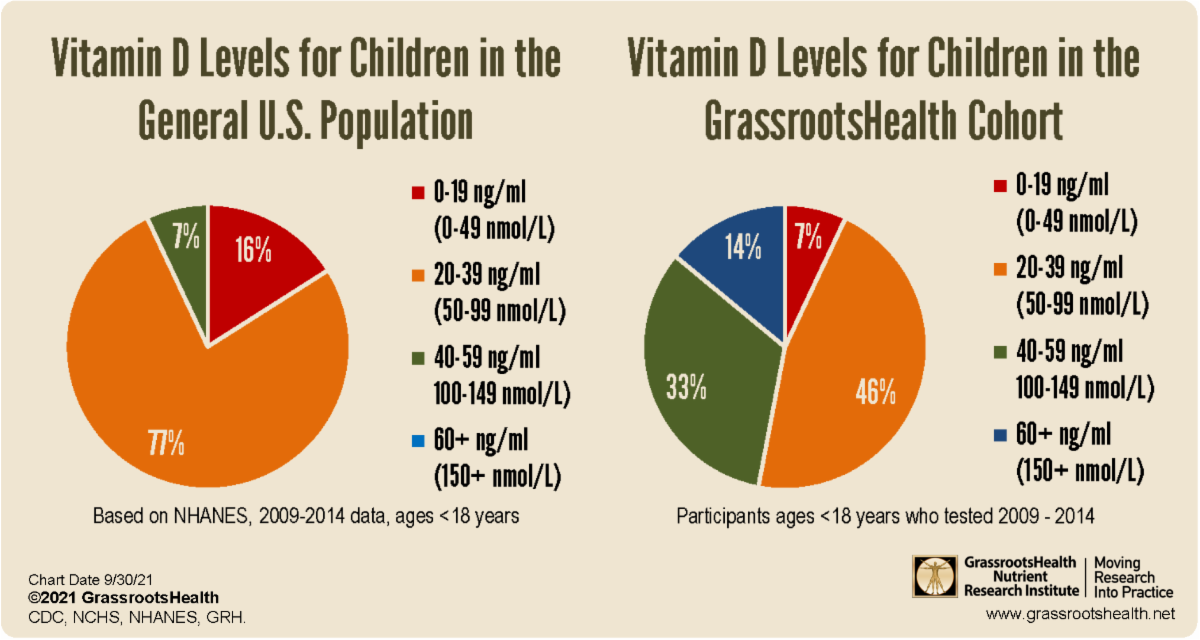
- 93% of children in the general US population have vitamin D levels below 40 ng/ml (100 nmol/L), 16% of whom are below 20 ng/ml (50 nmol/L)
- Vitamin D levels tend to drop among children and teens as they age, likely due to the need for increased intake as they grow bigger. A general requirement for vitamin D intake from all sources is around 35 IU/pound (75 IU/kg) per day, on average.
- Not testing children’s levels as they age and grow can easily lead to vitamin D levels below what is recommended
- Studies show children can also benefit from having enough vitamin D to help decrease the risk of severe COVID-19
|
|
Most Children Are Not Getting Enough Vitamin D |
|
Greetings!
Vitamin D is essential for everyone, but especially for growing children. Unfortunately, many children are not getting enough vitamin D, and the problem seems to worsen as they age.
According to 2009-2014 data from the National Health and Nutrition Examination Survey (NHANES) on children under the age of 18 in the United States, 93% had vitamin D levels below 40 ng/ml (100 nmol/L), with 16% of them below 20 ng/ml (50 nmol/L). That data is charted below next to data on children in the GrassrootsHealth cohort, among whom over 50% are still below the recommended 40 ng/ml, regardless of the fact that the parents testing their children through the project are educated enough about vitamin D to be measuring levels on their own.
|
|
In a past analysis of vitamin D intake and levels among children in the GrassrootsHealth cohort, we discovered that as the age of the children increased, the percent of participants with levels at or above 40 ng/ml decreased, from about two-thirds for those 0-4 years to about one-third for those 13-17 years. We also found that, while vitamin D intake should increase as body weight increases, intake remained the same or decreased as age increased, which is likely the main cause of the decreasing vitamin D levels with age. |
|
How Can You Choose a Starting Dose for Kids? |
|
As with adults, it is essential to measure the vitamin D level in order to determine an appropriate daily dose of vitamin D needed to reach a target level. If waiting for results, or if testing is not an option, one way to calculate an approximate dose is by using the average requirement of about 35 IU of vitamin D per pound of body weight (75 IU/kg) per day, from all sources. For example, a child weighing 60 pounds may need approximately 2100 IU of vitamin D per day. A supplement of 2000 IU per day could be enough for such a child who gets a moderate amount of vitamin D from sunshine exposure, or if some is obtained through their diet.
However, vitamin D testing should be done at least annually with children as well as with adults to determine an appropriate supplement amount for maintaining their target vitamin D level and ensure they are getting enough (and not too much) vitamin D. |
|
How Does the Vitamin D Level Affect Children’s COVID-19 Risk? |
|
Current available data suggests that avoiding or correcting vitamin D deficiency at any point during the COVID-19 pandemic may improve outcomes overall. |
|
Make Sure You And Your Children Are Getting Enough Vitamin D |
|
Having and maintaining healthy levels of vitamin D and other important nutrients can help improve your health now and for your future. Choose which to measure, such as your vitamin D, omega-3s and 6s, and essential minerals magnesium, selenium, and zinc, by creating your custom home test kit today. Take steps to improve the status of each of these measurements to benefit your overall health. You can also track your own intakes, symptoms and results to see what works best for YOU.
Enroll and test your levels today, learn what steps to take to improve your status of vitamin D (see below) and other nutrients and blood markers, and take action! By enrolling in the GrassrootsHealth projects, you are not only contributing valuable information to everyone, you are also gaining knowledge about how you could improve your own health through measuring and tracking your nutrient status, and educating yourself on how to improve it.
|
|
Help everyone Move Research into Practice with vitamin D and other nutrients! As a special birthday gift to everyone, in honor of the science, we have created a special scholarship fund for anyone to donate to that will go towards helping others participate. Your donation will allow anyone to get help with funding their participation when they need it.
Text-to-give: Text Daction to 44321 to add to our Scholarship Fund.
|
|
What does the Research Say about Vitamin D & COVID-19? |
|
Be sure to educate yourself on the benefits and importance of vitamin D for immune health, and take steps to ensure you and your loved ones are getting enough.
You can review all of the COVID-19 and immune health information shared by GrassrootsHealth on this page.
|
|
What Does it Take YOU to Get Your D to 40 ng/ml (100 nmol/L)? |
|
Did you know that everyone responds differently to vitamin D supplement amounts - by up to 6 times!? Your health could be greatly affected by making sure you have a vitamin D level of at least 40 ng/ml (100 nmol/L). Help us help you. |
|
Children with Diabetes Research Foundation |
The mission of CWDRF is to fund research leading to the cure and prevention of Type 1 diabetes. For over 20 years, they have been the venture capitalists of diabetes research, getting new, clinically relevant, innovative research off the ground.
CWDRF is currently funding the D*action Type 1 Diabetes Prevention project with GrassrootsHealth.
|
|
Sperti Vitamin D Sunlamps |
The Sperti Vitamin D Sunlamp, model D/UV-F, provides the special UVB rays needed for your body to produce Vitamin D. It is the only FDA recognized ultraviolet product for Vitamin D production in the human body, and independent studies have verified its effectiveness.
See how it works for you.
Look for our special project enrollment opportunity with Sperti!
|
|
The Helen Knoll Foundation |
The Helen Knoll Foundation (HKF) mission is to prevent breast cancer by empowering young women through risk awareness education, advocacy and access to age appropriate screenings. HKF with GrassrootsHealth is launching the Know YOUR Number campaign to help Stop Breast Cancer Before it Starts by working with local groups to provide vitamin D blood spot testing and project enrollment events. |
|
|
|
Have a beautiful and HEALTHY day.
Text-to-give: Text Daction to 44321
Onwards,
Carole Baggerly
Director, GrassrootsHealth
A Public Health Promotion & Research Organization Moving Research Into Practice NOW!
|
|
315 S. Coast Hwy 101, Suite U-87
Encinitas, CA 92024
(760) 579-8141
|
|
|
|
|
|
|
|