|
Brian Brown, PhD; Joshua Brody, MD; Miriam Merad, MD, PhD; Yizhou Dong, PhD; Alessia Baccarini, PhD, and colleagues
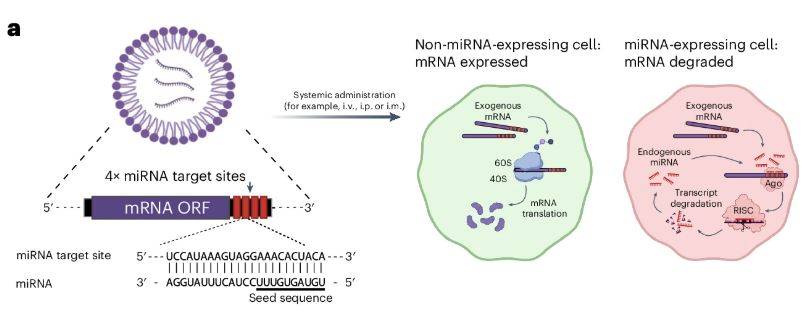
mRNA Vaccine Immunity Is Enhanced by Hepatocyte Detargeting and Not Dependent on Dendritic Cell Expression
Nature Biotechnology. 2026 Apr 29. PMID: 42056385
This study sheds new light on how mRNA vaccines generate immunity, revealing that certain non-immune cells, particularly muscle cells and liver cells, can play a role in shaping immune response. The researchers used a novel technology to control which cells express the vaccine, allowing them to enhance or dampen mRNA immunity—this can help enhance the vaccines’ effectiveness for cancer treatment or provide a way to use mRNA to turn down immune responses to treat autoimmune diseases. The studies provide important insights into how different cell types can affect the immune response to mRNA-encoded antigens and a new framework for designing mRNA vaccines and mRNA therapeutics, with significant implications for cancer immunotherapy, infectious disease vaccines, and gene-editing treatments.
Press Release
| | |
Juan Arriaga, PhD, was awarded R01 grant funding from the National Cancer Institute for “Role of ATAD2 in Prostate Cancer Progression and Metastasis.” Dr. Arriaga and team have identified ATAD2 as a novel epigenetic and transcriptional regulator that is overexpressed during prostate cancer progression. They aim to delineate the mechanisms of how ATAD2 drives metastasis and immune evasion, paving the way for future biomarker driven targeted therapies that may enable durable and systemic therapeutic responses in currently incurable metastatic disease.
| | |
The Melanoma Research Alliance has granted a Team Science Award to a team led by Poulikos Poulikakos, PhD. Co-investigators are Evripidis Gavathiotis, PhD, and Seiya Kitamura, PhD, both with Albert Einstein College of Medicine. The team will develop novel tumor-selective RAF inhibitors for melanomas driven by RAS mutations or dimeric BRAF mutants, cancers that are intrinsically resistant or have acquired resistance to current therapies. They will do this by exploiting conformational differences in RAF between tumor and normal cells and leveraging an innovative click chemistry platform that enables rapid synthesis and live-cell compound screening, to identify and optimize highly tumor-selective RAF inhibitor leads. This project has the potential to transform the treatment landscape for melanoma patients who have exhausted current targeted therapy options.
Announcement from Melanoma Research Alliance
| | Oren Becher, MD, and Emily Bernstein, PhD, were awarded a grant from the DIPG/DMG Collaborative—a collection of foundations that support research into the cure of diffuse intrinsic pontine glioma and diffuse midline glioma (DMG)—for “Targeting DMG Microenvironment with LSD1 Inhibitors.” In collaboration with the Chandra Laboratory at MD Anderson Cancer Center, Drs. Becher and Bernstein will evaluate an inhibitor to block LSD1—bomedemstat—which is currently in late phase clinical trials in adults. | | |
Hanna Irie, MD, PhD, received an Exceptional Project Grant from the Breast Cancer Alliance for “Overcoming CDK4/6 Inhibitor Resistance of Hormone Receptor (HR)+ Metastatic Breast Cancer.” In collaboration with E. Premkumar Reddy, PhD, Elisa Port, MD, and Joseph Sparano, MD, Dr. Irie will investigate an approach for treating HR+ metastatic breast cancer that has become resistant to standard first-line treatments by targeting a unique metabolic vulnerability of resistant cancer cells expressing myc. High levels of myc drive resistance to anti-estrogen and CDK4/6 inhibitor therapies in a subset of HR+ tumors. The novel agent 123300 could help overcome drug resistance to improve disease control and survival and may also help patients with early-stage HR+ breast cancers to prevent metastasis.
The Breast Cancer Alliance also awarded the Breast Surgical Oncology Fellowship at Mount Sinai West, under the leadership of Stephanie Bernik, MD, a grant that supports one of three fellows for one year. The grant has been awarded every year since 2023.
| | |
Hanna Irie MD, PhD, and Jian Jin, PhD, received a Department of Defense Breast Cancer Research Program Level 2 Partnering PI Award for “First in Class Degraders To Target Oncogenic PTK6 in Triple Negative Breast Cancer." Proposed studies, with collaborator Elisa Port, MD, will design and validate degraders targeting protein tyrosine kinase 6 (PTK6), an important driver of triple negative breast cancer (TNBC) growth and metastasis, as well as regulator of the TNBC immune microenvironment. The goal is to identify a PTK6 degrader for clinical translation that effectively blocks tumor cell intrinsic growth and favorably remodels the immune microenvironment, leading to improved disease control and enhanced efficacy of immunotherapies for TNBC.
| | |
Yelena Ginzburg, MD, received R01 funding from the National Institute of Diabetes and Digestive and Kidney Diseases for “Modulating Iron Trafficking to Ameliorate Ineffective Erythropoiesis in MDS.” Amit Verma, MBBS, at Montefiore Einstein, is Co-Principal Investigator. Extensive compelling translational preliminary data supports their proposal to target how dysregulated iron metabolism contributes to the mechanisms underlying disease pathophysiology in myelodysplastic syndrome. The goal is to enable novel therapeutic options for these patients.
| | |
Scott Friedman, MD, was awarded R01 funding from the National Institute of Diabetes and Digestive and Kidney Diseases for “Hepatic Stellate Cells in MASH Fibrosis and HCC." Metabolic dysfunction-associated steatohepatitis (MASH) of the liver leads to scarring, or fibrosis, and is the fastest rising cause of primary liver cancer development. This project aims to clarify how fibrogenic cells, known as hepatic stellate cells, communicate with each other to generate scar in MASH and learn how they contribute to primary liver cancer.
| | Biostatistics Support for Grant Applications | | |
Jerry Edward Chipuk, PhD, is an organizer of the International Cell Death Society’s 2026 Annual Meeting—The Dying Code: Deciphering Death in Health & Disease—to be held May 27–29 in Paris. The meeting brings together groups from different research backgrounds to examine cell death in a multidisciplinary fashion, with interaction among neurologists, immunologists, developmental biologists, oncologists, and gerntologists.
| | |
Lakshmi Rajdev, MD, MS, has been appointed as Co-Chair for the ASCO Targeted Therapy and Immunotherapy for Advanced Gastroesophageal Cancer Living Guidelines. The living guidelines require a continual literature search and expert review to ensure recommendations reflect the most current data. Dr. Rajdev was senior author for the guidelines published in February, prior to the transition to living status.
| | |
Mount Sinai Tisch Cancer Center
Seminar Series
Tuesdays at noon, Davis Auditorium
May 19
Patricia LoRusso, DO
Chief, Experimental Therapeutics
Associate Cancer Center Director, Experimental Therapeutics
Yale School of Medicine
Hosted by Thomas Marron, MD, PhD
May 26
Dmitriy Zamarin, MD, PhD
Co-Director, Center of Excellence for Gynecologic Cancer
Mount Sinai Tisch Cancer Center
Hosted by Mount Sinai Tisch Cancer Center
| | |
Division of Hematology and Medical Oncology Grand Rounds
Thursdays at 8:30 am
May 14
Noopur Raje, MD
Professor of Medicine
Harvard Medical School
Director, Center for Multiple Myeloma
Massachusetts General Hospital
Hosted by Joseph Sparano, MD
May 21
Michael Andreeff, MD, PhD
Professor of Medicine and Endowed Haas Chair in Genetics
Chief, Section of Molecular Hematology & Therapy
Department of Leukemia
University of Texas MD Anderson Cancer Center
Gedalio and Sonia Grinberg/Nathaniel Wisch, MD Endowed Visiting Lectureship
“Decoding TP53 in Myeloid Leukemias: When Guardian Becomes Gatekeeper of Resistance”
Hosted by Joseph Sparano, MD
| | |
Guillaume Mestrallet PhD; Robert Samstein, MD, PhD; Nina Bhardwaj, MD, PhD, and colleagues
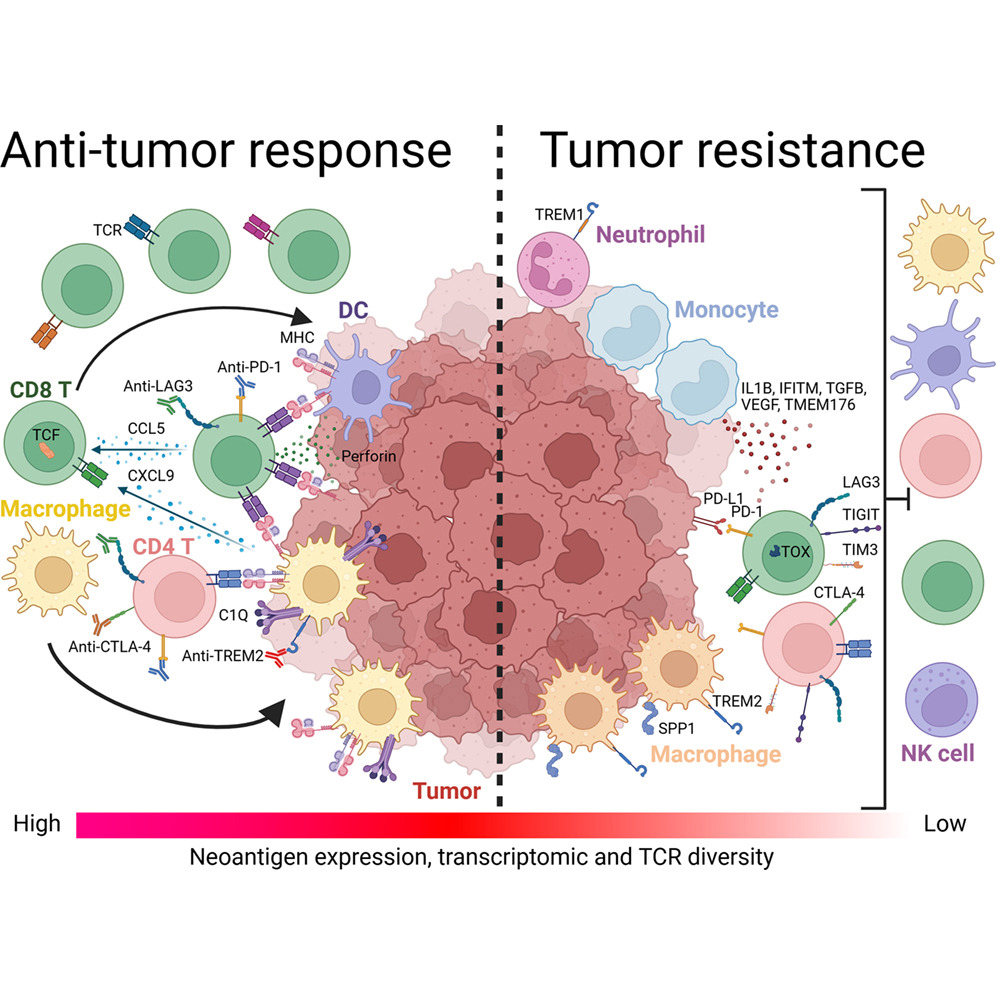
Reprogramming T Cell-Myeloid Crosstalk Overcomes Immune Resistance in Colorectal Cancer
Cell Reports Medicine. 2026 May 5. PMID: 42092363
This study identifies key T cell and macrophage subsets mediating the efficacy of immunotherapy in overcoming immune escape in both mismatch repair-deficient (MMRd) and mismatch-proficient (MMRp) colorectal cancer settings. Results show that successful anti-tumor responses depend not only on activating cancer-fighting T cells, but also on coordinated interactions between T cells and myeloid cells. Simultaneously reinvigorating T cells and targeting suppressive macrophages enabled restoration of immune coordination and generation of powerful anti-tumor responses. The findings have significant implications for the future of cancer treatment, supporting the development of rational combination immunotherapies that go beyond single-agent approaches.
Press Release
| | |
Lucas Ferrari de Andrade, PhD; John Mascarenhas, MD; Juan Arriaga, PhD; Bridget Marcellino, MD, PhD, and colleagues
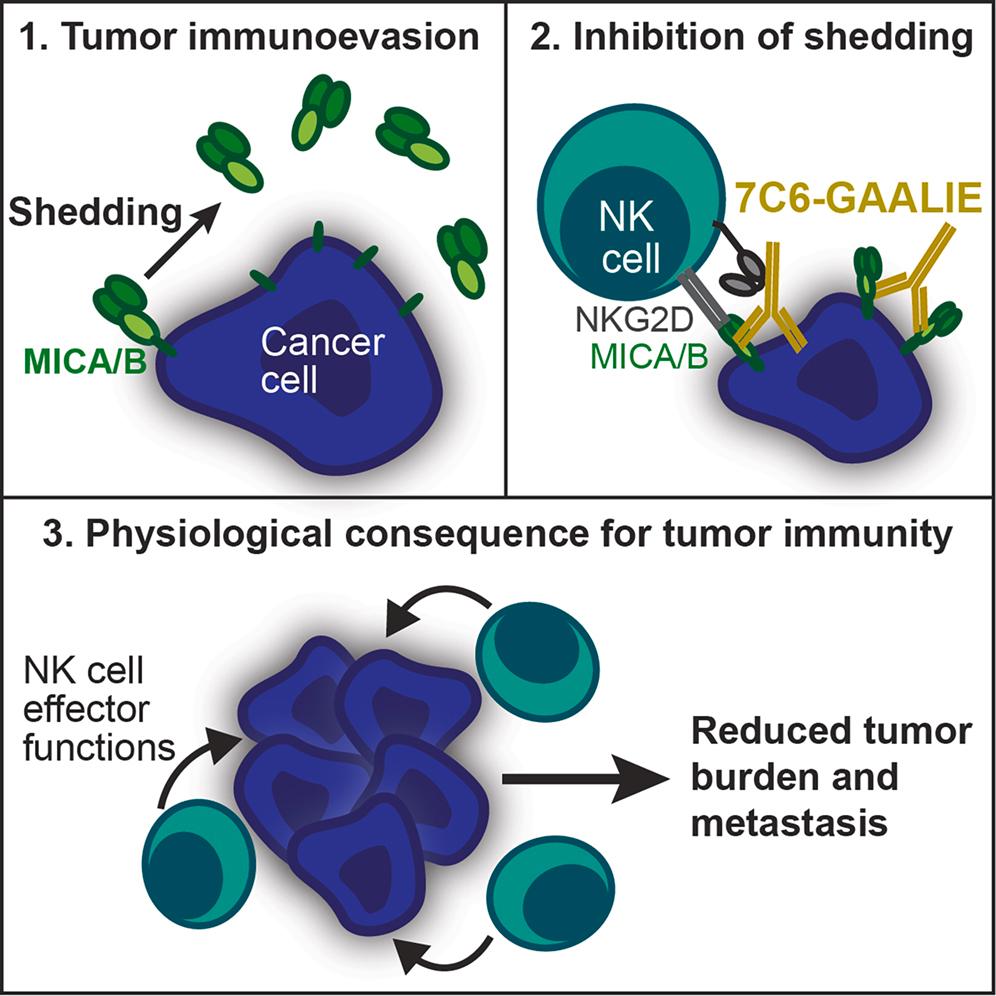
A MICA/B GAALIE-Mutant Antibody Elicits Potent Natural Killer Cell-Driven Immunity in Solid and Hematologic Malignancy Models
Cell Reports Medicine. 2026 Apr 17. PMID: 41999749
This study establishes the proof of concept of a next-generation anti-MICA/B antibody for cancer immunotherapy through an Fc optimization that enhances the antibody's ability to elicit NK cell-driven immunity. Dr. Ferrari de Andrade and team developed a next-generation anti-MICA/B antibody that inhibits the shedding of MICA/B from the surface of cancer cells, by introducing GAALIE mutations in the Fc to increase the binding affinity to Fcγ-activating receptors. This Fc-optimized antibody more potently elicited NK cell-driven immunity and displayed therapeutic activity in preclinical models of prostate cancer, melanoma, and leukemia, demonstrating that GAALIE mutations represent an effective means to enhance the therapeutic efficacy of anti-MICA/B antibodies for cancer.
| | |
Yelena Ginzburg, MD, and colleagues
Erythroferrone Derived From Osteoblasts Regulates Stress Erythropoiesis
Proceedings of the National Academy of Sciences. 2026 May 5. PMID: 42048446
Bone marrow erythroferrone (ERFE) suppresses hepcidin via bone morphogenetic protein (BMP) sequestration, increasing iron availability during stress erythropoiesis. Dr. Ginzburg and colleagues previously showed that ERFE is produced by osteoblasts and controls bone mass. They now report that osteoblast-derived ERFE is a major regulator of stress erythropoiesis. Their findings provide compelling evidence that osteoblast-derived ERFE modulates BMP4 levels to modulate responsiveness of erythroblasts to erythropoietin during stress erythropoiesis.
| | |
Jiahua Lu; Robert Samstein, MD, PhD; Diddier Prada, MD; Fred R. Hirsch, MD, PhD
Lung Cancer in Never Smokers: Genetics, Epidemiology, Environmental Exposures, and Distinct Immune Landscape
Journal of Thoracic Oncology. 2026 Apr 1. PMID: 41932615
Lung cancer in never smokers (LCINS) disproportionately affects younger women and East Asian populations and is characterized by distinct genetic susceptibility, environmental exposures, and molecular alterations. However, never smokers are excluded from current screening guidelines despite rising incidence and identifiable high-risk subgroups. This review summarizes LCINS epidemiology, genetic susceptibility, molecular alterations, environmental risk factors, and tumor immunology. Findings support expanding screening eligibility to include never smokers with identifiable demographic and familial risk factors who would benefit from early detection.
| | |
Eirini Papapetrou, MD, PhD, will present “TET2 Mutations Drive Clonal Hematopoiesis Through TRIM4 Silencing and Induction of Type I IFN” at the Fifteenth International Workshop on Molecular Aspects of Myeloid Stem Cell Development and Leukemia, May 18-21, in Cincinnati.
Dr. Papapetrou will give a Grand Rounds presentation—“Clonal Evolution of Myeloid Leukemia”—on June 5 at Memorial Sloan Kettering Cancer Center.
Jerry Edward Chipuk, PhD, will present “The ATF5-Dependent Mitochondrial Unfolded Protein Response Coordinates Oncogenic Fate” at the Mitochondria & Cell Fate Transitions: From Stemness to Senescence Conference, May 10-13, in Malta.
Karyn Goodman, MD, MS, was the Keynote Speaker at two meetings in April:
Zeynep H. Gümüş, PhD, gave an invited talk at the University of Pittsburgh Biomedical Informatics Colloquium on March 27—"From Samples to Populations: Interactive Visualizations of Multi-Omics Data at Scale.”
Dr. Gümüş participated at the Princeton University Biomedical Engineering Society Career Panel on Saturday, April 18.
Scott Friedman, MD, delivered the Smith Family Foundation Distinguished Lecture—“The Fibrotic Microenvironment of HCC: Mechanisms, Mediators, and Targets”—on May 6 at MD Anderson Cancer Center.
| | |
Beau Baars, MS, PhD candidate in the Poulikakos Lab, was selected to receive an AACR-Sanofi Scholar-In-Training Award. Scholar-In-Training Awards recognize outstanding young investigators presenting meritorious proffered papers at the AACR Annual Meeting (held April 17–22, 2026). Ms Baars’ paper: "Profiling Tumor Selectivity of State- and Paralogselective RAS Inhibitors Through a Signaling Inhibition Index (SII)."
| | |
Community Cancer Awareness Event
Day of Learning and Connection
Saturday, May 16, 10 am-3:30 pm
Bay Chester Community Center
1220 East 229th Street
Bronx, NY 10466
More Information
| | |
Do you have news for the next issue of TCC Connections?
Please send to Janet.Aronson@mountsinai.org.
Remember to share breaking news and high impact news that might be appropriate for media coverage with Diego Ortiz Quintero in the Press Office. This may include pending FDA drug/device approvals, studies/trial results being published in high-impact journals, and patient stories. The more lead time you can give Diego, the better—ideally, four weeks or when a paper is accepted by the journal. Embargoes will always be honored and news will only be released with your approval. Contact Diego at diego.ortizquintero@mountsinai.org or 201-572-5703.
| | | |
TCC Connections is a monthly publication of the Mount Sinai Tisch Cancer Center
Ramon Parsons, MD, PhD, Director
Janet Aronson , Editor
Past issues of TCC Connections are available on the Mount Sinai Tisch Cancer Center website
| | | | |