|
Dear Friends,
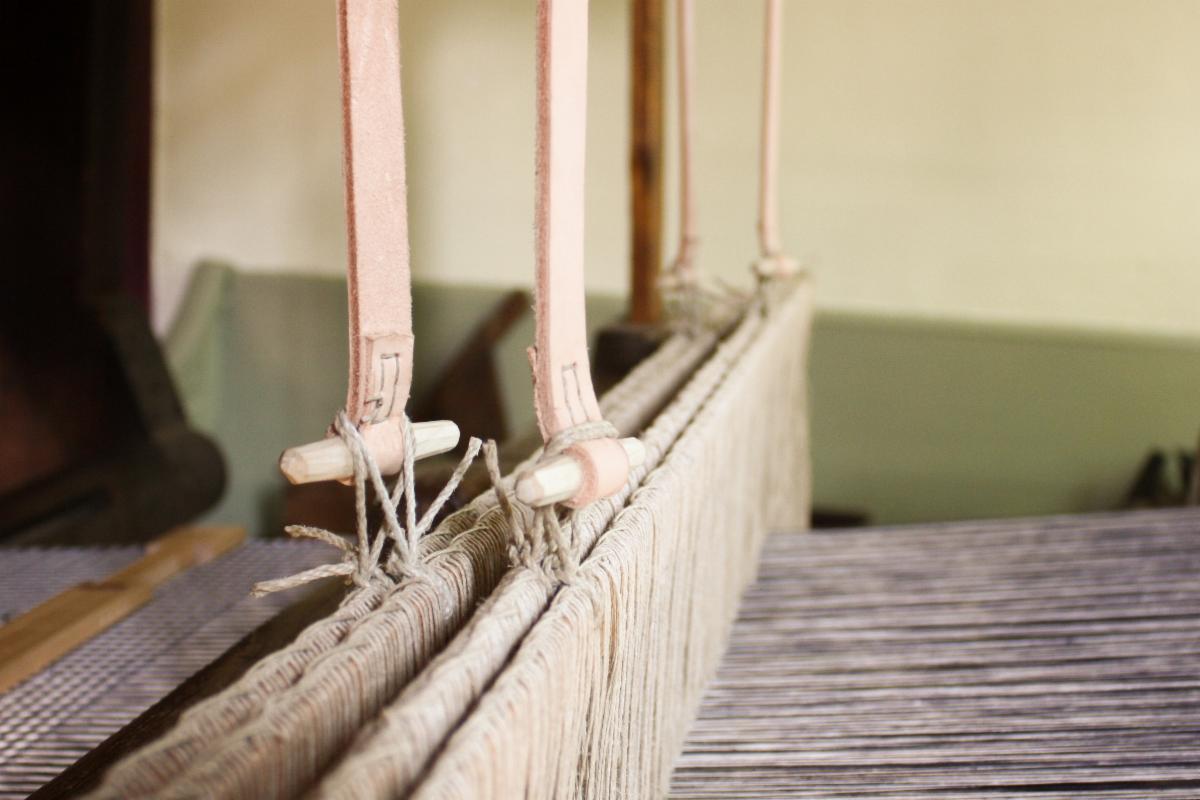
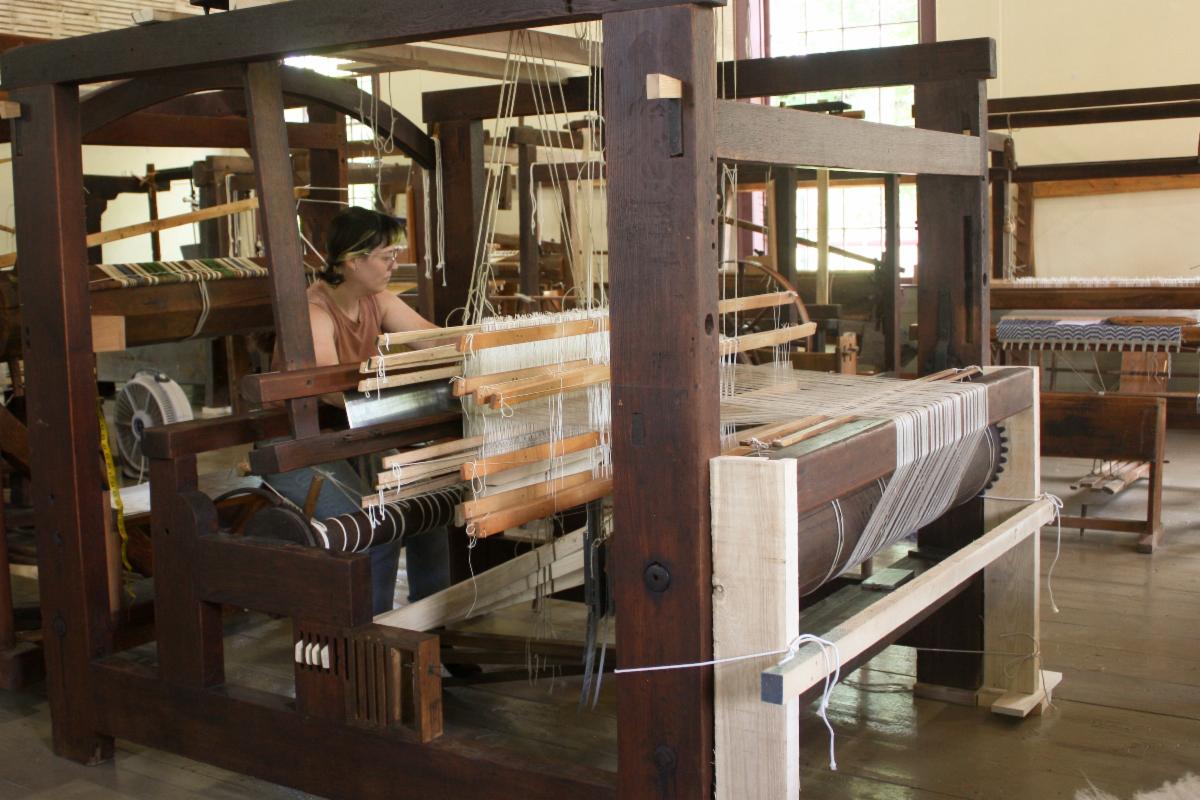
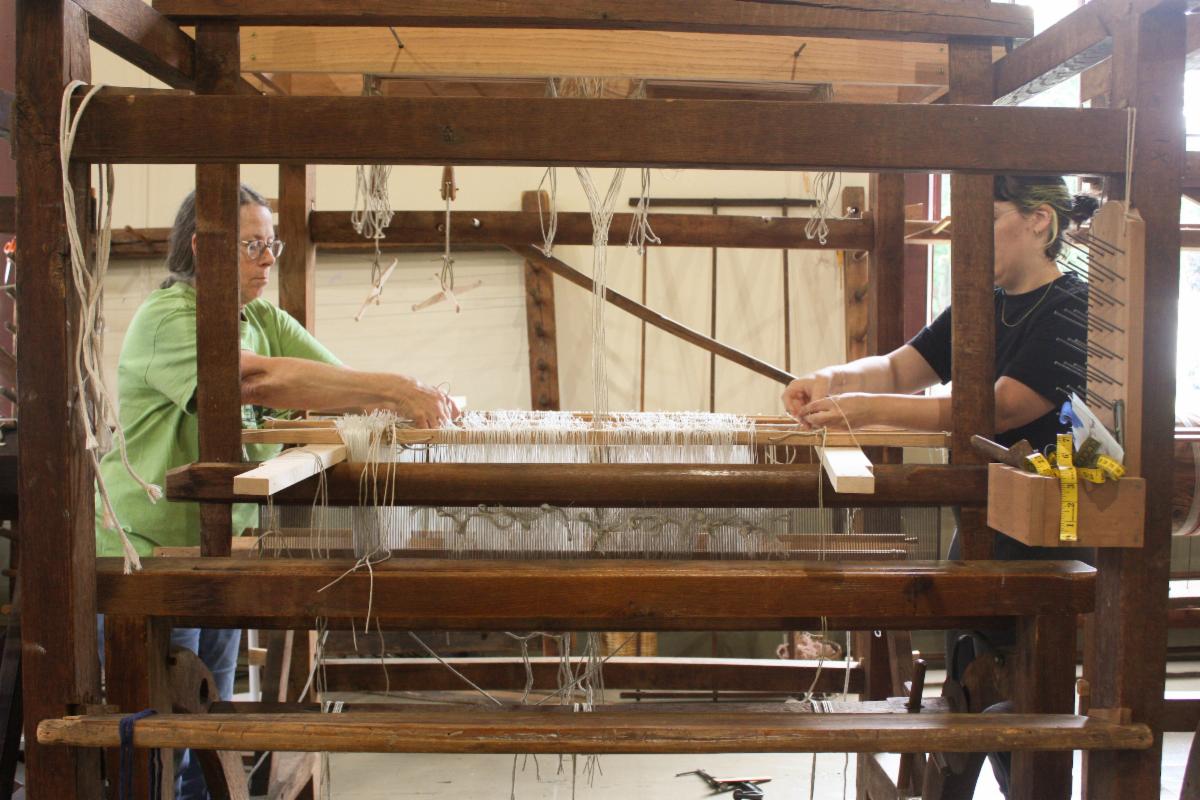
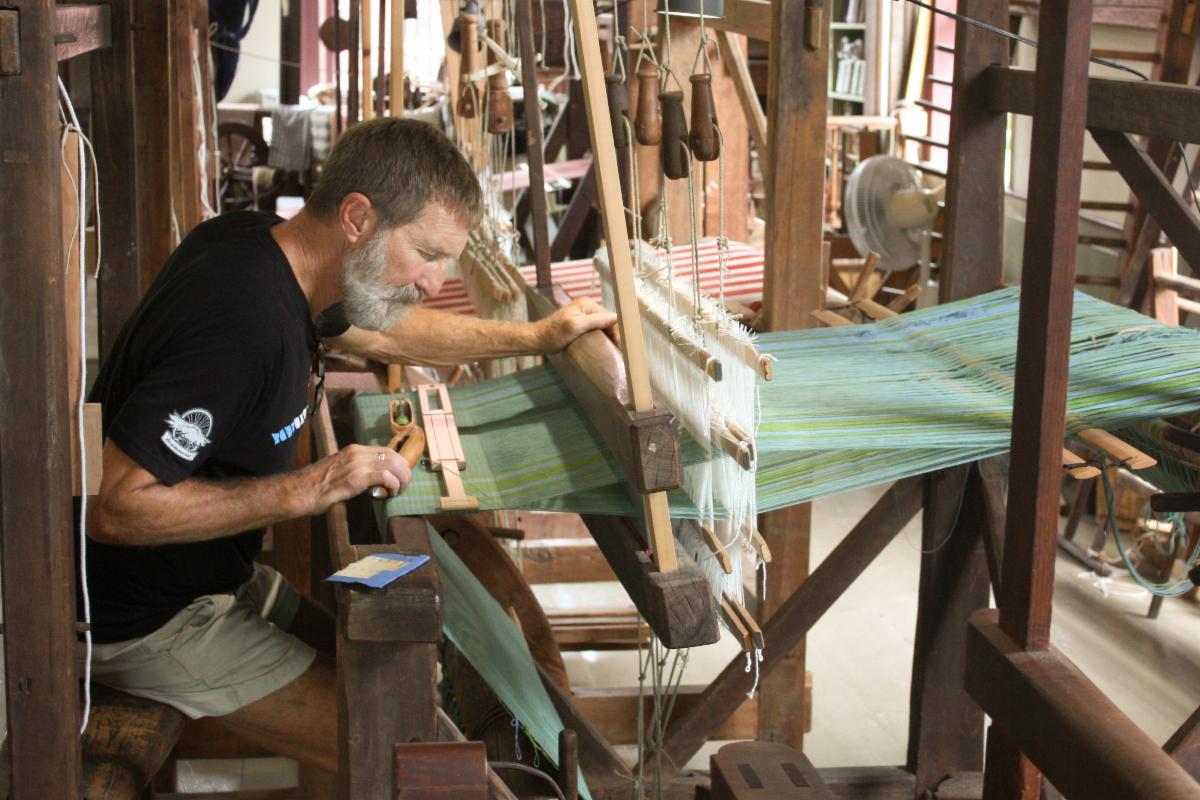
The last few weeks have been filled with all things mechanical here at the school. First up was a restoration project that's been simmering on the back burner for a long while. Actually, it was twelve restoration projects, as we removed modern hardware store pulleys from our looms and installed "mountings" of historic and reproduction pulleys and jacks. These new mountings illustrate a wider range of technical possibilities than we were using before, and put us more in line with craft practice of the past. The best part was using our collections files to reunite a set of double pulleys from our artifact storage with the loom they were originally used on.
On top of restoration was recreation (in all senses of the word), as we constructed an early 19th-century "Back Harness, or Diaper Mounting" for damask weaving. This double harness mechanism adds an entirely new type of shedding system to our offerings, and allows us to weave some pretty nifty stuff. Win-win.
On behalf of the team, we hope our mounting excitement (who could resist that one?) inspires more tinkering, more building, more learning.
Justin Squizzero
Director
| | |
In this newsletter:
- Mechanics and the "Back Harness"
- Foundations
- A Young Person's Guide to the Tape Loom
- Dimity, Diaper, and Damask
- Introduction to Bobbin Lace
- The Open Studio Sale Approaches!
| | Mechanics and the "Back Harness" | | |
Our first foray into double harness weaving began in 2014 thanks to the guidance of weaving historian Pat Hilts. (Take a trip down memory lane here.) Pat introduced us to the principals and set us (and especially Justin) down a figured weaving rabbit hole from which we have no intention of returning. With Pat we built Drawloom 1.0, followed in 2016 by Drawloom 2.0, and while cloth was made, each one suffered from a lack of resources and our general inexperience. In the intervening years we've learned a lot and gained some needed focus, leading us to our third and most historically rooted double harness mechanism: the "Back Harness, or Diaper Mounting [sic]."
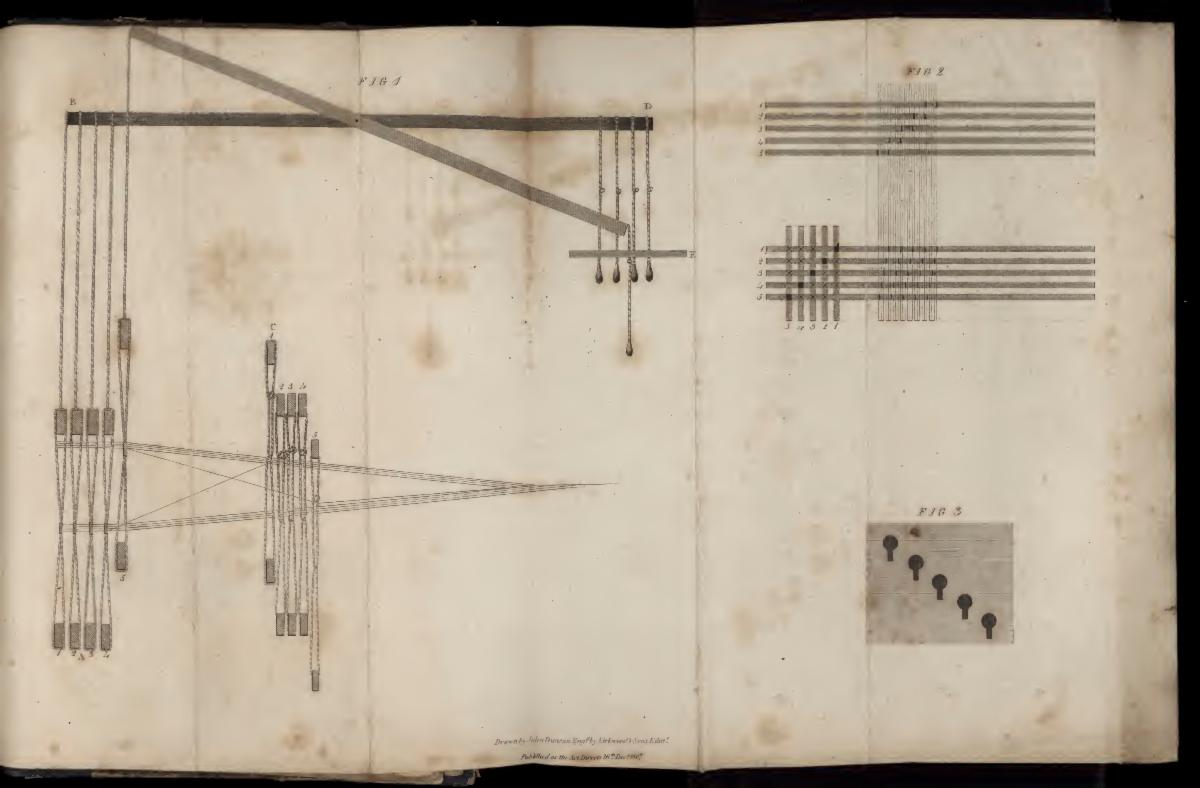
Our source for this mechanism comes from Practical and Descriptive Essays on the Art of Weaving by John Duncan, published in 1807 in Glasgow. Duncan's is the earliest comprehensive text on weaving as practiced in the UK that we're aware of (happy for leads on others), and his book is critical for understanding the technology in use there during a period of rapid innovation. In his essays "On the Weaving of Tweeled Cloth," Duncan describes mounting looms for weaving "fanciful tweels" like "Dornock," a block damask textile used for table linen. The simplest are made of two "sets" (blocks) requiring ten leaves of heddles, but the patterns continue up to six sets, requiring 24–30 leaves and treadles tied with 576–900 cords. Possible? Yes. Practical? Debatable.
| | |
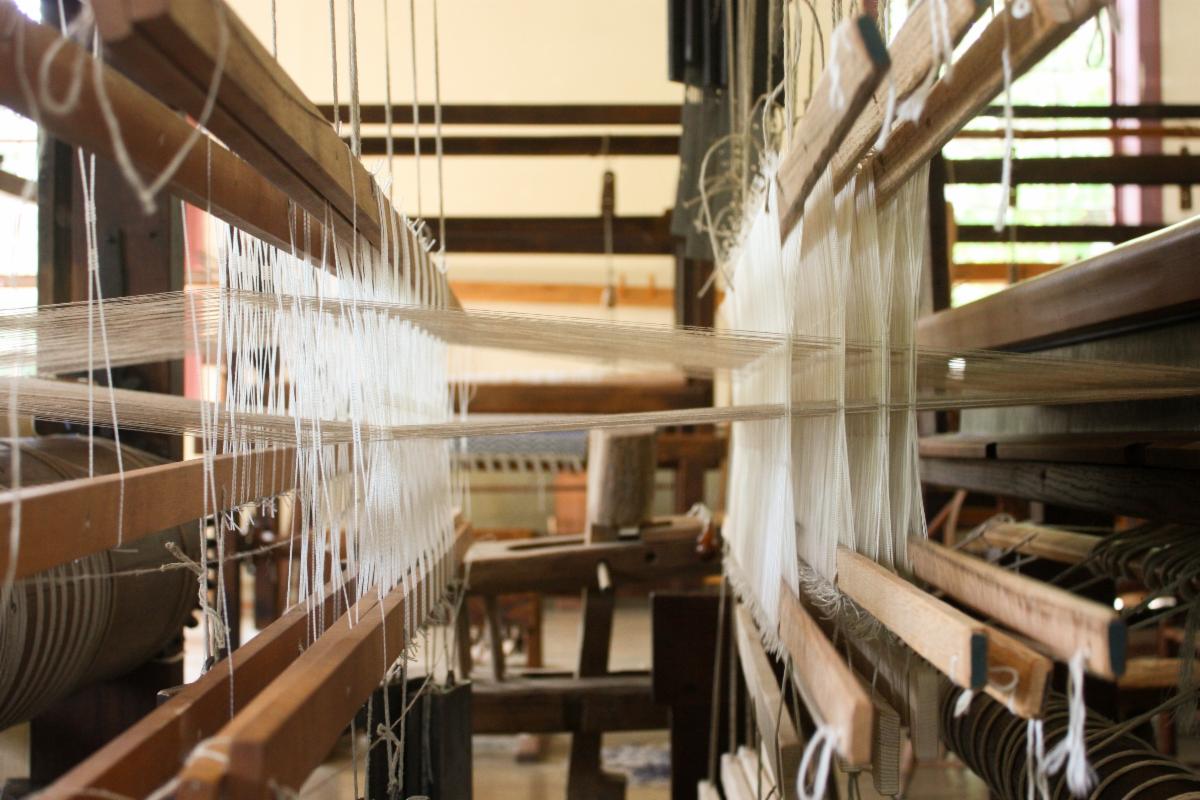
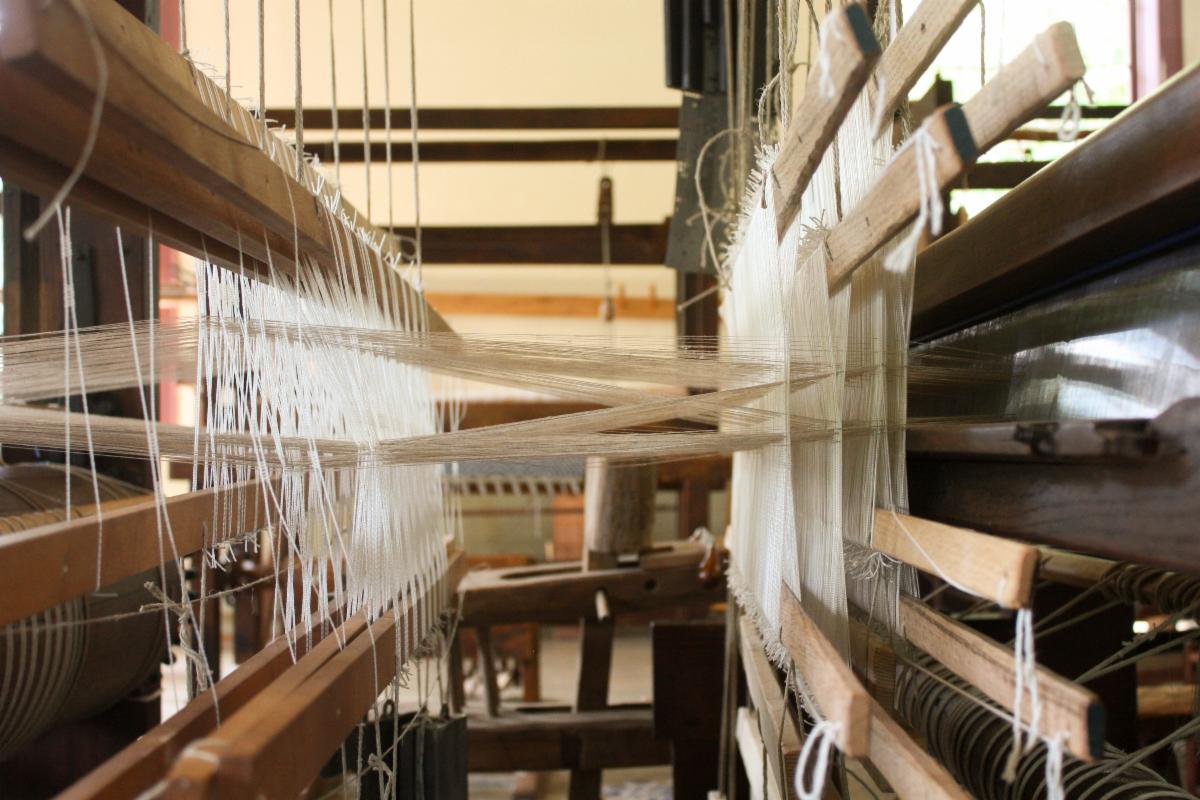
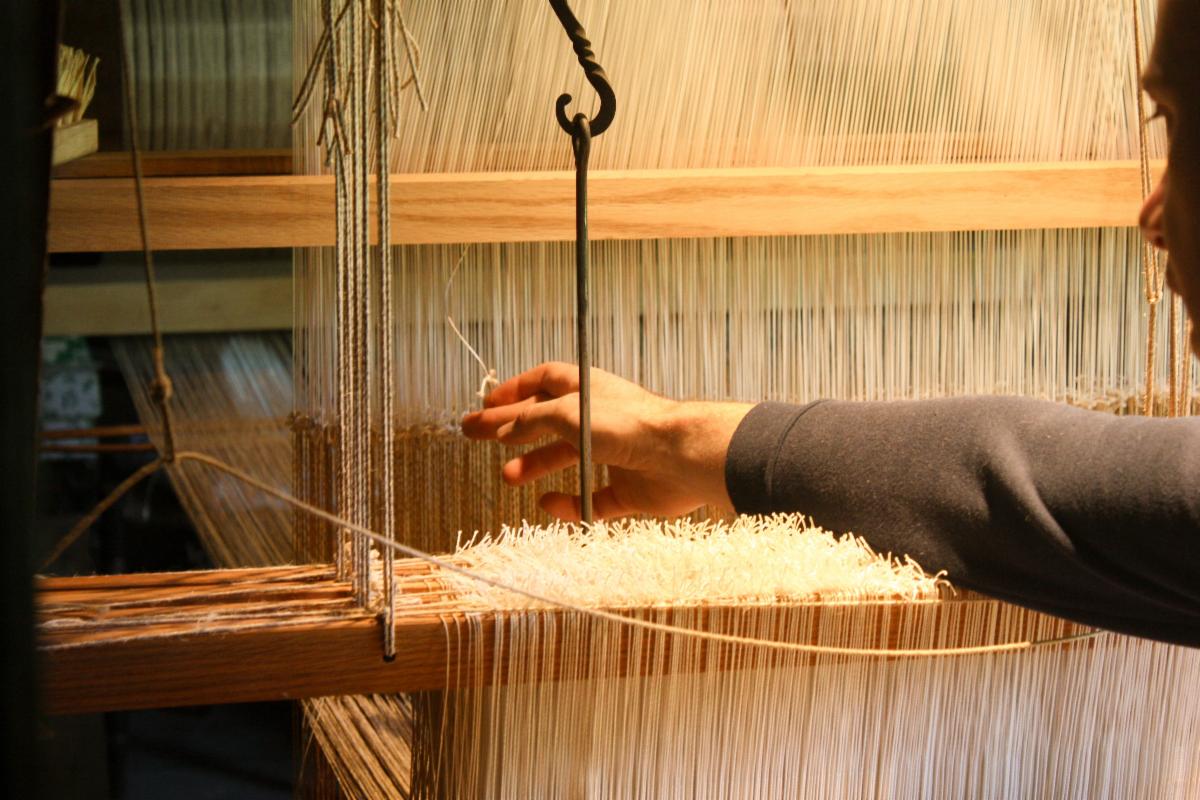
Enter the "Back Harness, or Diaper Mounting." Each block of the design is assigned a leaf of heddles in the back harness. On this leaf the heddles or mails hold all of the yarns needed for one unit of the weave structure (twill or satin). These yarns then continue forward to the front mounting of long-eyed heddles where each individual warp end is entered into its own heddle in a regular straight draw. At rest, the back harness leaves are weighted to hold them in a sunken shed position, bringing all of the warp to the bottom of the long-eyed heddles in front. When each treadle is pressed, one leaf of long-eyed heddles is raised while one leaf is sunk. The sinking heddles have no effect on the sunken warp as their long eyes slide down past it. However, the rising heddles lift up one warp end in every unit, allowing the weaving of a weft-faced twill or satin. This creates what we'll consider the ground of the cloth.
Now, to create the pattern, the weaver raises a leaf of the back harness by pulling a cord and locking it into a keyhole opening on a board overhead by means of a knot tied into the pull cord. The heddles on this leaf each contain a group of warp ends, enough to create one unit of the ground cloth. At this stage, large areas of sunken warp are ready to weave the ground as before, but now there are areas where the whole warp has been raised to form the desired pattern blocks. When the front mounting is worked by the treadles, the rising heddles continue to lift one end of each structure unit of the sunken ground warp, but the sinking long-eyed heddles will now do the same in reverse with the warp that's raised for the pattern blocks. When the weft is inserted those areas will produce warp faced twill or satin, opposite to the cloth face of the ground areas.
| | |
Above: A plate from Practical and Descriptive Essays on the Art of Weaving depicting the back harness and front mounting.
Below: The shed created by our recreation of the back harness, first with only the back harness shed opened, followed by the distinctive crossed shed formed by the long-eyed heddles.
| | |
Unlike our earlier versions, this back harness attempts to recreate the mechanism as described by Duncan, and wouldn't you know, it works! Duncan depicts a mounting with five leaves in the back, and five in the front, producing the same weaving capabilities of a loom mounted with 25 leaves. Though we built ours with the same number, we opted to use only four leaves of each for the class, weaving a four block, four-end twill. Threaded for Duncan's "Patterns for Four Sets, No. 16," and woven in singles linen, our back harness brought this early 19th-century text and fanciful tweel Dornock to life.
Pretty nifty, eh?
| | But wait, there's more! Some of our readers are familiar with the "shaft drawlooms" popular in contemporary Swedish weaving which can trace their existence back, well, to the back harness. According to John Becker, in the 19th century, Duncan's book was used as a source of information and inspiration by the Ekenmark family who expanded on the back harness principal and promoted its use throughout Sweden. Five back harness leaves became 20, or 50, or 100, and this complex weaving technology entered the realm of home weavers. Though this arrangement has a long history in many parts of the world, the back harness from Duncan may be considered the great-grandma of this thriving weaving practice today. | | |
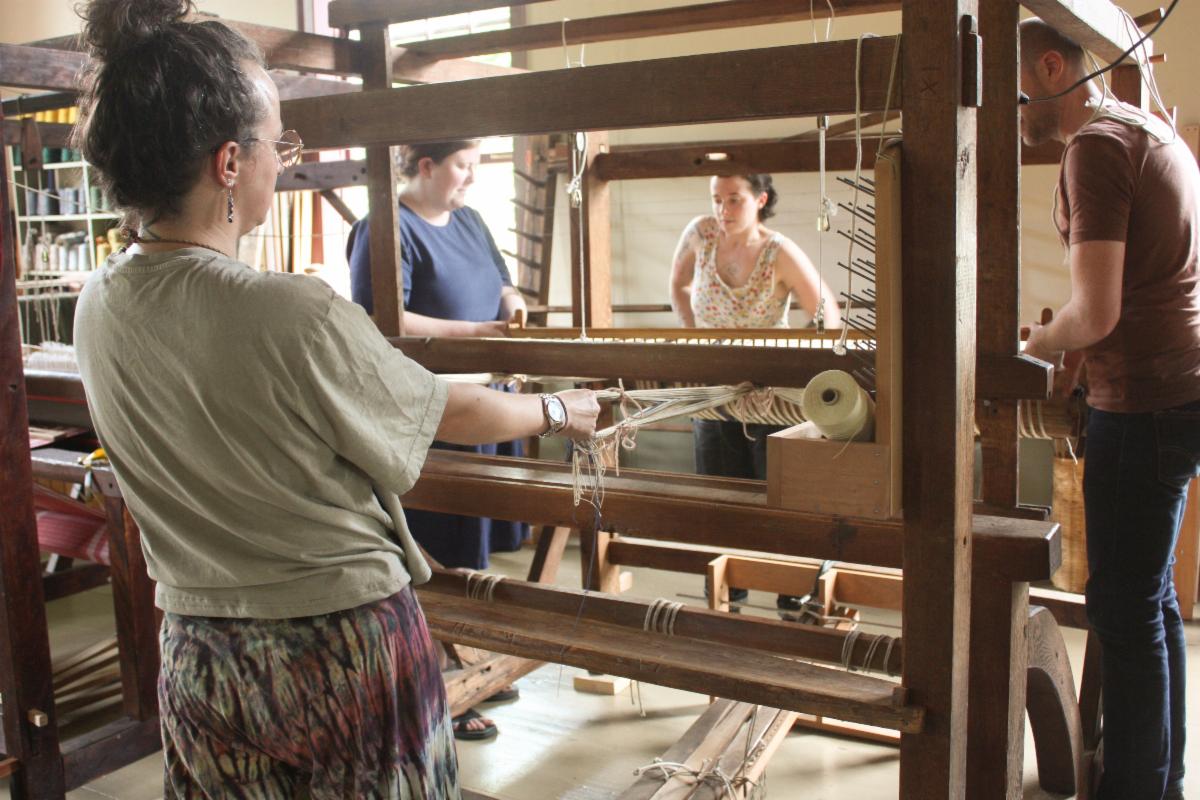
Above: (Top) Much of the week was spent assembling different mountings, like this five-leaf countermarch.
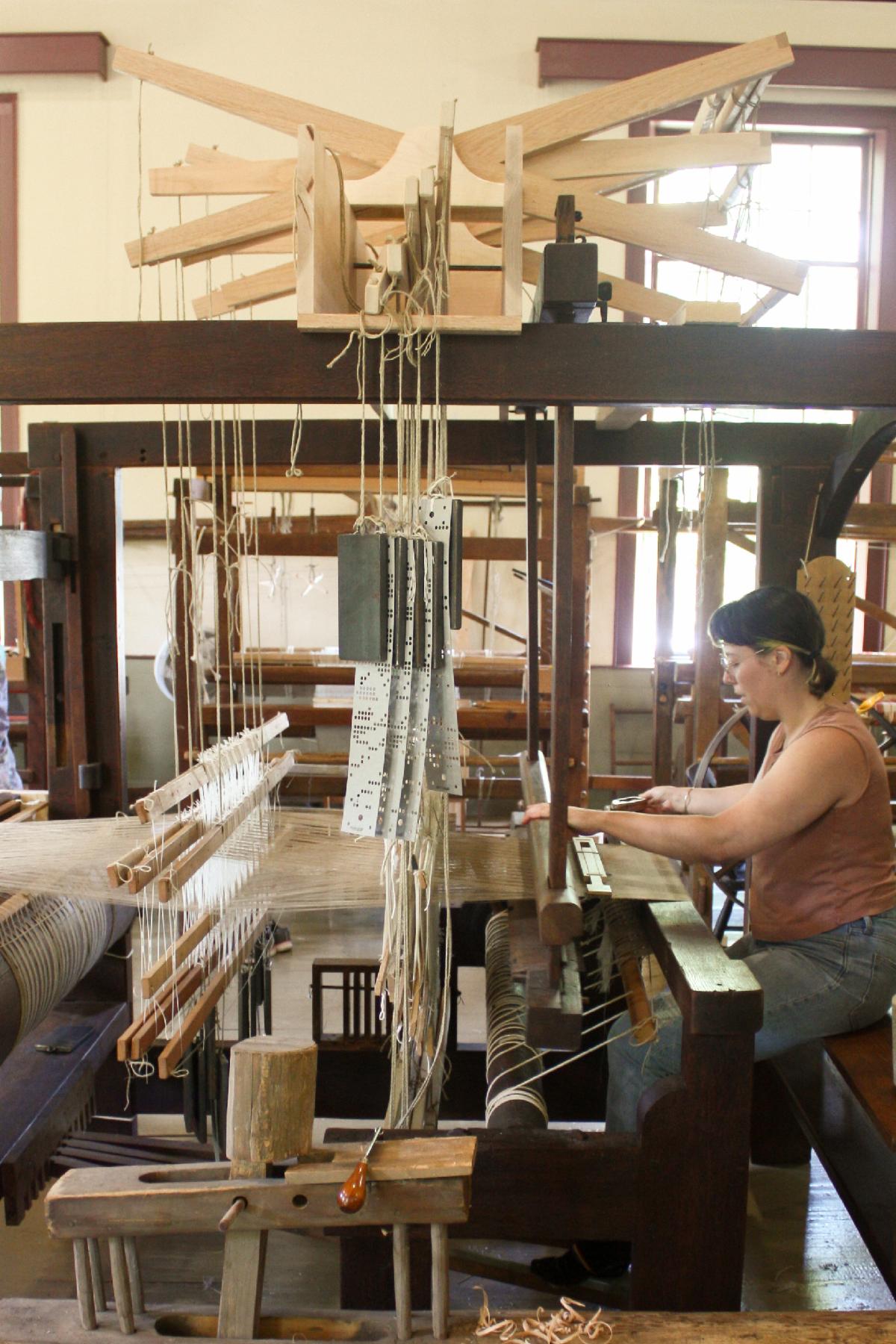
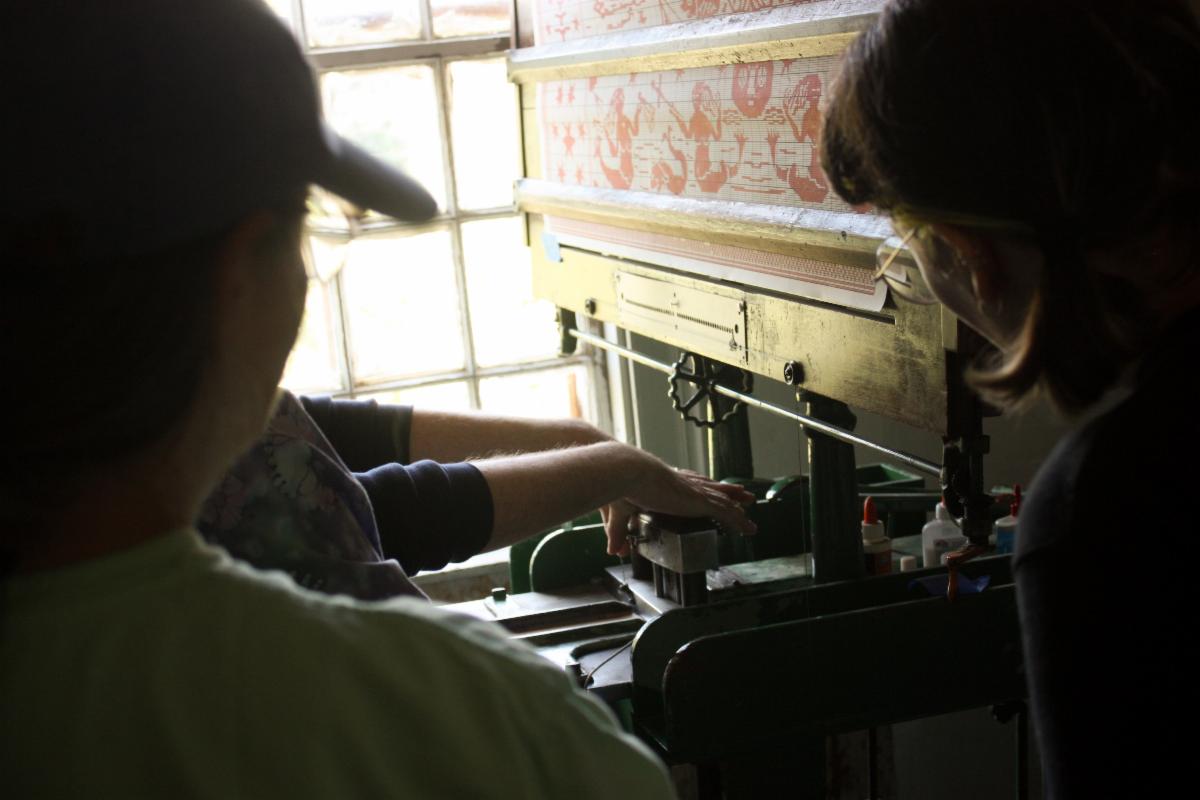
(Bottom) We took a field trip to see Justin's Jacquard damask loom and card punching machine which works on the back harness principal, but instead of five leaves for patterning, it uses 500 hooks.
Below: The group wove five-end satin, plainweave and twill, and five-shaft diaper (spot weave), though this class was really all about the looms and their mechanics.
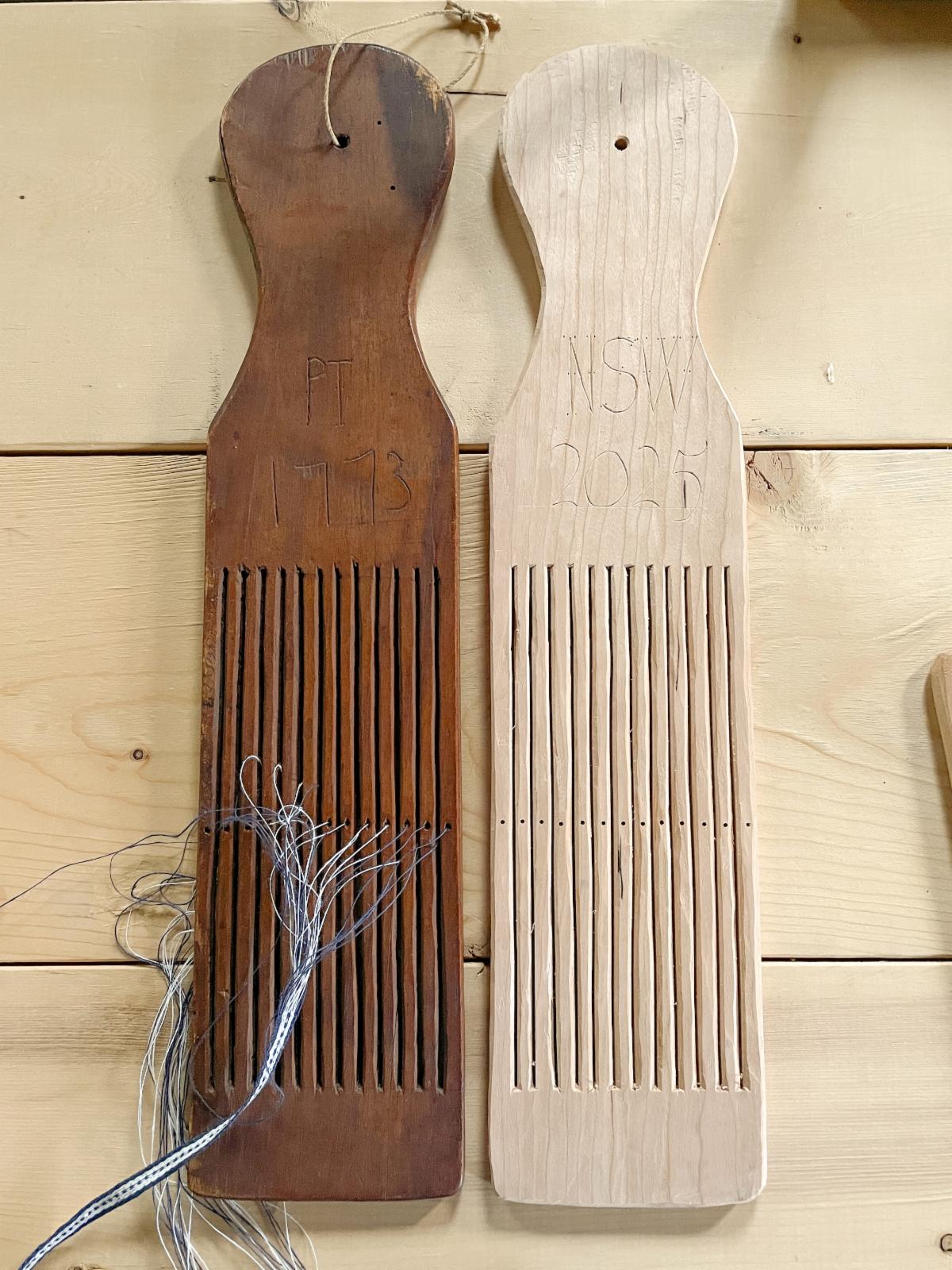
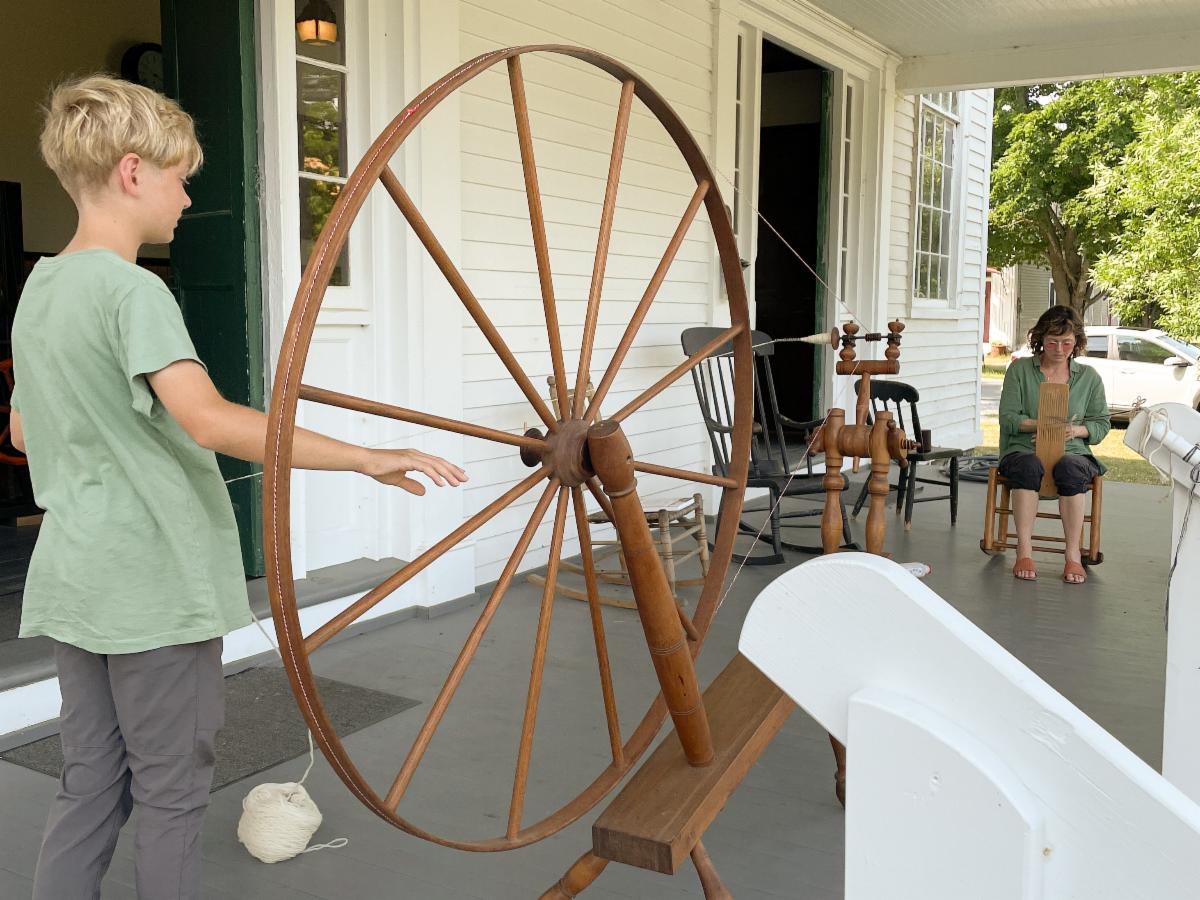
| | A Young Person's Guide to the Tape Loom | | We made reproductions of a signed and dated tape loom from our collection, and put them to use during our first youth oriented program. Mom held down the tape weaving while we tried some spinning, because sometimes you've just got to go with the flow. | | | Dimity, Diaper, and Damask | | |
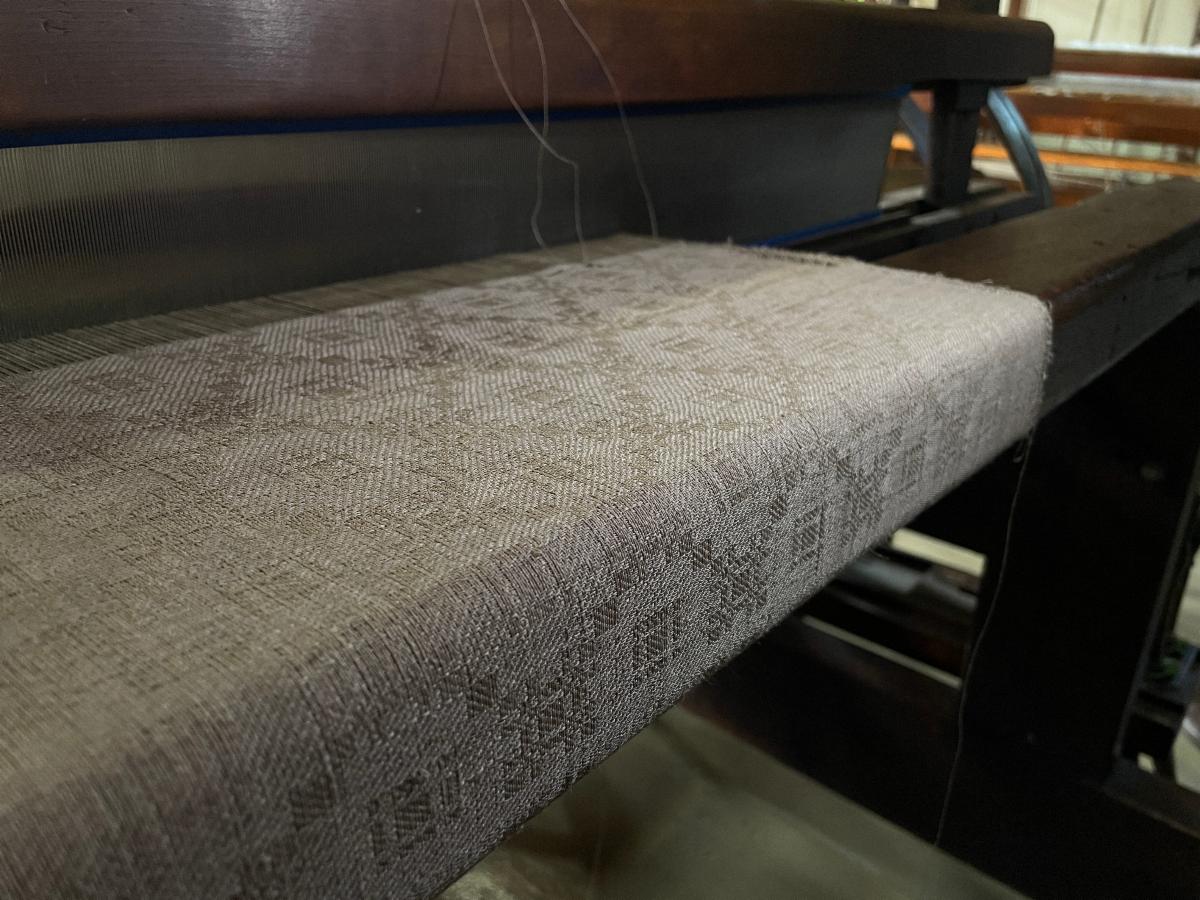
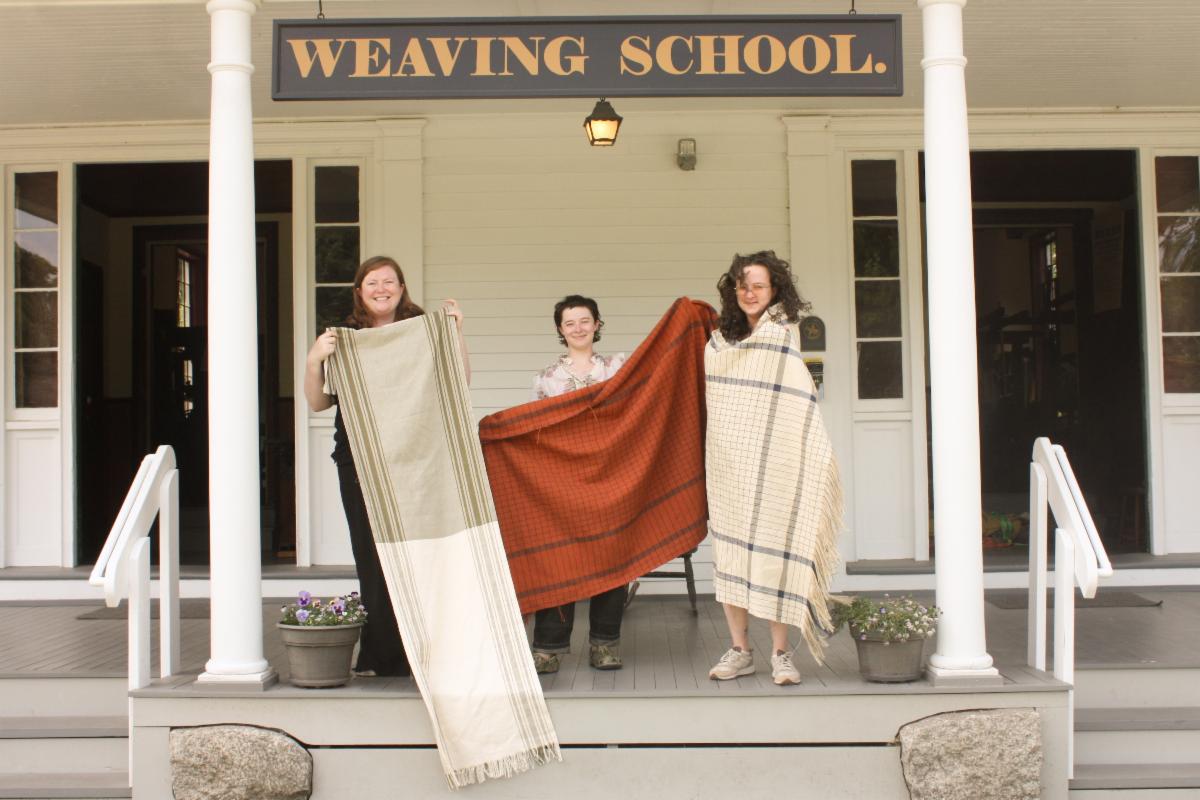
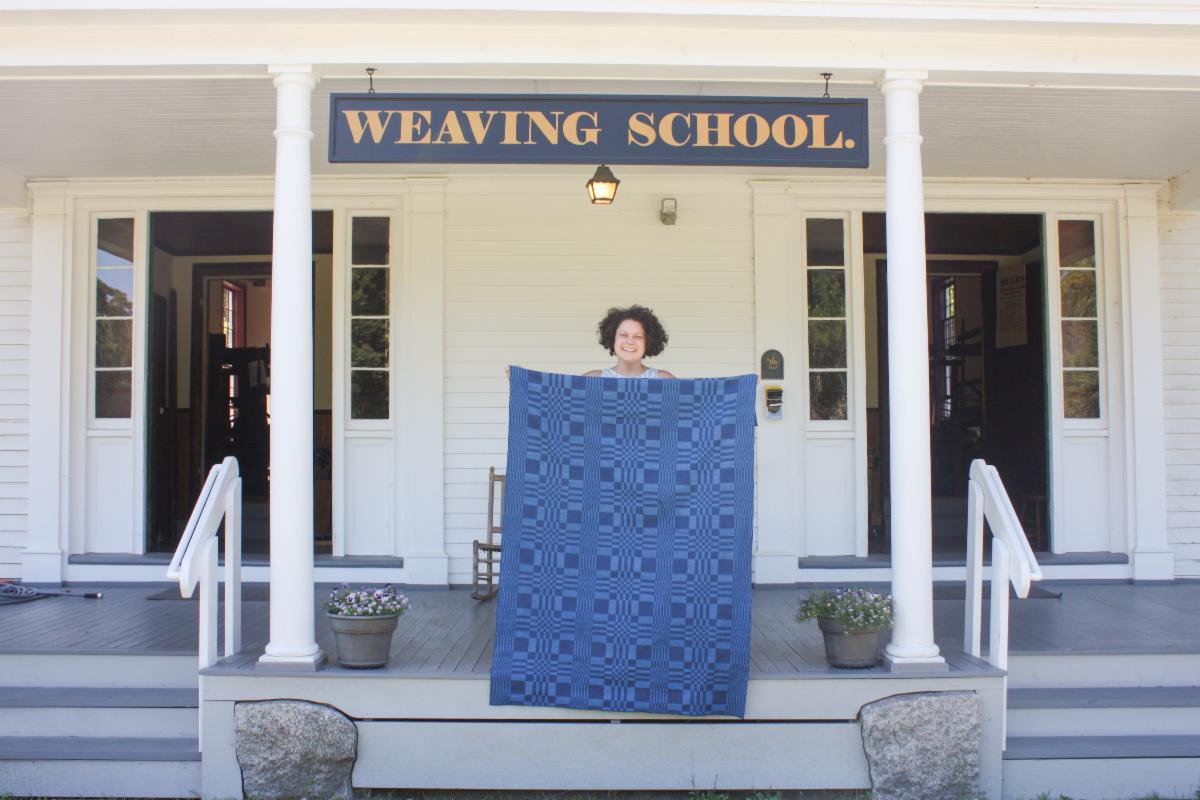
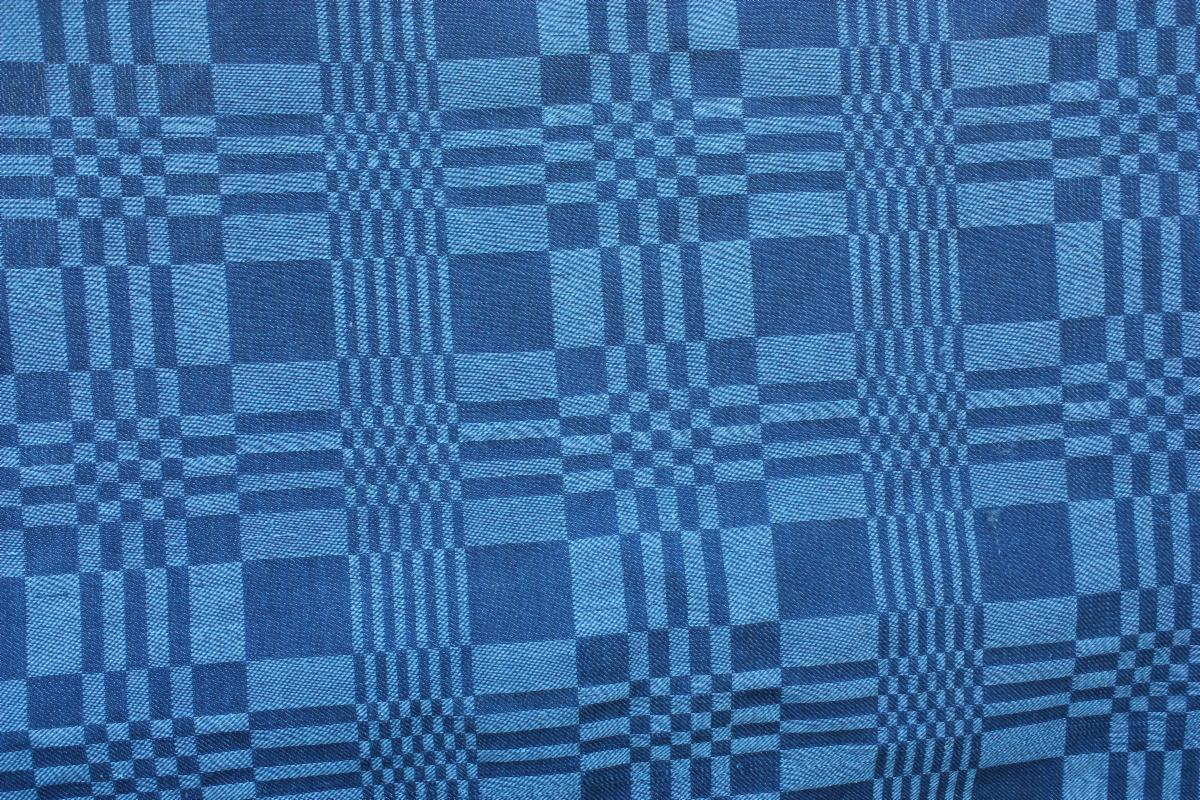
Hannah wove a two-block twill damask using a cotton warp and linen weft. By using a dark shade in the matte cotton and a lighter shade in the shiny linen, she heightened the tonal differences of the blocks in an unexpected and brilliant way.
Five stars, would recommend.
| | |
Introduction to Bobbin Lace
with Elena Kanagy-Loux
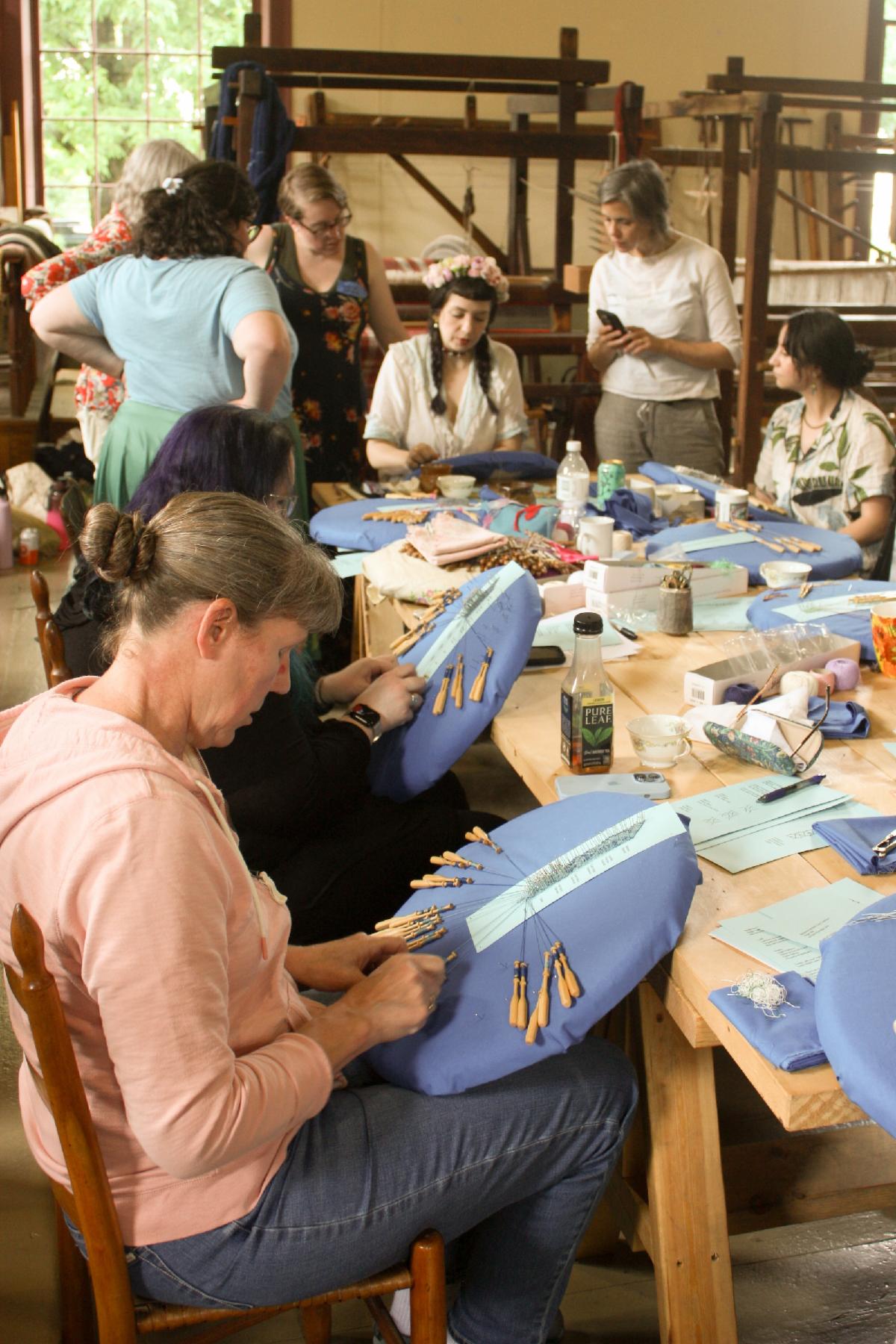
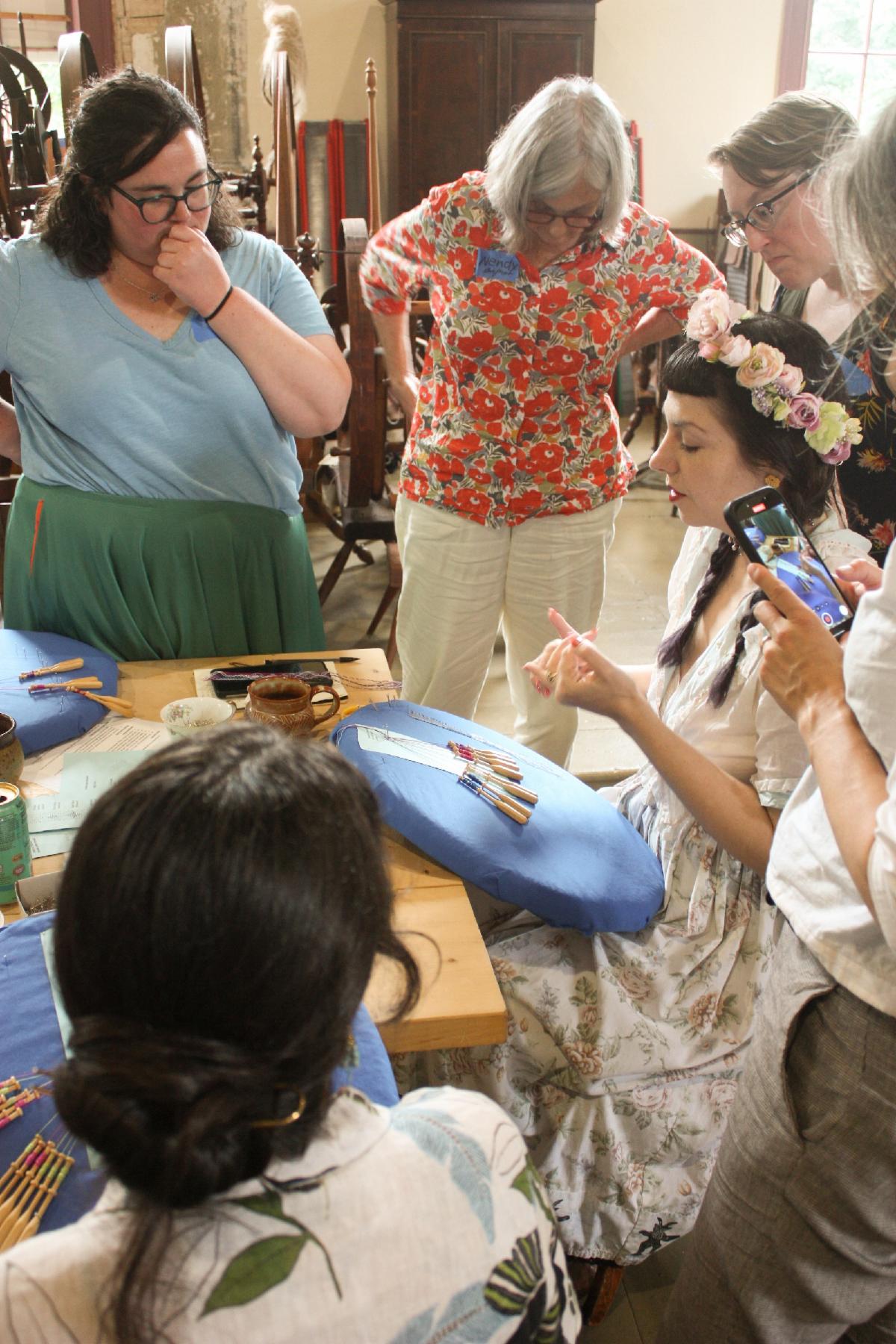
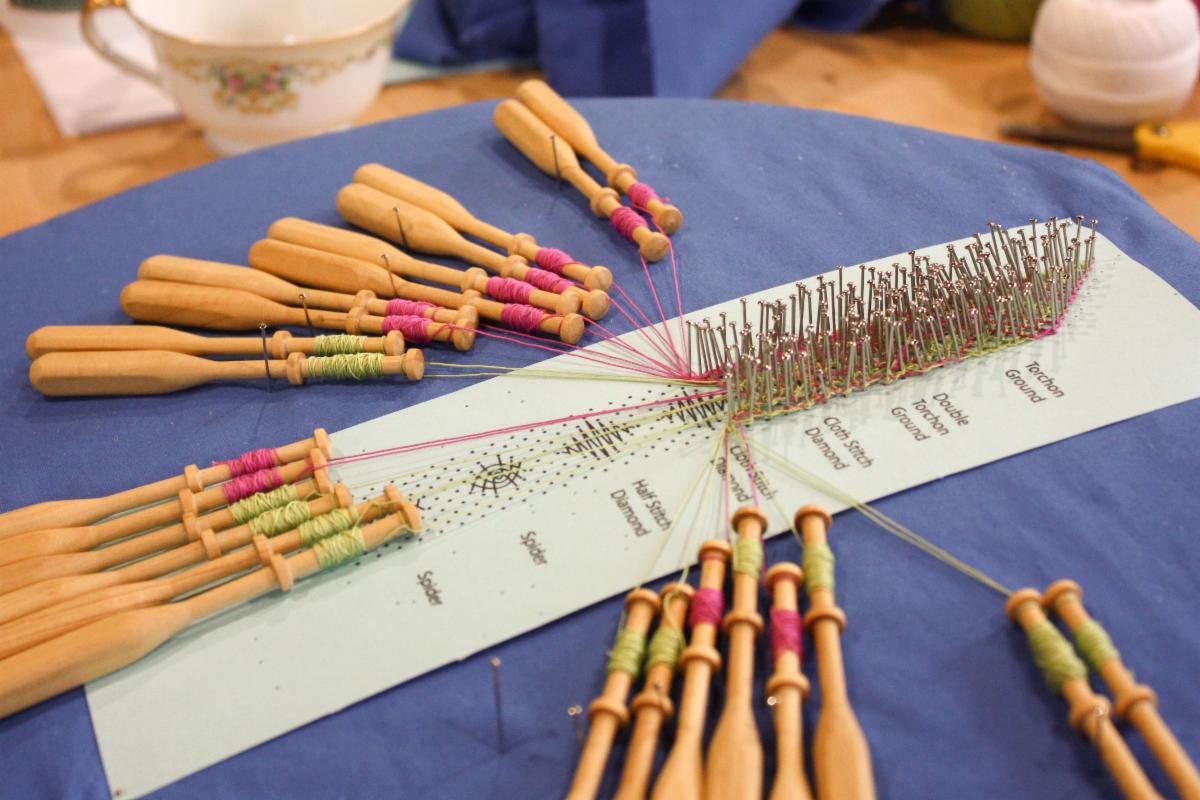
| | Elena returned to teach a full house of aspiring bobbin lace makers who spent the weekend crossing and twisting thread into Torchon lace samplers. The room was filled with the gentle and entrancing clicking of wooden bobbins as the students became initiated in this centuries-old craft. | | |
Don't Forget, the Open Studio Sale Commeth!
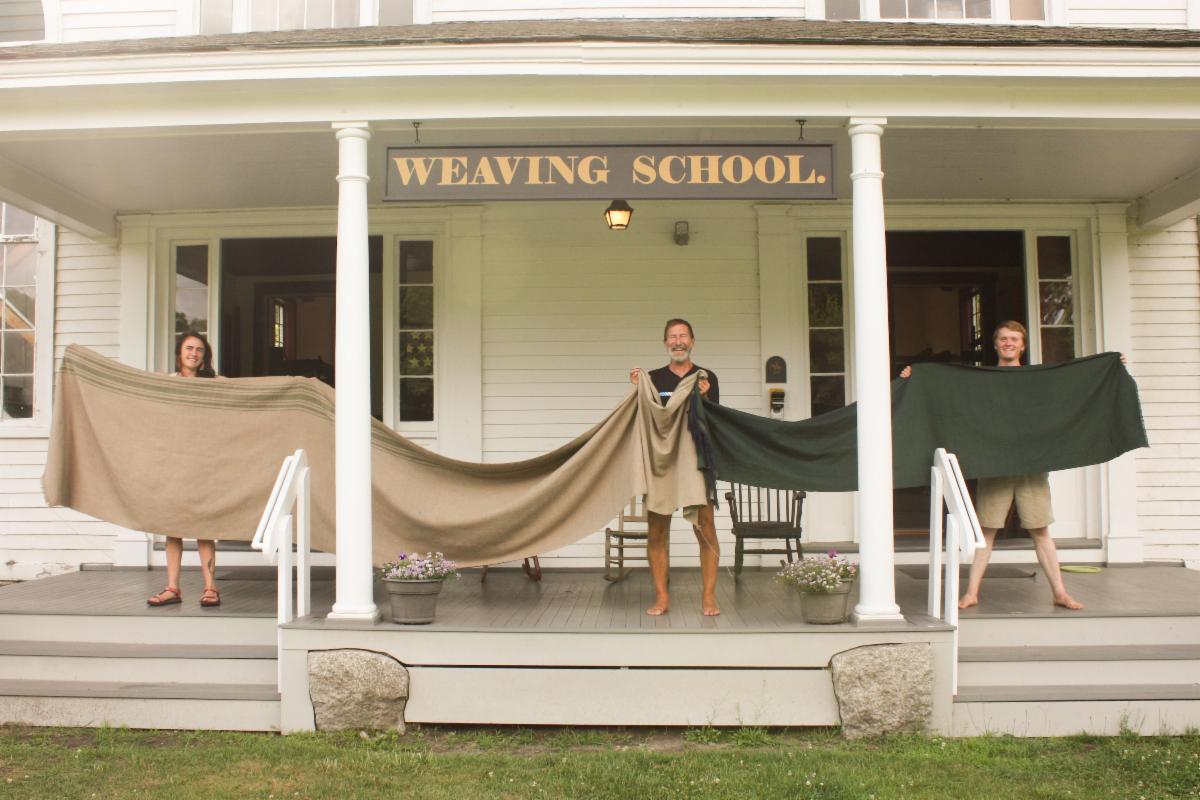
Attention friends and alumni of The Newbury School of Weaving: We are once again participating in the Vermont North by Hand Open Studio Tour on October 11–12 with a fundraiser featuring handwovens from our alumni and friends—that's you!
Ahead of the event, we will collect your weavings (towels, blankets, or any items made from your handwoven cloth), determine a price point together, and split all sales 50/50: 50% goes back to the maker, and 50% goes to support The Newbury School of Weaving. Any items that do not sell during the event will be kept at the school for a future sale unless the maker would like the item returned.
Our hope is that this will be a fun way for visitors to see the amazing work the school's community has been doing, and support both the weaver and school while taking home their very own piece of the experience to enjoy and share with others.
To participate or ask questions, please reach out to Emma directly: office@newburyschoolofweaving.org
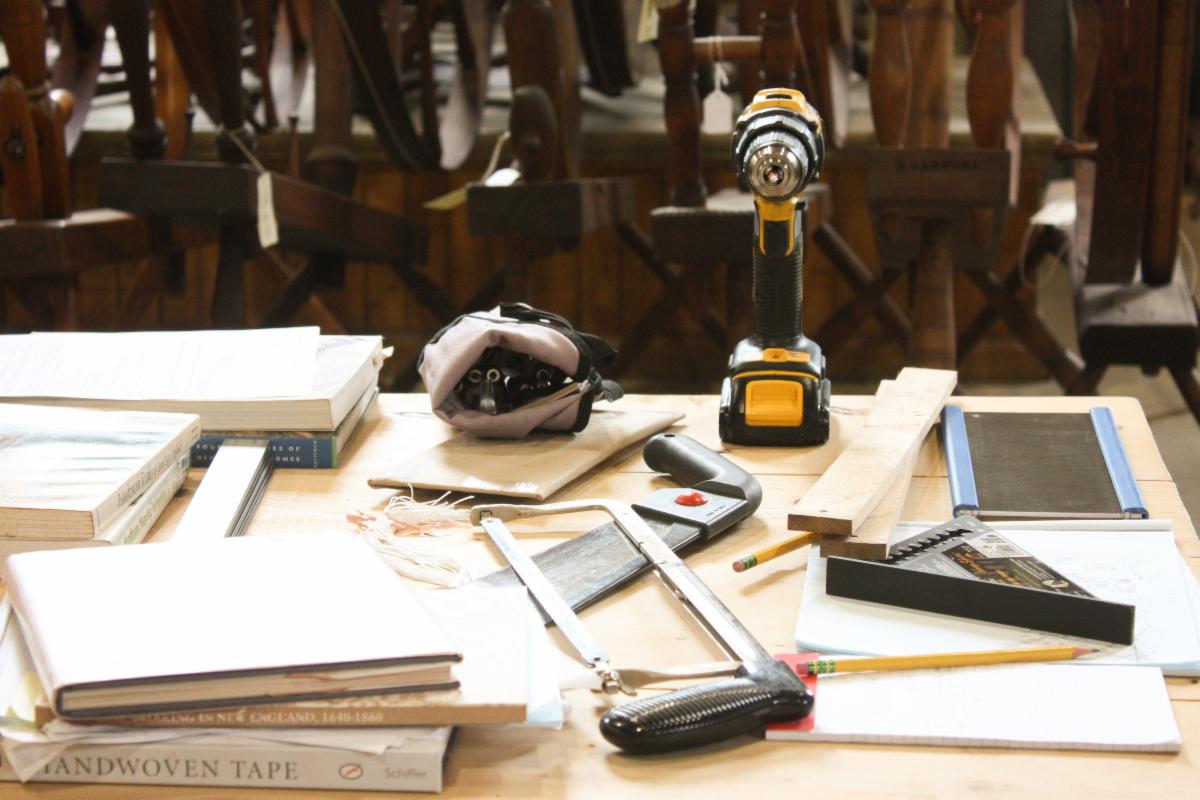
| | Keep tinkering, keep experimenting. It's surprising how much a hacksaw, a drill, and some graph paper can solve. | | As always, we can only do what we do with your generous support. Gifts of all sizes make a tremendous impact. Thank you. | | | | |