As the story unfolded, I began to understand the weight Eduardo was carrying. When the two of us were alone, Eduardo's mother
Marta explained in Spanish that she and her son had been unable to talk about the shoplifting incident. The oldest of four children, Eduardo was overwhelmed that he had upset his mother, who relied on him for everything. The last thing he wanted was for his siblings to find out how "bad" he was, so Marta had stopped trying to talk about it. The chasm of silence grew and grew between them, allowing Eduardo to sink deeper into embarrassment, shame, and sadness.
I learned there was even more on the line. Marta, a survivor of domestic violence, was in the process of becoming a U.S. citizen. Would the fact that her son had committed a crime mean that she would be turned away after investing so much? What would happen next? Realizing Eduardo was aware of this potentially devastating impact,
I began to see the layers of fear and uncertainty surrounding this family on account of Eduardo's one choice to steal a pair of headphones.
I assured Marta that Eduardo had the opportunity to resolve this incident through restorative justice, and if successful in completing his contract, he would have no criminal charge on his record.
It was unlikely that this case would change the direction of her citizenship process.
At the restorative justice conference, Eduardo's body language showed that he was still burdened by the weight of his choices.
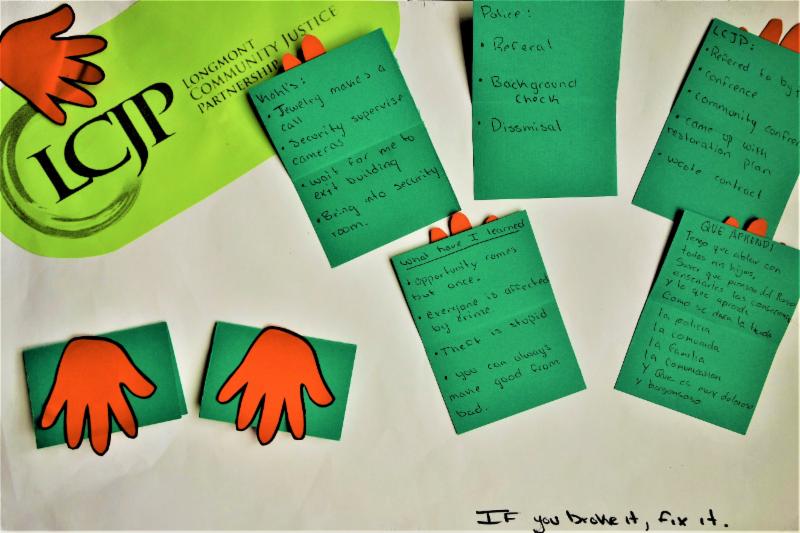
As we brainstormed ways that he could repair harms, a community volunteer suggested an art project that illustrated what Eduardo had learned. Eduardo perked up and agreed this was something he was willing to do, but as we clarified the details, he struggled to speak and his eyes filled with tears. He had learned so much, but what if he couldn't find a way to express it all?
|
|
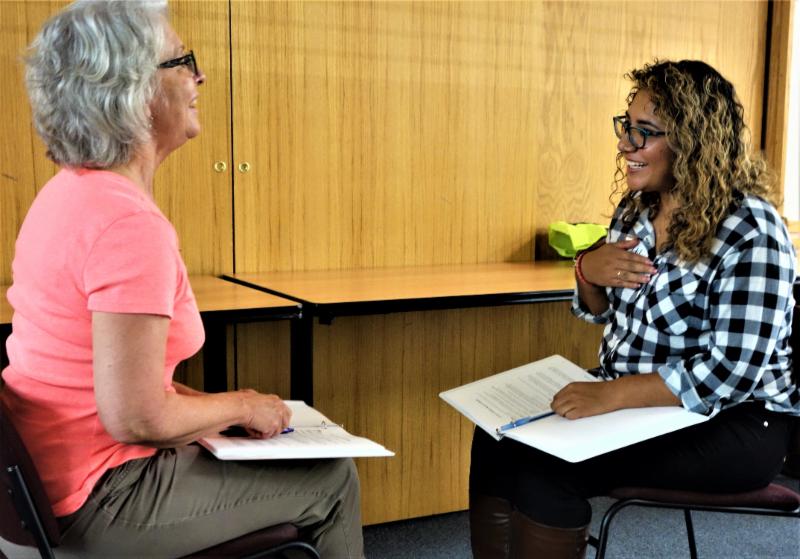
| LCJP Volunteer Interpreter Addy Taboada (right) practices her skills with LCJP Volunteer Facilitator Deb Smith |
Marta reached out, touched her son's knee, and offered to help. They could work on the project together, and it would include things they had both learned.
I could have never predicted how this small gesture could cause such a drastic change. Eduardo's attitude transformed. He sat up in his chair, he began making eye contact, he even smiled as we finalized his contract, which he later completed.
Often, parents and their children haven't found the words, time, or space to talk about the incident that has led to a restorative justice referral, no matter how "simple" it may seem. Guided by compassionate LCJP volunteers, the restorative justice process provides a safe space that invites family members to reconnect and move beyond the silence of shame.
*All names have been changed.