|
The foundational principle in historic preservation is to retain, protect, and maintain existing materials and historic character-defining features of our built environment. For historians, the stories of people and places are captured not only the physical form of buildings and landscapes, but also in the materials used to create these spaces.
What happens if new life cannot be found for older structures or, conversely, when the physical fabric needs to be replaced after decades of use?
Depending on the purpose, reuse of building and landscape materials can be complicated. And while just about anyone can take a hammer to a wall and create havoc, the task of a deconstructing a building with the goal of reusing materials requires planning and careful execution.
A growing movement to plan for and codify deconstruction can make it easier to track and reuse materials on a wider scale. This process can make finding the right materials (hopefully at a local source) easier as well as provide more access to expertise in developing designs that meet modern requirements for ADA and other building codes, and electrical and HVAC efficiencies. This can include data and other technology that fit within a green reuse framework.
On a national level, the EPA issued Best Practices for Reducing and Recyling Construction Materials, which provides a general overview of designing for adaptability, disassembly and reuse; a section on deconstructing buildings and mobile homes; and a list of organizations working to reduce disposal of construction and demolition materials. Check out some of those resources.
As part of its decarbonization efforts, the New York City Economic Development Corporation (NYCEDC) recently launched a hub for collecting, handling and resale of construction materials in Brooklyn with Our Temenos, an ecological landscaping firm. The goal of this year-long pilot project is to build out the physical infrastructure that is needed to support building material reuse at scale, something which industry experts have determined is vital to reduce embodied carbon emissions in the built environment and create green jobs. Read more here.
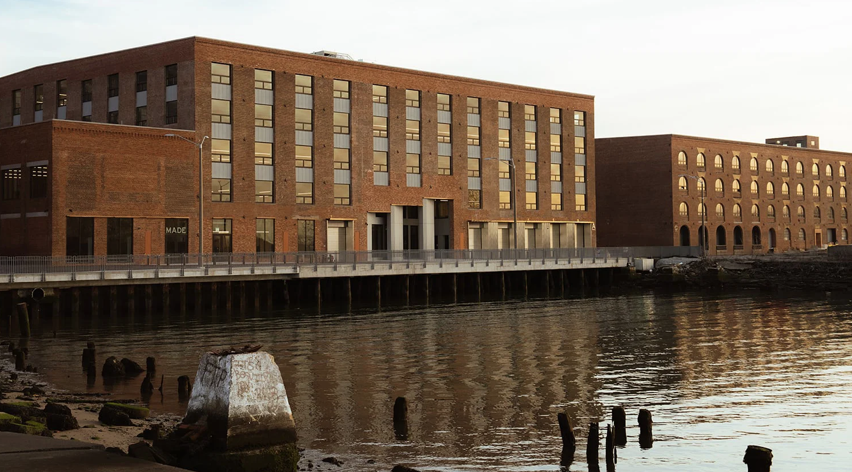
Below left: MADE Bush Terminal, hosting NYC's pilot deconstruction program.
|