A regional resource for climate advocates
February 13, 2022
|
|
Smart solutions to decarbonize buildings
By Katie McGinty, TED Talk, Jan. 2022
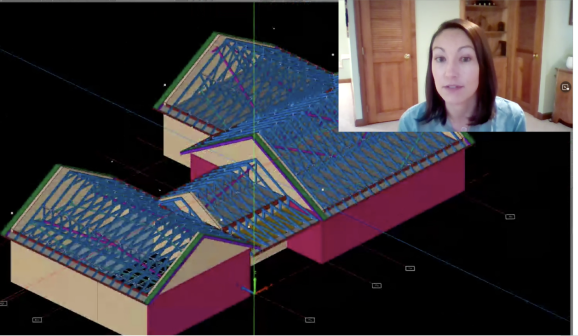
Buildings are bad news for the climate -- the indoor spaces we spend most of our lives in emit 40 percent of the world's greenhouse gases.
Rethinking how to create and occupy the spaces we inhabit, Katie McGinty, chief sustainability officer at Johnson Controls, walks us through smart...Watch here.
|
|
What's Cookin' in the Commonwealth? |
|
Draft building code changes open debate over emissions, costs
By Colin A. Young, State House News Service, February 9, 2022
The Baker administration on Feb. 8 rolled out the state building code changes that it hopes will encourage builders to shift away from fossil fuel heating in favor of electrification, including a new municipal opt-in net-zero stretch energy code that does not eliminate gas-heated buildings but would hold them to a higher efficiency standard.
Updating the existing stretch code and creating a new net-zero specialized stretch code for cities and towns to adopt is one of the more technical but meaningful steps Massachusetts is planning to take to be net-zero by the middle of the century. Residential and commercial building energy consumption was responsible for about 27 percent of the state’s greenhouse gas emissions in 2017. Read more.
|
|
Massachusetts gas ban movement gathers support from state lawmakers
A grassroots movement to restrict natural gas use in new buildings has percolated up to the Massachusetts State House.
S&P Global, February 3, 2022
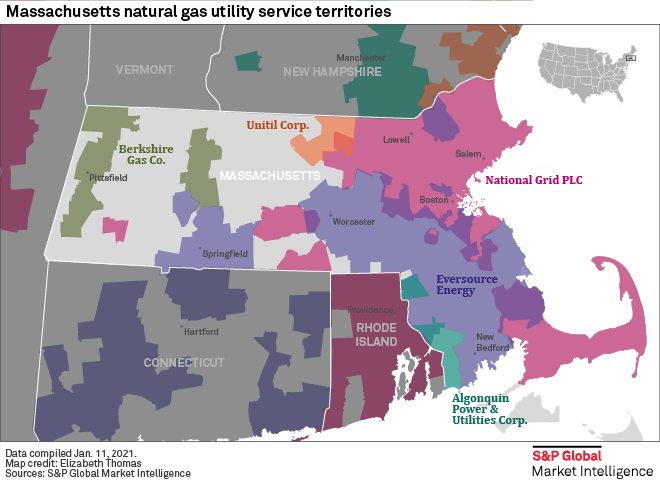
Massachusetts state lawmakers are taking steps to support a long-running campaign to allow local governments to pass building gas bans, reflecting the legislators' concern about Republican Gov. Charlie Baker's position on the grassroots movement. Read more.
|
|
DOER Releases Straw Proposal for Stretch Code Update and New Specialized Stretch Code
View the February 8 webinar and submit public comment
The Massachusetts Department of Energy Resources (DOER) has released its Straw Proposal for Stretch Code Update and new Specialized Stretch code and is seeing public feedback.
DOER is offering stretch code resources including:
Submit your comments to: stretchcode@mass.gov with the subject line “Stretch Code Straw Proposal Comments.”
The deadline for comments on the Straw Proposal is 5:00 pm EST, March 9, 2022.
|
|
Baker seeking major changes in building code
Municipalities could adopt rooftop solar, full electrification requirements
By Bruce Mohl, CommonWealth Magazine, February 7, 2022
THE BAKER ADMINISTRATION is preparing to unveil proposed revisions to the state building code that would ratchet up energy conservation across the state and allow individual communities to opt-in to a “specialized stretch code” that would require new construction to be much more energy self-sufficient.
The specialized stretch code, according to sources briefed on the plan, would require all new construction to include rooftop solar panels, to meet at least some “passive house” standards, and to be capable of using electricity for all heating needs...
Sources said the revisions to the state building code would deal primarily with windows, insulation, and other measures to reduce energy usage. Read more.
|
|
|
In the Spotlight: Faith Communities Environmental Network
|
|
The Faith Communities Environmental Network of Cape Cod & the Islands
A Cape Cod Climate Change Collaborative Network Is Leading the Way!
By Hannah Crosby, AmeriCorps Cape Cod, February 2022
Since its founding in 2016, a central mission of the Cape Cod Climate Change Collaborative has been to foster and promote networks – sector-based organizations, groups and individuals all working to combat the climate crisis. Networks span a broad range of sectors including business, transportation, energy, conservation, climate action, and agriculture, for example — and involve citizens, scientists, business leaders and activists all working to promote environmental justice, implement legislative initiatives to curb fossil fuel emissions, and move the region to net zero.
Among the Climate Collaborative networks, the Faith Communities Environmental Network (FCEN) is the oldest and most robust. Composed of thirty-five (and growing) diverse faith communities on Cape Cod and the Islands, FCEN members are committed to preserving Earth through eco-justice and to accomplishing its mission through education, activism, and sharing best practices.
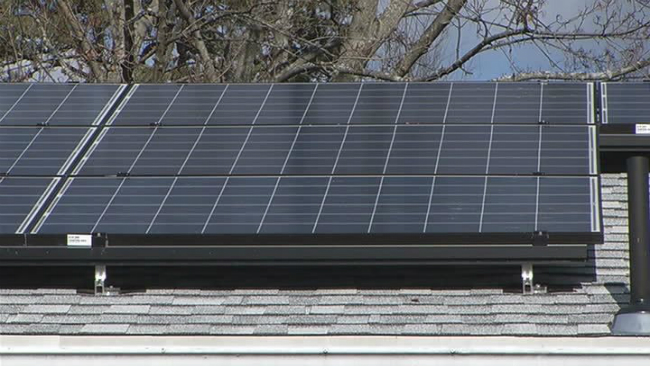
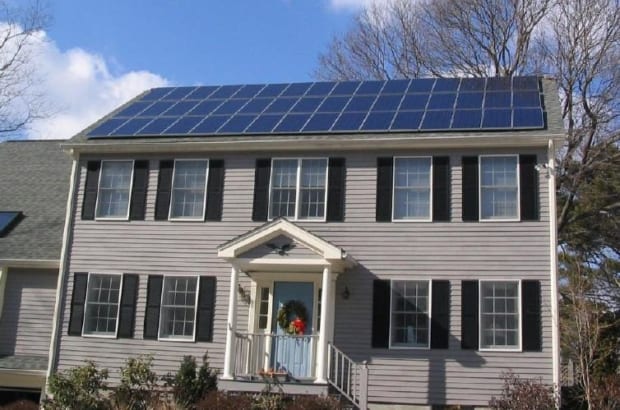
FCEN leads by example. Since its formation in 2016, FCEN has supported the installation of solar panels at faith institutions across the Cape and Islands. Recent projects include installations at the Unitarian Church of Barnstable and St. Christopher’s Episcopal in Chatham. Read more.
|
|
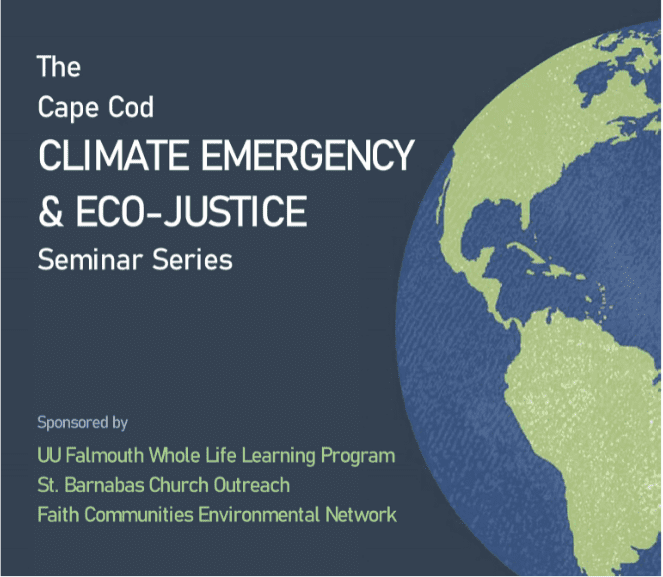
The Cape Cod Climate Emergency & Eco-Justice Seminar Series
A remarkable series produced by FCEN affiliates and individuals
This robust and comprehensive eight-part series on the climate crisis and eco-justice was held virtually from March through October 2021.
Co-sponsored by UU Falmouth Whole Life Learning Program, St. Barnabas Church Outreach, and the Faith Communities Environmental Network, the series illustrates what FCEN individuals, working together, can accomplish for the climate cause, their communities, and the care of planet Earth. Learn more and download the series here.
|
|
"Quotes of Note"
Mr. Maguire: There is a great future in plastics.
Think about it. Will you think about it?
Benjamin Braddock: Yes, I will.
Mr. Maguire: Okay. Enough said. That's a deal.
— The Graduate (Film release December 21, 1967)
|
|
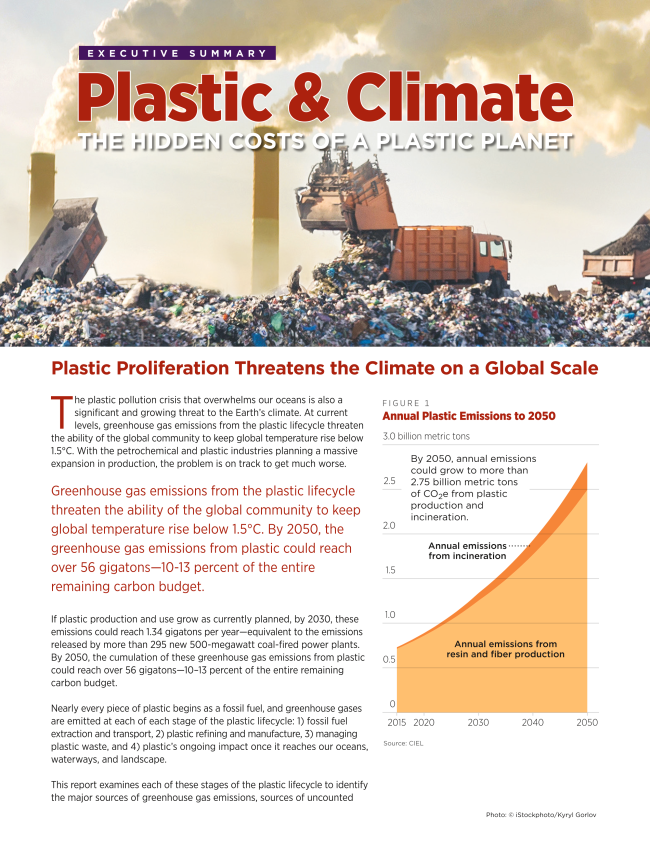
Plastic & Climate: The Hidden Costs of a Plastic Planet
Center for International Environmental Law
Amidst growing concern about the impacts of plastic on the oceans, ecosystems, and human health, there’s another largely hidden dimension of the plastic crisis: plastic’s contribution to global greenhouse gas emissions and climate change.
This report examines each of these stages of the plastic lifecycle to identify the major sources of greenhouse gas emissions, sources of uncounted emissions, and uncertainties that likely lead to underestimation of plastic’s climate impacts. Read more.
|
|
As Plastic Waste Surges, Local Woman Helps Cape Reduce Dependence
By Eve Zuckoff, WGBH News, July 28, 2020
On a hot summer Friday, a Toyota RAV4 rolls into the parking lot of Cape Cod Beer in Hyannis. It’s there for an outdoor festival with live music, cornhole, and, of course, beer. Trailing just behind the car is a bright green shed. The driver parks it right in front of the beer garden.
“I am setting up Sally Sud Shed. She is one of the ladies of Green Road Refill. The other one is me, Jess Georges,” the driver said.
For the last three years, Jessica Georges, Sally, and Sally’s predecessor, a converted school bus named Betty, have travelled to farmers markets and fairs all across the Cape and Nantucket. As the founder and sole employee of Green Road Refill, Georges is selling eco-friendly and plastic-free products: everything from bamboo toothbrushes to biodegradable deodorants. But the heart of her business is refills. Read more/listen here.
|
|
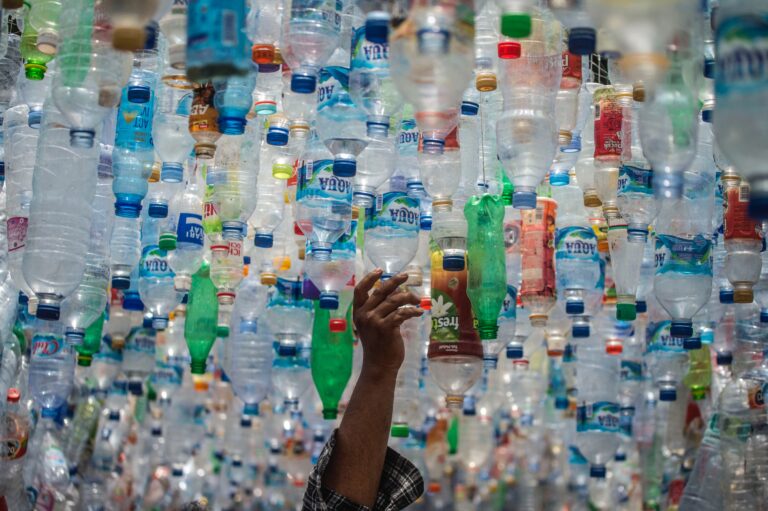
What we can do about all our plastic
By Amanda Williams, 1A WAMU | NPR, January 10, 2022 | Juni Kriswanto/AFP via Getty Images
Plastic bags at the grocery store. Plastic utensils handed out with to-go orders. Plastic straws in fountain sodas. Plastic phone cases. We use a lot of plastic in our daily lives. But that reliance comes at a cost.
We need every state (or better yet, federal) legislation to make NO PLASTIC UTENSILS the default for restaurants & food delivery services, like some like Hawaii & cities such as L.A. & Seattle have done. It’s mind-boggling this even needs to be said. Read more/listen here.
|
|
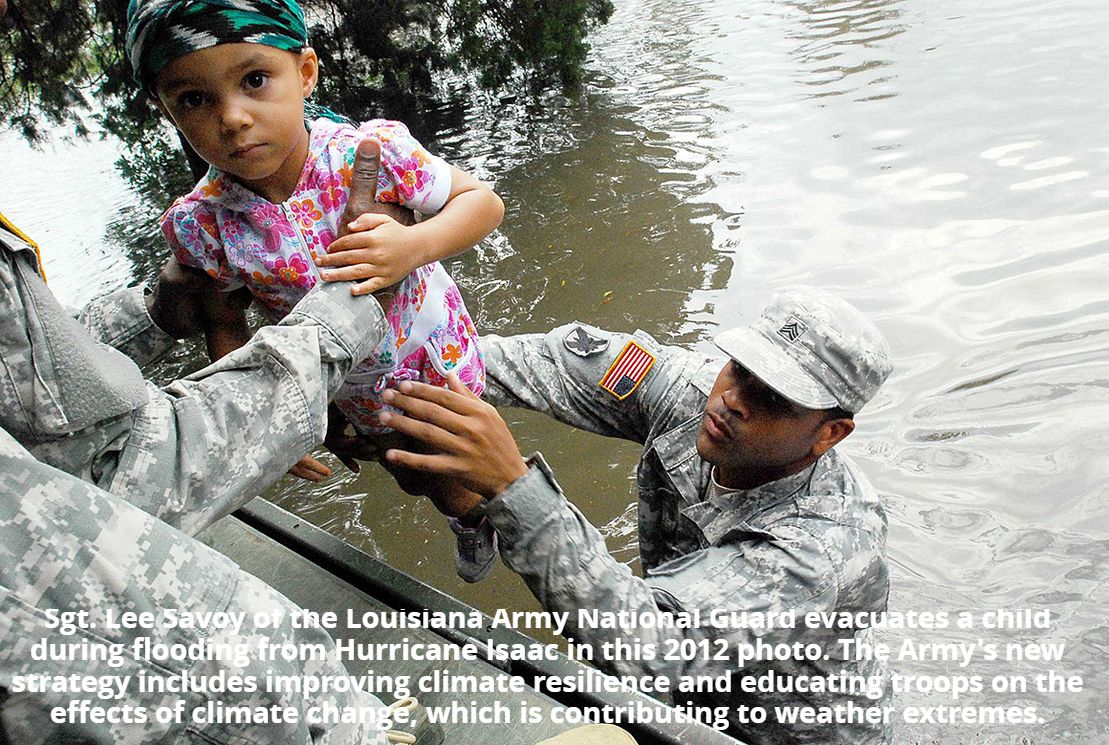
Army details plans to hit net-zero carbon emissions
By Nico Portuondo, E&E News, February 8, 2022 | Photo: Sgt. Rashawn D. Price, 241st Mobile Public Affairs Detachment/Army/Flickr
The United States Army released its climate strategy report today, outlining ambitious renewable energy and decarbonization goals for the service, including installing a microgrid at every Army base by 2035, fielding electric combat vehicles by 2050 and reaching net-zero emissions in all of the Army’s procurements by 2050.
“The Army will mitigate and adapt to climate change,” said Christine Wormuth, secretary of the Army, in the report. “We have a unique opportunity to improve our defense capabilities and become a more efficient force, while securing a better future.”
The Army is the first service to release a climate strategy, with similar plans expected later this year from the Air Force and Navy. The strategy is broken down into three lines of effort — installations, acquisitions and logistics, and training — with intermediate objectives on specific deadlines to build to the overarching effort of net-zero Army emissions by 2050. Read more.
|
|
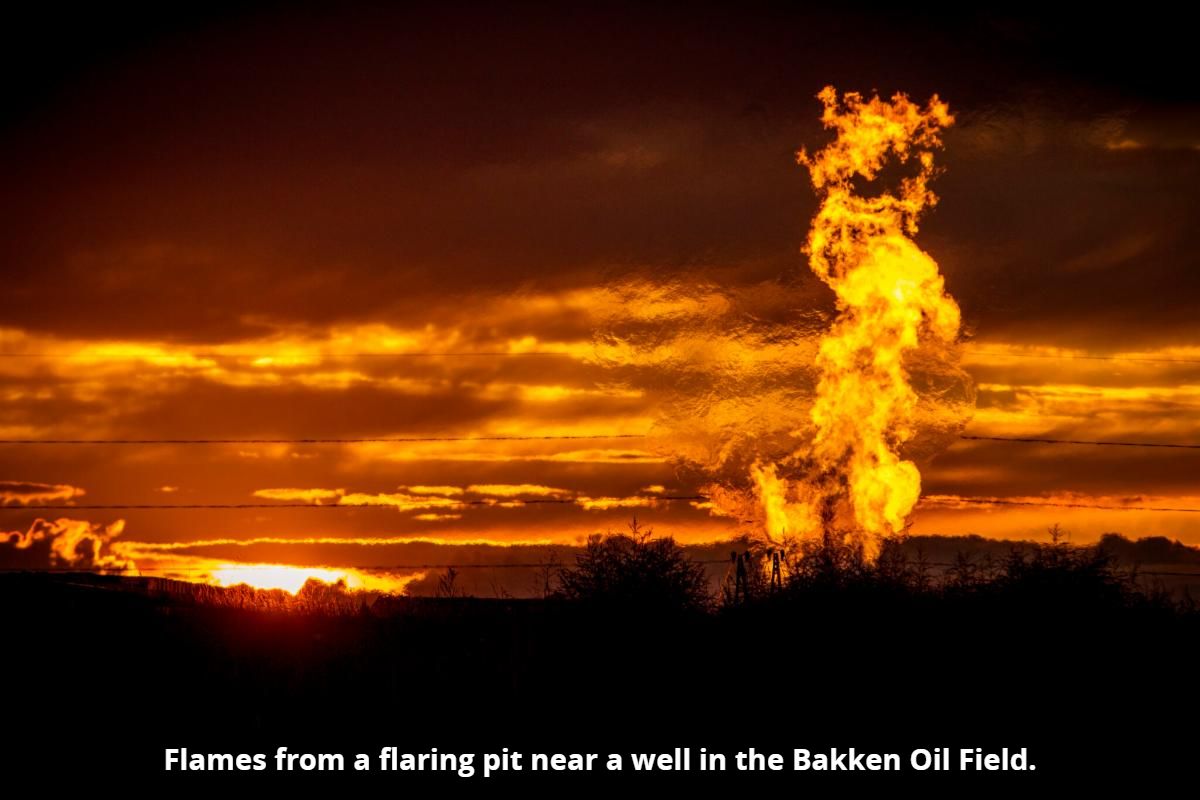
To Counter Global Warming, Focus Far More on Methane,
a New Study Recommends
Scientists at Stanford have concluded that the EPA has radically undervalued the climate impact of methane, a “short-lived climate pollutant,” by focusing on a 100-year metric for quantifying global warming.
By Phil McKenna, Inside Climate News, February 9, 2022 | Credit: Orjan F. Ellingvag/Corbis via Getty Images
The Environmental Protection Agency is drastically undervaluing the potency of methane as a greenhouse gas when the agency compares methane’s climate impact to that of carbon dioxide, a new study concludes.
The EPA’s climate accounting for methane is “arbitrary and unjustified” and three times too low to meet the goals set in the Paris climate agreement, the research report, published Wednesday in the journal Environmental Research Letters, found.
The report proposes a new method of accounting that places greater emphasis on the potential for cuts in methane and other short-lived greenhouse gasses to help limit warming to 1.5 degrees Celsius above pre-industrial levels. “If you want to keep the world from passing the 1.5 degrees C threshold, you’ll want to pay more attention to methane than we have so far,” said Rob Jackson, an earth system science professor at Stanford University and a co-author of the study. Read more.
|
|
Oceans, Conservation, Land Use |
|
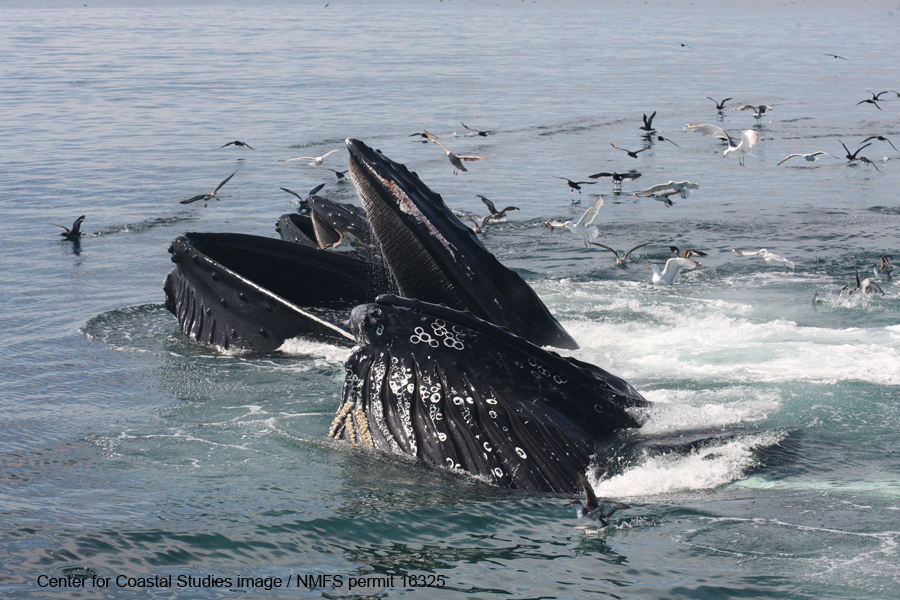
Current global warming may affect the Earth’s oceans for many millennia to come
Press release, Center for Coastal Studies, Feb. 2, 2022
A group of marine scientists from around the world, led by Dr. Per Palsbøll of the University of Groningen, looked to the past in order to understand how the long-term impacts from today’s global warming might impact baleen whale populations. Perhaps the most worrisome observation in the study was that “it suggests that the large-scale oceanic changes set in motion by global warming persisted for many thousands of years after temperatures stabilized. It is a warning from the past as to what the current global warming may already have started”.
The study was led by the Marine Evolution and Conservation group at University of Groningen’s Institute for Evolutionary Lifesciences, based in Groningen (the Netherlands), in collaboration with an international team of 37 researchers from 28 institutions in 15 countries. Dr. Palsbøll is also an adjunct scientist at the Center for Coastal Studies (CCS) along with another author, Dr. Martine Bérubé. Additional co-authors included CCS staff members Dr. Jooke Robbins, Scott Landry and David Mattila. It was published February 2nd in Global Change Biology. Read more.
|
|
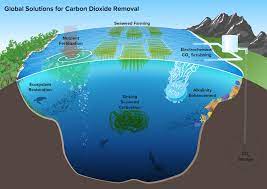
Scientists say the ocean must play a role in removing more CO2 to reduce the impacts of by climate change. Here’s how…
By Daniel Hentz, Oceanus, February 10, 2022
A new report from the National Academy of Sciences, Engineering, and Medicine (NASEM) says the need to use the ocean in removing excess carbon dioxide from the atmosphere is no longer a suggestion. It’s a necessity.
On December 8, 2021, a special committee from the academy concluded an 18-month assessment of ocean-based solutions that would help remove excess carbon dioxide out of the atmosphere, keeping planetary warming below 2°C, per the Paris Climate Agreement. That won’t be achievable without using some combination of both land and sea-based carbon dioxide removal (CDR) techniques, say report authors.
“There’s no doubt we are in the middle of a climate crisis that requires immediate greenhouse gas reductions and carbon dioxide removal,” says WHOI marine chemist and NASEM committee member Ken Buesseler during a recent presentation. “We need to get CO2 out of the atmosphere.” Read more.
|
|
Energy & The Built Environment |
|
Low-Income, Black, Hispanic, and Native American Households Face High Energy Burdens
ACEEE Energy Burden Report details high energy burdens
Even before the COVID-19 recession, energy bills strained many family budgets—and some far more than others. The American Council for an Energy Efficient Economy (ACEEE)'s 2020 research found that low-income, Black, Hispanic, and Native American households all face dramatically higher energy burdens—spending a greater portion of their income on energy bills—than the average household. High energy burdens are correlated with greater risk for respiratory diseases, increased stress and economic hardship, and difficulty in moving out of poverty. These communities also experience acute systemic inequalities, barriers, and limited access to public and private resources, and they are now being hit the hardest by job losses and health impacts of the pandemic.
We found the same patterns of inequality play out nationally, regionally, and across all metro areas in our study. These energy burden disparities must be addressed. Inefficient housing is a key factor leading to high energy burdens. Policymakers and utilities can boost funding for energy efficiency retrofits and weatherization for the communities who experience the highest energy burdens. Read more.
|
|
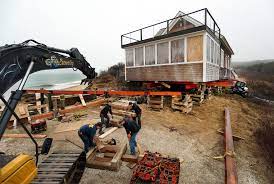
To escape crumbling coasts, some residents consider retreat
By Dharna Noor Globe Staff,Updated February 4, 2022 | Photo credit John Tlumacki, Globe Staff
This week, a Ballston Beach house teetering on the edge of collapse was taken off its stilts and moved to a temporary, safe location. The move came after a nor’easter storm brought heavy rains, winds, and waves to Cape Cod, cracking the pilings on which the historic house stood and washing away much of its foundation.
The home, which has stood on Truro’s coast since the 1800s, is one of an increasing number of houses on the Massachusetts coast that have been threatened by climate change-fueled erosion. Last January, a house on Plum Island collapsed into the sea during high tide. The following month, three summer homes in Sandwich partially collapsed amid a fierce winter storm. Just weeks later, another home on the shoreline split in two. Thousands of other coastal homes have suffered damage, too. Read more.
|
|
Events, Webinars & Trainings |
|
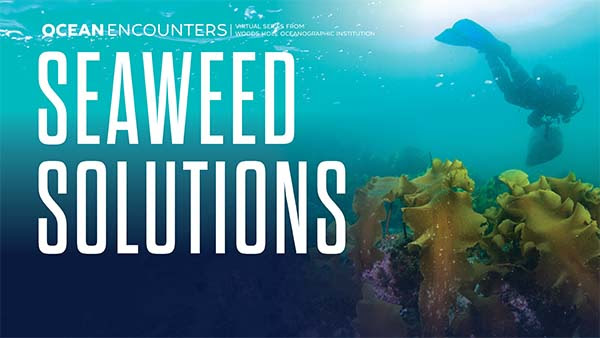
The Woods Hole Oceanographic Institution
Ocean Encounters Virtual Series presents
Seaweed Solutions
How scientists, ocean farmers, and policy makers are looking to kelp as a sustainable solution to some of the toughest issues facing our world today
Wednesday, February 16, 2022
7:30 PM ET
As our climate continues to change and food insecurity persists worldwide, scientists and others are looking to solve these problems without harming marine ecosystems. Learn how seaweed aquaculture has the potential to play a major role in creating climate-friendly food systems for a growing population and produce new types of carbon-neutral animal feeds, fuels, and other products for a better future. Speakers include: Robert Jones, Global Aquaculture Lead, The Nature Conservancy; Scott Lindell, Aquaculture Research Specialist, WHOI; Briana Warner, CEO Atlantic Sea Farms; with host Veronique LaCapra, WHOI.
|
|
Northeast Sustainable Energy Association (NESEA) presents
BuildingEnergy Boston
Virtual Pre-Conference Showcase
February 15, 2022
9:00am - 5:00pm
The BuildingEnergy Boston 2022 Virtual Pre-Conference Showcase is a free virtual event on Tuesday, February 15, two weeks before the in-person conference on February 28 and March 1. The showcase will feature sponsored sessions, community events, and networking opportunities across the sustainable energy spectrum.
|
|
Cape & Islands Climate Voices |
|
Climate Action: No. 594: Leading
By Example
Decarbonizing And Minimizing Environmental Impacts Of State Government
By Judith Holt, The Sandwich Enterprise, February 2022
The Baker-Polito Administration has filed legislation seeking $4.991 billion in capital funds to support core improvements that will enable the commonwealth to continue delivering critical state services to the people of Massachusetts.
In support of the statewide goal of achieving net zero greenhouse gas (GHG) emissions in 2050, in fulfilment of the requirements of Executive Order No. 569, which calls on state government to “expand upon existing strategies for the commonwealth to lead by example in making new, additional reductions in greenhouse gas emissions,” and in conformance with the Massachusetts State Hazard Mitigation and Climate Adaptation Plan, which outlines strategies necessary to prepare for the impacts of climate change, this executive order establishes policies, programs and strategies to substantially reduce GHG emissions from state government operations and enhance resiliency at state-owned-and-managed buildings, facilities, campuses and fleets.
These goals will be achieved by advancing high-performance buildings for new construction; expanding energy efficiency and decarbonizing fuels in existing buildings; acquiring fuel-efficient and zero-emission vehicles and continuing the deployment of new renewable energy. Read more.
|
|
From climate change to virus: What is going on?
By Sheila Place, Special to Cape Cod Times USA TODAY NETWORK, February 6, 2022
We have entered the era when our climate is so changed that we’re experiencing feedback loops, such as melting permafrost and increased greenhouse-gas emissions from deforestation. This long-predicted development means we are releasing increasing amounts of CO2 and methane, a powerful greenhouse gas, referred to as a 'climate bomb.'
Have you seen the film 'Don’t Look Up?' It’s a powerful satire describing the global 'Us' and our ongoing denial and inaction.
In the gloom of a 2022 winter, people are dying at a rate of 2,000 a day from COVID-19 and its variants. A very high percentage of hospitalizations and deaths are among the unvaccinated, and while breakthrough infections have become common, hospitalization and mortality rates continue to decline for the vaccinated and boosted. Read more.
|
|
Climate Finance = Climate Justice
By Courtney Lindwall, NRDC, January 21, 2022 | Photo: Tertius Pickard/AP Photo
Just 23 developed countries are responsible for half of all historical greenhouse gases that are warming the planet. That’s why, at the 2009 United Nations climate summit, those rich nations made a promise. Together, they agreed to mobilize $100 billion per year, officially beginning in 2020. The money was meant to help developing countries, which are most vulnerable and least responsible for the crisis, reduce their emissions and adapt to the impacts of climate change.
They didn’t keep that promise.
Not only did the rich nations fail to meet the 2020 funding target, but there’s also little consensus on how to measure the progress they’ve made. Yet, even with all the flaws, climate advocates still believe the pledge — which is yearly and runs through at least 2025 — remains critical. Here’s what you need to know. Read more.
|
|
Introducing the IMPACT+ Principles for Climate-Aligned Finance
By Elizabeth Harnett Alex Murray, RMI, February 9, 2022
In the wake of COP26 and a record-breaking year of climate commitments from the financial sector, there has never been greater attention on what financial institutions do next to translate their words into action. With the carbon budget running down and no time to waste in this decisive decade for climate action, it is essential that financial institutions take impactful, strategic, and ambitious steps toward a 1.5°C future. As climate action accelerates in 2022, financial professionals responsible for developing and implementing climate alignment strategies must navigate a constantly evolving landscape of climate initiatives and changing stakeholder expectations. In the absence of a one-size-fits-all approach to climate action, the financial sector needs to orient its next steps around the end goal of achieving real-world transformation.
|
|
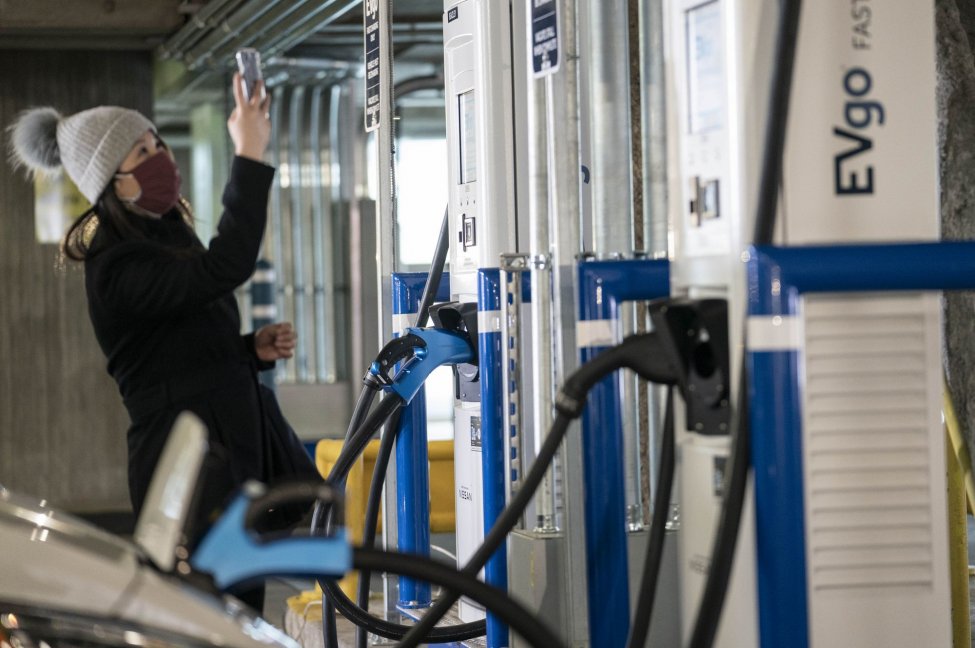
Federal gov't unveils plan to greatly expand EV charging stations across U.S.
By Clyde Hughes, UPI, February 10, 2022 | File Photo by Sarah Silbiger/UPI | License Photo
Feb. 10 (UPI) -- The federal government on Thursday gave states the go-ahead to build a national network of electric vehicle charging stations, with $5 billion in federal funds from the bipartisan infrastructure law that Congress passed last year.
The Transportation and Energy departments announced the measure, which will make the federal funds available over five years. The move is part of Pres-ident Joe Biden's aim to increase electric vehicle use and decrease carbon emissions. Read more.
|
|
YSE Study Finds Electric Vehicles Provide Lower Carbon Emissions Through Additional Channels
Yale School of the Environment, Dec. 19, 2021
With new major spending packages investing billions of dollars in electric vehicles in the U.S., some analysts have raised concerns over how green the electric vehicle industry actually is, focusing particularly on indirect emissions caused within the supply chains of the vehicle components and the fuels used to power electricity that charges the vehicles.
But a recent study from the Yale School of the Environment published in Nature Commun-ications found that the total indirect emissions from electric vehicles pale in comparison to the indirect emissions from fossil fuel-powered vehicles. Read more.
|
|
Funding Our Future: The EV Transition Requires Infrastructure that Inspires Confidence and Powers All Communities
By Britta Gross Julia Thayne DeMordaunt Alisa Petersen, RMI, Feb. 7, 2022 | Nuvve’s V2G EV Charging Hub model. Image courtesy of Nuuve
This week, the US Department of Transportation will release initial guidance on how it will make its first major investment in a nationwide electric vehicle (EV) charging network. The historic $7.5 billion in new funding—passed in last year’s infrastructure bill—is a massive opportunity to tackle our country’s largest source of emissions: the transportation sector. It’s also the United States’ chance to create a robust, convenient, and equitably sited charging network—where more communities have access to stations that can power cleaner modes of transportation.
From the largest metropolitan areas in the United States like New York City to rural communities in Georgia, we need cleaner, more affordable, and efficient transportation options if we are going to solve climate change in a way that uplifts communities. Spent wisely, the $7.5 billion in EV charging funding can help us deliver the national backbone for a far superior fast charging network than exists today. It can also prioritize infrastructure investments in both disadvantaged and underrepresented communities.
|
|
Climate Change Enters the Therapy Room
Ten years ago, psychologists proposed that a wide range of people would suffer anxiety and grief over climate. Skepticism about that idea is gone.
By Ellen Barry, The New York Times, February 6, 2022 | Photo credit Mason Trinca for The New York Times
Alina Black, a mother of two in Portland, Ore., sought a therapist who specialized in climate anxiety to address her mounting panics. “I feel like I have developed a phobia to my way of life,” she said.
PORTLAND, Ore. — It would hit Alina Black in the snack aisle at Trader Joe’s, a wave of guilt and shame that made her skin crawl.
Something as simple as nuts. They came wrapped in plastic, often in layers of it, that she imagined leaving her house and traveling to a landfill, where it would remain through her lifetime and the lifetime of her children.
She longed, really longed, to make less of a mark on the earth. But she had also had a baby in diapers, and a full-time job, and a 5-year-old who wanted snacks. At the age of 37, these conflicting forces were slowly closing on her, like a set of jaws. Read more.
|
|
NZ-21 CONFERENCE
Missed the conference?
Not to worry!
|
|
|
|
We are an all-volunteer 501(c)(3) organization whose mission is to reach carbon neutrality — or net zero — on Cape Cod and the Islands of Massachusetts by enhancing communication, collaboration, and activism among organizations, programs, and individuals committed to mitigating the climate crisis. We depend upon the generosity of our stakeholders to conduct our work. All donations are tax deductible as allowed by law
|
|
The Climate Action Alerts newsletter is curated and produced by Fran Schofield, Co-Vice President, Cape Cod Climate Change Collaborative Board of Directors.
Got news? Please send me your climate stories from home, school, workplace,
town or organization. And don't forget to share this action alert with
|
|
|
|
|
|
|