Muharram 1447

New Moon, New Year

🌒

This week, we welcome the sacred month of Muharram and the dawn of a new Hijri year, 1447 AH.


Muharram is not a month of sorrow alone, but of reflection, renewal, and rejoicing in the mercy of Allah that flows through every Prophet and is perfected in Sayyidina Muhammad ﷺ and his family. Muharram is one of the four sacred months in which Allah has commanded us to be especially mindful, just, and peaceful. It’s a time of fasting, prayer, remembrance, and turning our hearts inward to seek nearness to the Divine. According to tradition, Mawlana emphasized that fasting in Muharram brings a unique light and mercy from Allah.


Aisha Umm al-Mu’minin (ر) narrated that the Prophet ﷺ said:


“Whoever fasts the first ten days up till `Ashura, he will inherit the Paradise al-Firdaus.”


Muharram: A New Year, A Sacred Trust

Mawlana Shaykh Hisham Kabbani

January 9, 2009


O Muslims, O believers!


This is the month of Muharram al-Haram, a month in which Allah ﷻ has prohibited fighting. It is a month in which killing is forbidden, even the killing of a worm, even the killing of an ant. Especially when you are in the Holy Cities, in Mecca or in Madina.


This is a month where Allah ﷻ ordered His servants to make peace, because it is the beginning of the year, the year that Allah wanted for His believers, the year of the Hijrah, when the Prophet ﷺ migrated from Mecca to Madina.


He was tortured in Mecca, and Allah ordered him to leave it behind, to go to Madinat al-Munawwarah, where he would build his community, and he would build the Message of Islam, the Message that first flourished in Mecca, and then flourished in Madina, and then spread all over the world.


In this month, we do not forget one of the grandchildren of Sayyidina Muhammad ﷺ, Sayyidina al-Ḥusayn, whose father is Sayyidina ʿAlī ibn Abī Ṭālib, and whose mother is Sayyidah Fāṭimah az-Zahrāʾ, and whose grandfather is the Messenger of Allah ﷺ.


He came out for the support of the believers, and what was the result? They killed him. And not only did they kill him, they cut him into parts. That is why Allah is not happy with those who kill others. And today, we are seeing killing and bloodshed all over the world.


In almost every country, we are seeing problems, and these problems can be stopped by believing in Allah’s religion, which is Islam, a religion that prohibits attacking anyone without a reason.


Sayyidina Muhammad ﷺ brought Islam as a message of peace, as a message of extending a hand to everyone, as a message to bring people to Paradise, not as a message of bloodshed.


مِنَ ٱلَّذِينَ فَرَّقُوا۟ دِينَهُمْ وَكَانُوا۟ شِيَعًۭا ۖ كُلُّ حِزْبٍۭ بِمَا لَدَيْهِمْ فَرِحُونَ


˹like˺ those who have divided their faith and split into sects, each rejoicing in what they have.


(Surah Ar-Rum, 30:32)


Every group is happy with what they have. Islam became groups. Instead of unity, it became divisions. Instead of one hand, it became hundreds, it became thousands of hands. Each group with different ideas, fighting each other, trying to eliminate each other.


فَتَقَطَّعُوٓا۟ أَمْرَهُم بَيْنَهُمْ زُبُرًۭا ۖ كُلُّ حِزْبٍۭ بِمَا لَدَيْهِمْ فَرِحُونَ


Yet the people have divided it into different sects, each rejoicing in what they have.

(Surah Al-Mu'minun, 23:53)


In any case, we are not going deeply into that subject now. But we are asking Allah ﷺ, as many people around the world are asking, to stop the bloodshed, and to protect the innocent, and to make sure that no one is killed without reason.


May Allah send His mercy on the hearts of the mothers, the fathers, the brothers and sisters, and the relatives of those who lost their loved ones.


As I said, this is the month of temptations, and we must try to do our best, praying for those who have passed away, and sending them all kinds of duʿā’ and blessings, that Allah will forgive them, and that He will forgive us as well.

The Garden of Serenity

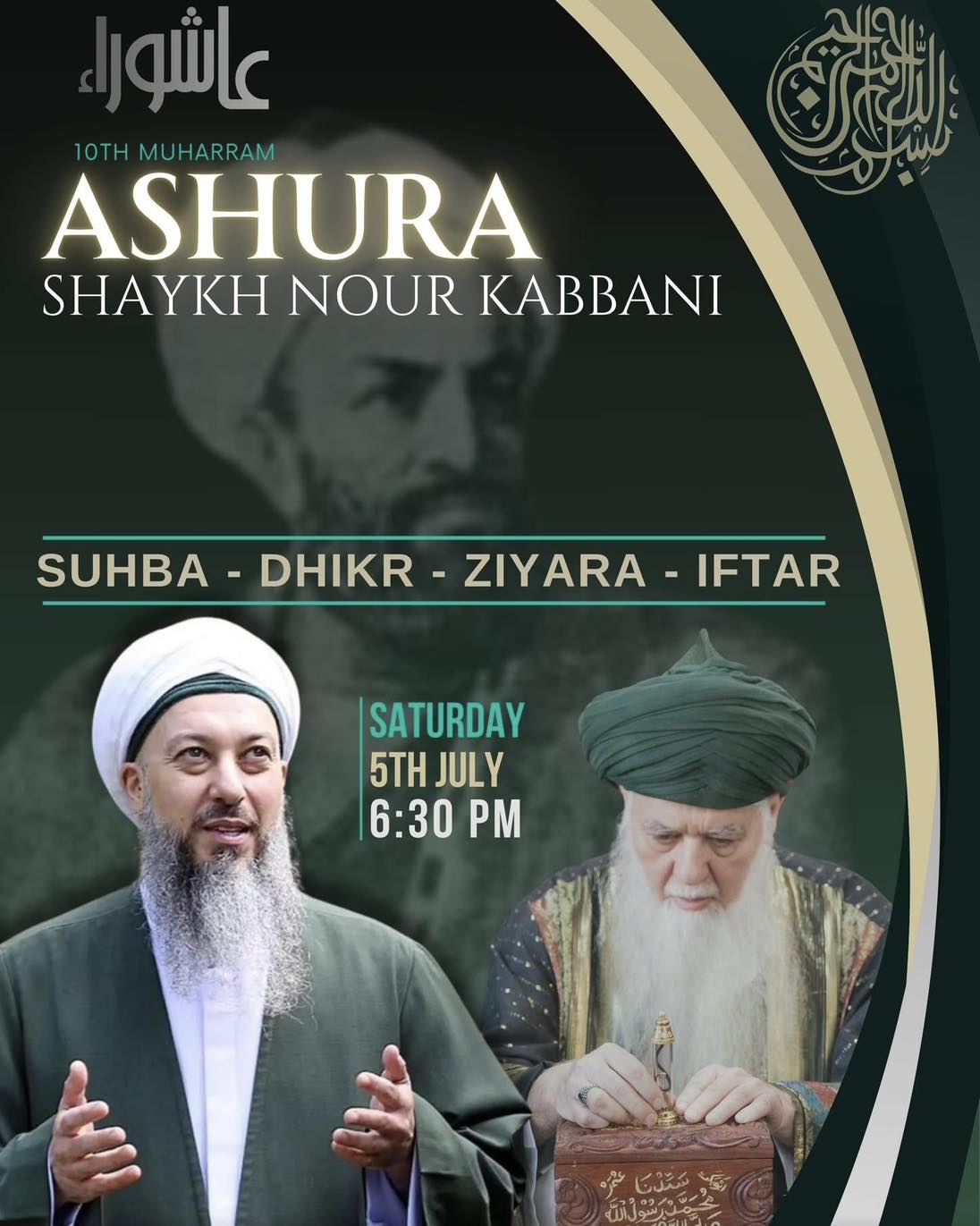
Shaykh Nour Kabbani

Streamed live on June 21, 2025

May Allah always keep us together in the garden of serenity. The garden of tranquility and peace. Do you believe this place is such a garden? Of course! Any place where there is dhikrullah, across the world, is the garden of serenity. You go to places and pay $20 to enter a “garden of serenity”, trying to find peace. Every association of dhikr, even if it’s only one person, will be covered with Allah’s tranquility and mercy.


People resort to other things to try to find peace and happiness, but it’s very simple: you sit down, empty your mind from all others, and connect to the Lord of Heavens. Immediately, angels will surround you.

Perform Ashura Qurban

Perform Ashura Qurban


It is a tradition of Mawlana Sultan al-Awliya Shaykh `AbdAllah al-Daghestani (ق) to make Qurban of two sheep on the day of `Ashura and distribute the meat to the poor and needy members of the Tariqah.


  • Zabiha in Fenton Sharif with the meat used to feed Zawiya guests.


  • Zabiha in Pakistan with the meat used to feed orphans and indigent folk

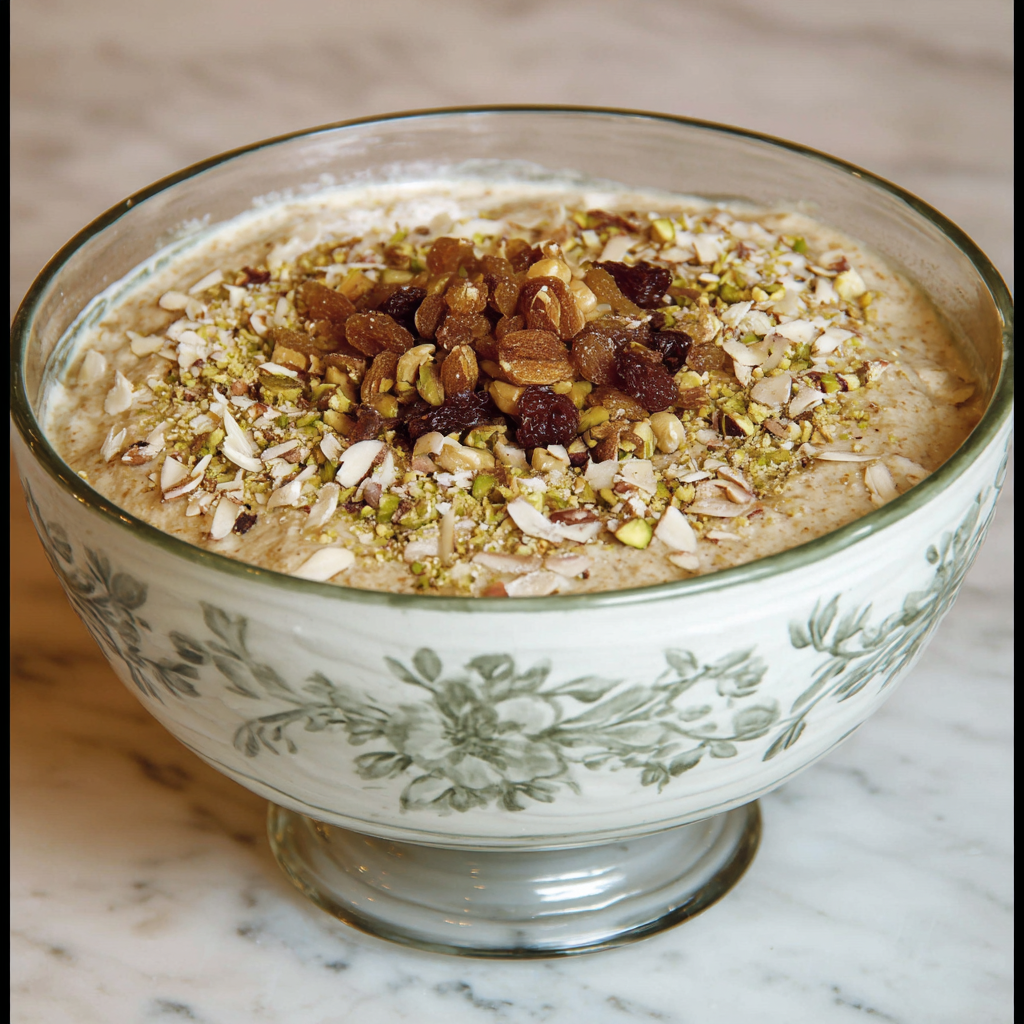
Ashura Pudding

HAJJAH NAZIHA'S HEAVENLY RECIPES

A traditional Middle Eastern dish made for Ashura, or the tenth of Muharram. On this day, the Ark of Prophet Noah (pbuh) finally reached land after sailing for 40 days following the Great Flood. To celebrate, all the remaining dried provisions (various grains, beans, dried fruits, and nuts) were cooked together with sugar to form a sweet dessert. To commemorate the occasion, we make a similar dessert using dried goods. Hajjah Naziha would cook the wheat and soak the beans the night before to prepare this special dessert.

Ingredients:

(Serves 4-6)


  • 1⁄2 cup dried apricots
  • 1⁄2 cup sliced almonds
  • 1⁄4 cup orange blossom water
  • 1⁄4 cup dry white beans + 1⁄4 tsp baking soda
  • 1⁄4 cup dry black-eyed peas + 1⁄4 tsp baking soda
  • 1⁄4 cup dry fava beans + 1⁄4 tsp baking soda
  • 1⁄4 cup dry chick-peas+1⁄4 tsp baking soda
  • 3 cups sugar
  • 1⁄2 cup raisins
  • 1 cup wheat
  • 8 cups water, divided


Garnish

  • shredded coconut
  • sliced almonds
  • chopped pistachios 


Preparation:


1. If cooking in a pressure cooker, skip to Step 2.

If cooking in a pot, put 5 cups water and add wheat. Bring to a boil, covered, on high heat. Reduce heat to medium and partially uncover pot. Boil for 30-40 minutes, or until wheat expands (doubles in size). Turn off heat and remove from stove. Go to Step 3.


2. In a pressure cooker put 4 cups water and add wheat. Place lid. Bring to a boil on high heat. Once it boils and starts to whistle, reduce heat to low and cook for 10 minutes. Turn off heat and remove from stove.


3. Place many large towels over and around the pot (or pressure cooker) to keep it warm. Keep covered with towels overnight.


4. Soak each of the beans in separate bowls with hot water and 1⁄4 teaspoon baking soda. Soak overnight. 


5. In the morning, remove the dark skin from the fava beans by cutting them on the side with a small knife. 


6. Drain beans.Use fresh water to boil each type of bean in separate pots. Add 4 cups of water to each pot and bring to a boil on high heat. Reduce heat to medium. Continue to boil uncovered, for 10 minutes, or until beans are tender but firm. Drain and rinse.


7. Roughly chop raisins and apricots.


8. Soak raisins in hot water for 5 minutes. Soak apricots separately in hot water for 5 minutes. 


9. Add all the beans to wheat pot. Add raisins, apricots, almonds, sugar, and 4 cups water. Bring to a boil, uncovered, on high heat. 


10. Reduce heat to medium and simmer, uncovered, for 1 1⁄2 hours, stirring occasionally. Stir in orange blossom water.

Note: The sugar is added at the end of making Ashura because if you add it sooner it will keep the wheat from expanding and cooking properly.


11. Transfer serving bowls. Garnish with coconut, almonds, and pistachios.


12. Serve warm or refrigerate and serve cold. 


Visiting Fenton Zawiyah?

We created this Whatsapp group dedicated to helping visitors at Fenton Zawiyah. This group connects local mureeds who can host and welcome our visiting mureeds from out of town. Let us know when you are planning to visit, inshallah!

Build Your Naqshbandi Library

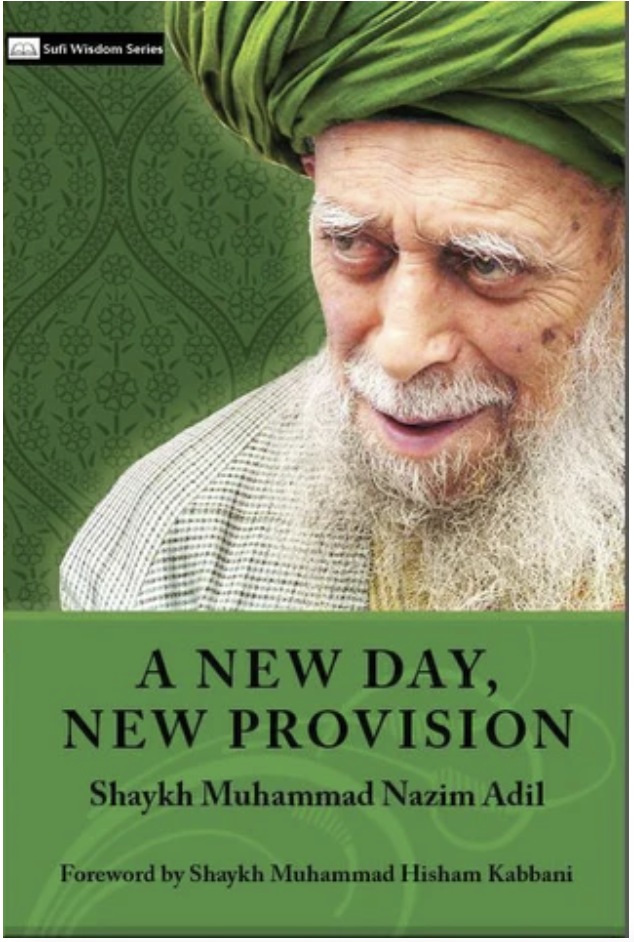
A New Day, New Provisions

By Shaykh Nazim Adil al-Haqqani 


Shaykh Nazim speaks to the hearts of spiritual seekers of any faith in a tremendous outpouring of truth, wisdom and divine knowledge unparalleled in the English language.


His message is filled with hope, love, mercy, and reassurance that even one’s smallest steps toward the Lord will neither go unnoticed nor neglected. As one who has traversed every step of the seeker’s path and reached its pinnacle, he offers practical guidelines for attaining the highest spiritual goals. Shaykh Nazim never prepared his words, but spoke according to inspirations coming to his heart. One need not follow the Sufi Path to understand this book, which will make a fine addition to any study of Islam, Sufism, spirituality and mysticism.

The SUFI WISDOM SERIES represents teachings of this Twentieth-century Sufi master that are firmly grounded in Islamic orthodoxy. The preface to “A New Day, New Provision” includes some of the secret miracles of the great shaykh’s passing.


EMAIL]  [SUFILIVE.COM]

Sufilive/ISCA is a 501(c)(3) nonprofit religious organization. Your contribution is tax-deductible to the extent allowed by law. Update your contact information BELOW in order to receive year-end tax-deduction documentation for tax purposes.