|
We have the music.
A symphony, in a minor key…
… Lord Darzi's magnus opus…
… his report telling us just about everything is wrong with the NHS.
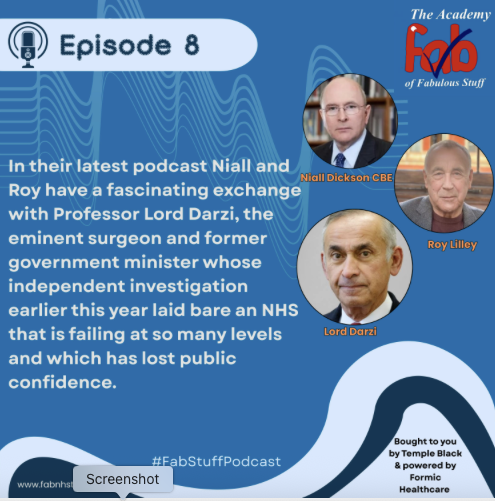
(You can hear Ara Darzi's view on the NHS and get a 'behind the scenes view' of his report in this podcast, FREE, here)
Condensing his masterwork into a coda; too little productivity.
Where to begin?
The Ten Year Plan is a funeral-march. To make progress we need an Allegro. A bright, sonata, a three-year-plan to get us to the next election, focussing on;
- waiting lists,
- waiting lists and
- waiting lists
Up to mid-2025 pretty well as many people were joining waiting lists as were treated.
There’s a slight improvement… but not consistent enough to ensure steady progress.
We need an ostinato, a relentless focus on;
- Throughput, flow and exit management, and...
- Demand management…
You might ask; is demand management really about productivity?
Fair question and yes.
Reductions in demand create headroom in the system which makes it easier to be productive.
To give it a better name; root-cause management…
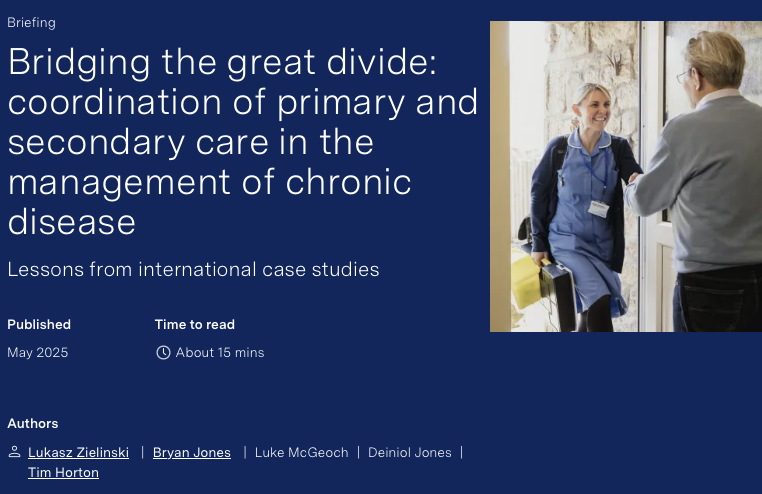
… which points us in the direction of primary care. The so-called, left-shift...
... which, with the best-will in the world… it ain’t gonna happen.
Why?
Primary and community care are insufficiently robust and won't be, in the foreseeable. It's a grim picture.
- As of July 2025, there were 1,086 fewer fully qualified, full-time equivalent GPs in England than in 2015.
- Between 2016–2020, around 694 practices closed.
- In the decade to 2024; practices in England have decreased by 20%, with 15% fewer qualified FTE GPs.
The Cogora/Pulse survey 22-25 tells us;
‘… since 2013 at least 474 GP surgeries across the UK have closed for good, displacing around 1.5 million patients.’
Most closures are in areas with a median deprivation score of 3.81 compared with 4.41 for an average practice.
There’s more;
- 22% of 8,911 GP premises were built before the establishment of the NHS, in 1948.
- GPs reported that 22.4% of their premises were not fit for purpose.
- 88% of GPs claim they don’t have sufficient consulting room.
- The system is already choc-a-bloc.
Added to which;
There’s been a 43% drop in district nurses between 2009 and 2024. Down from 7,643 to 4,322 FTE…
The four P's of why not...
- Primary and community services aren’t robust enough.
- Premisses aren’t modern enough and
- People... there aren't enough
-
Pounds... there ain't none.
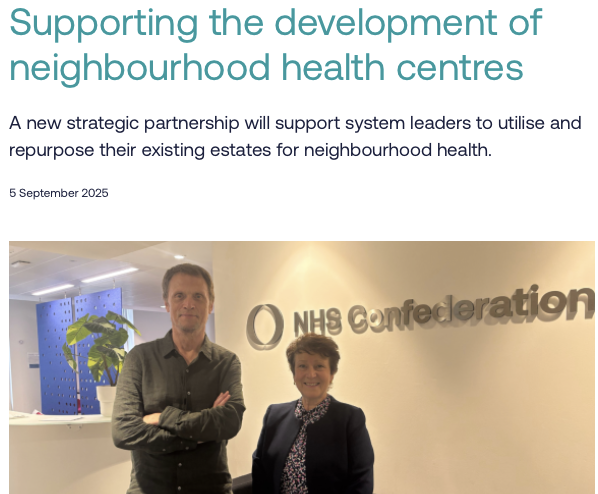
There is a another way. Not just about ‘shifting’ to primary care. It’s about shifting the whole system.
A tempo-rubato... shift the tempo, emphasis and increase productivity, all at once.
A musician might call it an appoggiatura; a moment of dissonance, before resolving. Certainly it runs against current policy thinking.
Hospitals have the scale, resources and data to drive a massive shift. If we link their funding to prevention and admission avoidance, they’ll invest upstream.
They would support GPs and community teams, instead of competing with them.
Make hospitals partners in building stronger local services, not barriers to them.
Hospitals have the infrastructure that we will never afford to duplicate in primary care.
Primary care is already, 'closer to home'.
Simple enough?.
Yes, the change is pretty obvious…
'...align the reward system with the outcomes you want and you’ll get what you want.'
All policy makers should have this as their screen-saver, stuck on their office door and made into a fridge magnate.
The tariff system is all wrong; it pays Trusts for more activity and paltry sums are spent in primary and community care.
Introduce; a population-based component to hospital funding.
Link a proportion of tariff to reductions in preventable emergency admissions, long-stay patients and chronic condition complications.
Allow hospitals to reinvest savings in community nursing, GP partnerships, frailty teams and prevention services.
I know, this gives hospitals more power… but it’s different power. The power to achieve fewer admissions which creates the headroom the system desperately needs.
The cost? Neutral in the short term… funding is restructured, not increased.
We know the numbers:
- 1% reduction in preventable admissions saves ~£200m annually;
- upstream prevention, spending £1 saves £3-4 in downstream hospital costs…
- for example diabetes complications, respiratory crises, falls and so on.
The knock-on benefits;
- free-up acute capacity,
- reduce agency staffing,
- delayed transfers-of-care costs and
- improvements to productivity metrics.
To avoid short-termism, create multi-year settlements to give hospitals time to invest.
Prevention, can be used as a financial lever to ratchet up productivity. Rather than it being the usual ‘nice to have’, that we all know seldom delivers.
I get the feeling everyone is shifting in their seats…
… leaning forward.
Like an audience in a concert hall, waiting for the conductor…
… waiting for someone to raise the baton, for that ‘preparatory beat’. The vital signal that establishes the tempo, character, and starting point for the music.
We have brilliant players, expensive instruments, shelves of sheet music but no baton.
What we get is noise, not music.
|